


What to Consider When Choosing Men Latex Boots for Extreme Working Conditions
Sep 20, 2026
View: 0
Leave a message
Meta Description: This article delves into the key factors to consider when choosing men's latex boots for extreme working conditions. It covers common problems, affected usage scenarios, product and process principles, practical solutions, maintenance, industry standards, and FAQs. Ideal for professionals in various industries, this guide is provided by a Professional Rain Boot Manufacturer.
Keywords: Men Latex Boots, Extreme Working Conditions, Boot Selection, Boot Maintenance, Boot Material
1. Core Problem Analysis
1.1 Common Causes of the Problem
When searching for men's latex boots suitable for extreme working conditions, users often face several problems. One of the most common issues is the lack of durability. In harsh environments, boots are prone to wear and tear, such as cracks in the latex material due to frequent bending and stretching. Another problem is poor waterproofing. If the boots are not properly sealed, water can seep in, causing discomfort and potentially leading to foot problems. Additionally, foot fatigue is a concern, as improper sizing or lack of support can make long - term wear painful. Slippage is also a significant issue, especially on wet or slippery surfaces, which can pose safety risks to workers.
1.2 Affected Usage Scenarios
These boots are essential in multiple scenarios. In the agricultural sector, farmers may need to work in muddy fields, where latex boots can protect their feet from water, mud, and pesticides. In the food processing industry, workers are required to stand in wet areas for long periods, and latex boots can provide waterproof and hygienic protection. Fishing is another scenario where boots are needed to keep feet dry and warm in cold and wet conditions. Workers in chemical plants also need specialized latex boots to protect their feet from chemical splashes. Additionally, in construction and mining, where there are risks of sharp objects and wet surfaces, latex boots can offer protection and prevent slips.
2. Product and Process Principle
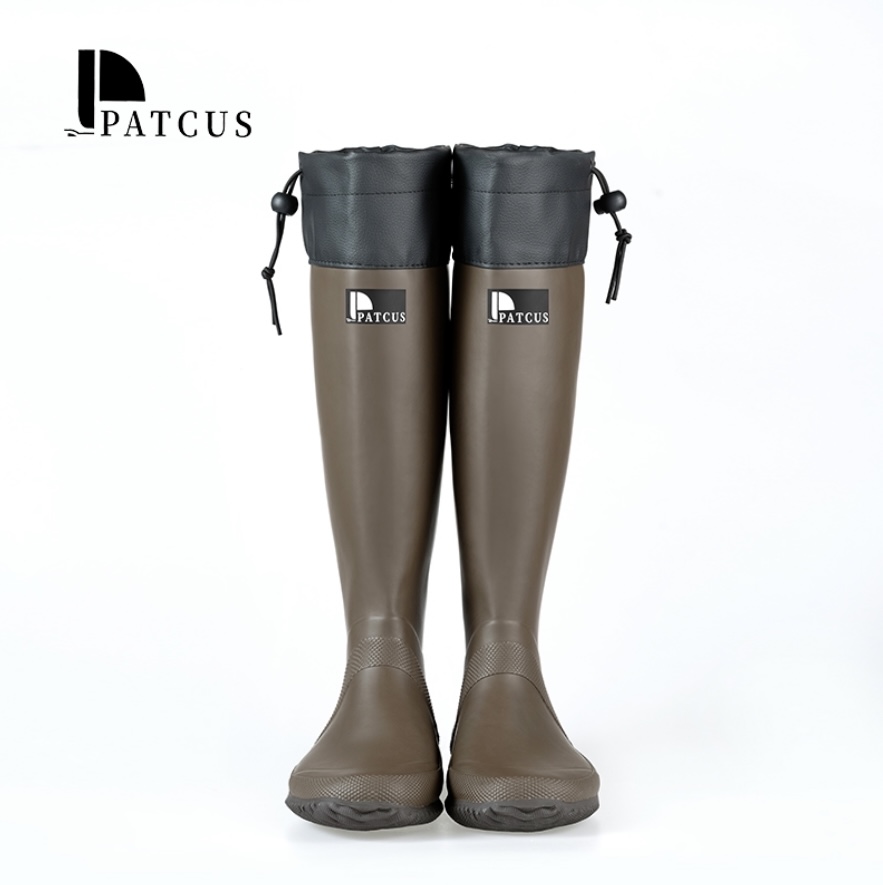
Men's latex boots are mainly made of latex material, which is a natural polymer with excellent elasticity and waterproof properties. Latex is derived from the sap of rubber trees and can be processed through various methods to form boots. The manufacturing process often involves injection molding or dipping. In injection molding, the molten latex is injected into a mold under high pressure, which allows for precise control of the boot's shape and size. Dipping is another common method, where a mold is dipped into a latex solution multiple times to build up the thickness of the boot. Professional Rain Boot Manufacturer often use advanced technologies to ensure the quality of the boots. For example, they may control the temperature and pressure during the manufacturing process to optimize the cross - linking of the latex molecules, which enhances the durability and strength of the boots. The outsole pattern is also carefully designed. A deep and well - structured outsole pattern can provide better traction on different surfaces, such as wet, muddy, or slippery floors. The shaft height is determined based on the intended use. Higher shafts can offer more protection in deep water or when working in areas with a lot of debris. The lining is usually made of a soft and breathable material to enhance comfort. Additionally, some manufacturers use a seamless structure to reduce the risk of water leakage at the seams, and they also control the thickness of the latex to ensure a good balance between protection and flexibility.
3. Practical Solutions and Operation Steps
### 3.1 Material Selection
When it comes to material selection for men's latex boots in extreme working conditions, pure latex is a good choice for its excellent waterproof and elastic properties. However, it may be relatively expensive. Some boots are made of a latex - synthetic rubber blend, which can offer a balance between cost and performance. Synthetic rubbers can enhance the durability and chemical resistance of the boots.
### 3.2 Shaft Height
For agricultural work, fishing, or working in areas with high water levels, boots with a shaft height of at least 30 - 40 cm are recommended. In industries like construction and mining, a medium - height shaft (around 20 - 30 cm) may be sufficient, as long as it can protect the ankles from potential hazards.
### 3.3 Outsole Pattern
Look for boots with deep, multidirectional outsole patterns. For example, a pattern with large lugs and channels can effectively drain water and provide better grip on wet and muddy surfaces. Zig - zag or hexagonal patterns also work well on different terrains.
### 3.4 Lining
A lining made of moisture - wicking and breathable material, such as cotton or synthetic fibers with moisture - management properties, can keep the feet dry and comfortable. Avoid boots with non - breathable linings, as they can cause sweating and discomfort.
### 3.5 Size
It is crucial to choose the right size of boots. Measure your feet accurately, considering both the length and width. Also, if you plan to wear thick socks in cold conditions, leave some extra space. It is better to try on the boots and walk around in them to ensure a proper fit.
### 3.6 Cold - Resistance and Slip - Resistance Ratings
For cold working conditions, check the cold - resistance rating of the boots. Some boots are designed to withstand temperatures as low as - 20°C or even lower. Regarding slip - resistance, boots should meet the relevant standards, such as EN ISO 20344:2021 for outsole testing on wet or contaminated surfaces.
### 3.7 Cleaning and Storage
Clean the boots regularly with mild soap and water. Avoid using harsh chemicals or solvents, as they can damage the latex material. After cleaning, let the boots dry naturally in a well - ventilated area, away from direct sunlight and heat sources. When storing, keep the boots in a cool and dry place, and avoid folding or compressing them for an extended period, as it can cause permanent damage to the shape and structure of the boots.
4. Daily Maintenance and Precautions
### 4.1 Daily Cleaning
After each use, remove any dirt, mud, or debris from the boots using a soft brush or cloth. Then, wash the boots with lukewarm water and a mild detergent. Make sure to rinse thoroughly to remove all soap residue.
### 4.2 Drying
Never dry latex boots in direct sunlight or near a heat source, such as a radiator or heater. This can cause the latex to crack and lose its elasticity. Instead, place the boots in a well - ventilated area with good air circulation to dry naturally. You can stuff the boots with newspaper to absorb moisture and help maintain their shape.
### 4.3 Deodorizing
If the boots develop an odor, you can sprinkle baking soda inside them and let it sit overnight. Then, shake out the baking soda the next day. Another option is to use specialized boot deodorizers.
### 4.4 Anti - Aging and Anti - Deformation
To prevent the latex from aging, avoid exposing the boots to chemicals, ozone, and excessive heat. When not in use, store the boots in a cool, dry place. To prevent deformation, you can use boot trees or stuff the boots with soft materials, such as old socks or towels.
### 4.5 Precautions
Do not use strong solvents, such as gasoline or alcohol, to clean the boots, as they can dissolve the latex. Also, do not use ordinary latex boots in situations where safety - certified boots are required. For example, in industries where there are risks of electrical hazards, punctures, or chemical splashes, use boots that meet the relevant safety standards.
Moreover, be careful not to over - stretch the boots during use, as this can cause permanent damage to the latex material.
5. Industry Standard and Parameter Reference
This section serves as the authoritative support module for the entire article, listing international standards, test methods, or verifiable parameters closely related to the article's theme. The following table summarizes the key parameters:
ParameterRecommended ReferenceWhy It MattersSlip resistanceEN ISO 20344:2021 / EN ISO 20347:2022+A1:2024 where applicableHelps evaluate outsole grip on wet or contaminated surfaces.Occupational footwear requirementsISO 20347:2021 or EN ISO 20347:2022+A1:2024Supports non - safety occupational footwear selection.Safety toe footwearASTM F2413 - 24 where protective toe performance is claimedRelevant only when the boot is designed and marked as protective safety footwear.Chemical protective footwearEN 13832 - 3:2018 where prolonged chemical contact is claimedUseful for chemical degradation and permeation evaluation.
It is important not to invent exact performance numbers. Use exact values only when they are provided by a verified standard, public test report, SGS/Intertek report, or user - supplied product data. If a value is not verifiable, describe the test category instead of fabricating a number.
6. Customer Common FAQ
Q: What are the advantages of latex boots over PVC boots?
A: Latex boots generally have better elasticity and flexibility than PVC boots. They can conform better to the shape of the foot, providing a more comfortable fit. Additionally, latex is a natural material, which is more breathable compared to PVC, reducing the risk of sweaty and smelly feet. A Professional Rain Boot Manufacturer can provide more detailed information based on the specific products.
Q: How do I know if the boots have good slip - resistance?
A: Check if the boots meet the relevant slip - resistance standards, such as EN ISO 20344:2021. You can also look at the outsole pattern. A deeper and more complex outsole pattern usually indicates better traction. In some cases, you can test the boots on a wet surface to see how well they grip.
Q: What size should I choose for latex boots?
A: Measure your feet accurately. Consider the length and width, as well as the thickness of the socks you plan to wear. It is recommended to try on the boots and walk around to ensure a proper fit. If you have wide feet or plan to wear thick socks, you may need to choose a slightly larger size.
Q: Do latex boots have a strong odor?
A: New latex boots may have a slight natural odor, but it should fade over time. If the odor is very strong and persistent, it could indicate low - quality latex or the use of improper additives. You can try airing the boots out in a well - ventilated area or using deodorizing methods as mentioned in the maintenance section.
Q: Can latex boots be used in cold temperatures?
A: Some latex boots are designed to be cold - resistant and can withstand low temperatures. However, regular latex boots may become stiffer and more prone to cracking in extreme cold. Check the product's cold - resistance rating before using them in cold conditions.
Conclusion
In conclusion, when choosing men's latex boots for extreme working conditions, several key factors need to be considered. These include material selection, shaft height, outsole pattern, lining, size, and the boots' performance in terms of slip - resistance and cold - resistance. Regular maintenance, such as proper cleaning, drying, and storage, is also crucial to extend the lifespan of the boots. By referring to industry standards and understanding common FAQs, users can make more informed decisions. A Professional Rain Boot Manufacturer can offer valuable expertise and guidance throughout the selection process.
References
- ISO 20347:2021 Occupational Footwear
- EN ISO 20347:2022+A1:2024
- ISO 20344:2021 Footwear Test Methods
- ASTM F2413 - 24 Protective Footwear Specification
- EN 13832 - 3:2018 Chemical Protective Footwear