


When Do Kids Need Latex Boots and How to Choose the Right Ones?
Aug 26, 2026
View: 0
Leave a message
Meta Description: This article explores when kids need latex boots and offers guidance on choosing the right ones. It's suitable for parents and guardians looking to understand the usage scenarios and selection criteria of kid latex boots. Professional Rain Boot Manufacturer provides expert insights for a more informed decision.
Keywords: Kid Latex Boots, Rain Boots, Waterproof Boots, Rubber Boots, Boot Selection, Boot Maintenance, Boot Material
1. Core Problem Analysis
1.1 Common Causes of the Problem
When searching for information on kids' latex boots, parents often face several common problems. Firstly, finding the right size can be challenging. Kids' feet grow quickly, and an ill - fitting boot can lead to discomfort, blisters, or even hinder normal foot development. Secondly, ensuring the boots are durable is crucial. Kids are usually active, and boots may endure rough use, such as being scuffed on the playground or dragged through mud. Another problem is the breathability of the boots. If the boots are not breathable, kids' feet may become sweaty, leading to an unpleasant smell and potential skin problems. Additionally, parents are concerned about the quality of the latex material, like how it reacts to chemicals in the environment and its resistance to wear and tear.
1.2 Affected Usage Scenarios
There are multiple usage scenarios where kids need latex boots. In rainy weather, latex boots keep kids' feet dry during school commutes or outdoor play. Gardening is another common scenario. When kids help plant flowers or vegetables in the garden, latex boots protect their feet from mud and water. In fishing activities, boots prevent feet from getting wet in the water by the pond or in boats. Also, for some farm visits, where there might be muck and livestock waste, latex boots offer a necessary layer of protection.
2. Product and Process Principle
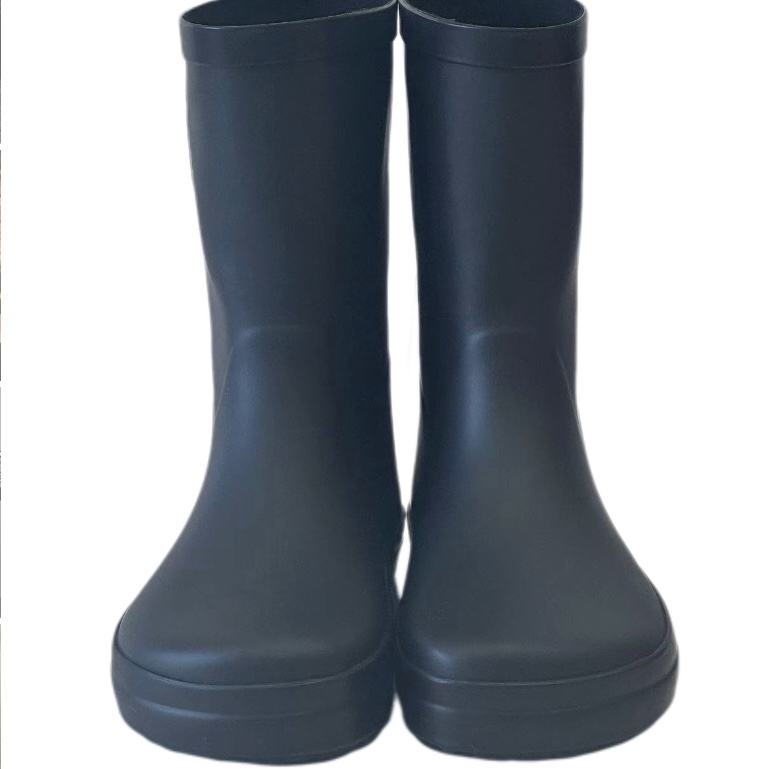
Latex is a natural material commonly used in making kids' rain boots. Its main advantage is its high elasticity, allowing the boots to stretch and fit the kids' feet comfortably. The elasticity also helps the boots adapt to different foot shapes and movements. In the manufacturing process, injection molding is often used. This process involves injecting molten latex into a pre - designed mold under high pressure. The mold gives the boots their shape, and the high - pressure injection ensures that the latex fills every corner of the mold evenly, resulting in a smooth and well - formed boot. Another important process is vulcanization. Vulcanization is a chemical process that adds sulfur to the latex and heats it. This process increases the strength, durability, and elasticity of the latex, making the boots more resistant to wear and tear, and less likely to crack. The lining of the boots also plays a role. Some boots have a soft lining to enhance comfort, while others may have an antibacterial lining to keep kids' feet fresh. A Professional Rain Boot Manufacturer carefully controls the thickness of the latex. Thicker latex generally offers more durability but may reduce flexibility, while thinner latex is more flexible but may be less durable. The compound formulation of the latex is also adjusted to meet different requirements, such as adding chemicals to improve resistance to UV rays or chemicals in the environment.
3. Practical Solutions and Operation Steps
When choosing kids' latex boots, the following steps and suggestions can be used:
- Material selection: Opt for high - quality natural latex, which is more breathable and comfortable than synthetic alternatives. Look for latex that has been tested for safety, ensuring it meets industry standards for children's products.
- Height selection: For general daily use like rainy commutes to school, short - to mid - calf height boots are usually sufficient. However, for activities like fishing or playing in deep mud, high - calf boots with an appropriate height of around 30 - 40 cm are recommended to prevent water from entering the boots.
- Sole pattern selection: Choose boots with deep and wide - spaced grooves on the sole. These grooves provide better traction on wet and slippery surfaces, reducing the risk of kids slipping. For example, a sole with a herringbone or wave - like pattern is ideal for various terrains.
- Lining selection: A soft and breathable lining, such as cotton or a moisture - wicking fabric, is preferred. It absorbs sweat and keeps kids' feet dry and comfortable for a longer time.
- Size selection: Measure your kids' feet accurately. It's advisable to add a little extra space, about 1 - 1.5 cm, to allow for growth. Consider the time of day when measuring, as feet tend to swell slightly in the afternoon. Try on the boots with the socks your child usually wears for a more accurate fit.
- Antibacterial protection: Look for boots with antibacterial treatment. This helps prevent the growth of bacteria and fungi, which can cause foot odor and athlete's foot.
- UV resistance: If your child will be using the boots in sunny conditions, select boots with latex that has been treated for UV resistance to prevent the material from deteriorating quickly.
- Cleaning and storage: After use, clean the boots with mild soap and water. Avoid using harsh chemicals that could damage the latex. Let the boots dry naturally in a well - ventilated area away from direct sunlight. When storing, keep them in a cool, dry place. Do not fold or compress the boots for long - term storage, as this may cause the latex to crack.
4. Daily Maintenance and Precautions
Proper daily maintenance is essential for prolonging the lifespan of kids' latex boots. After each use, rinse the boots thoroughly to remove dirt and debris. Use a soft brush or cloth to gently scrub the boots, especially in hard - to - reach areas. Then, allow the boots to air dry in a cool, shaded place. Never expose the boots to direct sunlight for an extended period, as this can cause the latex to become brittle and crack. Avoid storing the boots near a heat source, such as a radiator or heater, as high temperatures can also damage the material. When cleaning, do not use strong solvents such as alcohol or acetone, as these can dissolve the latex. Instead, use a mild detergent or soap specifically designed for cleaning rubber products. Additionally, regular inspection of the boots is necessary. Check for signs of wear and tear, such as cracks or holes. If any damage is found, repair or replace the boots promptly. It is important to note that ordinary latex boots are not suitable for use in situations where safety boots are required, such as in industrial or construction areas. Safety boots are designed and tested to meet specific safety standards, and using regular latex boots can lead to serious foot injuries.
5. Industry Standard and Parameter Reference
This chapter provides international standards and test methods relevant to kids' latex boots.
ParameterRecommended ReferenceWhy It MattersSlip resistanceEN ISO 20344:2021 / EN ISO 20347:2022+A1:2024 where applicableHelps evaluate outsole grip on wet or contaminated surfaces, reducing the risk of kids slipping and getting injured.Occupational footwear requirementsISO 20347:2021 or EN ISO 20347:2022+A1:2024Although kids' boots are not strictly occupational footwear, these standards can provide a reference for the quality and performance of the boots.Material safetyASTM F963 - 23 for toy safety standards related to materials in contact with children. For latex boots, it ensures that the latex does not contain harmful substances such as heavy metals or phthalates.Ensures the safety of kids' skin when in contact with the boots.WaterproofnessTests can be based on ISO 20344:2021 methods for waterproof footwear to ensure boots keep feet dry in wet conditions.To meet the primary function of rain boots - to keep feet dry.
Do not invent exact performance numbers. Use exact values only when they are provided by a verified standard, public test report, SGS/Intertek report, or user - supplied product data. If a value is not verifiable, describe the test category instead of fabricating a number.
6. Customer Common FAQ
Q: Is natural latex better than synthetic latex for kids' boots?
A: Yes, natural latex is generally a better choice. It is more breathable and has better elasticity, providing a more comfortable fit for kids' feet. Also, natural latex is biodegradable and more environmentally friendly. A Professional Rain Boot Manufacturer can help you understand the differences and select the most suitable latex material.
Q: How can I tell if the boots are slip - resistant?
A: Look for boots that meet the EN ISO 20344:2021 or EN ISO 20347:2022+A1:2024 standards for slip resistance. You can also check the sole pattern; deep and wide - spaced grooves usually indicate better slip - resistance.
Q: What size boots should I buy for my child?
A: Measure your child's feet accurately. Leave about 1 - 1.5 cm of extra space for growth. If possible, have your child try on the boots with the socks they usually wear. If your child has a wide or high - arched foot, you may need to choose a slightly larger size.
Q: Do latex boots have an odor?
A: New latex boots may have a slight odor. This is normal and usually goes away after a few days of airing. To speed up the process, you can place the boots in a well - ventilated area. Avoid using strong - smelling substances to cover the odor, as they may damage the latex.
Q: How long do latex boots usually last?
A: The lifespan of latex boots depends on the frequency of use, the environment, and maintenance. With proper care, a good - quality pair of latex boots can last for one to two years. Regularly check for signs of wear and tear, such as cracks or loss of elasticity, and replace the boots when necessary.
Conclusion
To sum it up, understanding when kids need latex boots and how to choose the right ones is crucial for parents. The main factors to consider include the material, size, sole pattern, and lining of the boots. By following the practical solutions and operation steps, parents can make a more informed decision. Additionally, proper maintenance and awareness of industry standards are essential for ensuring the safety and longevity of the boots. A Professional Rain Boot Manufacturer can provide valuable insights and guidance throughout the selection and maintenance process.
References
- EN ISO 20344:2021, Footwear Test Methods
- EN ISO 20347:2022+A1:2024, Occupational Footwear
- ISO 20347:2021, Occupational Footwear
- ASTM F963 - 23, Standard Consumer Safety Specification for Toy Safety