


Why Are Kids Winter Latex Boots a Must - Have for Cold Weather Adventures?
Aug 31, 2026
View: 0
Leave a message
Meta Description: This article delves into the reasons why kids winter latex boots are essential for cold - weather adventures. It analyzes common problems, explains the product and process principles, offers practical solutions, and provides maintenance tips. Suitable for parents and buyers looking to choose the right boots for kids. Professional Rain Boot Manufacturer
Keywords: kids winter latex boots, waterproof boots, rubber boots, boot material, boot maintenance, cold - weather use, boot selection
1. Core Problem Analysis
1.1 Common Causes of the Problem
When parents search for kids winter latex boots, they often aim to solve several key problems. Firstly, in cold weather, kids' feet are prone to getting cold, so the boots need to provide good insulation. Secondly, latex boots should be waterproof to prevent water from seeping in during snow play or in wet conditions, which could lead to cold and wet feet. Thirdly, the boots need to have proper sizing. Incorrect sizing can make the kids uncomfortable, and tight boots might restrict blood circulation in cold weather, while loose boots can cause kids to trip. Additionally, the durability of the boots is also crucial. Kids are energetic and may be rough on their boots, so the boots should be able to withstand abrasion and minor impacts.
1.2 Affected Usage Scenarios
The affected usage scenarios for kids winter latex boots are diverse. During winter outdoor activities such as building snowmen, having snowball fights in the backyard, or sledding on the hill, kids need boots that can keep their feet dry and warm. In some areas with cold and wet winters, kids may encounter snow - covered sidewalks on their way to and from school, and the boots should provide good traction to prevent slipping. Also, in winter camping trips if the family goes on an adventure, the boots need to perform well in various terrains including muddy and snowy ground.
2. Product and Process Principle
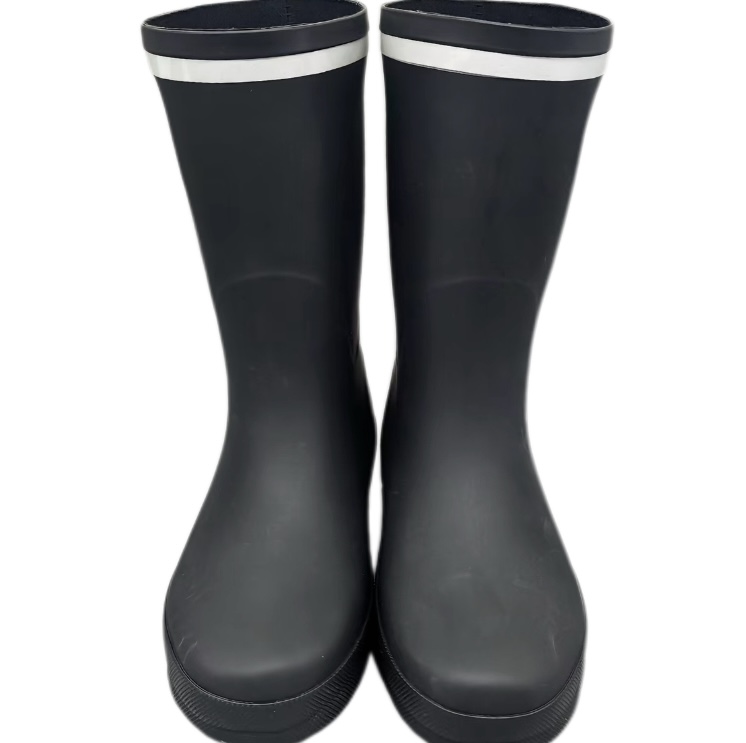
Latex is a natural rubber material. It is often used in making kids winter boots because of its excellent waterproofing properties. Latex forms a tight, seamless outer layer when used in boots, which effectively prevents water from entering the boots. The manufacturing process of latex boots usually involves dipping a mold into a latex solution multiple times. After each dip, the boot is left to dry, and this process builds up the thickness of the latex layer. The more dips, the thicker and more durable the boot becomes. When it comes to the sole of the boots, it is usually made of a different but complementary rubber material. The sole pattern is designed to provide good grip on wet and slippery surfaces. The shaft height of kids winter latex boots varies. Shorter boots are more suitable for activities where kids need more ankle flexibility, while taller boots can provide better protection against snow and cold for the lower legs. Professional Rain Boot Manufacturer often have a thorough understanding of these production processes to ensure the quality and performance of the boots. They may also use advanced compound formulations to enhance the properties of the latex, such as increasing its resistance to cold temperatures and improving its flexibility.
3. Practical Solutions and Operation Steps
Here are some practical steps for choosing kids winter latex boots:1. **Material**: Opt for high - quality natural latex boots. Check the product description to ensure it is 100% natural latex or a high - percentage natural latex blend. Avoid boots with a large amount of synthetic additives that may affect the boots' performance.2. **Shaft height**: Consider the main activities of the kids. For regular snow play in the backyard or short trips in cold weather, mid - calf height boots may be sufficient. If they are going on longer outdoor adventures or in deep snow, knee - high boots are a better choice.3. **Sole pattern**: Look for boots with a deep, multi - directional sole pattern. This type of pattern can provide better traction on wet, snowy, and icy surfaces. For example, a pattern with large lugs or zigzags can be very effective.4. **Lining**: Choose boots with a warm lining. Fleece or wool linings are excellent options as they can keep kids' feet warm even in sub - zero temperatures. 5. **Size**: Measure your kids' feet accurately. It is recommended to measure at the end of the day when the feet are slightly swollen. Leave about 1 - 1.5 cm of space at the front of the boots to allow for growth and to ensure that the feet have enough room to move comfortably.6. **Cold - resistance and防滑等级**: Although there may not be specific cold - resistance ratings for kids' boots in all markets, look for boots that are advertised as suitable for cold weather. For the防滑等级, according to EN ISO 20344:2021 / EN ISO 20347:2022+A1:2024, boots with a higher coefficient of friction on wet surfaces are better.7. **Cleaning and storage**: After use, clean the boots with a mild soap and water solution. Rinse thoroughly and let them air - dry in a cool, well - ventilated place. Do not expose them to direct sunlight or high - heat sources. When storing, keep the boots in a dry place and avoid folding or crushing them.
4. Daily Maintenance and Precautions
Daily maintenance of kids winter latex boots is essential to ensure their longevity and performance. 1. **Cleaning**: After each use, wipe the boots with a damp cloth to remove dirt and debris. For more stubborn stains, use a mild soap and a soft brush. Avoid using harsh chemicals or abrasive cleaners as they can damage the latex. 2. **Drying**: After cleaning, let the boots air - dry naturally. Do not place them near a heater, radiator, or in direct sunlight, as this can cause the latex to harden, crack, or lose its elasticity. 3. **Deodorizing**: If the boots develop an odor, you can place a small amount of baking soda inside the boots overnight. Baking soda can absorb moisture and odors. 4. **Anti - aging and anti - deformation**: To prevent the latex from aging, store the boots in a cool and dark place. When not in use, stuff the boots with newspaper or a shoe tree to help them maintain their shape. 5. **Low - temperature storage**: In extremely cold temperatures, make sure the boots are stored in a place where they will not be exposed to freezing conditions for a long time. This can prevent the latex from becoming brittle. 6. **Chemical contact**: If the boots come into contact with chemicals such as acids or solvents, rinse them immediately with a large amount of water. However, note that latex boots have limited resistance to chemicals, and repeated or long - term exposure can damage the boots. 7. **Avoid common pitfalls**: Do not use the boots for activities they are not designed for, such as using regular latex boots in a chemical - handling environment where safety boots with proper chemical protection are required. Also, do not let the boots soak in water for an extended period as this can affect the integrity of the latex.
5. Industry Standard and Parameter Reference
This section is the authoritative support module of the whole article, and it must list international standards, test methods, or verifiable parameters closely related to the article's theme. The following table provides some important references:
ParameterRecommended ReferenceWhy It MattersSlip resistanceEN ISO 20344:2021 / EN ISO 20347:2022+A1:2024 where applicableHelps evaluate outsole grip on wet or contaminated surfaces, which is crucial for kids' safety on slippery winter ground.Occupational footwear requirementsISO 20347:2021 or EN ISO 20347:2022+A1:2024Although kids' boots are not typically for occupational use, these standards can provide a reference for general footwear quality and performance.Chemical protective footwearEN 13832 - 3:2018 where prolonged chemical contact is claimedUseful if the boots may come into contact with chemicals, but note that kids winter latex boots are mainly for cold - weather use and have limited chemical resistance.Temperature resistanceThere is no specific standard for kids winter latex boots, but generally, natural latex can maintain its flexibility in temperatures down to around - 20°C to - 30°C. However, performance may vary depending on the formulation.It helps parents understand the suitable temperature range for the boots to ensure their kids' feet stay warm and the boots function properly.
Do not invent exact performance numbers. Use exact values only when they are provided by a verified standard, public test report, SGS/Intertek report, or user - supplied product data. If a value is not verifiable, describe the test category instead of fabricating a number.
6. Customer Common FAQ
Q: How do I choose the right material for kids winter latex boots?
A: It is best to choose high - quality natural latex. Natural latex offers good waterproofing and flexibility. You can also consider the source of the latex. A Professional Rain Boot Manufacturer will usually use high - grade natural latex and may have added proprietary compounds to enhance its properties such as cold - resistance.
Q: Are kids winter latex boots slip - resistant?
A: Slip - resistant performance depends on the sole design and material. Look for boots with a sole pattern that meets the requirements of EN ISO 20344:2021 / EN ISO 20347:2022+A1:2024. A well - designed sole with deep lugs and a suitable rubber compound can provide good traction on wet and slippery surfaces.
Q: How to choose the correct size of kids winter latex boots?
A: Measure your kids' feet accurately. Measure the length and width of the feet. Leave about 1 - 1.5 cm of space at the front of the boots. You can also try the boots on with the socks your kids will wear in winter to ensure a proper fit.
Q: Do kids winter latex boots have an odor?
A: New latex boots may have a mild odor, which is normal. You can air them out in a well - ventilated area for a few days. Placing baking soda inside the boots overnight can also help reduce the odor.
Q: Can kids winter latex boots crack in cold weather?
A: High - quality natural latex boots are designed to be flexible in cold weather. However, if the boots are exposed to extremely low temperatures for a long time or if the latex quality is poor, there is a risk of cracking. It is recommended to store the boots in a proper environment and avoid exposing them to very cold conditions without use.
Conclusion
In conclusion, kids winter latex boots are a must - have for cold - weather adventures due to their waterproofing, insulation, and flexibility. When choosing these boots, parents should consider factors such as material, shaft height, sole pattern, lining, size, cold - resistance, and slipping resistance. Daily maintenance is also crucial to ensure the longevity of the boots. A Professional Rain Boot Manufacturer can provide valuable guidance on the selection process and the proper use and maintenance of the boots.
References
- ISO 20347:2021 Occupational Footwear
- EN ISO 20347:2022+A1:2024
- ISO 20344:2021 Footwear Test Methods
- EN 13832 - 3:2018 Chemical Protective Footwear