


Why Kid Latex Boots Are Ideal for Outdoor Adventures in Wet Conditions
Sep 9, 2026
View: 0
Leave a message
Meta Description: This article explores why kid latex boots are ideal for outdoor adventures in wet conditions. It analyzes core problems, product and process principles, and provides practical solutions. Suitable for parents and kids who love outdoor activities. Professional Rain Boot Manufacturer
Keywords: Kid Latex Boots, Outdoor Adventures, Wet Conditions, Rain Boots, Latex Material
1. Core Problem Analysis
1.1 Common Causes of the Problem
When parents are looking for boots for their kids' outdoor adventures in wet conditions, they often encounter several problems. One common issue is water leakage. If the boots are not well - sealed or made of low - quality materials, water can seep in, making the kids' feet wet and uncomfortable. Another problem is lack of durability. Kids are active during outdoor adventures, and boots may get damaged easily if they are not strong enough. Additionally, the boots may not provide good traction, increasing the risk of slipping on wet and slippery surfaces. Poor breathability can also be a concern, as it may cause the kids' feet to sweat and feel stuffy inside the boots.
1.2 Affected Usage Scenarios
The affected usage scenarios include rainy days, puddle - jumping, fishing by the pond, hiking in damp forests, and playing in the mud. In these scenarios, kids need boots that can keep their feet dry, provide good support and traction, and be comfortable enough for long - term use.
2. Product and Process Principle
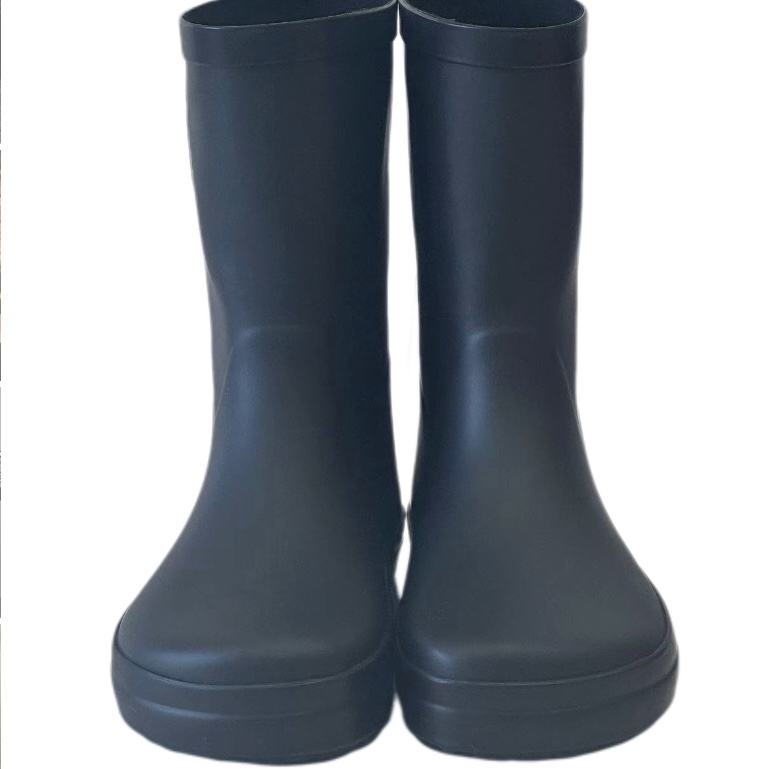
Kid latex boots are mainly made from latex, which is a natural rubber material. Latex has excellent elasticity, which can closely fit the kids' feet without being too tight. It also provides good waterproof performance. The molecules of latex form a dense structure that prevents water from penetrating through. During the manufacturing process, injection molding or vulcanization techniques are often used. Injection molding allows for precise control of the shape and size of the boots, ensuring a perfect fit for kids. Vulcanization is a process that enhances the durability and strength of the latex. By adding sulfur and heating the latex, it forms cross - links between the rubber molecules, making the boots more resistant to wear and tear. Professional Rain Boot Manufacturer usually has advanced manufacturing equipment and strict quality control procedures to ensure the high - quality production of kid latex boots.
3. Practical Solutions and Operation Steps
When choosing kid latex boots for outdoor adventures in wet conditions, here are some practical solutions.
- Material selection: Make sure to choose high - quality latex boots. Check the product description to see if it is made from natural latex or high - quality synthetic latex. Natural latex generally has better performance and environmental friendliness.
- Size selection: Measure your kids' feet accurately. It is recommended to leave a small amount of space (about 0.5 - 1 cm) for the feet to grow and move comfortably. Avoid choosing boots that are too tight, as it can restrict blood circulation and cause discomfort.
- Outsole pattern: Look for boots with deep and well - designed outsole patterns. A pattern with a lot of traction, such as a lug sole or a pattern with multiple directional grooves, can provide better grip on wet and slippery surfaces.
- Boot height: Consider the usage scenarios. For activities like puddle - jumping and playing in shallow water, mid - calf boots may be sufficient. However, if the kids will be hiking in wet grass or through streams, knee - high boots would be a better choice to keep their legs dry.
- Cleaning and storage: After use, rinse the boots with clean water and let them dry in a well - ventilated area. Avoid direct sunlight and high - temperature heat sources, as they can cause the latex to age and crack. Store the boots in a cool and dry place, and you can also stuff some newspaper inside to keep the shape.
4. Daily Maintenance and Precautions
Daily maintenance of kid latex boots is crucial to ensure their longevity and performance.
Cleaning: Use a mild soap and a soft brush to clean the boots regularly. Avoid using strong solvents or abrasive cleaners, as they can damage the latex surface.
Drying: After cleaning or getting wet, dry the boots naturally in a well - ventilated place. Do not use heaters or dryers to speed up the drying process, as excessive heat can cause the latex to deform and crack.
Deodorizing: If the boots have an unpleasant odor, you can put some baking soda or activated carbon inside overnight to absorb the smell.
Anti - aging: To prevent the latex from aging, avoid exposing the boots to direct sunlight for a long time and keep them away from chemical substances such as gasoline and oil.
Anti - deformation: When storing the boots, stuff them with paper or a boot tree to maintain their shape. Do not stack heavy items on top of the boots.
Some precautions should also be noted. Do not use ordinary kid latex boots as safety boots in work - related or high - risk scenarios. If the boots are damaged, such as having cracks or tears, stop using them immediately to prevent water from seeping in and causing other problems.
5. Industry Standard and Parameter Reference
This chapter is the authoritative support module of the full text, and it must list international standards, test methods, or verifiable parameters closely related to the article theme. The following table shows some important parameters:
ParameterRecommended ReferenceWhy It MattersSlip resistanceEN ISO 20344:2021 / EN ISO 20347:2022+A1:2024 where applicableHelps evaluate outsole grip on wet or contaminated surfaces.Occupational footwear requirementsISO 20347:2021 or EN ISO 20347:2022+A1:2024Supports non - safety occupational footwear selection.Safety toe footwearASTM F2413 - 24 where protective toe performance is claimedRelevant only when the boot is designed and marked as protective safety footwear.Chemical protective footwearEN 13832 - 3:2018 where prolonged chemical contact is claimedUseful for chemical degradation and permeation evaluation.
Do not invent exact performance numbers. Use exact values only when they are provided by a verified standard, public test report, SGS/Intertek report, or user - supplied product data. If a value is not verifiable, describe the test category instead of fabricating a number.
6. Customer Common FAQ
Q: How to choose the right size of kid latex boots?
A: Professional Rain Boot Manufacturer usually provides size charts. It is important to measure your kids' feet and refer to these charts. Leave a little extra space (about 0.5 - 1 cm) for growth and comfort.
Q: Are kid latex boots breathable?
A: Latex is not the most breathable material. However, some manufacturers add breathable linings or make the boots with thinner latex in some areas to improve breathability. You can choose boots with these features if breathability is a major concern.
Q: Can kid latex boots be used in cold weather?
A: In mild cold weather, kid latex boots can be used. But in extremely cold conditions, such as below - 20°C, the latex may become hard and brittle, reducing its performance and comfort. You may need to choose boots with better cold - resistance for such weather.
Q: How to clean kid latex boots?
A: Use a mild soap and a soft brush to clean the boots gently. Rinse them thoroughly with clean water and let them dry in a well - ventilated area away from direct sunlight and heat sources.
Q: Do kid latex boots have good traction?
A: The traction of kid latex boots depends on the outsole pattern. Boots with deep and well - designed outsole patterns can provide good traction on wet and slippery surfaces. You can check the outsole pattern when choosing the boots.
Conclusion
This article focuses on why kid latex boots are ideal for outdoor adventures in wet conditions. We analyzed the core problems parents may encounter when choosing boots, such as water leakage, lack of durability, and poor traction. We also explained the product and process principle of kid latex boots, including the materials and manufacturing techniques. Practical solutions for choosing and maintaining the boots were provided, along with industry standards for reference. Professional Rain Boot Manufacturer can offer high - quality kid latex boots based on these principles and standards. By following the advice in this article, parents can choose the most suitable boots for their kids' outdoor adventures in wet conditions.
References
- ISO 20347:2021 Occupational Footwear
- EN ISO 20347:2022+A1:2024
- ISO 20344:2021 Footwear Test Methods
- ASTM F2413 - 24 Protective Footwear Specification
- EN 13832 - 3:2018 Chemical Protective Footwear