


Why Men Latex Boots Are Ideal for Chemical - Handling Environments
Aug 26, 2026
View: 0
Leave a message
Meta Description: This article delves into why men latex boots are excellent for chemical - handling environments. It explores the suitability of these boots in various relevant scenarios, providing insights from material and process principles to practical usage and maintenance. It is a valuable resource for professionals in chemical - related industries. Professional Rain Boot Manufacturer
Keywords: Men Latex Boots, Chemical - Handling Environments, Rain Boots, Rubber Boots, Boot Material, Boot Maintenance
1. Core Problem Analysis
1.1 Common Causes of the Problem
When dealing with chemicals, workers face several risks related to footwear. The most common issues include chemical penetration, which can cause skin burns and long - term health problems. Latex boots are often sought after to address these concerns because of the need for a reliable barrier against chemicals. Additionally, the harsh chemicals may cause material degradation of normal boots, reducing their durability. Inadequate protection can also lead to chemical splashes reaching the feet, which is especially dangerous in high - risk chemical handling tasks. Another problem could be the poor flexibility of boots, which may limit the worker's mobility and increase the risk of accidents.
1.2 Affected Usage Scenarios
The affected usage scenarios mainly involve chemical manufacturing plants, where workers handle various types of chemicals during the production process. Laboratories are also a key area, as scientists and technicians conduct experiments with potentially hazardous chemicals. Wastewater treatment facilities that deal with chemical - laden water are another important scenario. In addition, industries such as electroplating and battery manufacturing, where strong acids and alkalis are used, also require proper chemical - resistant footwear. For example, in a chemical plant, workers need to move around the production line, and their boots may come into contact with spilled chemicals. In a laboratory, accidental splashes can occur during chemical transfers.
2. Product and Process Principle
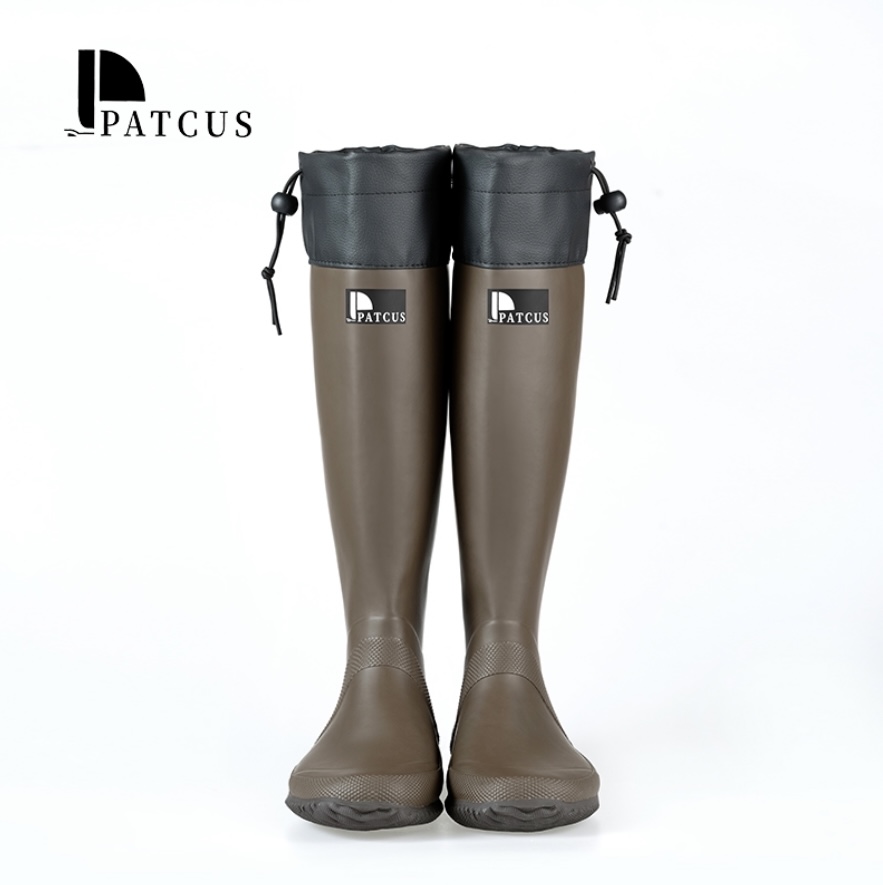
Men latex boots are typically made from natural latex, a polymer derived from the sap of rubber trees. The latex has excellent chemical resistance properties due to its molecular structure. It forms a dense and continuous barrier that prevents chemicals from penetrating through. The manufacturing process of latex boots often involves dipping a boot - shaped mold into a latex solution. This dipping process allows for the formation of a seamless structure, which is crucial for preventing chemical seepage at seams, a common weak point in other types of boots. The thickness of the latex layer can be controlled by the number of dips and the concentration of the latex solution. A thicker layer generally provides better chemical protection but may reduce flexibility. In some cases, additives can be added to the latex formulation to enhance specific properties, such as improving resistance to certain types of chemicals. Professional Rain Boot Manufacturer plays a vital role in ensuring the proper production of these boots, from the selection of high - quality latex to the precise control of the manufacturing process.
3. Practical Solutions and Operation Steps
When choosing men latex boots for chemical - handling environments, consider the following steps:
- Material selection: Ensure that the boots are made from high - quality natural latex. Check for certifications or test reports to verify the chemical resistance of the latex. For example, if you are dealing with strong acids, look for boots that are specifically tested and rated for acid resistance.
- Shaft height: Select a shaft height that provides adequate protection. In most chemical - handling scenarios, knee - high boots are recommended to prevent chemicals from splashing onto the lower legs. However, if the work environment has a higher risk of chemical spills near the upper legs, you may consider thigh - high boots.
- Outsole pattern: A good outsole pattern is essential for safety in chemical - handling environments. Look for boots with deep and well - defined grooves, which can provide better traction on wet and slippery surfaces. Patterns such as lug soles or herringbone patterns are often suitable.
- Lining: Some latex boots come with an inner lining. A breathable lining can improve comfort during long - term use. Materials like cotton or a cotton - polyester blend can be a good choice as they can absorb sweat and keep the feet dry.
- Size: Ensure a proper fit. Ill - fitting boots can cause discomfort and may also reduce protection. Follow the manufacturer's sizing chart and try on the boots if possible. Make sure there is enough room for the toes to move, especially when wearing thick socks.
- Chemical compatibility: Before using the boots in a specific chemical - handling environment, check the chemical compatibility chart provided by the manufacturer. This will help you determine if the boots can withstand the specific chemicals you are working with.
4. Daily Maintenance and Precautions
Proper daily maintenance is crucial for ensuring the longevity and effectiveness of men latex boots in chemical - handling environments. After each use, rinse the boots thoroughly with clean water to remove any chemical residues. Use a mild soap if necessary, but avoid using strong solvents, as they can damage the latex. Dry the boots in a well - ventilated area away from direct sunlight and heat sources, as prolonged exposure to high temperatures or sunlight can cause the latex to harden and crack. To prevent odor, you can sprinkle some baking soda inside the boots when not in use. For long - term storage, store the boots in a cool, dry place. Do not fold or compress the boots for an extended period, as this can cause permanent deformation. When it comes to precautions, never use the boots in an environment with chemicals that they are not rated for. Do not assume that regular latex boots can replace certified safety boots if the work environment requires special safety features. For example, if there is a risk of impact or puncture in addition to chemical exposure, proper safety boots with toe protection and puncture - resistant soles should be used.
5. Industry Standard and Parameter Reference
This section is the authoritative support module for the whole article, and it must list international standards, test methods, or verifiable parameters closely related to the article's theme. The following table is provided:
ParameterRecommended ReferenceWhy It MattersSlip resistanceEN ISO 20344:2021 / EN ISO 20347:2022+A1:2024 where applicableHelps evaluate outsole grip on wet or contaminated surfaces.Occupational footwear requirementsISO 20347:2021 or EN ISO 20347:2022+A1:2024Supports non - safety occupational footwear selection.Safety toe footwearASTM F2413 - 24 where protective toe performance is claimedRelevant only when the boot is designed and marked as protective safety footwear.Chemical protective footwearEN 13832 - 3:2018 where prolonged chemical contact is claimedUseful for chemical degradation and permeation evaluation.
Do not invent exact performance numbers. Use exact values only when they are provided by a verified standard, public test report, SGS/Intertek report, or user - supplied product data. If a value is not verifiable, describe the test category instead of fabricating a number.
6. Customer Common FAQ
Q: How do I know if the latex boots are suitable for the chemicals I'm handling?
A: Check the chemical compatibility chart provided by the Professional Rain Boot Manufacturer. This chart lists the chemicals that the boots can withstand and the degree of resistance. If in doubt, you can also contact the manufacturer for more information.
Q: Are latex boots slippery on wet surfaces?
A: The slip resistance of latex boots depends on the outsole pattern. Boots with a well - designed outsole pattern, such as those that meet the requirements of EN ISO 20344:2021 or EN ISO 20347:2022+A1:2024, can provide good traction on wet surfaces.
Q: How do I choose the right size of latex boots?
A: Refer to the manufacturer's sizing chart. Measure the length and width of your feet accurately and choose the size that corresponds to your measurements. It's also advisable to try on the boots if possible to ensure a proper fit.
Q: Do latex boots have an odor?
A: New latex boots may have a slight natural rubber odor. This odor usually dissipates over time with proper ventilation. You can also use de - odorizing methods such as sprinkling baking soda inside the boots to reduce the odor.
Q: Can latex boots crack in cold temperatures?
A: Latex boots can become less flexible in cold temperatures, and in extreme cold, there is a risk of cracking. If you work in cold environments, choose boots that are designed to have good low - temperature flexibility or use additional insulation to protect the boots.
Conclusion
To summarize, men latex boots are an ideal choice for chemical - handling environments due to their excellent chemical resistance, which is derived from the properties of natural latex and the seamless manufacturing process. When selecting these boots, factors such as material quality, shaft height, outsole pattern, lining, and size should be carefully considered. Proper daily maintenance, including rinsing, drying, and storage, is essential to ensure their longevity and effectiveness. Relevant industry standards, such as those related to slip resistance and chemical protection, provide a reliable reference for product selection. Professional Rain Boot Manufacturer can offer valuable guidance in understanding the product characteristics and making appropriate choices. By following these principles, workers in chemical - handling environments can ensure their safety and comfort.
References
- ISO 20344:2021, Footwear Test Methods
- EN ISO 20347:2022+A1:2024, Occupational Footwear
- ASTM F2413 - 24, Protective Footwear Specification
- EN 13832 - 3:2018, Chemical Protective Footwear