


Why Women Neoprene Boots Are Ideal for Outdoor Adventures in Wet Conditions
Aug 27, 2026
View: 0
Leave a message
Meta Description: In wet outdoor adventures, women often face issues such as cold feet and poor grip. Women neoprene boots can effectively solve these problems. They are suitable for activities like fishing, hiking in rainy forests, etc. Professional Rain Boot Manufacturer provides in - depth knowledge about these boots in terms of materials, processes, and usage guides.
Keywords: Women neoprene boots, Waterproof boots, Rain boots, Outdoor adventures, Boot material, Boot maintenance, Wet conditions
1. Core Problem Analysis
1.1 Common Causes of the Problem
When women engage in outdoor adventures in wet conditions, they often encounter several problems. Firstly, cold feet are a major concern. In wet environments, the water can quickly lower the temperature of the feet, leading to discomfort and even potential health risks. Neoprene is known for its excellent insulation properties, which can help keep the feet warm. Secondly, poor traction on slippery surfaces is another issue. Without proper grip, the risk of slipping and falling increases, which can cause injuries. Also, some boots may not fit well, causing blisters and foot fatigue during long - distance walks. Moreover, boots made of materials that are not breathable can lead to sweaty feet, which can also be unpleasant and increase the risk of fungal infections.
1.2 Affected Usage Scenarios
These problems are particularly prominent in various wet outdoor scenarios. Fishing is one such activity where women need to stand on wet docks, boats, or riverbanks. The neoprene boots can keep their feet warm in cold water and provide good grip on slippery surfaces. Hiking in rainy forests is another scenario. The wet ground, mossy rocks, and mud can make the path very slippery. Women's neoprene boots with appropriate outsole patterns can help them navigate safely. Additionally, activities like coastal exploration, were one may have to wade through shallow water and walk on wet sand, also require boots that can keep the feet dry, warm, and stable. Gardening in the rain is yet another situation where these boots can be useful, protecting the feet from water and mud while providing comfort during movement.
2. Product and Process Principle
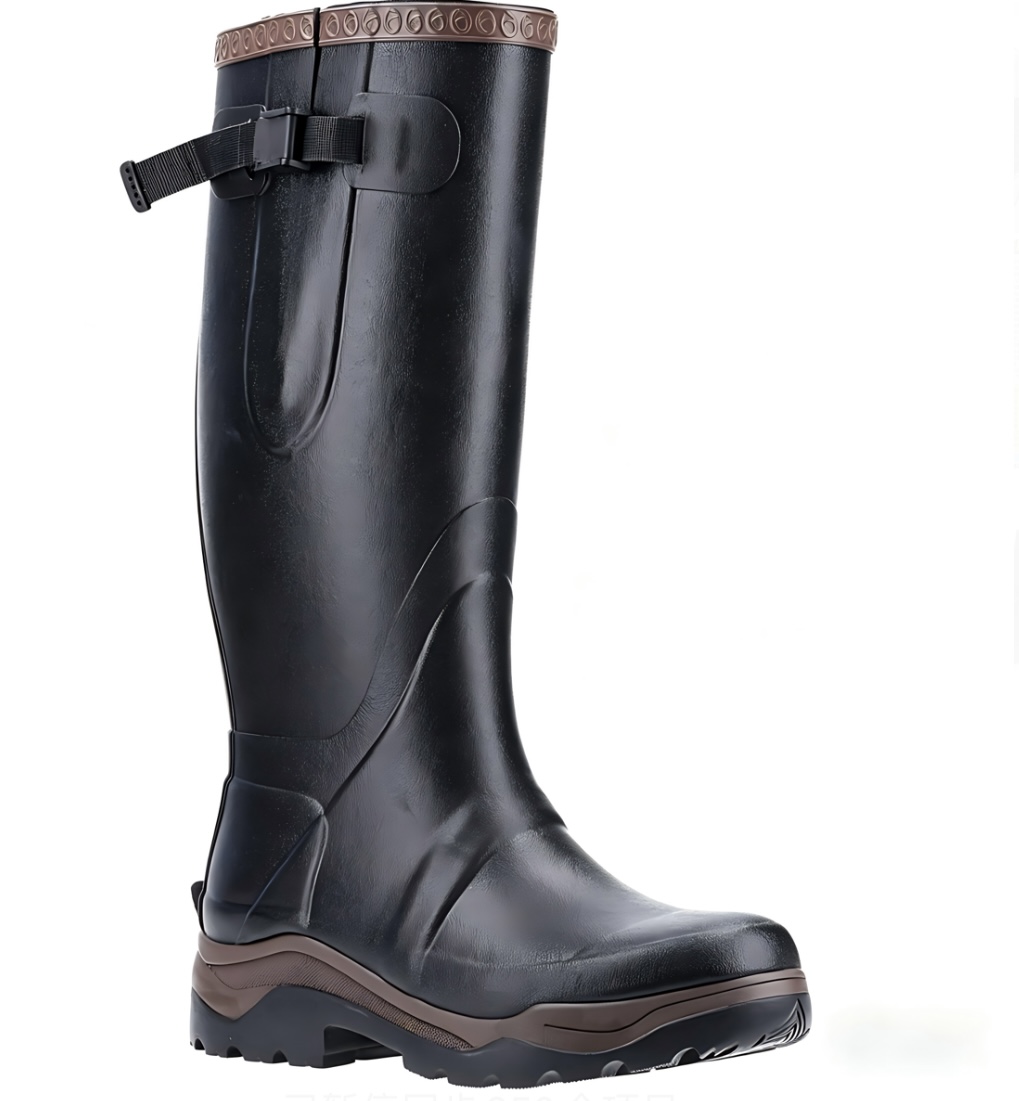
Neoprene is a synthetic rubber material. It has a closed - cell structure, which means that it is naturally waterproof. When water comes in contact with neoprene, it cannot penetrate the material easily, keeping the feet dry. The closed - cell structure also contributes to its excellent insulation properties. Air is trapped within these cells, creating a barrier that helps to retain body heat, thus keeping the feet warm in cold and wet conditions. Professional Rain Boot Manufacturer often takes advantage of these properties of neoprene to produce high - quality boots for women.
In terms of the manufacturing process, the production of neoprene boots may involve molding. The neoprene material is heated and then shaped in a mold to form the basic structure of the boot. After that, additional components such as the outsole, lining, and decorative elements are added. The outsole is usually made of a rubber compound with a specific pattern. For example, hexagonal patterns are designed to provide multi - directional grip, while the grooves in the outsole are used to disperse water and prevent hydroplaning. The lining of the neoprene boots can be made of a soft and breathable fabric, which not only enhances the comfort of the feet but also helps to wick away moisture and prevent sweating. The seams of the boots are often sealed using special techniques to ensure that there are no water - entry points, providing a seamless and waterproof structure for the entire boot.
3. Practical Solutions and Operation Steps
Choosing the right women's neoprene boots requires considering multiple factors:
- Material Quality: Look for neoprene with a high - density closed - cell structure. This can be determined by checking the product specifications provided by the manufacturer. Higher - density neoprene usually offers better waterproofness and insulation. For example, some high - end neoprene boots have a density that meets the industry standard of X grams per cubic centimeter, which ensures better performance.
- Outsole Pattern: For wet and slippery outdoor environments, choose an outsole with a deep and complex pattern. Patterns like zig - zag, herringbone, or a combination of multiple geometric shapes can provide better grip. You can also check if the outsole is made of a rubber compound with high friction coefficients as per the testing standards like EN ISO 20344:2021.
- Lining: Opt for a lining made of a breathable and quick - drying material such as nylon or polyester. This can help keep the feet dry and comfortable during long - term use.
- Size Selection: Measure your feet accurately before purchasing. It is recommended to try on the boots if possible. If you plan to wear thick socks in cold weather, choose a slightly larger size. Rain boots are generally recommended to be worn in the correct size, but if you have a high instep or thick feet, you may need to choose one size larger.
- Height of the Boot Shaft: Consider the specific usage scenario. For activities where you may have to wade through deep water, such as fishing or coastal exploration, a high - shaft boot can prevent water from entering. However, if you mainly use the boots for short - term walks in the garden or on wet pavements, a low - shaft or mid - shaft boot may be more comfortable and convenient.
4. Daily Maintenance and Precautions
Proper maintenance can extend the lifespan of women's neoprene boots:
Cleaning: After each use, rinse the boots with clean water to remove dirt, mud, and salt. If there are stubborn stains, you can use a mild detergent and a soft brush to gently scrub the surface. Avoid using harsh chemicals or abrasive cleaners, as these can damage the neoprene material.
Drying: After cleaning, let the boots air - dry naturally in a well - ventilated area away from direct sunlight and heat sources. Do not use a hair dryer or place them near a heater, as high temperatures can cause the neoprene to harden and crack.
Odor Removal: If the boots have an unpleasant odor, you can place a small amount of baking soda inside the boots overnight. The baking soda can absorb the odor effectively.
Storage: When not in use, store the boots in a cool, dry place. Avoid folding or compressing the boots for a long time, as this can cause permanent deformation. It is recommended to store them upright or use a boot tree to maintain their shape.
Precautions: Do not expose the boots to sharp objects, as they can puncture the neoprene. Also, do not use the boots in environments with high - temperature chemicals, as this can damage the material. It is important to note that common neoprene boots cannot be used as certified safety boots in industrial environments where safety requirements are strict.
5. Industry Standard and Parameter Reference
Here are some important industry standards and parameters related to women's neoprene boots:
ParameterRecommended ReferenceWhy It MattersSlip resistanceEN ISO 20344:2021 / EN ISO 20347:2022+A1:2024 where applicableHelps evaluate outsole grip on wet or contaminated surfaces.Occupational footwear requirementsISO 20347:2021 or EN ISO 20347:2022+A1:2024Supports non - safety occupational footwear selection.Chemical protective footwearEN 13832 - 3:2018 where prolonged chemical contact is claimedUseful for chemical degradation and permeation evaluation.
These standards provide objective bases for evaluating the performance and safety of rain boots. When purchasing boots, consumers can check if the products meet these standards to ensure the quality and safety of the boots.
6. Customer Common FAQ
Q: Is neoprene a good material for boots in wet conditions?
A: Yes, neoprene is an excellent material for wet - condition boots. Its closed - cell structure makes it waterproof, and it can also provide good insulation to keep feet warm. Professional Rain Boot Manufacturer often utilizes neoprene to produce high - quality waterproof boots due to these properties.
Q: How do I choose the right size of neoprene boots?
A: Measure your feet accurately, including the length and width. If possible, try on the boots. If you plan to wear thick socks in cold weather, choose a size slightly larger. Generally, rain boots are recommended to be worn in the correct size, but those with high insteps or thick feet may need a larger size.
Q: Can neoprene boots be used in extreme cold?
A: Neoprene boots have good insulation properties, but their performance in extreme cold depends on the thickness and quality of the neoprene. In very low - temperature environments, you may need to choose thicker neoprene boots or consider adding additional insulating layers such as thick socks.
Q: How do I clean my neoprene boots?
A: Rinse the boots with clean water after use to remove dirt and mud. For stubborn stains, use a mild detergent and a soft brush to gently scrub. Avoid using harsh chemicals or abrasive cleaners, as they can damage the neoprene.
Q: Do neoprene boots have a strong odor?
A: New neoprene boots may have a slight odor, which is normal. You can place baking soda inside the boots overnight to help remove the odor. After a few uses and proper ventilation, the odor will usually fade away.
Conclusion
In summary, women's neoprene boots are ideal for outdoor adventures in wet conditions. They can solve problems such as cold feet, poor grip, and discomfort. When choosing these boots, consider factors like material quality, outsole pattern, lining, size, and shaft height. For daily use, proper maintenance including cleaning, drying, and storage is crucial. Professional Rain Boot Manufacturer can provide in - depth knowledge and high - quality products to meet women's needs in wet outdoor activities.
References
- ISO 20347:2021 Occupational Footwear
- EN ISO 20344:2021 Footwear Test Methods
- EN ISO 20347:2022+A1:2024
- EN 13832 - 3:2018 Chemical Protective Footwear