


Why Women's Rubber Ankle Boots Are a Must - Have for Outdoor Adventures
Sep 15, 2026
View: 0
Leave a message
Meta Description: Are you a woman seeking the perfect waterproof boots for outdoor activities? Women's rubber ankle boots offer practical solutions for several problems like slipping and getting feet wet. This article provides insights into product knowledge, process principles, and daily maintenance for these boots. It aims to assist female outdoor enthusiasts in making informed choices. Professional Rain Boot Manufacturer
Keywords: Women's Rubber Ankle Boots, Outdoor Adventures, Boot Material, Boot Maintenance, Waterproof Boots
1. Core Problem Analysis
1.1 Common Causes of the Problem
When women search for rubber ankle boots for outdoor adventures, they often face issues such as poor traction on wet surfaces, water seepage through seams or materials, foot fatigue due to lack of support, and discomfort from improper sizing. The use of low - quality rubber can lead to cracking or premature wear, especially in cold or harsh environmental conditions. Additionally, some boots may have inadequate breathability, causing sweaty and uncomfortable feet during long - term use.
1.2 Affected Usage Scenarios
These problems can significantly affect various outdoor usage scenarios. For instance, in farming, muddy fields require boots with excellent grip to prevent slips and falls. In gardening, boots need to be waterproof to keep feet dry while working in wet soil. During rainy commuting, reliable waterproofing is essential. Fishing activities often involve standing in water or on wet docks, demanding boots that are both waterproof and slip - resistant. In muddy outdoor work or livestock handling, durability and traction are crucial for safe and efficient movement.
2. Product and Process Principle
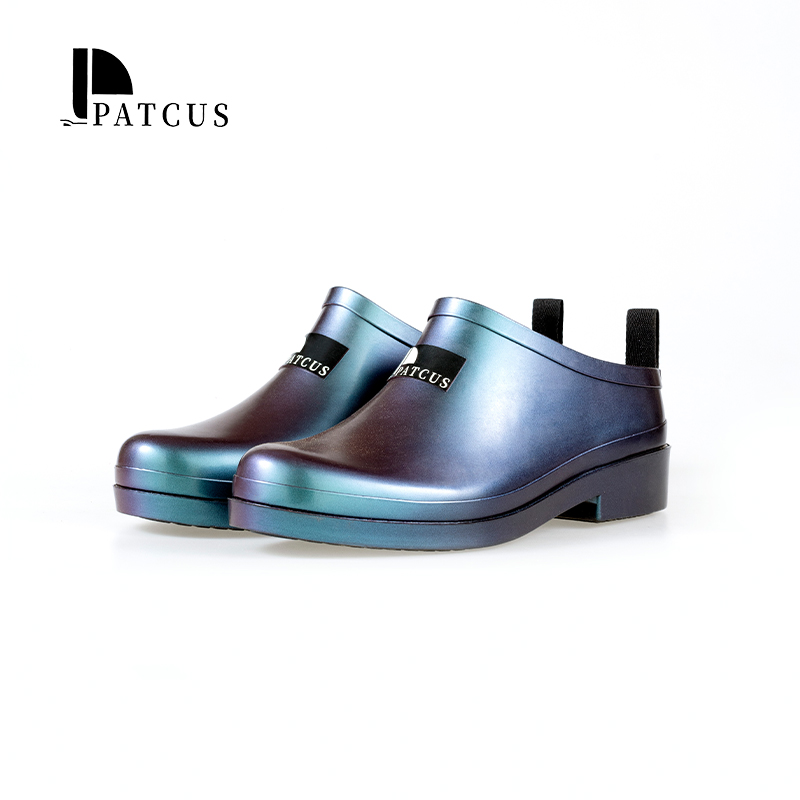
Women's rubber ankle boots are typically made of materials such as natural rubber, synthetic rubber (like SBR, BR, CR), or PVC. Natural rubber offers high elasticity, flexibility, and good waterproofing properties. Synthetic rubbers can be engineered to have specific characteristics, such as improved abrasion resistance or better performance in extreme temperatures. PVC is a cost - effective option with decent waterproof capabilities. The manufacturing process is a complex combination of material science, chemical treatment, and precise manufacturing. Professional Rain Boot Manufacturer is often involved in this process to ensure the effectiveness of production, selection, and process science.
The production usually starts with raw material preparation and inspection. The raw rubber, along with various additives such as vulcanization systems (sulfur, accelerators, activators), reinforcing fillers (carbon black, white carbon black), softeners, and anti - aging agents, are carefully selected and inspected. These additives play crucial roles in determining the physical properties of the final product. For example, vulcanization systems are used to cross - link the rubber molecules, enhancing the boot's strength, elasticity, and durability. The reinforcing fillers improve the boot's abrasion resistance and reduce costs.
Next, the raw materials undergo the mixing process. This is done using a mixer (such as an internal mixer or an open mill). The mixing process involves plasticizing the rubber to improve its plasticity, and then adding the additives in a specific order. Strict temperature and time control are necessary to ensure uniform dispersion of the additives and prevent premature vulcanization. After mixing, the vulcanized rubber is tested for various properties such as Mooney viscosity, vulcanization characteristics, specific gravity, and hardness to ensure it meets the process requirements.
The sheets of vulcanized rubber, lining fabrics, and other materials are then cut into the required shapes and sizes using cutting machines. The accuracy of the stencils and the quality of the cutting are crucial to ensure the proper fit and shape of the final boots. The key step is the forming process, where all the cut components are precisely assembled on a shoe last. This can be done using methods such as the last - fitting method, where the lining is first placed on the last, followed by applying glue to the areas that require bonding. The assembled boot is then heated and vulcanized to form a solid, waterproof, and elastic shoe body.
3. Practical Solutions and Operation Steps
### Material Selection
- For areas with cold temperatures, natural rubber or high - quality synthetic rubber with good low - temperature flexibility is recommended. PVC may become brittle in extremely cold conditions.
- If you need boots for chemical - related outdoor work, choose materials with high chemical resistance, and refer to the standards in Industry Standard and Parameter Reference section for chemical protective footwear, such as EN 13832 - 3:2018 where applicable.
### Shaft Height
- Ankle boots provide enough coverage for most casual outdoor adventures. However, for activities in deep mud or water, you may consider boots with a slightly higher shaft.
### Sole Pattern
- Choose a sole pattern with deep grooves and multiple edges for better traction on wet and slippery surfaces. Patterns like lugs or deep treads are suitable for outdoor use. According to EN ISO 20344:2021, the sole should have good grip performance.
### Lining
- A moisture - wicking lining can keep your feet dry and comfortable during long - term wear. Fabrics like nylon or polyester blends are good choices.
### Size Selection
- Measure your feet accurately according to the size chart provided by the manufacturer. Make sure there is enough room for your toes to move freely, but the boots should not be too loose to prevent blisters and improve stability.
### Cold Resistance Rating and Slip Resistance Rating
- Check the product specifications for cold resistance ratings if you will be using the boots in cold environments. For slip resistance, look for boots that meet the relevant standards such as EN ISO 20344:2021 / EN ISO 20347:2022+A1:2024 where applicable.
### Cleaning Method
- After use, rinse the boots with clean water to remove dirt and debris. Use a mild soap or detergent to clean stubborn stains. Avoid using harsh chemicals or solvents that may damage the rubber or the lining.
### Storage Method
- Store the boots in a cool, dry place away from direct sunlight. Stuff them with paper or a boot tree to help maintain their shape.
4. Daily Maintenance and Precautions
### Cleaning
- Regularly clean your boots after each use to prevent dirt and debris from building up, which can cause premature wear. Use a soft brush to remove loose dirt and then wash with a mild detergent and water. Rinse thoroughly and dry naturally at room temperature.
### Drying
- Never dry your boots near a high - heat source, such as a heater or a radiator. High heat can cause the rubber to crack or deform. Instead, allow them to air dry in a well - ventilated area.
### Deodorizing
- If your boots develop an odor, you can place a small amount of baking soda inside overnight to absorb the smell. You can also use specialized shoe deodorizers.
### Preventing Aging
- Avoid prolonged exposure to sunlight, which can cause the rubber to harden and age. Store the boots in a dark place when not in use.
### Preventing Deformation
- As mentioned before, use a boot tree or stuff the boots with paper to maintain their shape. Avoid folding or compressing the boots for long periods.
### Low - Temperature Storage
- In cold weather, store the boots where the temperature is above the rubber's freezing point to prevent cracking. If you need to use them in cold conditions, choose boots with good low - temperature flexibility.
### Handling Chemical Exposure
- If the boots come into contact with chemicals, immediately rinse them thoroughly with water according to the chemical's properties. If the chemical is corrosive, refer to the chemical protective footwear standard EN 13832 - 3:2018 for further guidance on damage assessment and disposal.
### Avoiding Pitfalls
- Do not use ordinary rubber boots in high - risk work environments that require certified safety boots. For example, work areas with sharp objects or heavy - load impacts require safety - toed boots that meet ASTM F2413 - 24 standards. Do not use strong solvents to clean the boots, as they can dissolve the rubber and damage the boots. Also, do not expose the boots to open flames or high - temperature sources for a long time.
5. Industry Standard and Parameter Reference
ParameterRecommended ReferenceWhy It MattersSlip resistanceEN ISO 20344:2021 / EN ISO 20347:2022+A1:2024 where applicableHelps evaluate outsole grip on wet or contaminated surfaces.Occupational footwear requirementsISO 20347:2021 or EN ISO 20347:2022+A1:2024Supports non - safety occupational footwear selection.Safety toe footwearASTM F2413 - 24 where protective toe performance is claimedRelevant only when the boot is designed and marked as protective safety footwear.Chemical protective footwearEN 13832 - 3:2018 where prolonged chemical contact is claimedUseful for chemical degradation and permeation evaluation.
Do not invent exact performance numbers. Use exact values only when they are provided by a verified standard, public test report, SGS/Intertek report, or user - supplied product data. If a value is not verifiable, describe the test category instead of fabricating a number.
6. Customer Common FAQ
Q: How do I choose the right material for my women's rubber ankle boots?
A: The choice of material depends on your specific needs. If you will be in a cold environment, natural or high - quality synthetic rubber is better. For chemical - exposed work, refer to chemical - resistant materials using standards like EN 13832 - 3:2018. A Professional Rain Boot Manufacturer can provide more detailed material selection guidance based on your usage scenario.
Q: Are women's rubber ankle boots slip - resistant?
A: Slip resistance varies by product. Look for boots that comply with EN ISO 20344:2021 / EN ISO 20347:2022+A1:2024 where applicable. Boots with deep - grooved sole patterns usually offer better traction.
Q: How can I determine the right size for my boots?
A: Always measure your feet according to the manufacturer's size chart. Pay attention to the length and width, and make sure there is enough space for your toes to move. Trying on boots before purchasing is also recommended if possible.
Q: Why do my new boots have a strong smell, and how can I remove it?
A: New rubber boots may have a chemical smell due to the manufacturing process. You can place baking soda inside overnight or use specialized shoe deodorizers. Ventilating the boots in a well - ventilated area can also help reduce the odor.
Q: My boots seem to be cracking. What could be the reason?
A: Cracking can be caused by factors such as prolonged exposure to sunlight, extreme cold, or using low - quality rubber. Using boots that meet the appropriate standards and following proper maintenance procedures can help prevent cracking.
Conclusion
Women's rubber ankle boots are essential for outdoor adventures, offering solutions to various problems such as wet feet and slipping. To choose the right boots, consider factors like material, shaft height, sole pattern, and lining based on your specific usage scenarios. Proper daily maintenance, including cleaning, drying, and storage, is crucial to extend the lifespan of the boots. Refer to industry standards for parameters such as slip resistance and occupational requirements. A Professional Rain Boot Manufacturer can provide valuable insights and guidance throughout the selection and maintenance process, ensuring you have the best boots for your outdoor needs.
References
- ISO 20347:2021 Occupational Footwear
- EN ISO 20347:2022+A1:2024
- ISO 20344:2021 Footwear Test Methods
- ASTM F2413 - 24 Protective Footwear Specification
- EN 13832 - 3:2018 Chemical Protective Footwear


