


Why Women's Waterproof Latex Boots Are Ideal for Extreme Outdoor Conditions
Aug 31, 2026
View: 0
Leave a message
Meta Description: This article explores why women's waterproof latex boots are perfect for extreme outdoor conditions. It delves into common problems, product principles, and offers practical solutions. Suitable for women engaging in outdoor activities, it provides valuable insights for choosing and maintaining rain boots. Professional Rain Boot Manufacturer
Keywords: Women's waterproof latex boots, Extreme outdoor conditions, Rain boot material, Boot maintenance, Boot selection
1. Core Problem Analysis
1.1 Common Causes of the Problem
When women search for waterproof latex boots for extreme outdoor conditions, they often aim to solve several key problems. First, waterproofness is crucial. In situations like heavy rain, snowy areas, or muddy terrains, leaks can cause feet to get wet, leading to discomfort, cold, and even potential health issues such as frostbite or foot infections. Second, the lack of durability can be a significant concern. Latex boots may face risks of cracking, especially in low - temperature environments or when exposed to sharp objects. Third, insufficient grip is a hazard. On slippery surfaces like wet rocks, ice, or mud, poor traction can result in slips and falls, endangering personal safety. Additionally, improper sizing can cause blisters, soreness, or restricted movement, making long - term outdoor activities unbearable. The material may also age over time, losing its elasticity and waterproof properties. Finally, cleaning and maintenance can be a challenge. If not properly cared for, dirt, grime, and chemicals can damage the boots.
1.2 Affected Usage Scenarios
These problems can affect a variety of outdoor scenarios. For example, in farming, women may need to walk through wet fields, mud, or manure. The boots need to keep their feet dry and provide good traction to prevent slipping in the soft ground. In gardening, they are exposed to water, fertilizers, and pesticides, so chemical resistance and waterproofness are essential. Fishing involves standing in wet boats or on slippery riverbanks, where waterproof and non - slip boots are a must. During rainy commuting, especially in urban areas with puddles and wet sidewalks, the boots should protect feet from getting wet and ensure safe walking. In livestock work, they need to deal with wet and dirty areas, and the boots should be durable enough to withstand constant movement and potential contact with sharp objects. Muddy outdoor work, such as construction or outdoor exploration in wet and muddy conditions, also requires high - performance waterproof latex boots.
2. Product and Process Principle
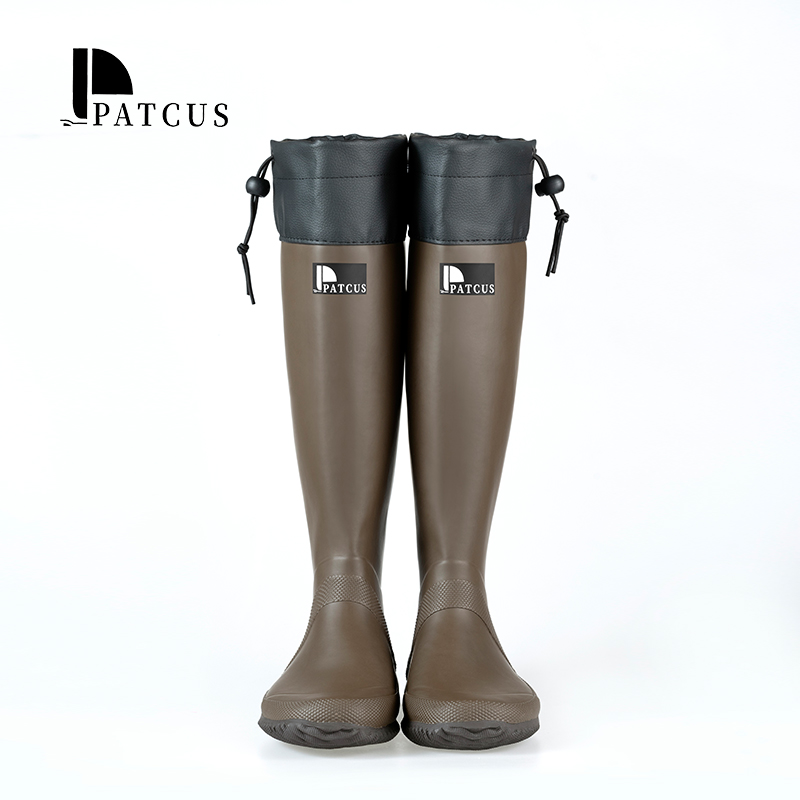
Latex is a natural rubber material with excellent waterproof and elastic properties. Its molecular structure forms a dense network that effectively blocks water molecules from penetrating, providing reliable waterproof protection. The elasticity of latex allows the boots to fit the feet snugly and adapt to different foot movements without causing discomfort. In the manufacturing process of women's waterproof latex boots, injection molding is a common technique. In this process, the liquid latex is injected into a pre - designed mold under high pressure. The mold has the exact shape and size of the boots, ensuring precise production. After injection, the latex is then vulcanized. Vulcanization is a chemical process where the latex is heated in the presence of sulfur or other vulcanizing agents. This process cross - links the latex molecules, enhancing the boots' strength, durability, and resistance to heat and chemicals. Some boots also feature a seamless structure. A seamless design eliminates weak points such as seams, reducing the risk of water leakage and increasing the overall strength of the boots. Professional Rain Boot Manufacturer often pays attention to the control of thickness. By precisely controlling the thickness of different parts of the boots, they can ensure that the boots are not only waterproof and durable but also lightweight and comfortable. For the outsole, unique patterns are designed to improve grip. The patterns can increase the friction between the boots and the ground, providing better traction on various surfaces.
3. Practical Solutions and Operation Steps
When choosing women's waterproof latex boots for extreme outdoor conditions, the following steps can be considered:
- Material Selection: Opt for high - quality natural latex. Look for information about the percentage of natural latex in the product description. Higher natural latex content usually means better waterproofness, elasticity, and durability. Avoid boots with a high proportion of synthetic or recycled materials, as they may not perform as well in extreme conditions.
- Selecting the Shaft Height: Consider the depth of water and the type of activities. For activities like fishing or walking in deep puddles, tall - shaft boots that cover the calves can prevent water from splashing inside. For general outdoor use with less water, mid - shaft boots may be more suitable as they offer a balance between protection and freedom of movement.
- Choosing the Outsole Pattern: For slippery or uneven surfaces, select boots with deep, multi - directional grooves or lugs on the outsole. These patterns can effectively grip the ground, providing stability on wet rocks, mud, or ice.
- Selecting the Lining: A breathable and moisture - wicking lining can keep feet dry and comfortable during long - term wear. Some linings are also antibacterial, which can prevent odor and foot infections.
- Determining the Size: Measure your feet accurately and refer to the manufacturer's size chart. It's advisable to try on the boots if possible. Make sure there is enough room for your toes to move freely, but the boots should not be too loose to avoid rubbing and blisters.
- Checking the Cold - Resistance Level: If you plan to use the boots in cold environments, choose boots with insulation or a high - quality latex that can withstand low temperatures without cracking.
- Assessing the Slip - Resistance Level: Look for boots that meet relevant slip - resistance standards, such as EN ISO 20344:2021 / EN ISO 20347:2022+A1:2024. This can ensure better safety on wet or contaminated surfaces.
- Cleaning Method: After use, rinse the boots with clean water to remove dirt and debris. Use a mild soap if necessary, but avoid using strong solvents or abrasive cleaners as they can damage the latex. Gently scrub the boots with a soft brush, especially in the areas with stubborn stains.
- Storage Method: Let the boots dry naturally in a cool, well - ventilated place. Avoid direct sunlight and high - temperature sources as they can cause the latex to age and crack. Store the boots in a dry place, and you can stuff them with newspaper or a shoe tree to maintain their shape.
4. Daily Maintenance and Precautions
To maintain the performance of women's waterproof latex boots and extend their lifespan, the following daily maintenance tips and precautions are recommended:
- Cleaning: As mentioned before, rinse the boots with water and use a mild soap for dirtier boots. After cleaning, make sure to remove all soap residues to prevent chemical damage to the latex.
- Drying: Do not use heat sources like hair dryers or heaters to dry the boots quickly. This can cause the latex to shrink and crack. Instead, let them air - dry slowly in a shaded, well - ventilated area.
- Deodorizing: If the boots develop an odor, you can sprinkle some baking soda inside and let it sit overnight. Baking soda can absorb odors effectively. Then, shake out the baking soda the next day.
- Preventing Aging: Keep the boots away from sunlight, ozone, and high - temperature environments. These factors can accelerate the aging of the latex, causing it to lose elasticity and crack. You can also apply a latex conditioner periodically to maintain its flexibility.
- Preventing Deformation: Use shoe trees or stuff the boots with newspaper when not in use. This can help maintain the shape of the boots and prevent them from collapsing or warping.
- Low - Temperature Storage: In cold weather, make sure to store the boots in a place where the temperature does not drop too low. If the latex freezes, it can become brittle and crack when it thaws.
- Handling Chemical Contact: If the boots come into contact with chemicals, rinse them immediately with a large amount of water. If possible, consult the manufacturer for specific cleaning and treatment methods according to the type of chemical.
- Avoiding Common Pitfalls: Do not long - term expose the boots to sunlight, as it can cause the latex to harden and discolor. Do not place the boots near high - temperature sources, such as radiators or stoves. Do not use strong solvents or harsh chemicals to clean the boots, as they can dissolve or damage the latex. Remember, common latex boots should not be used as safety boots. If you need safety features like toe protection or puncture resistance, choose boots that are specifically designed and certified for such purposes.
5. Industry Standard and Parameter Reference
This chapter is an authoritative support module for the whole article, listing international standards, test methods, or verifiable parameters.
ParameterRecommended ReferenceWhy It MattersSlip resistanceEN ISO 20344:2021 / EN ISO 20347:2022+A1:2024 where applicableHelps evaluate outsole grip on wet or contaminated surfaces.Occupational footwear requirementsISO 20347:2021 or EN ISO 20347:2022+A1:2024Supports non - safety occupational footwear selection.Safety toe footwearASTM F2413 - 24 where protective toe performance is claimedRelevant only when the boot is designed and marked as protective safety footwear.Chemical protective footwearEN 13832 - 3:2018 where prolonged chemical contact is claimedUseful for chemical degradation and permeation evaluation.
Do not invent exact performance numbers. Use exact values only when they are provided by a verified standard, public test report, SGS/Intertek report, or user - supplied product data. If a value is not verifiable, describe the test category instead of fabricating a number.
6. Customer Common FAQ
Q: How can I choose the right material for waterproof boots?
A: For women's waterproof boots in extreme outdoor conditions, natural latex is a great choice. It offers excellent waterproofness and elasticity. When choosing, look for high - natural - latex content. Some boots may also have synthetic materials mixed in, but they may not perform as well as pure natural latex in extreme conditions. Professional Rain Boot Manufacturer can provide more advice on material selection based on different usage scenarios.
Q: Are women's waterproof latex boots slippery?
A: Not necessarily. The slip resistance of the boots depends on the outsole pattern and the materials used. Look for boots with outsoles that have deep grooves or lugs, and those that meet relevant slip - resistance standards like EN ISO 20344:2021 / EN ISO 20347:2022+A1:2024 for better traction on wet or slippery surfaces.
Q: How do I choose the right size of waterproof latex boots?
A: First, measure your feet accurately. Then refer to the manufacturer's size chart. It's best to try on the boots if possible. There should be enough room for your toes to move freely, but the boots should not be too loose to avoid rubbing and blisters. Different brands may have slightly different sizing, so make sure to double - check.
Q: Do new latex boots have an odor?
A: Some new latex boots may have a slight odor. This is normal due to the manufacturing process. You can sprinkle some baking soda inside the boots and let it sit overnight to absorb the odor. Then, shake out the baking soda the next day. Let the boots air out in a well - ventilated area for a few days to reduce the odor further.
Q: Can latex boots crack in low temperatures?
A: Latex boots can be affected by low temperatures. In extremely cold conditions, the latex may become brittle and more prone to cracking. To prevent this, choose boots with good cold - resistance properties or use them with appropriate insulation. Store them in a warmer place when not in use to avoid cold - related damage.
Conclusion
In conclusion, women's waterproof latex boots are highly suitable for extreme outdoor conditions due to their excellent waterproofness, elasticity, and grip. This article has covered core problems such as leakage, cracking, and poor grip, and provided solutions on material selection, sizing, and maintenance. When choosing such boots, pay attention to standards, materials, and usage scenarios. Professional Rain Boot Manufacturer can offer professional guidance in the process of selection and production, ensuring that women can choose the most suitable boots for their outdoor activities.
References
- HG/T2492 - 2012, Rubber Rain Boots, China National Standard
- EN ISO 20344:2021, Footwear Test Methods
- EN ISO 20347:2022+A1:2024, Occupational Footwear
- ASTM F2413 - 24, Protective Footwear Specification