


Women’s Soft Latex Outdoor Rubber Boots: Skin-Friendly & Lightweight Functional Selling Points for Fashion Footwear Wholesalers
Aug 13, 2026
View: 1
Leave a message
Meta Description: This article delves into the world of women's latex boots, addressing common problems like sizing, comfort, and durability. It offers practical advice for fashion footwear wholesalers and end - users. Suitable for various outdoor scenarios, this guide equips readers with essential knowledge about product selection and maintenance. Professional Rain Boot Manufacturer.
Keywords: Women Latex Boots, rain boots, waterproof boots, rubber boots, boot material, boot maintenance
1. Core Problem Analysis
1.1 Common Causes of the Problem
When consumers search for women's latex boots, they often face several issues. One of the primary concerns is finding the right size. Latex has a certain elasticity, but if the size is incorrect, it can lead to discomfort. For example, boots that are too tight may restrict blood circulation and cause foot pain, while overly loose boots can make walking difficult and increase the risk of slipping.
Another common problem is the durability of the boots. Latex may be prone to damage from sharp objects, and over time, exposure to sunlight, heat, and chemicals can cause material degradation. This can result in cracks, leaks, and a shorter lifespan for the boots.
Foot comfort is also a significant issue. Some latex boots may not have proper ventilation, leading to sweaty and smelly feet. Additionally, the lack of proper arch support or cushioning can cause fatigue during long - term wear.
1.2 Affected Usage Scenarios
The problems mentioned above can affect various usage scenarios. For rainy commuting, ill - fitting or leaking boots can make the journey unpleasant, leaving the feet wet and cold. In gardening or farming, where there are often sharp tools and rough terrain, boots that are not durable enough may get damaged quickly, failing to provide adequate protection.
For fishing activities, boots need to be waterproof and comfortable for long hours of standing. If the boots are not breathable or lack proper support, it can reduce the enjoyment of the fishing experience. Similarly, in livestock work, where workers are constantly moving on wet and muddy ground, boots that lose their grip or structural integrity can pose safety risks.
2. Product and Process Principle
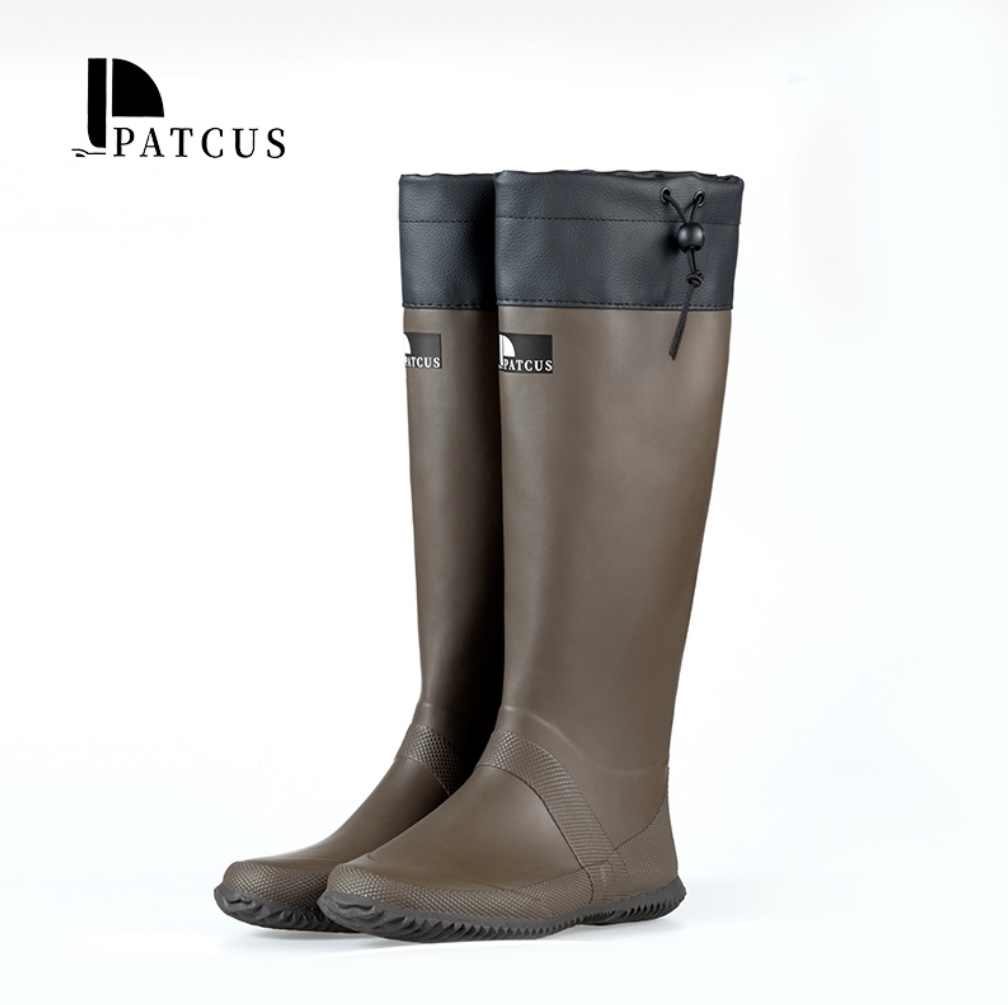
Women's latex boots are typically made from natural or synthetic latex materials. Natural latex, derived from rubber trees, offers excellent elasticity, flexibility, and a high level of comfort. It is also biodegradable, making it an environmentally friendly option. Synthetic latex, on the other hand, is man - made and can be engineered to have specific properties, such as enhanced durability or resistance to certain chemicals.
The manufacturing process of latex boots often involves dipping a shoe mold (usually made of metal) into a latex solution. This dipping process is repeated several times to build up the desired thickness of the boot. After dipping, the boots are then subjected to a drying process to remove the solvent and harden the latex. Some boots may also undergo a vulcanization process, which involves heating the latex with sulfur or other cross - linking agents. This process increases the strength, durability, and heat resistance of the latex.
The lining of latex boots can vary. Some boots have a soft fabric lining, which provides extra comfort and helps to wick away moisture. Others may have a seamless interior, which reduces the risk of irritation and chafing. The outsole pattern of the boots is also carefully designed. Deep grooves and patterns can provide better traction on wet and slippery surfaces, while different shapes and sizes of treads can enhance grip on various terrains.
Professional Rain Boot Manufacturer usually has in - depth knowledge of latex properties and the manufacturing process. They can control factors such as thickness, elasticity, and chemical resistance during production to ensure the boots meet different users' needs.
3. Practical Solutions and Operation Steps
When choosing women's latex boots, several factors should be considered:
- Material Selection: If you value environmental - friendliness and natural comfort, natural latex is a good choice. However, if you need boots with enhanced chemical resistance or other specialized properties, synthetic latex may be more suitable.
- Shaft Height: For activities like rainy commuting or light gardening, knee - high or mid - calf boots may be sufficient. But for activities in deep water or mud, such as fishing or farming in wet fields, thigh - high boots are recommended.
- Sole Pattern: For slippery surfaces like wet concrete or mud, boots with deep, wide - spaced grooves and multi - directional treads are ideal. In contrast, for more stable and dry terrains, a simpler sole pattern may be adequate.
- Lining: If you have sensitive skin or expect to wear the boots for long periods, choose boots with a soft, breathable lining. This can prevent skin irritation and keep your feet dry.
- Size: Always measure your feet accurately before purchasing. Refer to the manufacturer's size chart, and if possible, try on the boots in person. Remember that latex boots may stretch slightly over time, so don't choose boots that are too tight initially.
- Durability and Resistance: If you work in an environment with chemicals or sharp objects, look for boots with enhanced durability and chemical resistance. Some boots may be treated with special coatings or have reinforced areas to withstand such conditions.
4. Daily Maintenance and Precautions
Proper maintenance can significantly extend the lifespan of women's latex boots:
- Cleaning: After each use, rinse the boots with clean water to remove dirt, mud, and chemicals. For stubborn stains, use a mild soap solution and a soft brush. Avoid using abrasive cleaners or brushes that can damage the latex surface.
- Drying: After cleaning, let the boots air - dry at room temperature. Do not expose them to direct sunlight or heat sources such as radiators, as this can cause the latex to crack and lose its elasticity.
- Odor Removal: If the boots develop an odor, you can sprinkle baking soda inside them and let it sit overnight. Then, shake out the baking soda the next day. You can also use odor - absorbing insoles.
- Anti - aging and Anti - deformation: Store the boots in a cool, dry place. To prevent deformation, you can stuff them with paper or a boot tree. Avoid folding or creasing the boots for an extended period.
- Chemical Contact: If the boots come into contact with harsh chemicals, rinse them immediately and thoroughly. Check for any signs of damage after exposure. If there are visible changes in the latex, such as discoloration or softening, the boots may need to be replaced.
There are also some precautions to keep in mind. Do not use strong solvents to clean the boots, as they can dissolve the latex. Do not wear ordinary latex boots in situations where safety boots are required, such as in industrial settings with heavy machinery or sharp objects. And never store the boots in a place with high humidity, as this can lead to mold growth.
5. Industry Standard and Parameter Reference
This section provides important industry standards and parameter references to ensure the quality and safety of women's latex boots:
ParameterRecommended ReferenceWhy It MattersSlip resistanceEN ISO 20344:2021 / EN ISO 20347:2022+A1:2024 where applicableHelps evaluate outsole grip on wet or contaminated surfaces.Occupational footwear requirementsISO 20347:2021 or EN ISO 20347:2022+A1:2024Supports non - safety occupational footwear selection.Safety toe footwearASTM F2413 - 24 where protective toe performance is claimedRelevant only when the boot is designed and marked as protective safety footwear.Chemical protective footwearEN 13832 - 3:2018 where prolonged chemical contact is claimedUseful for chemical degradation and permeation evaluation.
It's important not to invent exact performance numbers. Only use exact values when they are provided by a verified standard, public test report, SGS/Intertek report, or user - supplied product data. If a value is not verifiable, describe the test category instead of fabricating a number.
6. Customer Common FAQ
Q: How do I choose the right material for women's latex boots?
A: If you prioritize environmental friendliness and natural comfort, natural latex is a great option. For enhanced durability or resistance to specific chemicals, synthetic latex may be more appropriate. Professional Rain Boot Manufacturer can offer more detailed guidance based on your specific needs.
Q: Are latex boots slippery?
A: The slipperiness of latex boots depends on the outsole pattern. Boots with a well - designed outsole pattern, such as deep grooves and multi - directional treads, can provide good traction on wet and slippery surfaces. You can refer to the slip - resistance standards like EN ISO 20344:2021 to evaluate the grip performance.
Q: How do I determine the right size of latex boots?
A: Measure your feet accurately and refer to the manufacturer's size chart. It's also advisable to try on the boots if possible. Keep in mind that latex boots may stretch slightly over time, so avoid choosing boots that are too tight initially.
Q: Do latex boots have a strong odor?
A: New latex boots may have a slight odor, but it usually fades over time. You can use methods like sprinkling baking soda inside the boots or using odor - absorbing insoles to reduce the smell.
Q: How can I prevent latex boots from cracking?
A: Avoid exposing the boots to direct sunlight, high heat, and harsh chemicals. Store them in a cool, dry place and stuff them with paper or a boot tree to prevent deformation. Regular cleaning and proper drying after use also help maintain the integrity of the latex.
Conclusion
In conclusion, when it comes to women's latex boots, understanding the common problems, product and process principles, practical solutions, maintenance methods, and industry standards is crucial. By considering factors like material, shaft height, sole pattern, lining, and size during selection, users can find the most suitable boots for their needs. Professional Rain Boot Manufacturer plays an important role in providing high - quality products and professional advice. With proper use and maintenance, women's latex boots can offer long - term comfort and performance in various outdoor scenarios.
References
- ISO. ISO 20344:2021, Footwear Test Methods. 2021.
- ISO. ISO 20347:2021, Occupational Footwear. 2021.
- EN. EN ISO 20347:2022+A1:2024. 2024.
- ASTM. ASTM F2413 - 24, Protective Footwear Specification. 2024.
- EN. EN 13832 - 3:2018, Chemical Protective Footwear. 2018.