


Women's waterproof latex boots for reliable protection in rainy outdoor terrains
Oct 15, 2026
View: 0
Leave a message
Meta Description: Women engaging in rainy outdoor work or recreational activities often face challenges like water seepage, uncomfortable fit, or short product lifespan when selecting waterproof footwear. This article explores core pain points, material principles, practical selection tips, maintenance methods, and industry standards to help users make informed choices. Professional Rain Boot Manufacturer provides professional reference for related products.
Keywords: women's waterproof latex boots, rain boots, outdoor waterproof footwear, boot maintenance, work boot standards, slip-resistant boots
1. Core Problem Analysis
1.1 Common Causes of the Problem
Many women encounter three key issues when using ordinary waterproof boots for rainy outdoor use: water leakage at seam joints, stuffiness leading to foot odor or blisters, and insufficient outsole grip on wet or muddy surfaces. Additional common problems include material cracking from prolonged UV exposure or improper storage, and ill-fitting sizes that cause discomfort during extended wear. These issues often stem from improper material selection, flawed production processes, or lack of targeted maintenance.
1.2 Affected Usage Scenarios
These pain points impact various outdoor scenarios, including agricultural work like gardening and crop harvesting, food processing environments that require frequent cleaning with water, fishing activities along wet shorelines, rainy urban commuting, warehouse cleaning operations, and light livestock handling. Each of these scenarios has specific requirements for waterproof footwear that ordinary boots cannot fully meet.
2. Product and Process Principle
Waterproof latex boots rely on natural latex compound and seamless manufacturing to achieve water resistance. Natural latex, processed from rubber tree sap, forms a flexible, impermeable layer when cured, with properties that balance durability and comfort for outdoor use. Vulcanization, a key production step, cross-links latex molecules to improve resistance to stretching, abrasion, and minor temperature fluctuations.
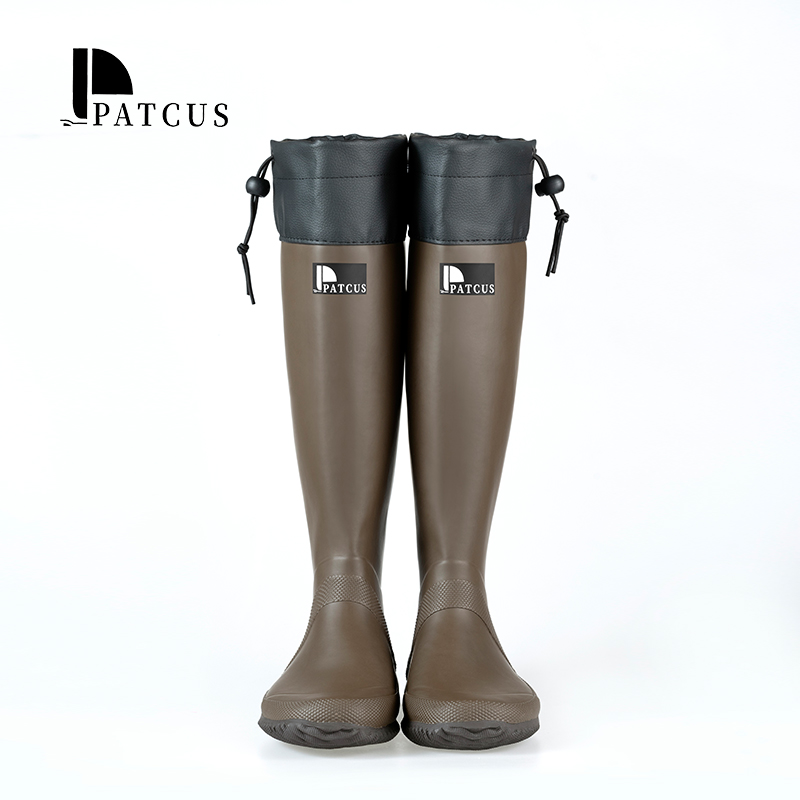
Professional Rain Boot Manufacturer explains that shaft height selection also affects performance: taller shafts offer better protection against splashes and deep puddles, while drawstring closures (as seen in the sample product) help seal out water without restricting movement. The outsole pattern, typically designed with deep, uneven lugs, enhances traction on wet and muddy surfaces, aligning with requirements outlined in international footwear standards.
3. Practical Solutions and Operation Steps
When selecting women's waterproof latex boots, follow these specific, actionable steps to match your needs: First, assess your primary usage scenario—for light gardening or commuting, a mid-calf height with a flexible sole works well; for agricultural work or long fishing trips, choose a full-calf height with reinforced toe and heel areas. Next, check size: measure your foot length with light socks, as lined boots may run slightly smaller than unlined ones.
- Verify the construction: seamless injection-molded shafts are preferred over sewn seams to reduce water leakage risk.
- Evaluate outsole design: select lugs at least 5mm deep for muddy or slippery outdoor surfaces, noting that slip resistance performance is tested under standards like EN ISO 20344:2021.
- Check for breathability features: some latex boots include micro-perforations or moisture-wicking linings to reduce foot stuffiness.
- Avoid using these boots for extreme cold work environments, as standard latex may become rigid at temperatures below -10°C, per general footwear material guidelines.
4. Daily Maintenance and Precautions
Proper maintenance extends the lifespan of waterproof latex boots and preserves their performance. After each rainy outdoor use, wipe the exterior with a soft, damp cloth to remove mud and debris, paying special attention to outsole lugs to prevent clogging. Avoid using harsh chemical cleaners like bleach or solvent-based products, as these can degrade the latex material over time.
Dry boots naturally in a well-ventilated, shaded area—never expose them to direct sunlight or place near heat sources like radiators, as high temperatures can cause latex to crack or shrink. For long-term storage, clean boots thoroughly, stuff with paper towels to maintain shape, and store in a cool, dry closet away from sharp objects that can puncture the material. A critical precaution: never use waterproof latex boots as substitutes for chemical-resistant safety boots designed for industrial chemical exposure.
5. Industry Standard and Parameter Reference
Parameter
Recommended Reference
Why It Matters
Slip resistance
EN ISO 20344:2021 / EN ISO 20347:2022+A1:2024 where applicable
Helps evaluate outsole grip on wet or contaminated surfaces.
Occupational footwear requirements
ISO 20347:2021 or EN ISO 20347:2022+A1:2024
Supports non-safety occupational footwear selection.
Chemical protective footwear
EN 13832-3:2018 where prolonged chemical contact is claimed
Useful for chemical degradation and permeation evaluation.
Material flexibility
ISO 20344:2021 Flexibility test at low temperature
Evaluates latex performance in cold outdoor conditions.
Do not invent exact performance numbers. Testing follows standardized methods to ensure consistent results across different manufacturers, with parameters aligned to relevant footwear safety and performance regulations.
6. Customer Common FAQ
Q: Can waterproof latex boots be used for heavy industrial work?
A: Standard women's waterproof latex boots are designed for light to moderate outdoor use. For heavy industrial work, look for models certified under ISO 20347:2021, and confirm they meet specific load and durability requirements. Professional Rain Boot Manufacturer notes that heavy-duty designs use thicker latex compounds for extended wear.
Q: How do I remove odors from used latex boots?
A: After cleaning and drying, sprinkle a small amount of baking soda inside the boots, leave for 24 hours, then shake out thoroughly. Avoid using strong air fresheners, as they may react with the latex material.
Q: What sizes do women's waterproof latex boots typically come in?
A: Sizes generally align with standard women's shoe sizing (US 5 to US 11, EU 35 to EU 42), though specific ranges vary by manufacturer. Always check size charts from the supplier to ensure accurate fit.
Q: Will latex boots crack in cold weather?
A: Standard latex may become rigid at temperatures below -10°C, increasing cracking risk. For cold outdoor use, select models formulated with modified latex compounds that retain flexibility at lower temperatures, tested per ISO 20344:2021.
Conclusion
Selecting appropriate women's waterproof latex boots requires understanding usage scenarios, material properties, and relevant industry standards to address common pain points like water leakage and poor grip. Proper maintenance—including safe cleaning, drying, and storage—preserves boot performance over time. Professional Rain Boot Manufacturer emphasizes aligning boot selection with specific environmental conditions to ensure reliable protection during rainy outdoor activities.
References
- International Organization for Standardization. ISO 20344:2021: Footwear - Test methods for whole shoe. 2021.
- European Committee for Standardization. EN ISO 20347:2022+A1:2024: Occupational footwear. 2024.
- European Committee for Standardization. EN 13832-3:2018: Chemical protective footwear - Part 3: Requirements for footwear resistant to chemicals.