


Work‑Oriented Performance Merits of Men’s Knee‑High Latex Boots for Industrial Settings
Aug 13, 2026
View: 1
Leave a message
Meta Description: This blog focuses on the fundamental concerns regarding men's knee-high latex boots in industrial environments, such as waterproofing, skid resistance, and comfort. It delves into the core product and process principles, offers practical purchasing and maintenance advice, and furnishes industry-standard references. Ideal for B2B buyers and industrial workers. Professional Rain Boot Manufacturer
Keywords: Men knee-high latex boots, Rain boots, Waterproof boots, Rubber boots, Industrial settings, Boot maintenance, Boot material
1. Core Problem Analysis
1.1 Common Causes of the Problem
When users search for men's knee-high latex boots for industrial settings, they typically aim to address several issues. Firstly, waterproofness is of utmost importance. If the boots do not effectively block water, workers' feet will get wet, leading to discomfort and potential health problems like chilblains. Secondly, skid resistance is crucial. In industrial environments, floors can be wet, oily, or covered with debris, increasing the risk of slips and falls. Thirdly, comfort is a key concern. Workers may need to wear these boots for long hours, so boots that are too tight, too heavy, or lack proper support can cause fatigue and foot pain. Additionally, durability is essential. Industrial settings expose boots to various types of wear and tear, such as abrasion, punctures, and chemical exposure. If the boots are not durable enough, they will need to be replaced frequently, resulting in increased costs.
1.2 Affected Usage Scenarios
The use of men's knee-high latex boots is affected in multiple industrial scenarios. In the mining industry, workers often encounter wet and muddy conditions in underground mines. These boots can protect their feet from water, mud, and sharp rocks. In the food processing industry, employees need to work in wet and hygienic environments. The waterproof and easy-to-clean properties of latex boots make them suitable for this scenario. In the chemical industry, workers may be exposed to various chemicals. Latex boots with appropriate chemical resistance can prevent chemical spills from coming into contact with their feet. Moreover, in agricultural settings, such as farming and livestock work, these boots can safeguard feet from water, mud, and animal wastes.
2. Product and Process Principle
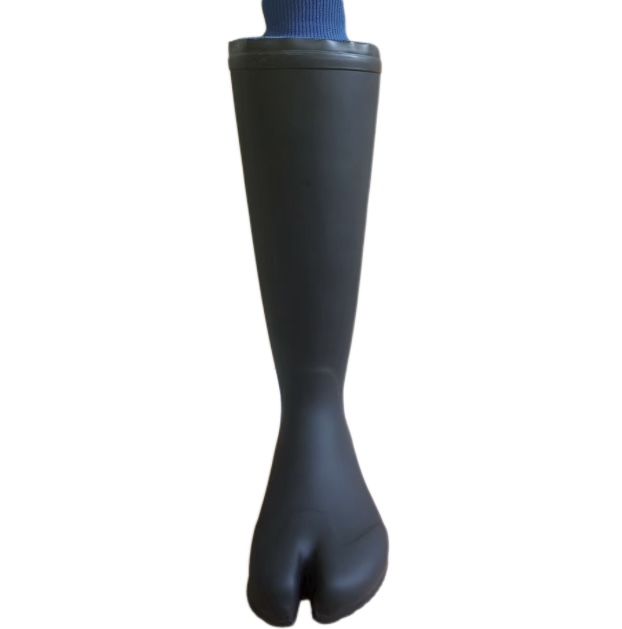
Latex, the main material for these boots, is a natural polymer with excellent elasticity and waterproofness. It is obtained from the sap of rubber trees and then undergoes a series of processing steps. The production of knee-high latex boots often involves processes like injection molding or dipping. In injection molding, molten latex is injected into a mold under high pressure, where it cools and solidifies to take the shape of the boot. This process allows for precise control of the boot's shape and size. Dipping, on the other hand, involves submerging a boot-shaped form into a latex solution. The latex coats the form, and after drying and vulcanization, the boot is formed. Vulcanization is a crucial process that enhances the durability and strength of the latex by cross - linking the polymer chains. A seamless structure is often preferred in the manufacturing of these boots. This structure minimizes the risk of water leakage and improves the overall integrity of the boot. Thickness control is also important. A proper thickness ensures both waterproofness and flexibility. Professional Rain Boot Manufacturer can use advanced compound formulations to optimize the performance of the latex, such as improving its chemical resistance or enhancing its skid resistance.
3. Practical Solutions and Operation Steps
When choosing men's knee-high latex boots for industrial settings, consider the following steps:
- Material Selection: Opt for high-quality latex with good elasticity and durability. Check if the latex has been treated to enhance its chemical resistance if the work environment involves exposure to chemicals.
- Shaft Height: Knee-high boots are suitable for most industrial scenarios as they provide sufficient protection against water, mud, and debris. However, if the work requires more mobility around the knees, consider boots with a slightly lower shaft height.
- Sole Pattern: Select boots with deep and well - designed sole patterns. Patterns like deep grooves or multi - directional ridges can improve skid resistance on wet and slippery surfaces. For extremely oily or greasy floors, look for soles with specialized anti - slip properties.
- Inner Lining: Boots with a comfortable and breathable inner lining can reduce foot fatigue and prevent sweating. Some linings are made of moisture - wicking materials that keep the feet dry.
- Size Selection: Measure your foot length and width accurately. Rain boots are usually recommended to be one size larger than your regular shoes to accommodate thick socks and provide enough space for your feet to move comfortably. If you have wide feet or high arches, choose boots with a wider fit.
- Certifications: Check if the boots meet relevant industry standards, such as EN ISO 20344:2021 for slip resistance or EN ISO 20347:2022+A1:2024 for occupational footwear requirements. These certifications ensure that the boots have been tested and meet the necessary safety criteria.
4. Daily Maintenance and Precautions
Proper daily maintenance can extend the lifespan of men's knee-high latex boots:
- Cleaning: After use, rinse the boots with clean water to remove dirt, mud, and chemicals. For stubborn stains, use a mild detergent and a soft brush. Avoid using strong solvents, as they can damage the latex.
- Drying: Let the boots dry naturally in a well - ventilated area away from direct sunlight and heat sources. Do not use a heater or hair dryer to speed up the drying process, as high temperatures can cause the latex to crack or deform.
- Deodorizing: If the boots develop an odor, you can place a small amount of baking soda inside the boots overnight to absorb the smell. Alternatively, use a shoe deodorizer.
- Anti - aging: Avoid leaving the boots in direct sunlight for long periods, as UV rays can cause the latex to age and become brittle. Store the boots in a cool, dry place when not in use.
- Anti - deformation: To prevent the boots from losing their shape, you can stuff them with newspaper or a boot shaper when storing them.
- Chemicals Contact: If the boots come into contact with chemicals, immediately rinse them thoroughly with water. If the chemical is corrosive, check the boots for damage and consider replacing them if necessary. Never use ordinary rain boots as a substitute for certified safety boots in high - risk industrial environments.
5. Industry Standard and Parameter Reference
This section is the authoritative support module of the full text, and it must list international standards, test methods, or verifiable parameters closely related to the article theme. The following table shows some important parameters:
ParameterRecommended ReferenceWhy It MattersSlip resistanceEN ISO 20344:2021 / EN ISO 20347:2022+A1:2024 where applicableHelps evaluate outsole grip on wet or contaminated surfaces.Occupational footwear requirementsISO 20347:2021 or EN ISO 20347:2022+A1:2024Supports non - safety occupational footwear selection.Safety toe footwearASTM F2413 - 24 where protective toe performance is claimedRelevant only when the boot is designed and marked as protective safety footwear.Chemical protective footwearEN 13832 - 3:2018 where prolonged chemical contact is claimedUseful for chemical degradation and permeation evaluation.
Do not invent exact performance numbers. Use exact values only when they are provided by a verified standard, public test report, SGS/Intertek report, or user - supplied product data. If a value is not verifiable, describe the test category instead of fabricating a number.
6. Customer Common FAQ
Q: How do I choose the right material for men's knee - high latex boots?
A: For general industrial use, high - quality latex is a good choice. However, if your work environment involves exposure to specific chemicals, consult a Professional Rain Boot Manufacturer. They can recommend latex with enhanced chemical resistance properties.
Q: Are these boots really slip - resistant?
A: Boots that meet the EN ISO 20344:2021 or EN ISO 20347:2022+A1:2024 standards are tested for slip resistance. The sole pattern also plays a crucial role. Deeper and well - designed patterns can significantly improve skid resistance on various surfaces.
Q: How do I determine the right size for my boots?
A: Measure your foot length and width. It is generally recommended to choose rain boots that are one size larger than your regular shoes. This allows room for thick socks and comfortable movement of your feet.
Q: Do these boots have an odor?
A: New latex boots may have a slight odor. You can place baking soda in the boots overnight to reduce the smell. Ensure proper ventilation during storage to prevent the build - up of odors.
Q: Can I wear these boots in cold weather?
A: Latex boots have some degree of cold resistance. However, in extremely cold conditions, consider boots with additional insulation or a lining that can keep your feet warm. Check the product specifications for cold - resistance ratings.
Conclusion
In conclusion, men's knee - high latex boots for industrial settings offer outstanding performance in waterproofing, skid resistance, and durability. By understanding the core problems, product and process principles, and following the practical solutions and daily maintenance advice, users can make informed choices. When in doubt, seeking advice from a Professional Rain Boot Manufacturer can help ensure that the boots meet specific industrial requirements.
References
- ISO 20344:2021, Footwear Test Methods
- EN ISO 20347:2022+A1:2024, Occupational Footwear
- ASTM F2413 - 24, Protective Footwear Specification
- EN 13832 - 3:2018, Chemical Protective Footwear