


3 Key Factors to Consider When Choosing Men Latex Boots in Extreme Conditions
Sep 9, 2026
View: 0
Leave a message
Meta Description: This blog post delves into the key factors for choosing men's latex boots in extreme conditions, covering common problems, product principles, selection steps, maintenance, and industry standards. It aims to assist buyers in the rain boots industry, providing professional guidance. Professional Rain Boot Manufacturer.
Keywords: Men Latex Boots, Extreme Conditions, Boot Selection, Boot Maintenance, Industry Standards
1. Core Problem Analysis
1.1 Common Causes of the Problem
When choosing men's latex boots in extreme conditions, buyers often face multiple problems. Firstly, in terms of material performance, latex may harden and crack in low - temperature environments, losing its flexibility and waterproofness. In high - temperature and high - humidity conditions, latex can age more quickly, reducing its service life. Secondly, the issue of fit is crucial. If the boots are not the right size, it can cause discomfort, blisters, and affect work efficiency. Thirdly, the anti - slip performance of the boots may not meet the requirements in wet, muddy, or oily extreme conditions, increasing the risk of falls. Additionally, problems such as the durability of the boots, especially in harsh working conditions with sharp objects, and the breathability of the boots during long - term wear also need attention.
1.2 Affected Usage Scenarios
The affected usage scenarios are diverse. In agricultural work, such as farming and gardening, men may need to work in muddy fields for long periods. The boots need to be waterproof, anti - slip, and durable to withstand the wear and tear of soil and plant debris. In the fishing industry, fishermen work on wet boats and docks, where the boots must have excellent waterproof and anti - slip properties to ensure safety. In food processing plants, the boots need to be resistant to chemicals and easy to clean to meet hygiene standards. For warehouse cleaning, workers need boots that can handle wet floors and provide good support. In livestock work, the boots may be exposed to manure and urine, requiring good chemical resistance and durability. In muddy outdoor construction work, the boots should be tough enough to resist punctures and provide stable footing.
2. Product and Process Principle
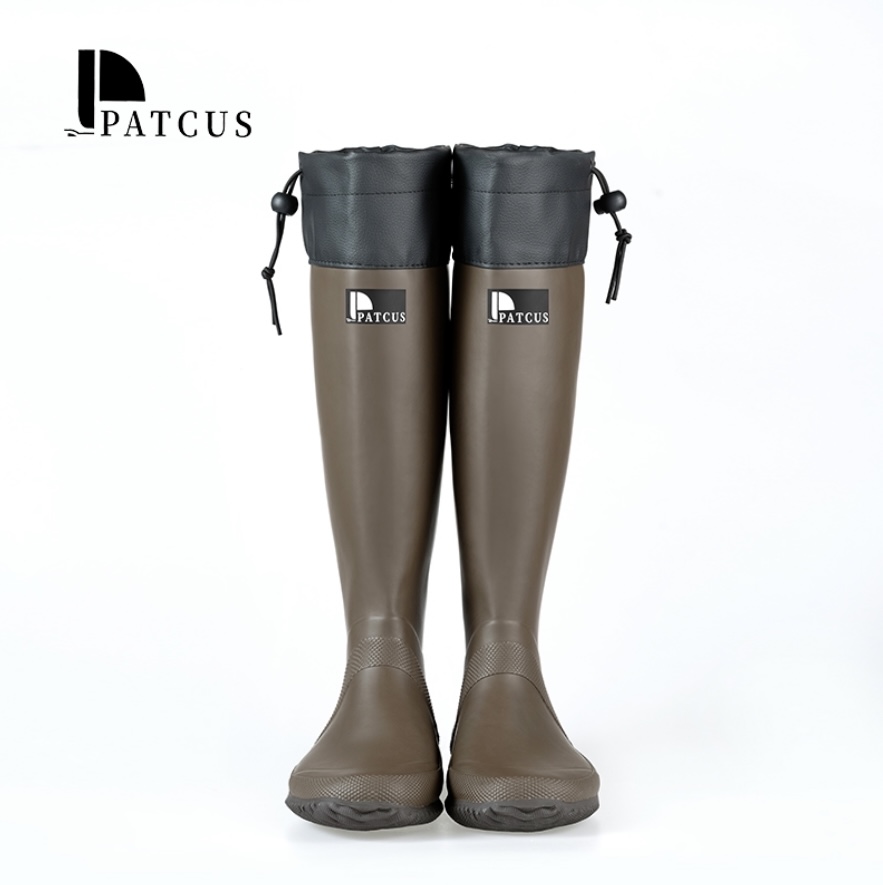
Rain boots, including men's latex boots, are mainly made of natural or synthetic rubber - like materials. Latex is a type of natural rubber, which is collected from rubber trees. It has excellent elasticity and flexibility due to its long - chain polymer structure. The long - chain molecules can stretch and bend under stress and then return to their original state, providing a good fit for the feet. In the manufacturing process, injection molding is a common method. The liquid latex is injected into a mold under high pressure, and then heated to solidify, forming the shape of the boots. This process allows for high - precision production and can ensure the consistency of the product. Another important process is vulcanization. By adding sulfur and other additives to the latex and heating it, the long - chain molecules of the latex form cross - links, which significantly improve the durability, heat resistance, and chemical resistance of the boots. The outsole pattern is also carefully designed. Different patterns, such as deep V - shaped grooves or herringbone patterns, are used to increase friction with the ground, providing better anti - slip performance. The shaft height is designed according to different usage scenarios. Higher shafts can provide more protection, such as preventing water from splashing into the boots in deep water or mud. The lining of the boots can be made of different materials, such as cotton or synthetic fibers, to improve comfort and breathability. Professional Rain Boot Manufacturer is often involved in these processes, using advanced technologies and strict quality control to ensure the performance and quality of the boots.
3. Practical Solutions and Operation Steps
When choosing men's latex boots in extreme conditions, the following steps can be followed:
- Material Selection: Opt for high - quality latex with good elasticity and durability. Check the product description or consult the manufacturer to ensure the latex has been properly processed, such as vulcanized, to improve its performance in extreme conditions. For extremely cold environments, consider boots with additional insulation layers or special cold - resistant latex formulations.
- Boot Height: In deep water or mud, choose boots with a higher shaft, usually above the ankle or even up to the calf. This can prevent water and debris from entering the boots. For normal wet conditions, ankle - high boots may be sufficient.
- Outsole Pattern: Select boots with deep and well - designed outsole patterns. For wet and slippery surfaces, patterns like deep V - shaped grooves or herringbone patterns are recommended as they can effectively drain water and provide better grip. In muddy or uneven terrain, patterns that can prevent mud from sticking and provide good traction are more suitable.
- Lining: Look for boots with a comfortable lining material. Cotton linings are breathable but may take longer to dry. Synthetic fiber linings are often quick - drying and can be more suitable for long - term use in wet conditions.
- Size Selection: Ensure to measure your feet accurately and refer to the manufacturer's size chart. Try on the boots if possible, and make sure there is enough room for your toes to move freely without being too loose. A proper fit can prevent blisters and improve comfort during long - term wear.
- Anti - slip and Cold - resistant Ratings: Check the anti - slip rating of the boots, especially in extreme wet or oily conditions. Some boots may have specific cold - resistant ratings, which are important for use in cold environments. Look for boots that meet relevant international or industry standards, such as EN ISO 20344:2021 for anti - slip performance.
- Cleaning and Storage: After use, clean the boots with mild soap and water. Avoid using harsh chemicals that can damage the latex. Dry the boots naturally in a well - ventilated area, away from direct sunlight and heat sources. Store the boots in a cool, dry place, and if possible, stuff them with paper to maintain their shape.
4. Daily Maintenance and Precautions
Daily maintenance of men's latex boots is crucial to ensure their performance and longevity. Here are some maintenance tips and precautions:
Cleaning: After each use, clean the boots with a soft brush and mild soap and water. This can remove dirt, mud, and other contaminants that may damage the latex. For stubborn stains, you can use a mild detergent, but make sure to rinse thoroughly to avoid leaving any residue.
Drying: After cleaning, dry the boots in a well - ventilated area at room temperature. Do not expose the boots to direct sunlight or high - temperature heat sources, as this can cause the latex to harden, crack, or age prematurely. Stuffing the boots with newspaper or paper towels can help absorb moisture and speed up the drying process.
Deodorizing: To remove odors, you can sprinkle baking soda inside the boots and let it sit overnight. Then, shake out the baking soda the next day. Another option is to use a specialized shoe deodorizer.
Anti - aging and Anti - deformation: To prevent the latex from aging, store the boots in a cool, dry place away from direct sunlight and chemicals. To avoid deformation, stuff the boots with paper or use boot trees when storing them. This can help maintain the shape of the boots.
Low - temperature Storage: In cold weather, if the boots are not in use, store them in a warm place to prevent the latex from hardening. If the boots are exposed to low temperatures during use, let them warm up gradually at room temperature before cleaning and storing.
Handling Chemical Contact: If the boots come into contact with chemicals, rinse them immediately with plenty of water. Check the boots for any signs of damage, such as discoloration or softening. If the damage is severe, the boots may need to be replaced.
Avoidance Precautions: Do not use the boots in environments where they are not designed for. For example, do not use ordinary latex boots in areas with high - risk chemicals or sharp objects. Do not use strong solvents to clean the boots, as this can dissolve the latex. Do not store the boots in a compressed state for a long time, as this can cause permanent deformation.
5. Industry Standard and Parameter Reference
This chapter provides important international standards and test methods for men's latex boots, which can help buyers make more informed decisions.
ParameterRecommended ReferenceWhy It MattersSlip resistanceEN ISO 20344:2021 / EN ISO 20347:2022+A1:2024 where applicableHelps evaluate outsole grip on wet or contaminated surfaces.Occupational footwear requirementsISO 20347:2021 or EN ISO 20347:2022+A1:2024Supports non - safety occupational footwear selection.Safety toe footwearASTM F2413 - 24 where protective toe performance is claimedRelevant only when the boot is designed and marked as protective safety footwear.Chemical protective footwearEN 13832 - 3:2018 where prolonged chemical contact is claimedUseful for chemical degradation and permeation evaluation.
When referring to these standards, it is important to note that the data should be obtained from reliable sources, such as official test reports or product certifications. Do not invent exact performance numbers. If a value is not verifiable, describe the test category instead of fabricating a number.
6. Customer Common FAQ
Q: What material is better for men's latex boots in extreme cold?
A: In extreme cold, boots with a cold - resistant latex formulation or additional insulation layers are better. Some manufacturers may use special additives in the latex to improve its cold - resistance. Professional Rain Boot Manufacturer can provide more information on the cold - resistant performance of their products.
Q: How do I know if the boots have good anti - slip performance?
A: Check if the boots meet relevant anti - slip standards, such as EN ISO 20344:2021. Look at the outsole pattern; deep and well - designed patterns, like deep V - shaped grooves or herringbone patterns, usually indicate better anti - slip performance. You can also try the boots on a wet surface to test their grip.
Q: How to choose the right size of men's latex boots?
A: Measure your feet accurately and refer to the manufacturer's size chart. If possible, try on the boots. Make sure there is enough room for your toes to move freely, and the boots should not be too loose or too tight. A proper fit is important for comfort and performance.
Q: Do men's latex boots have a strong smell?
A: New latex boots may have a certain smell, but it should fade over time with proper ventilation. If the smell is extremely strong or persistent, it may indicate low - quality latex or improper processing. You can try the deodorizing methods mentioned above to reduce the smell.
Q: Can I use normal men's latex boots in chemical - exposed environments?
A: No, normal latex boots are not suitable for long - term use in chemical - exposed environments. For such environments, you need to choose boots that meet the EN 13832 - 3:2018 standard for chemical protective footwear. Professional Rain Boot Manufacturer can offer chemical - resistant latex boots for specific industrial needs.
Conclusion
In conclusion, when choosing men's latex boots in extreme conditions, buyers need to consider multiple factors. Firstly, understand the common problems and the affected usage scenarios. Secondly, familiarize yourself with the product and process principles to make informed material and design choices. Thirdly, follow the practical selection steps, including material, height, outsole pattern, lining, and size selection. Fourthly, pay attention to daily maintenance and avoid common mistakes. Fifthly, refer to industry standards to ensure the quality and performance of the boots. Professional Rain Boot Manufacturer can provide valuable guidance and high - quality products in this process, helping buyers select the most suitable boots for their needs.
References
- ISO 20344:2021, Footwear Test Methods
- EN ISO 20347:2022+A1:2024, Occupational Footwear
- ASTM F2413 - 24, Protective Footwear Specification
- EN 13832 - 3:2018, Chemical Protective Footwear