


3D Pattern Non-Slip Men’s Rain Boots: Anti-Slip Safety & Functional Design for Rainy Outdoor Work
Aug 13, 2026
View: 0
Leave a message
Meta Description: This article focuses on the key issues related to men's 3D pattern non-slip rain boots, such as material selection, process principle, and usage scenarios. It is suitable for B2B buyers and end - users who are interested in rain boots. Professional Rain Boot Manufacturer offers in - depth guidance on rain boot knowledge and selection.
Keywords: men's rain boots, 3D pattern, non-slip, rain boots materials, rain boots process, rain boots maintenance, rain boots usage scenarios
1. Core Problem Analysis
1.1 Common Causes of the Problem
When users search for men's 3D pattern non - slip rain boots, they usually aim to solve several core problems. One of the most prominent issues is the lack of anti - slip performance. In rainy outdoor work, the ground is often wet, slippery with water or covered with mud, which increases the risk of slipping. A poor anti - slip design can lead to falls and potential injuries. Another problem is the discomfort caused by improper material selection. For example, some materials may not be breathable, causing the feet to sweat and feel stuffy during long - term use. Additionally, the durability of the rain boots is also a concern. If the materials are not wear - resistant or the manufacturing process is not up to standard, the rain boots may crack or wear out quickly, especially in harsh working environments.
1.2 Affected Usage Scenarios
The affected usage scenarios are mainly those in rainy outdoor work. For instance, farming work involves walking in muddy fields during rainy days, where the ground is soft and slippery. Gardeners also need to work outdoors in the rain, dealing with wet soil and grass. Fishermen often work on wet and slippery docks or boats, and the risk of slipping is high. Warehouse cleaning workers may encounter wet floors in the warehouse during rainy seasons. Livestock workers have to move around in muddy pens. All these scenarios require rain boots with excellent anti - slip performance and durability.
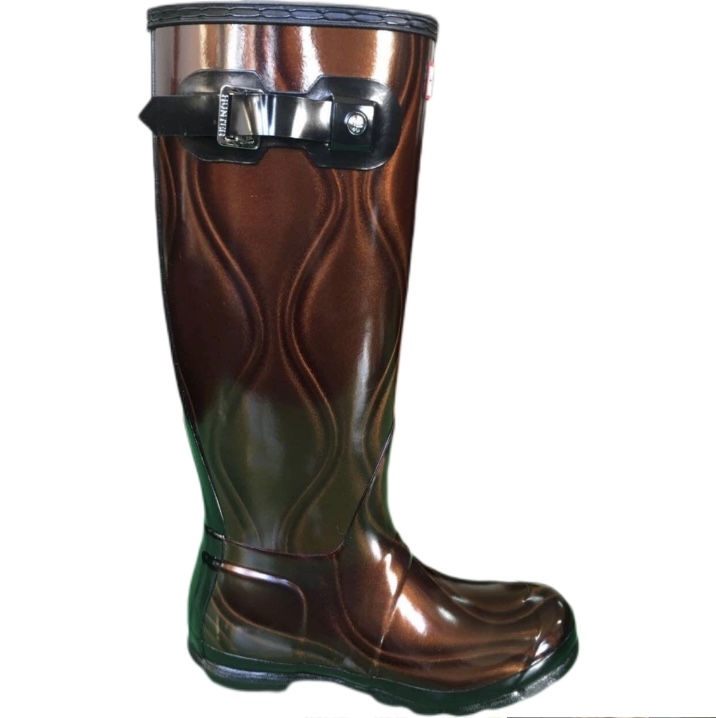
2. Product and Process Principle
Modern rain boots are mainly made of various materials, each with its own characteristics. Natural rubber is a classic choice. It has excellent flexibility, waterproofness, and anti - slip properties. It can maintain its softness even in cold temperatures, providing a good grip on the ground. Synthetic rubber, on the other hand, offers similar performance to natural rubber but often has better resistance to oil and chemicals. PVC is also widely used due to its low cost and relatively simple production process. It is a waterproof material but may be harder than rubber and more prone to hardening and cracking in extremely low temperatures. EVA is lightweight and comfortable, suitable for those who need to wear rain boots for long periods. However, it has lower durability compared to rubber and PVC.
The manufacturing process of rain boots is also crucial. Injection molding is a common method where the molten material is injected into a mold to form the shape of the rain boot. This process can ensure a uniform thickness and high - precision production. Vulcanization is a process used for rubber rain boots. It involves treating the rubber with heat and chemicals to improve its strength, elasticity, and durability. The 3D pattern on the outsole is designed through a special molding technology. The pattern can increase the friction between the outsole and the ground, enhancing the anti - slip performance. Professional Rain Boot Manufacturer plays a significant role in applying these processes to ensure the high - quality production of rain boots.
3. Practical Solutions and Operation Steps
### Material Selection:
- If you need rain boots for heavy - duty work and harsh environments, natural rubber or high - quality synthetic rubber is a good choice. They offer excellent durability and anti - slip performance.
- For those on a budget or for occasional use, PVC rain boots can be considered. Just be aware of their performance in cold weather.
- If lightness and all - day comfort are your priorities, EVA rain boots are recommended.
### Shaft Height:
- For farming or fishing in waters with a certain depth, high - shaft rain boots that reach the knee or above are suitable to prevent water from entering.
- For daily rainy commuting or warehouse cleaning, mid - shaft rain boots are more flexible and easy to wear.
### Outsole Pattern:
- Choose rain boots with deep and multi - directional 3D patterns. Patterns like wave - shaped, arrow - shaped or hexagonal ones can provide better traction on wet and slippery surfaces. According to EN ISO 20344:2021, these patterns can effectively improve the anti - slip performance on various surfaces.
### Lining:
- Look for rain boots with breathable linings, such as cotton or quick - drying fabrics. They can reduce the sensation of stuffiness and keep your feet dry.
### Size Selection:
- Measure your feet carefully and refer to the brand's size chart. Make sure there is enough room for your toes to move freely, especially if you plan to wear thick socks in cold weather.
### Cold - Resistance and Anti - Slip Grades:
- If you work in cold regions, choose rain boots with a suitable cold - resistance grade. For anti - slip, check if the product meets the relevant standards, such as EN ISO 20347:2022+A1:2024.
### Cleaning and Storage:
- After use, clean the rain boots with clean water and a mild detergent. Avoid using strong solvents. Dry them naturally in a well - ventilated area, away from direct sunlight and high - temperature sources.
- When storing, keep them in a cool, dry place in an upright position to prevent deformation.
4. Daily Maintenance and Precautions
### Cleaning
- Regularly clean your rain boots to remove dirt and mud. Use a soft brush or cloth to wipe the surface gently. For stubborn stains, a mild soap solution can be used, but rinse thoroughly to avoid leaving any residue.
### Drying
- After cleaning, let the rain boots dry naturally. Do not place them near a heater or in direct sunlight, as this can cause the material to crack or deform. Insert newspaper into the boots to absorb moisture and help maintain their shape.
### Deodorizing
- If there is an odor in the rain boots, you can place a small sachet of activated carbon or baking soda inside. Replace them regularly to keep the boots smelling fresh.
### Anti - Aging and Anti - Deformation
- To prevent aging, avoid exposing the rain boots to ozone, which can speed up the material degradation. Store them flat or in an upright position to prevent long - term folding and deformation.
### Chemical Contact
- If the rain boots come into contact with chemicals, rinse them immediately with a large amount of water. If they are exposed to strong acids or alkalis, it is recommended to replace them, as these chemicals can damage the material structure.
### Avoidance Pitfalls
- Do not use ordinary rain boots in place of certified safety boots in industrial environments. Certified safety boots need to meet specific safety standards, such as ASTM F2413 - 24 for protective toe performance.
- Do not store the rain boots in a damp environment, as this can lead to mold growth.
- Do not use sharp objects to scrape the rain boots, which can damage the outer layer and reduce waterproofness.
5. Industry Standard and Parameter Reference
This chapter is the authoritative support module of the whole article. The following table lists international standards, test methods or verifiable parameters closely related to the article theme:
ParameterRecommended ReferenceWhy It MattersSlip resistanceEN ISO 20344:2021 / EN ISO 20347:2022+A1:2024 where applicableHelps evaluate outsole grip on wet or contaminated surfaces.Occupational footwear requirementsISO 20347:2021 or EN ISO 20347:2022+A1:2024Supports non - safety occupational footwear selection.Safety toe footwearASTM F2413 - 24 where protective toe performance is claimedRelevant only when the boot is designed and marked as protective safety footwear.Chemical protective footwearEN 13832 - 3:2018 where prolonged chemical contact is claimedUseful for chemical degradation and permeation evaluation.
Do not invent exact performance numbers. Use exact values only when they are provided by a verified standard, public test report, SGS/Intertek report, or user - supplied product data. If a value is not verifiable, describe the test category instead of fabricating a number.
6. Customer Common FAQ
Q: How to choose the right material for men's rain boots?
A: The choice of material depends on your specific needs. If you need high durability and flexibility, natural rubber or synthetic rubber is recommended. For a more budget - friendly option, PVC can be considered, but note its performance in cold weather. EVA is suitable for light - weight and comfortable requirements. Professional Rain Boot Manufacturer can provide more detailed guidance on material selection based on different working scenarios.
Q: Are these 3D pattern non - slip rain boots really effective in preventing slips?
A: The 3D pattern on the outsole is designed to increase friction. According to EN ISO 20344:2021, a well - designed 3D pattern can effectively improve the anti - slip performance on wet and contaminated surfaces. However, proper usage and maintenance also affect the anti - slip effect.
Q: How to determine the correct size of rain boots?
A: First, measure the length and width of your feet. Then, refer to the brand's size chart. It is better to try on the boots if possible, ensuring there is enough space for toe movement and a proper fit around the ankle and calf.
Q: Do these rain boots have a strong odor when new?
A: Some rain boots may have a slight odor when new, especially those made of PVC. This is usually caused by the materials and production process. You can place the boots in a well - ventilated area for a few days to let the odor disperse. If the odor is very strong or does not disappear, it may be a quality issue.
Q: Can these rain boots be used in cold temperatures?
A: It depends on the material. Natural rubber rain boots can usually maintain good performance in cold temperatures. However, PVC rain boots may harden and become more brittle at low temperatures. Check the product's cold - resistance rating and ensure it meets your requirements.
Conclusion
This article has comprehensively discussed the key aspects of men's 3D pattern non - slip rain boots. From core problem analysis, we understand the common issues users face, such as anti - slip performance and material comfort. The product and process principle section explains the material characteristics and manufacturing methods. Practical solutions offer step - by - step guidance on selection, cleaning, and storage. Daily maintenance precautions help users extend the lifespan of rain boots. The industry standard and parameter reference provide reliable benchmarks for product evaluation. And the FAQ section addresses common customer concerns. Professional Rain Boot Manufacturer can offer in - depth expertise and support in rain boot selection, production, and maintenance, ensuring that users can find the most suitable rain boots for their needs.
References
- Article: Analysis Report on Market Scale and Competitive Landscape of China's Rain Boot Industry, Publication Date: 2026-05-08
- Article: What Are the Main Production Materials for Rain Boots? A Guide to Durability and Comfort, Publication Date: 2025-06-18
- Article: Market Development Analysis, Prospect Trend and Investment Research Report of China's Rubber Rain Boot Industry (2026–2030), Publication Date: 2025-12-15
- Article: Material Evolution and Functional Differentiation of Rain Boots: Industry Observation From Basic Waterproofing to Scenario-Based Adaptation, Publication Date: 2026-06-06