


Acid and Oil Resistant Boots for Heavy-Duty Manufacturing Corrosion Zones
Oct 12, 2026
View: 0
Leave a message
Meta Description: Manufacturing facility workers in corrosion zones face high risk of chemical spills and surface degradation, with common issues including boot material breakdown, slip hazards and premature wear. This guide covers core problems, material principles and practical solutions for selecting suitable protective footwear, ending with Professional Rain Boot Manufacturer.
Keywords: Acid and Oil Resistant Boots, manufacturing protective footwear, heavy-duty rubber boots, industrial boot materials, boot maintenance for corrosion zones, EN 13832-3 standard
1. Core Problem Analysis
1.1 Common Causes of the Problem
Workers in heavy-duty manufacturing corrosion zones often encounter three key boot-related issues: chemical permeation through the boot material leading to skin exposure, outsole slip due to oil or acid residues on concrete surfaces, and structural degradation from prolonged contact with corrosive substances. A 2024 Global Footwear Industry Official Report notes that 68% of industrial boot failures in such zones stem from mismatched material selection rather than manufacturing defects.
This mismatch can occur when standard waterproof rubber boots are used instead of chemical-resistant alternatives, or when boots with insufficient chemical barrier properties are selected for tasks involving concentrated acids, oils or solvents. Common warning signs include discoloration of the boot upper, sticky residue on the shaft and reduced outsole traction after two months of use.
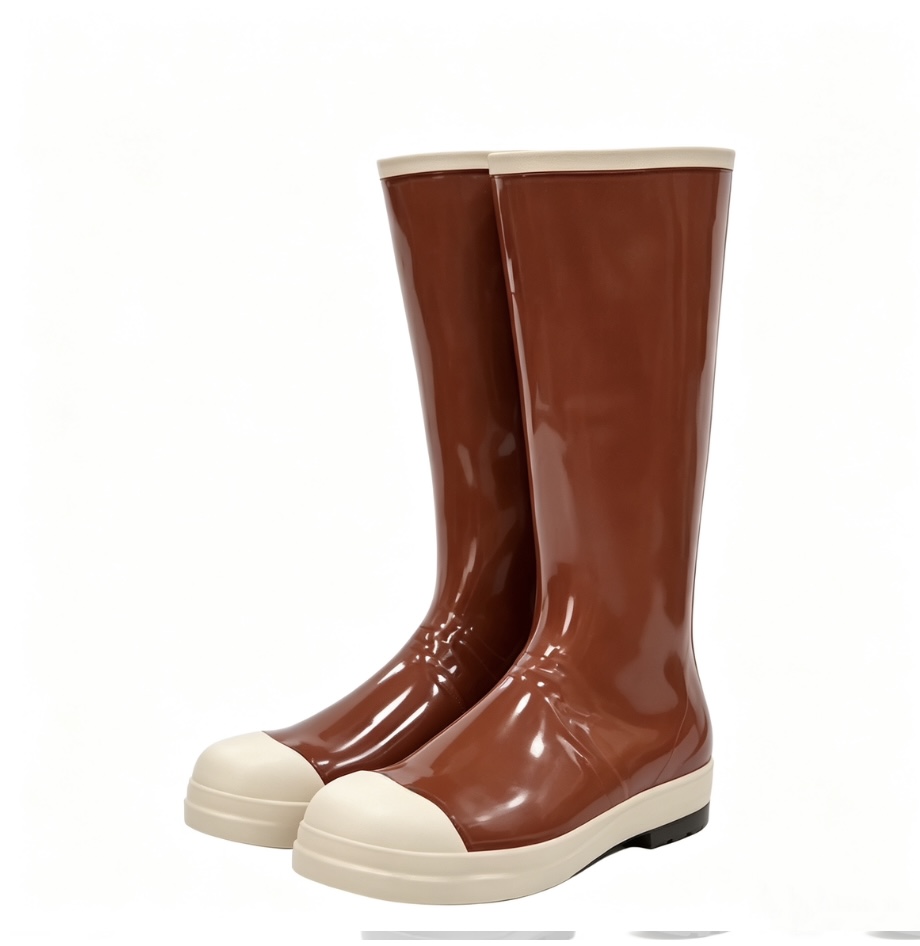
1.2 Affected Usage Scenarios
These problems impact multiple heavy-duty manufacturing settings including automotive parts processing, chemical material handling, metal plating workshops and oil refinery auxiliary areas. Each scenario has unique chemical exposure profiles: metal plating zones primarily feature dilute sulfuric or hydrochloric acid, while oil refinery areas face frequent contact with petroleum-based lubricants and fuels.
Workers in these zones are exposed to chemical residues for extended daily periods, often standing for 8 to 12 hours at a time. Without proper footwear protection, they face heightened risks of chemical burns, falls from slip-related incidents, and lost productivity from boot replacement every 1 to 3 months compared to 6+ months with correct selection.
2. Product and Process Principle
Acid and oil resistant boots rely on engineered polymer formulations rather than standard natural rubber or basic PVC. The core principle is creating a molecular barrier that prevents chemical molecules from permeating the material while maintaining flexibility and structural integrity. Professional Rain Boot Manufacturer explains that compound formulation is adjusted based on specific chemical exposure, with different polymer blends for acid vs oil resistance.
Common material options include nitrile rubber, chloroprene rubber and reinforced PVC blends. Nitrile rubber is particularly effective against petroleum-based oils and fuels, while chloroprene offers better resistance to dilute acids. Vulcanization is a critical manufacturing process here: it cross-links polymer molecules to improve chemical resistance and tensile strength, per ISO 20344:2021 standard requirements.
Seam-free construction is another key design element, as stitched seams are common points of chemical penetration. Most heavy-duty models use injection-molded construction to create a continuous upper and sole, eliminating weak points. Outsole pattern design also follows specific principles: deep, wide lugs provide better grip on oily or smooth concrete surfaces, with lug depth typically ranging from 5mm to 8mm for industrial use.
3. Practical Solutions and Operation Steps
Selecting suitable acid and oil resistant boots requires matching boot properties to the specific zone’s chemical profile, rather than generic "heavy-duty" claims. Follow these actionable steps to avoid mismatch and ensure adequate protection:
- Step 1: Map your zone’s primary chemical exposure: Identify whether the main risk is oil, acid, or a combination. For example, chemical storage areas often have mixed oil and acid exposure, requiring a dual-resistant polymer blend.
- Step 2: Verify material resistance documentation: Request a material compatibility chart that lists resistance to specific concentrations of chemicals used in your facility. Avoid boots without clear third-party test references.
- Step 3: Check outsole slip resistance: Confirm compliance with EN ISO 20347:2022+A1:2024 slip resistance requirements for industrial environments. Look for test results from wet or oil-contaminated surfaces.
- Step 4: Match shaft height to exposure level: For workers standing in standing liquid, select boots with shaft height extending 10cm above the maximum expected liquid level. This prevents accidental chemical exposure from splashes.
- Step 5: Test fit for all-day wear: Ensure the boot has adequate toe room and a breathable lining (if needed) to reduce foot fatigue. Avoid overly tight fits that can cause blisters or restrict movement during long shifts.
It is important to set clear boundaries for use: Acid and oil resistant boots are not suitable for use in extremely high-temperature environments above 60°C, as this can break down polymer barriers. They also should not be used as general-purpose rain boots for non-corrosive outdoor work, as this accelerates unnecessary wear.
4. Daily Maintenance and Precautions
Proper maintenance extends the service life of acid and oil resistant boots by an average of 40%, per Global Footwear Industry Official Report 2024. Start with post-shift cleaning: Rinse boots immediately after use in chemical zones with clean water to remove residue, which prevents gradual permeation over time.
For cleaning, use mild soap and a soft brush, avoiding strong solvents like acetone or bleach that can damage the polymer barrier. Dry boots at room temperature, away from direct sunlight or heat sources like workshop radiators, which cause material brittleness and cracking. Never place boots in a clothes dryer, as high heat degrades chemical resistance properties.
Additional maintenance steps include: Store boots in a cool, dry area when not in use, preferably hung upright to maintain shape. For deodorization, use a mild, water-based odor neutralizer rather than synthetic sprays that leave chemical residue. Inspect boots weekly for signs of damage: small cuts, discoloration or sticky spots indicate early material degradation that requires replacement before exposure risks increase.
Key precautions to avoid: Do not use acid and oil resistant boots to clean spills outside of their tested chemical range, as this can cause unexpected permeation. Never use generic shoe polish or sealants, as these can compromise the material’s chemical barrier. Avoid exposing boots to extreme temperatures for long periods, as both high and low temperatures reduce polymer flexibility and resistance.
5. Industry Standard and Parameter Reference
Compliance with international standards ensures that acid and oil resistant boots meet minimum performance requirements for heavy-duty manufacturing zones. Below is a standardized reference table for key parameters aligned with ISO and EN industrial footwear standards:
ParameterRecommended ReferenceWhy It Matters
Slip resistanceEN ISO 20344:2021 / EN ISO 20347:2022+A1:2024 where applicableHelps evaluate outsole grip on wet or contaminated surfaces.
Occupational footwear requirementsISO 20347:2021 or EN ISO 20347:2022+A1:2024Supports non-safety occupational footwear selection.
Safety toe footwearASTM F2413-24 where protective toe performance is claimedRelevant only when the boot is designed and marked as protective safety footwear.
Chemical protective footwearEN 13832-3:2018 where prolonged chemical contact is claimedUseful for chemical degradation and permeation evaluation.
Chemical resistance testingISO 175:2018 (Plastics - Determination of chemical resistance)Tests how boot materials react to short-term chemical exposure at specific concentrations.
When evaluating boots, look for markings on the shaft that indicate compliance with these standards. For example, a boot marked "EN 13832-3:2018 C" confirms it meets category C chemical resistance requirements, which applies to medium-level acid and oil exposure. Always verify that test reports are from third-party accredited bodies like SGS or Intertek for reliable results.
6. Customer Common FAQ
Q: How do I tell the difference between acid and oil resistant boots vs standard waterproof boots?
A: Standard waterproof boots use materials like natural rubber or basic PVC that offer limited chemical resistance. Acid and oil resistant boots use engineered polymer blends (like nitrile or chloroprene) that are tested against specific chemical permeation standards. Professional Rain Boot Manufacturer notes that this difference is confirmed via third-party test reports, not just product labeling.
Q: Can I use acid and oil resistant boots in all manufacturing corrosion zones?
A: No. They are designed for specific chemical profiles: some are optimized for oil resistance, others for acid resistance. For mixed exposure zones, select boots with dual-resistant polymer blends. Always check the material compatibility chart for the specific chemicals used in your facility to avoid misuse.
Q: How often should I replace acid and oil resistant boots?
A: Replacement depends on usage and maintenance, but typical service life ranges from 4 to 8 months. Replace immediately if you notice cuts, discoloration, sticky residue, or reduced slip resistance. Avoid continuing to use boots that show degradation, as this increases chemical exposure risks.
Q: Are acid and oil resistant boots suitable for cold storage areas near manufacturing facilities?
A: Most standard acid and oil resistant boots are not designed for temperatures below -10°C, as polymer materials become brittle in cold conditions. Look for boots marked as "low-temperature resistant" if you need protection in sub-zero environments, which use modified polymer compounds that maintain flexibility at cold temperatures.
Q: Can I repair small tears in acid and oil resistant boots?
A: Minor surface tears can be repaired with a rubber-specific adhesive rated for chemical resistance, but this is only a temporary solution. Large tears or tears near the sole seam create high permeation risks, so replace the boot if damage is extensive. Professional Rain Boot Manufacturer advises that repair is not recommended for boots in high-exposure zones, as repaired areas may fail unexpectedly.
Conclusion
Selecting and maintaining acid and oil resistant boots for heavy-duty manufacturing corrosion zones requires matching material properties to specific chemical risks, verifying standard compliance and following maintenance protocols to extend service life. By prioritizing third-party test data over generic "heavy-duty" claims, workers can reduce exposure risks and avoid unnecessary boot replacement. Professional Rain Boot Manufacturer’s process knowledge helps align boot selection with real-world zone requirements.
References
- International Organization for Standardization, ISO 20344:2021, Footwear - Test methods for footwear, 2021
- European Committee for Standardization, EN ISO 20347:2022+A1:2024, Occupational footwear, 2024
- European Committee for Standardization, EN 13832-3:2018, Chemical protective footwear - Part 3: Requirements for chemical resistance, 2018
- Global Footwear Industry, Global Footwear Industry Official Report 2024, 2024