


Acid and Oil Resistant Boots: Ideal for High - Corrosion Industrial Workplaces
Aug 25, 2026
View: 0
Leave a message
Meta Description: This article delves into acid and oil resistant boots, addressing common problems like material degradation and slip - resistance in high - corrosion industrial workplaces. It explains the product and process principles, offers practical solutions, and provides maintenance tips. Professional Rain Boot Manufacturer is introduced to offer professional insights.
Keywords: acid and oil resistant boots, rain boots, rubber boots, waterproof boots, boot material, boot maintenance, industrial workplaces
1. Core Problem Analysis
1.1 Common Causes of the Problem
When users search for acid and oil resistant boots, they are typically trying to solve several key problems. One of the most significant issues is material degradation. Exposure to acids and oils can cause the boot material to break down over time, leading to reduced durability and potential leakage. This can be due to the chemical reactions between the boot material and the corrosive substances. Another problem is the loss of slip - resistance. Oily or acidic substances on the factory floor can make the surface extremely slippery, increasing the risk of falls and injuries. Additionally, issues like foot discomfort, such as heat, moisture, and odor build - up, can also be a concern, especially during long - term use in industrial settings.
1.2 Affected Usage Scenarios
The affected usage scenarios are mainly high - corrosion industrial workplaces. This includes chemical manufacturing plants, where workers are exposed to various acids and oils during the production process. Oil refineries are also a critical scenario, as employees are constantly surrounded by oil and its by - products. Wastewater treatment facilities are another area, where boots need to resist the acidic and oily substances in the wastewater. Moreover, some metal - plating workshops involve the use of acids for surface treatment, and workers in these places require acid and oil resistant boots to protect their feet.
2. Product and Process Principle
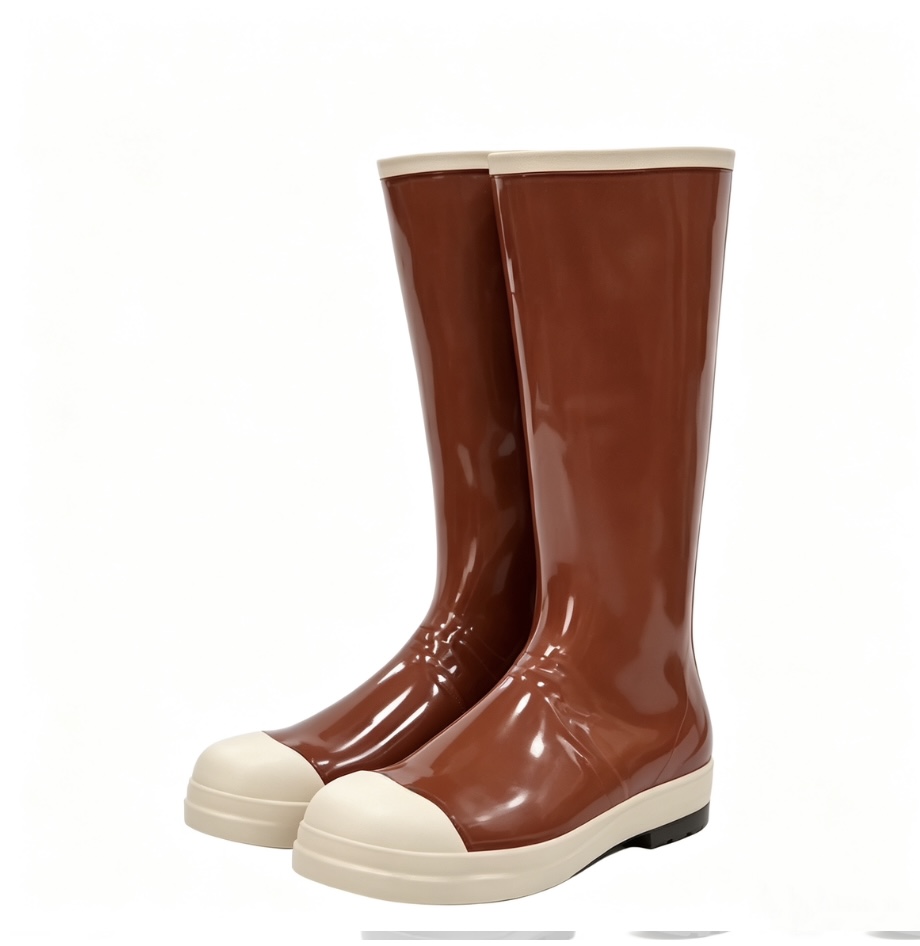
Acid and oil resistant boots are typically made from specific materials and through particular processes. The most common materials include rubber and PVC. Rubber is a popular choice because of its excellent elasticity and resistance to abrasion. It can withstand a certain degree of chemical corrosion, especially when it is formulated with special additives. PVC, on the other hand, is known for its cost - effectiveness and good chemical resistance. It can be customized to have different levels of acid and oil resistance by adjusting the compound formulation. The outsole pattern of these boots is also crucial. A deep and well - designed pattern can enhance the slip - resistance on greasy or wet surfaces. The shaft height is determined based on the working environment. For example, in a chemical plant where there is a risk of splashing, a higher shaft is needed to provide more protection. The lining of the boots can be made of materials like breathable fabric or neoprene, which can improve comfort and reduce moisture build - up. In terms of the manufacturing process, injection molding is a common method for PVC boots. It allows for precise control of the shape and thickness of the boots. For rubber boots, vulcanization is a key process. Vulcanization cross - links the rubber molecules, making the boots more durable and resistant to chemical attack. Some boots also feature a seam - free structure, which eliminates the weak points where leakage might occur. Professional Rain Boot Manufacturer can play an important role in the production, as they have the expertise and experience to select the right materials, control the thickness, and ensure the quality of the manufacturing process.
3. Practical Solutions and Operation Steps
When choosing acid and oil resistant boots, consider the following steps:
- Material selection: If you need long - term durability and high - level chemical resistance, rubber boots are a better choice. However, if cost is a major concern and the chemical exposure is not extremely severe, PVC boots can be considered.
- Shaft height: Determine the appropriate shaft height based on the working environment. For areas with a high risk of splashing, choose boots with a shaft height of at least 30 cm.
- Outsole pattern: Look for boots with a deep and well - distributed outsole pattern. A pattern with wide grooves and large lugs can provide better grip on slippery surfaces.
- Lining: Select boots with a breathable lining to reduce foot moisture and odor. Neoprene lining can also provide additional comfort and insulation.
- Size: Make sure to choose the right size. Boots that are too tight can cause discomfort, while boots that are too large may not provide proper support. It is recommended to try on the boots with the socks you will wear at work.
- Certifications: Check for relevant certifications, such as EN ISO 20344:2021 or EN 13832 - 3:2018, to ensure that the boots meet the necessary safety standards.
4. Daily Maintenance and Precautions
To maintain acid and oil resistant boots, follow these tips:
- Cleaning: After use, clean the boots with mild soap and water. Avoid using strong solvents, as they can damage the boot material.
- Drying: Let the boots dry naturally in a well - ventilated area. Do not expose them to direct sunlight or high - temperature heat sources, as this can cause the material to crack or deform.
- Odor removal: If the boots have an odor, you can place a small amount of baking soda inside them overnight to absorb the smell.
- Anti - aging: To prevent the boot material from aging, store them in a cool and dry place. Avoid storing them in areas where they are exposed to ozone or other chemicals that can accelerate the aging process.
- Precautions: Do not use ordinary rain boots in high - corrosion industrial workplaces. Only use boots that are specifically designed and certified for acid and oil resistance. Do not expose the boots to extreme temperatures, as this can affect their performance.
5. Industry Standard and Parameter Reference
This section is the authoritative support module of the full text. The following table lists the international standards, test methods, or verifiable parameters related to acid and oil resistant boots:
ParameterRecommended ReferenceWhy It MattersSlip resistanceEN ISO 20344:2021 / EN ISO 20347:2022+A1:2024 where applicableHelps evaluate outsole grip on wet or contaminated surfaces.Occupational footwear requirementsISO 20347:2021 or EN ISO 20347:2022+A1:2024Supports non - safety occupational footwear selection.Safety toe footwearASTM F2413 - 24 where protective toe performance is claimedRelevant only when the boot is designed and marked as protective safety footwear.Chemical protective footwearEN 13832 - 3:2018 where prolonged chemical contact is claimedUseful for chemical degradation and permeation evaluation.
Do not invent exact performance numbers. Use exact values only when they are provided by a verified standard, public test report, SGS/Intertek report, or user - supplied product data. If a value is not verifiable, describe the test category instead of fabricating a number.
6. Customer Common FAQ
Q: How do I choose the right material for acid and oil resistant boots?
A: The choice of material depends on your specific needs. If you need high - level chemical resistance and long - term durability, rubber is a better option. PVC is more cost - effective but may not offer the same level of resistance. Professional Rain Boot Manufacturer can provide more detailed advice based on your working environment.
Q: Are these boots slip - resistant?
A: Yes, most acid and oil resistant boots are designed to be slip - resistant. However, the degree of slip - resistance can vary. You can check the boots against standards like EN ISO 20344:2021 to ensure they meet the required level of slip - resistance.
Q: How do I determine the correct size?
A: It is best to try on the boots with the socks you will wear at work. Make sure there is enough room for your toes to move freely and that the boots fit snugly around your ankles and calves. If you are unsure, consult the size chart provided by the manufacturer.
Q: Do these boots have an odor?
A: New boots may have a slight odor, but this usually fades over time. You can use methods like placing baking soda inside the boots to remove the odor.
Q: Can I use these boots in extremely cold temperatures?
A: It depends on the material and the design of the boots. Some boots are designed to be used in cold temperatures, while others may become brittle and lose their flexibility. Check the product specifications or consult the manufacturer for information on the cold - resistant properties of the boots.
Conclusion
In conclusion, acid and oil resistant boots are essential for high - corrosion industrial workplaces. Understanding the core problems, product and process principles, practical solutions, maintenance tips, and industry standards is crucial for making the right choice. Professional Rain Boot Manufacturer can offer valuable insights and guidance throughout the selection and usage process. By following the advice in this article, users can ensure that they select the most suitable boots for their needs and maintain them properly to extend their lifespan.
References
- ISO 20347:2021, Occupational Footwear
- EN ISO 20344:2021, Footwear Test Methods
- ASTM F2413 - 24, Protective Footwear Specification
- EN 13832 - 3:2018, Chemical Protective Footwear