


Acid and Oil Resistant Work Boots Protect Construction Teams in Harsh Job Sites
Oct 16, 2026
View: 0
Leave a message
Meta Description: Construction site workers face constant exposure to harsh chemicals, slippery surfaces, and physical hazards that standard footwear cannot mitigate. Acid and oil resistant work boots are designed to address these risks, offering specialized protection tailored to extreme on-site conditions. For reliable guidance on selecting suitable footwear, consult a Professional Rain Boot Manufacturer.
Keywords: acid and oil resistant work boots, construction safety footwear, chemical resistant boots, waterproof work boots, occupational safety standards, boot maintenance for work footwear
1. Core Problem Analysis
1.1 Common Causes of the Problem
Workers on construction sites encounter multiple footwear-related challenges daily. Standard boots often degrade when exposed to industrial acids, lubricants, petroleum-based fluids, or heavy moisture, leading to material cracking, delamination, or reduced slip resistance. Unprotected feet are also at risk of cuts from sharp debris, compression from falling objects, and discomfort that impairs productivity over long shifts. Beyond physical damage, prolonged contact with corrosive chemicals can cause skin irritation or more serious occupational health issues.
1.2 Affected Usage Scenarios
Acid and oil resistant work boots are critical for a wide range of construction site activities, including concrete mixing, asphalt handling, heavy machinery maintenance, chemical storage facility tasks, and outdoor work in damp or contaminated terrain. These boots are also relevant for related roles such as industrial cleaning crews, manufacturing facility workers, and logistics teams that handle packaged construction materials treated with protective coatings. Without proper specialized footwear, workers in these scenarios face elevated risk of injury and equipment downtime due to reduced mobility.
2. Product and Process Principle
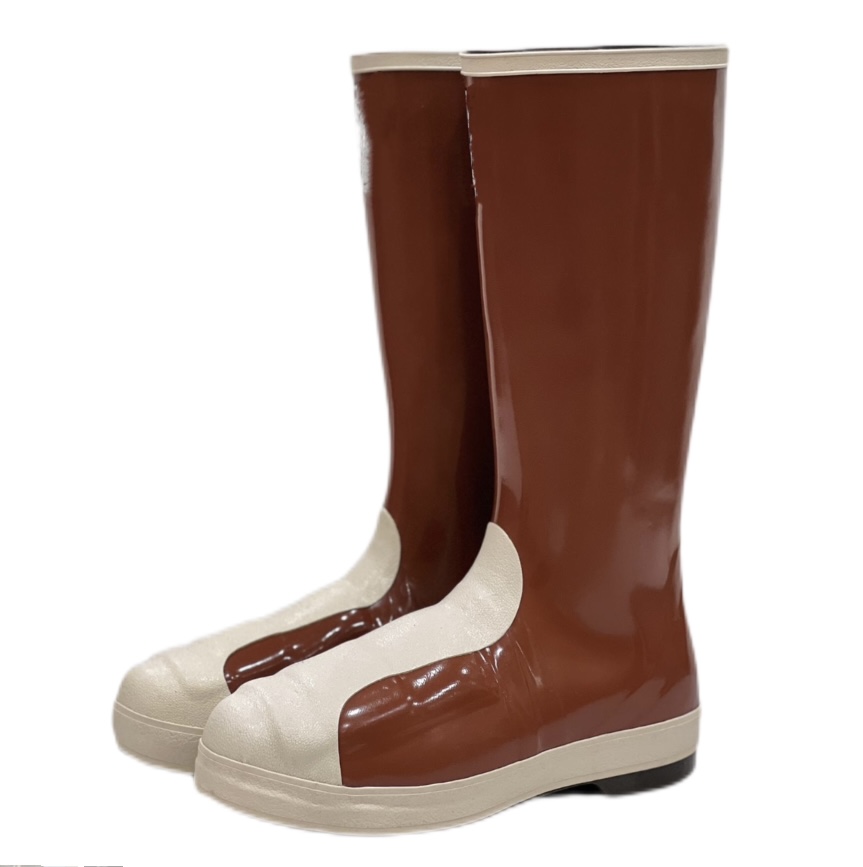
Acid and oil resistant work boots are constructed using specialized compound formulations designed to repel corrosive substances while maintaining structural integrity. Common materials include nitrile rubber, which offers superior resistance to petroleum-based fluids and mild acids, and specialized PVC blends that provide cost-effective chemical protection for light to moderate exposure. Modern production processes often use seamless injection molding or vulcanization to eliminate gaps where chemicals could seep into the boot interior. Outsole patterns are engineered with deep, non-slip treads to maintain grip on wet or oily surfaces, while shaft heights are adjusted to extend coverage up the lower leg for additional protection against splashes.
A Professional Rain Boot Manufacturer applies standardized material testing during production to ensure each boot meets consistent performance requirements, including chemical permeation resistance and durability under repeated use. The compound formulation is calibrated to balance chemical resistance with flexibility, allowing workers to move comfortably while completing strenuous construction tasks without sacrificing protection.
3. Practical Solutions and Operation Steps
Selecting the appropriate acid and oil resistant work boots requires matching boot specifications to specific job site conditions. Follow these actionable steps to make an informed choice that balances protection, comfort, and durability:
- First, assess the primary chemical exposure on your site: for frequent contact with strong acids or petroleum products, choose boots with nitrile rubber construction per EN 13832-3:2018 standards; for light to moderate exposure, PVC blends may be sufficient.
- Check slip resistance ratings using relevant standards: EN ISO 20347:2022+A1:2024 provides guidance for occupational footwear grip performance on smooth or contaminated surfaces.
- Verify shaft height: select boots with a shaft that covers at least two inches above the ankle to prevent chemical splashes from reaching the lower leg.
- Confirm lining material: moisture-wicking linings reduce foot fatigue during extended wear, while removable insoles allow for easy cleaning and replacement when worn.
- Test fit: wear work socks similar to those used on-site and walk for at least five minutes to ensure the boot provides enough arch support and toe room without causing rubbing or blisters.
- Determine compatibility with additional safety features: if your site requires impact protection, select boots that meet ASTM F2413-24 standards for protective toe performance.
4. Daily Maintenance and Precautions
Proper maintenance extends the lifespan of acid and oil resistant work boots while preserving their protective properties. Develop a regular care routine to address wear and tear, and follow these critical precautions to avoid damaging the boots or compromising safety:
After each use, remove dirt, chemical residues, and debris using a soft brush and mild soap; avoid strong solvents or harsh cleaners, as these can degrade the protective compound of the boot. Rinse thoroughly with clean water and air dry at room temperature, away from direct sunlight, space heaters, or other high heat sources that can cause material cracking or warping. Store boots in a cool, dry area with adequate ventilation, ideally in a hanging position to maintain their shape. Inspect boots weekly for signs of wear, including cracks in the outsole, delamination of the upper material, or discoloration that may indicate chemical breakdown.
Key precautions to avoid: do not use acid and oil resistant work boots as general rain boots or for casual outdoor use, as this can accelerate material degradation. Do not attempt to repair structural cracks with adhesives not approved for chemical resistant footwear, as these repairs often fail and leave gaps for chemicals to penetrate. If boots show significant damage or fail performance tests during inspection, replace them immediately to maintain on-site safety standards.
5. Industry Standard and Parameter Reference
Technical standards provide verified benchmarks for evaluating the performance of acid and oil resistant work boots. The following table outlines key parameters and their associated industry references, ensuring consistent, reliable protection for construction site workers:
ParameterRecommended ReferenceWhy It Matters
Slip resistanceEN ISO 20344:2021 / EN ISO 20347:2022+A1:2024 where applicableHelps evaluate outsole grip on wet or contaminated surfaces.
Occupational footwear requirementsISO 20347:2021 or EN ISO 20347:2022+A1:2024Supports non-safety occupational footwear selection for construction roles.
Safety toe footwearASTM F2413-24 where protective toe performance is claimedRelevant only when the boot is designed and marked as protective safety footwear for construction sites.
Chemical protective footwearEN 13832-3:2018 where prolonged chemical contact is claimedUseful for evaluating resistance to acid and oil permeation in work boot materials.
Material durabilityISO 20344:2021 Section 7: Flex Resistance TestMeasures resistance to cracking or delamination after repeated bending during normal use.
All performance claims for acid and oil resistant work boots should align with at least one of these industry standards to ensure validity. Third-party testing by accredited bodies such as SGS or Intertek can provide additional verification of compliance, reducing the risk of selecting footwear that fails to meet on-site safety requirements.
6. Customer Common FAQ
Q: How do I know if acid and oil resistant work boots are suitable for my construction site?
A: Assess the types of chemicals present on your site, frequency of contact, and required slip protection. A Professional Rain Boot Manufacturer can help match boot specifications to your specific site conditions, ensuring you select footwear that meets both functional and safety needs.
Q: Can I use regular rubber boots as a substitute for acid and oil resistant work boots on construction sites?
A: No. Regular rubber boots are not formulated to resist petroleum-based fluids or strong acids, and they often lack the slip resistance and structural durability required for construction work. Using regular boots in these environments increases the risk of injury and material failure.
Q: How often should I replace my acid and oil resistant work boots?
A: Replacement frequency depends on usage intensity, chemical exposure levels, and maintenance practices. Most boots last between 6 and 12 months with regular use, but you should inspect boots monthly for signs of wear. If cracks, delamination, or reduced grip are observed, replace the boots immediately regardless of their usage time.
Q: Are acid and oil resistant work boots available for wide or narrow foot sizes?
A: Many manufacturers offer a range of width options to accommodate different foot shapes. It is recommended to test boots with work socks similar to those used on-site to ensure proper fit, as ill-fitting boots can cause discomfort and reduce mobility.
Q: Can I clean acid and oil resistant work boots with pressure washers?
A: Pressure washing is not recommended, as high water pressure can force residues into seams or damage the protective compound. Use a soft brush and mild soap to clean boots, allowing the material to dry gradually at room temperature.
Conclusion
Acid and oil resistant work boots are an essential investment for construction teams operating in hazardous on-site conditions, protecting workers from chemical exposure, slips, and physical injury. By understanding the material principles, proper selection criteria, and maintenance requirements, employers and workers can extend boot lifespan while maintaining consistent safety performance. A Professional Rain Boot Manufacturer provides standardized guidance and quality specifications that help ensure work boots meet industry standards, reducing risk and improving productivity on construction sites.
References
- ISO 20347:2021, Occupational footwear – Requirements, International Organization for Standardization, 2021
- EN ISO 20344:2021, Personal protective equipment – Test methods for footwear, European Committee for Standardization, 2021
- EN 13832-3:2018, Chemical protective footwear – Part 3: Requirements and test methods for footwear resistant to chemicals, European Committee for Standardization, 2018
- ASTM F2413-24, Standard Specification for Performance Requirements for Protective Footwear, ASTM International, 2024