


Durable Cut-resistant Work Boots Perform Well In Heavy Industrial Fabrication
Nov 1, 2026
View: 0
Leave a message
Meta Description: Heavy industrial fabrication and sharp machining demand reliable footwear that prevents cuts and abrasions, while ensuring comfort and compliance with safety standards. This guide explores key factors for selecting work boots for these high-risk scenarios, with actionable insights to support decision-making. Professional Rain Boot Manufacturer.
Keywords: durable cut-resistant boots, work boot safety, industrial footwear, cut-resistant shoe material, heavy duty work boots, machining work footwear
1. Core Problem Analysis
1.1 Common Causes of the Problem
Workers in heavy industrial fabrication and sharp-machining often face risks from sharp metal chips, rotating tools, and abrasive materials that can puncture or cut standard footwear. Additional issues include poor slip resistance on oil-stained factory floors, insufficient waterproofing in damp workshop environments, and boots that wear out quickly due to repeated exposure to harsh work conditions.
Many users also report discomfort from ill-fitting boots that lead to reduced productivity, or boots that fail to maintain protective properties over short periods, such as frayed seams or weakened cut-resistant layers after minimal use.
1.2 Affected Usage Scenarios
These issues are prevalent in multiple heavy work settings, including metal fabrication workshops, CNC machining facilities, heavy assembly lines, steel construction sites, and industrial maintenance bays. Workers in these environments handle sharp components, operate power tools, and work in spaces where falling debris or accidental contact with rotating machinery is common.
Other affected scenarios include outdoor industrial loading zones where sharp metal offcuts are present, and repair workshops for heavy equipment that involve working with sharp metal parts and lubricants.
2. Product and Process Principle
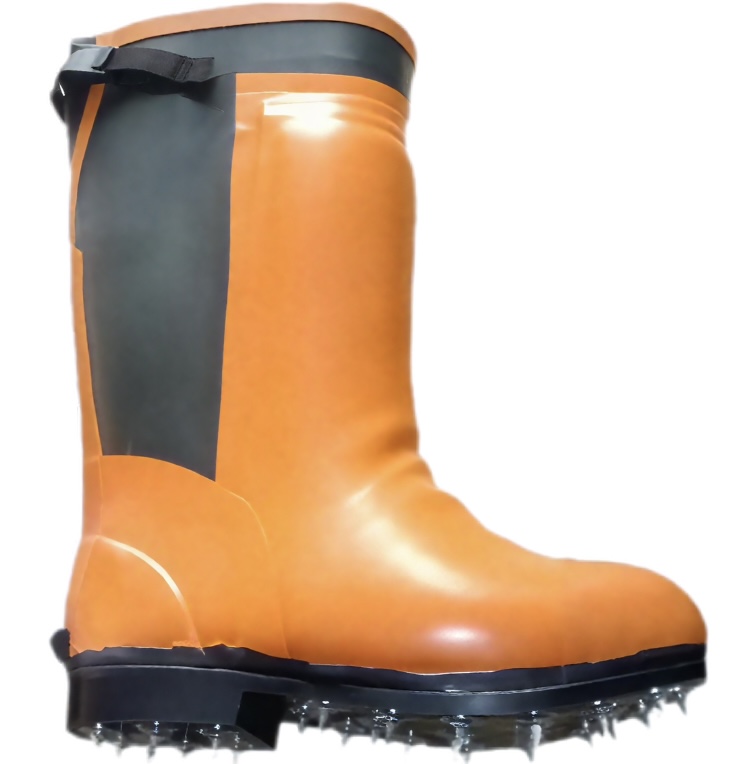
Cut-resistant work boots rely on specialized materials and construction methods to balance protection with flexibility. Common materials include reinforced rubber compounds, which offer abrasion resistance, and composite or steel cut-resistant layers positioned in the midsole and upper to prevent sharp objects from penetrating.
Seam-free injection molding is a key manufacturing process that eliminates weak points where cuts could occur, while controlled material thickness ensures durability without adding unnecessary weight. Professional Rain Boot Manufacturer applies standardized material testing to verify that components meet performance requirements for industrial use.
The outsole design uses a deep tread pattern made from high-grip rubber compound, compatible with slip resistance tests per EN ISO 20344:2021. The shaft height is typically extended to cover the ankle area, reducing the risk of cuts from falling metal chips that often land on lower leg sections.
Lining materials are selected for breathability, to manage foot moisture during long shifts in warm workshops, while maintaining the structural integrity of the boot to retain cut-resistant properties over time.
3. Practical Solutions and Operation Steps
Selecting the right durable cut-resistant work boots requires evaluating three key factors: workplace hazards, fit, and maintenance requirements. Follow these actionable steps to make an appropriate choice:
- First, identify the primary cut hazard in your workplace: if risks come from sharp metal chips, opt for boots with midsole cut-resistant layers rated for puncture resistance under ASTM F2413-24;
- Check outsole slip resistance: ensure the outsole complies with EN ISO 20347:2022+A1:2024, which applies to non-safety occupational footwear for industrial settings;
- Verify fit: choose a half size larger than casual footwear to accommodate work socks and foot swelling during long shifts;
- Assess durability: look for reinforced toe caps and stitched or molded seams, avoiding glued seams that may fail under heavy use;
- Confirm that the boot’s water resistance is suitable for your environment, as damp feet can reduce comfort and increase fatigue.
It is important to note that cut-resistant boots are not designed for use as chemical protective footwear; for scenarios involving prolonged exposure to chemicals, select boots that meet EN 13832-3:2018 standards instead.
4. Daily Maintenance and Precautions
Proper maintenance extends the lifespan of cut-resistant work boots and preserves their protective properties. Follow these maintenance steps to keep boots in good condition:
- After each work shift, wipe the boots clean with a damp cloth to remove metal chips, oil, and debris that can degrade the material or cause cuts during future use;
- Air dry boots at room temperature, away from direct sunlight or heat sources, as high temperatures can soften rubber compounds and weaken cut-resistant layers;
- For persistent odors, use a mild, shoe-specific deodorizer, avoiding strong solvents that can break down boot materials;
- Inspect boots weekly for signs of wear, including frayed seams, cracked soles, or exposed cut-resistant layers. Replace boots if any protective components are damaged.
Key precautions to avoid: do not use cut-resistant work boots as safety footwear for heavy impact protection, as they are designed primarily for cut and puncture resistance. Do not modify boots by adding extra layers or cutting off sections, as this can compromise their protective performance.
5. Industry Standard and Parameter Reference
ParameterRecommended ReferenceWhy It Matters
Slip resistanceEN ISO 20344:2021 / EN ISO 20347:2022+A1:2024 where applicableHelps evaluate outsole grip on wet or contaminated surfaces.
Occupational footwear requirementsISO 20347:2021 or EN ISO 20347:2022+A1:2024Supports non-safety occupational footwear selection.
Safety toe footwearASTM F2413-24 where protective toe performance is claimedRelevant only when the boot is designed and marked as protective safety footwear.
Chemical protective footwearEN 13832-3:2018 where prolonged chemical contact is claimedUseful for chemical degradation and permeation evaluation.
Cut resistance performanceISO 17235:2015 Footwear test methods for cut resistanceValidates the ability of boot materials to resist cutting from sharp objects.
There is no universal performance number for cut resistance, as requirements vary by workplace hazard level. Always ask suppliers for third-party test reports aligned with ISO 17235:2015 to verify cut-resistant capabilities.
6. Customer Common FAQ
Q: Are cut-resistant work boots suitable for heavy impact scenarios?
A: Cut-resistant boots are designed to prevent cuts and punctures, not to withstand heavy impact. For impact protection, select boots marked as safety footwear with impact resistance ratings per ASTM F2413-24. Professional Rain Boot Manufacturer advises checking product labeling for specific performance claims.
Q: How do I know if my boots have sufficient cut resistance for machining work?
A: Look for boots that provide test results from ISO 17235:2015, which measures resistance to cutting by sharp blades. For machining settings with metal chips, a higher cut resistance rating is recommended, compared to lighter industrial tasks.
Q: Can I clean cut-resistant boots with bleach or strong detergents?
A: Avoid strong solvents or bleach, as these can degrade the rubber and cut-resistant materials over time. Use a mild soap and damp cloth for cleaning, and rinse thoroughly to remove residue.
Q: How long do durable cut-resistant boots typically last in heavy industrial use?
A: Lifespan varies based on usage frequency and hazard level, but with proper maintenance, most boots retain protective properties for 6 to 12 months in heavy fabrication and machining scenarios. Professional Rain Boot Manufacturer recommends regular inspections to replace boots before protective layers are damaged.
Q: Do cut-resistant boots work well in wet workshop environments?
A: Many cut-resistant boots use waterproof rubber compounds, but ensure the boot has a water resistance rating appropriate for your workspace. Look for sealed seams and waterproof linings to prevent water from entering, which can lead to discomfort and foot fatigue.
Conclusion
Selecting durable cut-resistant boots for heavy industrial fabrication and sharp-machining requires balancing protection, comfort, and compliance with industry standards. Key considerations include hazard assessment, material performance, slip resistance, and proper maintenance to preserve protective properties. Professional Rain Boot Manufacturer offers standardized guidance on material testing and boot construction, helping users make informed choices for high-risk work environments.
References
- ISO 17235:2015, Footwear - Test methods for cut resistance, International Organization for Standardization, 2015.
- EN ISO 20347:2022+A1:2024, Occupational footwear, European Committee for Standardization, 2024.
- ASTM F2413-24, Standard Specification for Performance Requirements for Protective Footwear, ASTM International, 2024.