


Durable Latex Boots for Extreme Outdoor Working and Men's Fashion Needs
Oct 15, 2026
View: 0
Leave a message
Meta Description: Men working in harsh outdoor conditions need boots that balance function, durability, and style to handle wet, muddy, or contaminated surfaces while supporting daily mobility. This guide explores material selection, process logic, and practical maintenance for latex work boots, supporting users and sourcing decisions. Professional Rain Boot Manufacturer.
Keywords: men fashion latex boots, waterproof work boots, durable outdoor boots, rain boot maintenance, occupational footwear standards, vulcanized rubber boots
1. Core Problem Analysis
1.1 Common Causes of the Problem
Users searching for durable men’s latex boots for extreme outdoor work often face issues like material degradation after repeated exposure to moisture or chemicals, structural failure at stress points from bending or heavy load, and poor fit that reduces mobility during long shifts. Additional common problems include inadequate slip resistance on wet or smooth surfaces, and lack of style that works for both work tasks and casual off-hours activities.
1.2 Affected Usage Scenarios
These issues impact a range of outdoor occupational and semi-recreational scenarios, including agricultural work like livestock handling or muddy field operations, food processing tasks that require strict hygiene and resistance to mild cleaning chemicals, fishing and waterway maintenance work, rainy commuting on slippery urban or rural paths, and warehouse cleaning that involves exposure to standing water or cleaning solutions.
2. Product and Process Principle
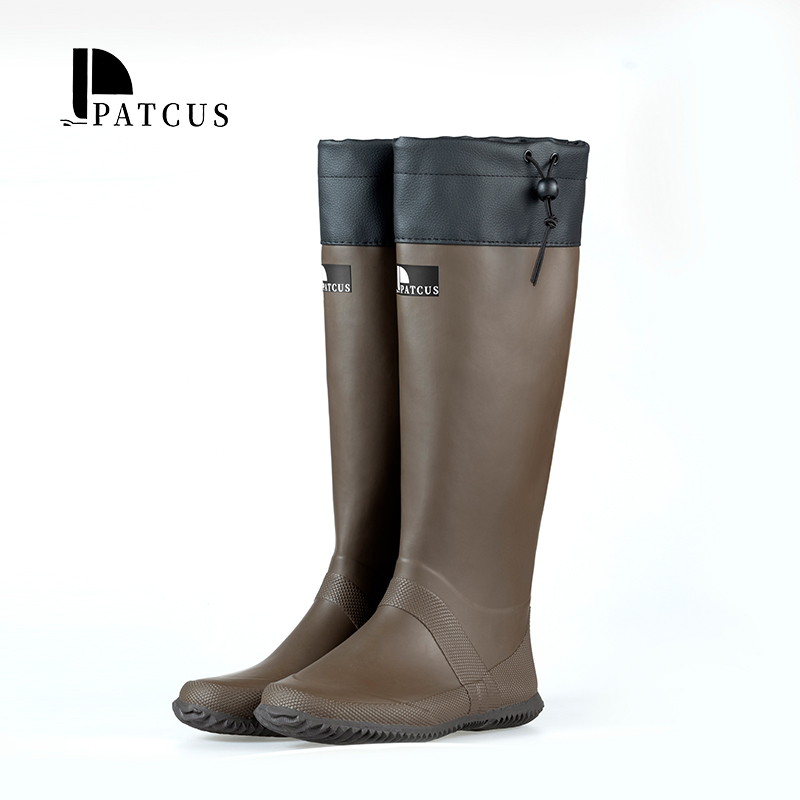
Latex boots for extreme outdoor use rely on a combination of material compound formulation and manufacturing processes to meet performance requirements. Unlike general-purpose PVC boots, professional-grade latex boots use a modified natural rubber compound that balances flexibility and tensile strength; this formulation is adjusted to resist cracking from repeated bending and degradation from mild chemical exposure [1]. Vulcanization, a key process for latex footwear, involves heating the rubber compound with sulfur to create cross-links between polymer molecules, improving structural integrity and durability over repeated use. Seam-free construction, achieved via direct injection or dip molding, eliminates weak points that are common in stitched or glued boots, reducing the risk of water penetration at structural joints. Shaft height and outsole pattern are tailored to specific use cases: taller shafts provide additional protection against water and debris, while deep, multi-directional tread patterns improve slip resistance on uneven or wet terrain. Professional Rain Boot Manufacturer applies these principles to translate material science into practical, usable footwear for harsh conditions.
3. Practical Solutions and Operation Steps
Selecting the right latex boots for extreme outdoor work requires evaluating several measurable factors, rather than relying on vague claims. First, match the material to your primary use: for work with frequent chemical exposure, look for latex compounds formulated to resist specific substances, per EN 13832-3:2018 standards. Second, confirm outsole grip: test slip resistance by pressing the boot sole against a wet, smooth surface, or check for compliance with EN ISO 20347:2022+A1:2024 slip resistance requirements. Third, select shaft height based on your tasks: a 12-16 inch shaft works for muddy field work or shallow water exposure, while a shorter shaft may be sufficient for rainy commuting or indoor warehouse cleaning. Fourth, choose lining type: mesh linings improve breathability for long shifts in warm weather, while fabric linings provide additional insulation for cold outdoor work. Fifth, verify size: order a half size larger than your casual shoe size to accommodate thick socks worn for cold weather or added support during heavy work activities.
- Confirm material formulation aligns with your primary work hazards (moisture, chemicals, abrasion)
- Test outsole grip on wet surfaces to avoid slip-related safety risks
- Match shaft height to your specific work environment’s debris or water exposure
- Allow for 0.5 inch of toe room to avoid blisters during full work shifts
4. Daily Maintenance and Precautions
Proper maintenance extends the service life of latex work boots and preserves their performance properties. After each use in wet or dirty conditions, rinse the boots with cool, clean water to remove mud, salt, or chemical residue; avoid hot water, as high temperatures can break down latex polymer bonds. Dry boots in a well-ventilated, shaded area, away from direct sunlight or space heaters, which can cause material cracking or deformation. For deodorizing, use a mild, fragrance-free cleaning solution and allow boots to air completely; avoid strong chemical cleaners like bleach, which can damage latex compounds. When storing boots, keep them in a cool, dry area away from sharp objects that could puncture the material. A critical precaution: do not use general-purpose latex boots as protective safety footwear for heavy industrial work requiring impact or compression resistance, as these are not tested to meet ASTM F2413-24 standards.
5. Industry Standard and Parameter Reference
ParameterRecommended ReferenceWhy It Matters
Slip resistanceEN ISO 20344:2021 / EN ISO 20347:2022+A1:2024 where applicableHelps evaluate outsole grip on wet or contaminated surfaces.
Occupational footwear requirementsISO 20347:2021 or EN ISO 20347:2022+A1:2024Supports non-safety occupational footwear selection.
Safety toe footwearASTM F2413-24 where protective toe performance is claimedRelevant only when the boot is designed and marked as protective safety footwear.
Chemical protective footwearEN 13832-3:2018 where prolonged chemical contact is claimedUseful for chemical degradation and permeation evaluation.
Tensile strength of latex materialISO 37:2017 Rubber, vulcanized or thermoplastic – Determination of tensile stress-strain propertiesMeasures the ability of the boot material to resist breaking under stress, critical for heavy work use.
Do not invent exact performance numbers. Use exact values only when they are provided by a verified standard, public test report, or third-party audit. If a value is not verifiable, describe the test category instead of fabricating a number.
6. Customer Common FAQ
Q: Are latex boots more durable than PVC boots for extreme outdoor work?
A: This depends on use case. Latex boots offer better flexibility and resistance to tearing in cold temperatures, but may degrade faster with prolonged exposure to certain oils or strong chemicals. Professional Rain Boot Manufacturer notes that the right material choice is based on primary work hazards rather than universal durability claims.
Q: How do I clean latex boots without damaging the material?
A: Use cool water and a soft bristle brush to remove dirt, then air dry in shade. Avoid hot water, direct sunlight, or harsh cleaning products like bleach, as these can break down latex polymer bonds over time.
Q: Can I wear latex work boots for both work and casual activities?
A: Many modern latex boots are designed with aesthetic elements like sleek silhouettes or neutral color options, making them suitable for casual outings after work. It is important to confirm the boots still meet work performance requirements when selecting style-focused options.
Q: What size should I order for heavy outdoor work?
A: Order a half size larger than your standard shoe size to accommodate thick socks worn for cold weather or extra space for foot swelling during long work shifts.
Q: Do latex boots need any special maintenance to prevent cracking in cold weather?
A: Avoid prolonged exposure to freezing temperatures when not in use, as unconditioned latex can become brittle. Store boots in a temperature-controlled area and apply a small amount of approved latex conditioner, if recommended by the manufacturer, to retain flexibility.
Conclusion
Selecting durable men’s latex boots for extreme outdoor work requires balancing performance needs, material science, and practical maintenance practices. By aligning boot properties with work hazards, verifying compliance with relevant industry standards, and following proper care routines, users can extend the service life of their footwear while maintaining the functionality required for daily tasks. Professional Rain Boot Manufacturer emphasizes that informed selection based on measurable parameters rather than vague claims leads to better long-term value for work and occasional style needs.
References
- International Organization for Standardization. (2017). ISO 37:2017 Rubber, vulcanized or thermoplastic – Determination of tensile stress-strain properties. Geneva, Switzerland.
- International Organization for Standardization. (2021). ISO 20344:2021 Personal protective equipment – Test methods for footwear. Geneva, Switzerland.
- European Committee for Standardization. (2022). EN ISO 20347:2022+A1:2024 Occupational footwear. Brussels, Belgium.
- European Committee for Standardization. (2018). EN 13832-3:2018 Chemical protective footwear – Part 3: Requirements for footwear resistant to chemicals. Brussels, Belgium.
- American Society for Testing and Materials. (2024). ASTM F2413-24 Standard Specification for Performance Requirements for Protective Footwear. West Conshohocken, PA, USA.