


Flame-resistant Firefighting Boots: Key Performance Standards for Emergency Response
Oct 10, 2026
View: 0
Leave a message
Meta Description: Flame-resistant firefighting boots are critical for high-risk emergency operations, requiring specific performance standards to withstand extreme heat and flame exposure. This guide covers core requirements, selection tips, and maintenance best practices for industrial use. Professional Rain Boot Manufacturer.
Keywords: flame-resistant firefighting boots, emergency response footwear, industrial safety boots, heat-resistant footwear, boot performance standards, firefighting gear
1. Core Problem Analysis
1.1 Common Causes of the Problem
Users seeking flame-resistant firefighting boots often face issues such as insufficient heat resistance leading to skin burns, poor seam durability causing water penetration, inadequate slip resistance on greasy or wet emergency surfaces, and materials that degrade prematurely after repeated flame or high-temperature exposure. Many also struggle with mismatched sizing and heavy, restrictive design that impairs movement during urgent operations.
1.2 Affected Usage Scenarios
Flame-resistant firefighting boots are essential for a range of high-risk scenarios including structural firefighting, wildland fire suppression, industrial chemical emergencies, search and rescue operations in burning or contaminated buildings, and refinery fire response. These environments demand footwear that balances protection with mobility to support rapid, sustained action by first responders.
2. Product and Process Principle
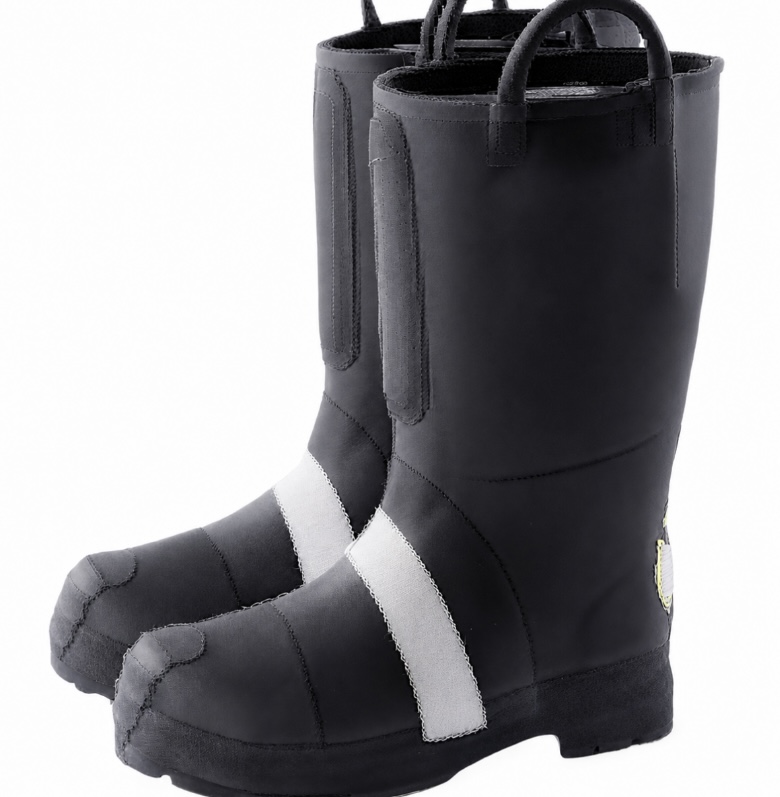
Flame-resistant firefighting boots rely on specialized material formulations and manufacturing processes to deliver performance under extreme conditions. Key materials include heat-stabilized rubber blends, aramid fiber linings, and flame-retardant treated polymers, each engineered to resist ignition and limit heat transfer to the foot. Injection molding with seamless construction eliminates weak points where heat or moisture could penetrate, while precise thickness control ensures structural integrity without unnecessary bulk.
Professional Rain Boot Manufacturer apply strict process controls during vulcanization, curing materials at regulated temperatures to enhance flame resistance and seam strength. The outsole uses a high-friction compound with tread patterns optimized for uneven, debris-covered surfaces common in emergency response, while the shaft is designed for a secure fit that prevents debris entry without restricting ankle movement.
3. Practical Solutions and Operation Steps
Selecting the right flame-resistant firefighting boots requires matching specifications to the specific operational risks of each response scenario. First, identify the primary hazards: structural fires require boots with higher heat resistance ratings, while chemical emergencies demand additional chemical permeation resistance. Next, verify that the boot meets relevant international standards to ensure consistent performance.
- Measure foot size with appropriate socks worn during extended shifts, leaving enough room for natural swelling during intense activity
- Check outsole tread depth and pattern to ensure grip on wet, greasy, or rough surfaces per required safety standards
- Confirm seam construction is seamless or double-stitched with flame-resistant thread to prevent seam failure under heat
- Test liner breathability to balance temperature control and flame resistance, as overheating can impair performance during long operations
- Match boot shaft height to the primary hazard zone, avoiding excess height that adds unnecessary weight for rapid movement
4. Daily Maintenance and Precautions
Proper maintenance extends the service life of flame-resistant firefighting boots and preserves their performance properties. After each use, remove debris from treads and clean the exterior with a mild, non-solvent-based detergent to avoid damaging flame-resistant coatings. Rinse thoroughly and air-dry in a cool, shaded area, avoiding direct sunlight or proximity to heaters, which can degrade heat-resistant materials.
Additional precautions include: do not use strong solvents or abrasive cleaners that remove flame-retardant treatments; avoid storing boots in tight, humid spaces that promote mold or mildew growth; inspect seams and soles regularly for signs of wear or damage; and never use general waterproof boots as a substitute for certified flame-resistant firefighting boots, as they lack the required heat and flame resistance for emergency operations.
5. Industry Standard and Parameter Reference
ParameterRecommended ReferenceWhy It MattersFlame resistanceEN ISO 17249:2013+A1:2018 (for protective footwear in flame environments)Evaluates ignition resistance and after-flame time to prevent burn injuriesSlip resistanceEN ISO 20347:2022+A1:2024 (where applicable)Assesses grip on wet, greasy surfaces to reduce slip-related injuries during emergency responseChemical resistanceEN 13832-3:2018 (for chemical exposure scenarios)Measures permeation resistance against common industrial chemicals used in emergency incidentsHeat resistanceISO 17493:2017 (thermal insulation for footwear)Tests ability to limit heat transfer from hot surfaces to the foot during extended exposure
Do not invent exact performance numbers. Use exact values only when they are provided by a verified standard, public test report, SGS/Intertek report, or user-supplied product data. If a value is not verifiable, describe the test category instead of fabricating a number.
6. Customer Common FAQ
Q: How do I verify if a flame-resistant firefighting boot meets required safety standards?
A: Check for official certification marks from recognized testing bodies, such as CE marking for European standards or ASTM F2413-24 for North American safety footwear. Professional Rain Boot Manufacturer provide test documentation to confirm compliance with relevant standards for specific operational use cases.
Q: Can flame-resistant firefighting boots be repaired after damage to seams or soles?
A: Minor surface damage may be repaired with specialized flame-resistant adhesives designed for boot materials, but structural damage affecting flame or heat resistance requires replacement, as repairs can compromise performance under extreme conditions.
Q: Do flame-resistant boots need special care compared to regular rain boots?
A: Yes. Avoiding harsh cleaners and heat exposure is more critical for flame-resistant boots, as these factors can break down the specialized polymer and fiber formulations that provide protection. Regular rain boots do not require the same level of preservation for heat and flame resistance.
Q: Are flame-resistant firefighting boots suitable for both structural fires and wildland firefighting?
A: Not always. Structural firefighting boots typically prioritize heat and chemical resistance, while wildland boots focus on lightweight design and puncture resistance. It is important to select boots certified for the specific type of operational hazard encountered.
Conclusion
Flame-resistant firefighting boots are a critical component of high-risk emergency response, requiring careful selection based on operational hazards and strict adherence to performance standards. Understanding material principles, maintenance best practices, and compliance with international standards ensures that boots deliver reliable protection when it is most needed. Professional Rain Boot Manufacturer play a key role in guiding selection and production of boots that balance safety, mobility, and durability for first responder use.
References
- European Committee for Standardization. EN ISO 17249:2013+A1:2018. Protective footwear - Resistance to flame.
- International Organization for Standardization. EN ISO 20347:2022+A1:2024. Occupational footwear - Requirements and test methods.
- European Committee for Standardization. EN 13832-3:2018. Chemical protective footwear - Part 3: Requirements for chemical resistance.