


How Acid and Oil Resistant Safety Boots Excel in Chemical Manufacturing Environments
Sep 17, 2026
View: 0
Leave a message
Meta Description: This article focuses on acid and oil resistant safety boots, exploring their problems in chemical manufacturing environments, product - process principles, solutions, maintenance, and related standards. Targeted at professionals in chemical industries and safety equipment purchasers, it aims to provide comprehensive industry knowledge. Professional Rain Boot Manufacturer
Keywords: acid and oil resistant safety boots, chemical manufacturing, product principle, maintenance, safety standards
1. Core Problem Analysis
1.1 Common Causes of the Problem
When users search for acid and oil resistant safety boots, they typically have concerns about several key issues. Firstly, in chemical manufacturing environments, boots may be exposed to various acids and oils, leading to chemical corrosion. This can damage the material of the boots, reducing their lifespan and compromising safety. Secondly, the boots may lack sufficient slip resistance. The presence of oils and chemical spills on the floor can make the working surface extremely slippery, increasing the risk of falls and injuries. Thirdly, foot comfort is a critical consideration. Poorly designed boots can cause foot fatigue, sweating, and even blisters during long - term wear, negatively affecting work efficiency.
1.2 Affected Usage Scenarios
The affected usage scenarios mainly include chemical manufacturing plants. In these plants, workers are often in direct contact with a wide range of chemicals, such as strong acids and oils. For example, in the production of petrochemical products, there are high - risk situations where oil - based substances are used and may spill on the floor. Another scenario is battery manufacturing. Workers deal with sulfuric acid during the production process, and acid - resistant boots are essential for their protection. Additionally, in some metal - plating industries, acid solutions are used for surface treatment, making acid and oil resistant safety boots necessary equipment.

2. Product and Process Principle
Acid and oil resistant safety boots are mainly made of a variety of materials, each with unique properties and manufacturing processes. One common material is nitrile rubber (NBR). Nitrile rubber has excellent resistance to oils and greases. It can withstand the corrosion of mineral oils, vegetable and animal fats, as well as diesel and engine oils. This is because the molecular structure of nitrile rubber provides a stable barrier against these substances. The manufacturing process of nitrile rubber boots often involves vulcanization. During vulcanization, the rubber is heated with sulfur and other additives, which cross - link the rubber molecules, increasing its strength, elasticity, and chemical resistance. Professional Rain Boot Manufacturer often uses this process to ensure the quality of the boots.
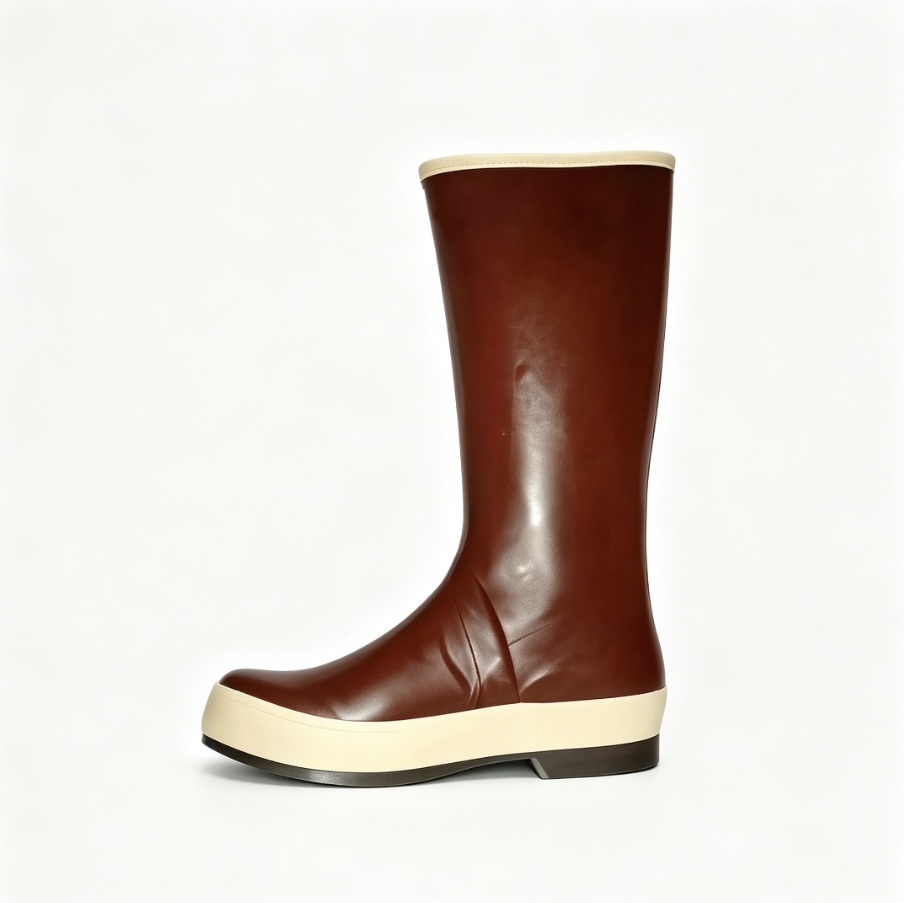
Another material is PVC (polyvinyl chloride). PVC is a versatile synthetic material. It can be made more resistant to chemicals by adding additives. The production of PVC boots is usually through an injection - molding process. In this process, the PVC material is heated to a molten state and then injected into a mold. The molded boots have a seamless structure, which enhances their waterproof and chemical - resistant properties. However, PVC may become brittle in low - temperature environments.
Some boots also use a combination of different materials. For example, the outsole may be made of a rubber compound for better slip resistance, while the upper part is made of a PVC or other chemical - resistant materials. The lining of the boots is also an important factor. Some linings are made of moisture - wicking materials to keep the feet dry and comfortable, while others may have additional insulation properties.
3. Practical Solutions and Operation Steps
When choosing acid and oil resistant safety boots, the following aspects should be considered:
- Material Selection: For environments with heavy oil exposure, nitrile rubber boots are a good choice due to their excellent oil resistance. In situations where cost is a concern and the acid concentration is not too high, PVC boots can be considered. However, if the work involves both high - acid and oil - rich environments, boots with a combination of materials or with special chemical - resistant treatments may be needed.
- Boot Height: High - cuff boots are suitable for environments where there is a risk of splashing high - level chemicals or oils. They can provide more protection for the calves. Medium - or low - cuff boots are more suitable for areas where the risk of splash is relatively low and flexibility is more important.
- Outsole Pattern: A deep and well - designed outsole pattern is crucial for slip resistance. Patterns with wide grooves can effectively drain water, oil, and chemicals, increasing the friction between the boot and the ground. Also, soles with high - friction materials are preferred. The slip resistance should meet the relevant standards, such as EN ISO 20344:2021 / EN ISO 20347:2022 + A1:2024.
- Lining: Choose a lining material that is breathable and moisture - wicking. This can prevent foot sweating and discomfort. Some advanced lining materials also have antibacterial properties, which can improve foot hygiene.
- Size: The boots should fit properly. A too - tight boot can cause circulation problems and discomfort, while a too - loose boot may cause the wearer to trip. It is recommended to measure the feet accurately and try on the boots before purchasing. Usually, it is better to leave a little space for the toes to move freely.
4. Daily Maintenance and Precautions
Proper daily maintenance can extend the lifespan of acid and oil resistant safety boots and ensure their performance. Here are some maintenance suggestions:
- Cleaning: After use, clean the boots immediately. Use a mild detergent and warm water to wash off the acid, oil, and other chemicals on the surface. Avoid using strong solvents, as they may damage the material of the boots. Then, rinse the boots thoroughly with clean water.
- Drying: After cleaning, let the boots dry naturally at room temperature. Do not place them in direct sunlight or near a high - temperature heat source, as this can cause the material to age and deform. It is also important to stuff the boots with newspaper or a boot dryer to help absorb moisture and maintain their shape.
- Odor Removal: If the boots have an odor, you can place some odor - absorbing agents, such as activated carbon, inside the boots. Another method is to sprinkle some baking soda inside the boots and let it sit for a period of time, then knock out the baking soda.
- Antioxidation and Anti - aging: Apply a special protection wax or cream to the boots regularly to slow down the aging process of the material. This helps to maintain the flexibility and chemical resistance of the boots.
- Avoid Direct Contact with Special Chemicals: Although the boots are designed to be acid and oil resistant, long - term or direct contact with highly concentrated acids or strong oxidizing agents may still damage them. If such a situation occurs, replace the boots immediately.
- Do Not Use Ordinary Rain Boots Instead: Ordinary rain boots do not have the necessary acid and oil resistance and safety certification. Do not use them in chemical manufacturing environments to avoid potential safety risks.
5. Industry Standard and Parameter Reference
This chapter is the authoritative support module of the full - text, and it must list international standards, test methods, or verifiable parameters closely related to the article theme. Prioritize using tables.
ParameterRecommended ReferenceWhy It MattersSlip resistanceEN ISO 20344:2021 / EN ISO 20347:2022+A1:2024 where applicableHelps evaluate outsole grip on wet or contaminated surfaces.Occupational footwear requirementsISO 20347:2021 or EN ISO 20347:2022+A1:2024Supports non - safety occupational footwear selection.Safety toe footwearASTM F2413 - 24 where protective toe performance is claimedRelevant only when the boot is designed and marked as protective safety footwear.Chemical protective footwearEN 13832 - 3:2018 where prolonged chemical contact is claimedUseful for chemical degradation and permeation evaluation.Acid and oil resistance levelSpecific industry - recognized test standards (e.g., tests to measure the resistance to specific acids and oils over a certain period of time)Ensures the boots can withstand the chemical environment they will be exposed to in the workplace.
Do not invent exact performance numbers. Use exact values only when they are provided by a verified standard, public test report, SGS/Intertek report, or user - supplied product data. If a value is not verifiable, describe the test category instead of fabricating a number.
6. Customer Common FAQ
Q: How do I choose the right material for acid and oil resistant safety boots?
A: The choice of material depends on the specific chemical environment. If there is mainly oil exposure, nitrile rubber is a good option. For environments with a combination of acid and oil, or when cost is a factor, PVC - based or multi - material boots can be considered. Professional Rain Boot Manufacturer can provide more detailed guidance based on the actual situation of the workplace.
Q: What is the standard for the slip resistance of these boots?
A: The slip resistance should meet relevant standards such as EN ISO 20344:2021 / EN ISO 20347:2022+A1:2024. These standards help evaluate the outsole's grip on wet or contaminated surfaces.
Q: How should I clean the boots with acid or oil stains?
A: Use a mild detergent and warm water to clean the boots. Avoid using strong solvents. After cleaning, rinse them thoroughly with clean water and let them dry naturally at room temperature.
Q: Can I wear these boots in low - temperature environments?
A: The performance in low - temperature environments depends on the material. PVC boots may become brittle in low temperatures, while nitrile rubber boots generally have better low - temperature flexibility. Check the product specifications for specific low - temperature resistance information.
Q: How do I know if the boots I'm buying meet the acid and oil resistance requirements?
A: Look for boots that have relevant certifications based on industry standards such as EN 13832 - 3:2018. Professional Rain Boot Manufacturer usually provides products that comply with these standards, and you can also request test reports or certificates from the manufacturer.
Conclusion
This article has comprehensively discussed acid and oil resistant safety boots used in chemical manufacturing environments. We analyzed the core problems, such as chemical corrosion, slip resistance, and foot comfort. The product and process principles of different materials like nitrile rubber and PVC were explained. Practical solutions for selection, including material, height, outsole pattern, and lining, were provided. Daily maintenance methods and precautions were also emphasized. Additionally, relevant industry standards and common FAQs were presented. Professional Rain Boot Manufacturer can offer professional guidance in the selection, production, and maintenance of these boots, helping users make the right choices and ensuring work safety.
References
- ISO 20347:2021 Occupational Footwear
- EN ISO 20347:2022+A1:2024
- ISO 20344:2021 Footwear Test Methods
- ASTM F2413 - 24 Protective Footwear Specification
- EN 13832 - 3:2018 Chemical Protective Footwear