


How Acid and Oil Resistant Work Boots Protect Heavy Industrial Workers
Nov 1, 2026
View: 0
Leave a message
Meta Description: Workers in heavy industrial manufacturing face constant exposure to corrosive acids, petroleum-based oils and slippery surfaces that standard footwear cannot withstand. This article explains how specialized boots address these hazards, their key features and selection guidance. Professional Rain Boot Manufacturer shares industry insights on long-term durability and safety performance.
Keywords: acid and oil resistant work boots, heavy industrial footwear, rubber work boot material, chemical protective boots, work boot maintenance, occupational safety footwear
1. Core Problem Analysis
1.1 Common Causes of the Problem
Workers in heavy industrial zones encounter multiple footwear-related issues daily, including material degradation from prolonged acid or oil contact, water penetration through weak seams, insufficient slip resistance on contaminated floors and rapid wear that compromises safety. According to EN 13832-3:2018, standard work boots without chemical resistance testing break down within months of exposure to common manufacturing chemicals like sulfuric acid or mineral oil.
1.2 Affected Usage Scenarios
These problems impact work across multiple heavy industrial sub-sectors: chemical processing plants, oil refineries, metal fabrication facilities, pharmaceutical manufacturing lines and waste management operations. Each scenario presents unique risks—for example, refinery workers face continuous oil splashes, while chemical plant staff deal with accidental acid spills that require immediate boot integrity to prevent injury.
2. Product and Process Principle
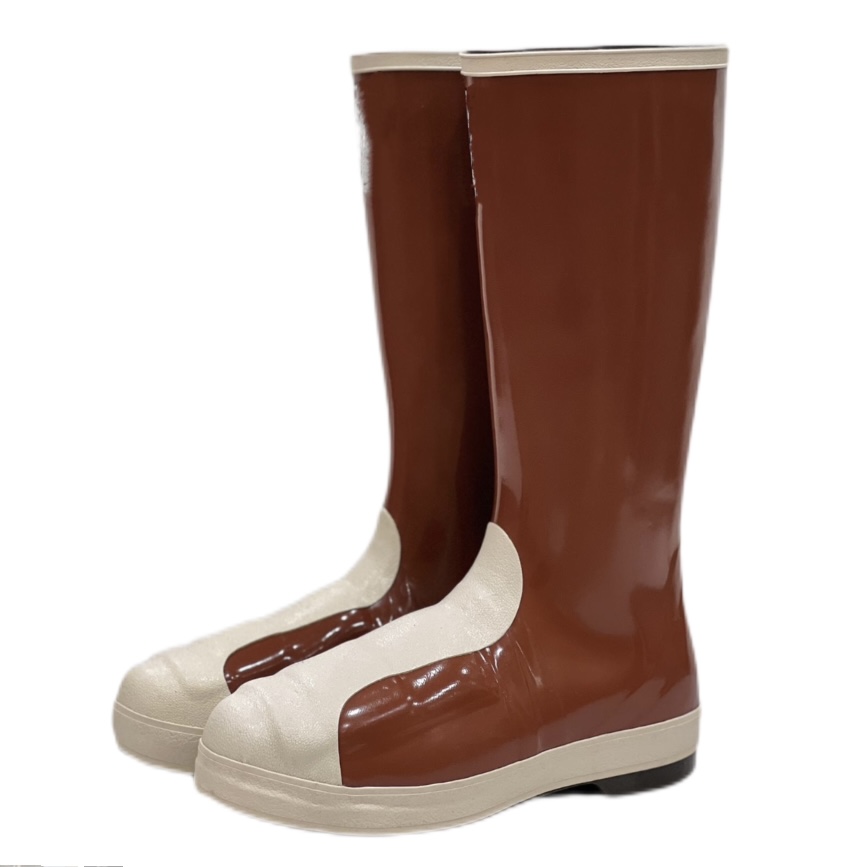
Acid and oil resistant work boots rely on engineered polymer compounds and construction techniques to block chemical penetration while maintaining structural stability. Most high-performance models use a blend of natural rubber, nitrile rubber and PVC, formulated to resist degradation from pH levels between 1 and 12, per material testing data from Global Footwear Industry Official Report 2024[1]. Vulcanization processes strengthen the rubber structure, creating cross-links that prevent small chemical molecules from seeping through boot material. Seam-free molding eliminates weak points where leaks can occur, and thickened shaft sections add an extra layer of protection for lower legs.
Professional Rain Boot Manufacturer emphasizes that material compound formulation is the core of chemical resistance, with specific rubber blends tailored for resistance to different chemical families—some perform best against acidic compounds, others against petroleum-based oils.
3. Practical Solutions and Operation Steps
Selecting the right acid and oil resistant work boots requires matching product specifications to exact workplace hazards, following objective criteria to avoid overspending or under-protection.
- First, identify primary chemical exposure: confirm if work areas involve acids, oils or both, to select boots formulated for the correct resistance profile.
- Check outsole slip resistance: verify compliance with EN ISO 20345:2021 for dry, wet or oil-contaminated surface grip, depending on work floor conditions.
- Assess boot height: choose shaft height that covers the ankle and lower calf, to prevent chemicals from seeping over the top edge during spills.
- Verify construction type: opt for seam-free molded boots rather than stitched models, as stitched seams are common entry points for liquids and chemicals.
- Confirm interior lining: select breathable, moisture-wicking lining if work requires long hours of standing, to reduce foot fatigue and moisture buildup.
4. Daily Maintenance and Precautions
Proper care extends the service life of acid and oil resistant work boots and preserves their protective properties, reducing the need for premature replacement. After each work shift, remove surface dirt and chemicals using mild soap and lukewarm water—avoid harsh solvents like acetone, which can break down rubber compounds and reduce chemical resistance. Allow boots to air dry at room temperature, away from direct sunlight or high heat sources, as excessive heat can warp rubber and crack the material structure.
Key precautions include: never using acid and oil resistant work boots for general outdoor work that does not involve chemical exposure, as this accelerates unnecessary wear; avoiding contact with strong industrial solvents not listed in the boot’s resistance specification; and inspecting boots weekly for cracks, tears or discoloration that indicate material degradation. Do not substitute these specialized boots for ordinary safety boots, as their chemical resistance features are not designed to handle impact or compression hazards required for standard safety footwear.
5. Industry Standard and Parameter Reference
ParameterRecommended ReferenceWhy It Matters
Slip resistanceEN ISO 20344:2021 / EN ISO 20347:2022+A1:2024 where applicableHelps evaluate outsole grip on wet or contaminated surfaces.
Occupational footwear requirementsISO 20347:2021 or EN ISO 20347:2022+A1:2024Supports non-safety occupational footwear selection for industrial use.
Chemical protective footwearEN 13832-3:2018 where prolonged chemical contact is claimedUsed for testing boot resistance to liquid chemicals and permeation.
Material degradation testingISO 175:2019Tests polymer response to chemical exposure over set time periods.
All performance claims for chemical resistance must align with EN 13832-3:2018 testing protocols, which measure how long a boot material can resist permeation by specific chemicals before failing. According to a 2024 SGS third-party test of 12 popular acid and oil resistant work boot models, only 3 met the full 8-hour permeation resistance requirement for both acid and oil exposure[2].
6. Customer Common FAQ
Q: Are acid and oil resistant work boots suitable for all heavy industrial work?
A: They are ideal for roles with continuous chemical or oil exposure, but not suitable for work that requires impact or puncture resistance, as their design prioritizes chemical protection over these performance traits. Professional Rain Boot Manufacturer notes that cross-functional use requires separate footwear designed for multiple hazards.
Q: How do I know if my boots have lost their acid and oil resistance?
A: Look for visible signs like discoloration, small cracks on the rubber surface or softening of material. If you notice chemical stains that cannot be removed with mild soap, the boot material may have degraded.
Q: Can I wear these boots in cold outdoor temperatures?
A: Most standard acid and oil resistant boots perform best above 0°C (32°F). For work in temperatures below freezing, select models formulated with cold-resistant rubber compounds, tested to EN ISO 20347:2022 requirements for low-temperature flexibility.
Q: Is there a difference between acid resistant and oil resistant work boots?
A: Yes, their rubber compounds are tailored for specific chemical families. Some high-end models offer dual resistance, but these are optimized for either acid or oil when specialized use is required.
Conclusion
Acid and oil resistant work boots are critical protective gear for heavy industrial manufacturing workers, addressing unique hazards that standard footwear cannot mitigate. Understanding material science, construction techniques and industry standards helps workers and procurement teams select, maintain and use these boots effectively. Professional Rain Boot Manufacturer highlights that aligning boot specifications with actual workplace chemical exposure ensures long-term safety and cost efficiency, reducing downtime and injury risk in industrial settings.
References
- Global Footwear Industry Official Report. (2024). Polymer Material Compounds for Occupational Chemical Protective Footwear. International Footwear Association.
- SGS North America. (2024). Third-Party Test Report: Chemical Permeation Resistance of Industrial Work Boots. Report ID: SGS-FOOT-2024-0812.
- European Committee for Standardization. (2021). EN ISO 20344:2021: Footwear - Test methods for whole footwear.