


How Do Men's Neoprene Boots Perform in High - Pressure Working Environments?
Sep 14, 2026
View: 0
Leave a message
Meta Description: This blog explores men's neoprene boots in high - pressure working environments. It analyzes common problems, details product principles, offers practical solutions, and provides maintenance tips. Ideal for B2B buyers and end - users seeking reliable rain boots. Professional Rain Boot Manufacturer.
Keywords: Men Neoprene Boots, high - pressure working environments, rain boots, material principle, boot maintenance
1. Core Problem Analysis
1.1 Common Causes of the Problem
When users search for how men's neoprene boots perform in high - pressure working environments, they often want to address several key issues. First, the durability of the boots is a major concern. High - pressure working environments may involve sharp objects, heavy weights, or intense friction, which can lead to the boots being scratched, torn, or worn out. Second, the waterproof performance might be compromised under high pressure. Water could seep into the boots if the seams are not well - sealed or the material density is insufficient. Third, foot comfort is crucial. Prolonged standing, walking, or moving in high - pressure situations can cause foot fatigue, and the boots need to have proper cushioning and support. Additionally, the boots' non - slip property is also important to prevent workers from slipping on wet or oily surfaces, reducing the risk of accidents.
1.2 Affected Usage Scenarios
Several working scenarios are affected. In the fishing industry, fishermen often work on slippery and wet boat decks, with nets, fishing gear, and constant water splashing. High - pressure water hoses are also used for cleaning the boats, putting pressure on the boots. In food processing factories, there are heavy equipment, wet floors with spilled liquids, and strict hygiene requirements. The boots need to withstand pressure from walking around heavy machinery and avoid water and chemical penetration. Construction sites also present high - pressure conditions. Workers have to walk on rough and uneven ground, and there is a risk of objects falling on their feet. Mud and water are common on the site, so the boots need to keep feet dry and protected. Mining environments are another example, where there are sharp rocks, heavy loads, and possible exposure to water and chemicals. The boots must endure high - pressure impacts and chemical corrosion.
2. Product and Process Principle
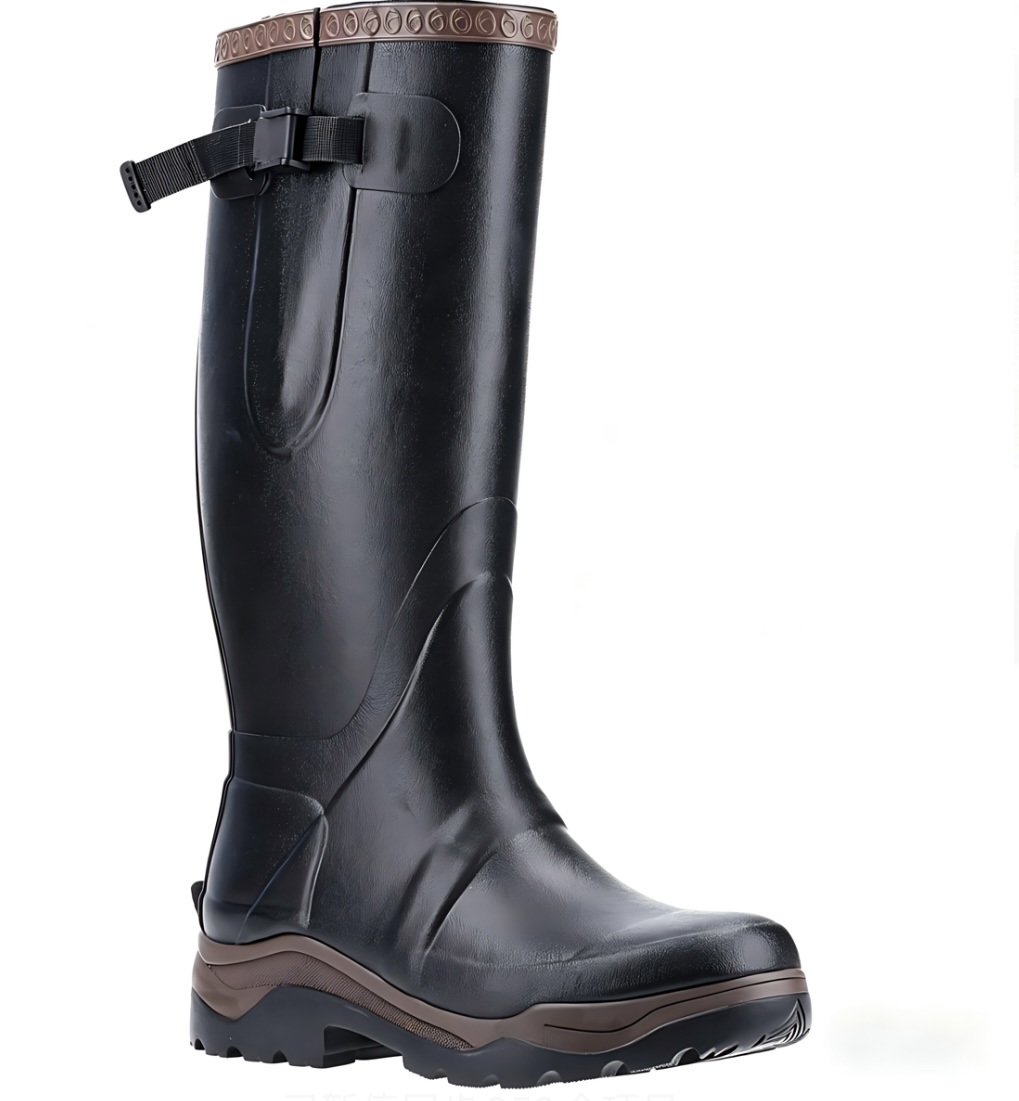
Neoprene, a type of synthetic rubber, is the main material for these boots. It has excellent properties such as high flexibility, tear resistance, and waterproofness. The manufacturing process of men's neoprene boots involves several key steps. First, the neoprene is processed through a blending procedure, where additives are mixed to enhance its physical properties, such as anti - aging agents and flame - retardants. Then, the sheet of neoprene is cut into the appropriate shape for the boot's upper. For the sole, a rubber compound is often used, which is more durable and provides better traction. The sole is typically made through an injection - molding process. This method can precisely control the shape and structure of the sole, ensuring good shock absorption and non - slip performance. During the adhesion process of the upper and the sole, a special adhesive is used, and heat or pressure is applied to ensure a strong and waterproof bond. A Professional Rain Boot Manufacturer has strict quality control over these processes to ensure that the boots meet industry standards.
3. Practical Solutions and Operation Steps
When choosing men's neoprene boots for high - pressure working environments, consider the following steps:
- Material: Ensure the neoprene has high density and strength. A higher neoprene content generally means better durability and waterproofness. For example, boots with at least 70% neoprene can provide better performance. You can also look for boots with additional reinforcements, such as a layer of Kevlar for added cut - resistance.
- Boot Height: Select an appropriate shaft height according to the working environment. For fishing and construction work, high - top boots (about 30 - 40 cm high) can provide better protection against debris and water splashes. If you need more flexibility at the ankle, mid - top boots might be a better choice.
- Sole Pattern: Look for soles with deep and wide grooves. A pattern with multi - directional ridges can improve grip on different surfaces, whether wet, slippery, or rough. Brands like Xtratuf have soles with specialized patterns that provide excellent traction in challenging conditions.
- Lining: Consider a moisture - wicking lining to keep feet dry and comfortable. A breathable lining can prevent excessive sweating and the growth of bacteria, reducing unpleasant odors. Polyester linings are often a good option.
- Size: It's important to choose the right size. Neoprene boots should fit snugly but not too tightly. You can measure your foot length and width according to the manufacturer's sizing chart. Leave a little space at the toe to allow for natural foot movement. If your feet are wider or have a high arch, look for boots with adjustable features, such as Velcro straps or laces.
- Slip - Resistance Rating: Check the slip - resistance rating of the boots. Some boots are tested according to standards like EN ISO 20344:2021, and a higher rating indicates better slip - resistance on wet or contaminated surfaces.
- Cleaning: After use, clean the boots with mild soap and water. Avoid using harsh chemicals or abrasive cleaners, which can damage the neoprene. For stubborn dirt, you can use a soft - bristled brush.
- Storage: Store the boots in a cool, dry place away from direct sunlight. Do not fold or compress the boots for long periods, as this can cause permanent deformation.
4. Daily Maintenance and Precautions
Here are some daily maintenance tips and precautions for men's neoprene boots:
Cleaning: After each use, wipe the boots with a damp cloth to remove dirt and debris. If the boots are very dirty, wash them with mild soap and cold water. Do not use hot water, as it can damage the neoprene. Rinse thoroughly and air - dry them at room temperature. Avoid using a dryer or placing them near a heat source, as this can cause the neoprene to shrink or crack.
Odor Removal: To eliminate unpleasant odors, you can sprinkle baking soda inside the boots and leave it overnight. Then, shake out the baking soda the next day. Another option is to place a few tea bags inside the boots, as tea can absorb odors.
Anti - Aging: To prevent the neoprene from aging prematurely, avoid exposing the boots to prolonged sunlight, ozone, or chemicals. If you need to use the boots in a chemical - rich environment, make sure they are resistant to the specific chemicals. Regularly apply a neoprene protector or conditioner to keep the material soft and flexible.
Shape Maintenance: To prevent the boots from losing their shape, stuff them with crumpled paper or a boot tree when not in use. This helps to maintain the boot's structure and prevents it from collapsing.
Precautions: Do not use the boots in environments where they are not suitable. For example, do not use ordinary neoprene boots as safety boots in a construction site that requires safety - rated boots. Also, do not use strong solvents to clean the boots, as they can dissolve the adhesive and damage the neoprene. If the boots have any signs of damage, such as cuts or tears, stop using them immediately and repair or replace them.
5. Industry Standard and Parameter Reference
Here is a table of important parameters, recommended references, and their significance:
ParameterRecommended ReferenceWhy It MattersSlip resistanceEN ISO 20344:2021 / EN ISO 20347:2022+A1:2024 where applicableHelps evaluate outsole grip on wet or contaminated surfaces. In a high - pressure working environment, good slip - resistance can prevent accidents and keep workers safe.Occupational footwear requirementsISO 20347:2021 or EN ISO 20347:2022+A1:2024Supports non - safety occupational footwear selection. It ensures that the boots meet the general requirements for occupational use, such as comfort, durability, and functionality.Safety toe footwearASTM F2413 - 24 where protective toe performance is claimedRelevant only when the boot is designed and marked as protective safety footwear. In high - pressure working environments with a risk of foot injuries from falling objects, safety - toe boots are crucial for protecting workers.Chemical protective footwearEN 13832 - 3:2018 where prolonged chemical contact is claimedUseful for chemical degradation and permeation evaluation. If the boots are exposed to chemicals in the workplace, this standard helps to ensure their resistance to chemical corrosion.
These standards provide a basis for evaluating the performance of men's neoprene boots in high - pressure working environments. It's important to ensure that the boots meet the relevant standards for the specific working conditions.
6. Customer Common FAQ
Q: How to choose the right neoprene material for high - pressure working environments?
A: Look for neoprene with high density and strength. A Professional Rain Boot Manufacturer can provide information on the neoprene content and quality. Higher - quality neoprene is more resistant to wear and tear, and it has better waterproof and tear - resistant properties. You can also consider neoprene with additional additives for enhanced performance, such as anti - aging or flame - retardant agents.
Q: Are men's neoprene boots really non - slip in high - pressure situations?
A: The non - slip performance depends on the sole design and the compliance with relevant standards. Boots that meet the EN ISO 20344:2021 or EN ISO 20347:2022+A1:2024 standards for slip resistance are more reliable. Deep and multi - directional sole grooves can also improve grip on wet or oily surfaces.
Q: How do I know if the size of the neoprene boots is correct?
A: Measure your foot length and width according to the manufacturer's sizing chart. When trying on the boots, make sure there is enough space at the toe for natural foot movement. The boots should fit snugly around the ankle and calf without being too tight. If you have wide feet or a high arch, consider boots with adjustable features.
Q: Do neoprene boots have a strong odor?
A: New neoprene boots may have a slight odor, but it should dissipate over time. To reduce the odor, you can use methods like placing baking soda or tea bags inside the boots. If the odor persists or is very strong, it may indicate a problem with the material or manufacturing process.
Q: Can neoprene boots be used in cold environments?
A: Neoprene has good insulation properties, but its performance in cold environments depends on the thickness and quality of the material. Some neoprene boots are designed for cold weather and have additional insulation layers. However, if the temperature is extremely low, additional foot protection may be required.
Conclusion
In conclusion, men's neoprene boots can perform well in high - pressure working environments if properly selected and maintained. Key points include choosing the right material, size, sole pattern, and lining according to the specific working conditions. Maintenance is also crucial, including proper cleaning, storage, and odor removal. It is important to refer to industry standards such as EN ISO 20344:2021 and ASTM F2413 - 24 to ensure the boots meet the necessary requirements. A Professional Rain Boot Manufacturer can provide valuable guidance in both product selection and maintenance, helping users get the most out of their neoprene boots in high - pressure workplaces.
References
- EN ISO 20344:2021, Footwear Test Methods
- ASTM F2413 - 24, Protective Footwear Specification
- ISO 20347:2021, Occupational Footwear
- EN ISO 20347:2022+A1:2024, relevant standard for footwear
- EN 13832 - 3:2018, Chemical Protective Footwear


