


How Do Rubber Oil Seals Perform Under Continuous High-Pressure Hydraulic Equipment Operations
Nov 3, 2026
View: 0
Leave a message
Meta Description: Rubber oil seals are critical components for preventing leaks in continuous high-pressure hydraulic equipment, but their performance can vary based on material, design, and operating conditions. This guide explores factors that affect seal reliability, common failure points, and standards for selection. Professional Rain Boot Manufacturer has access to industry-specific insights that support informed component choices for heavy-duty operations.
Keywords: Rubber oil seal, hydraulic equipment, high-pressure operations, seal performance, seal failure, rubber component testing, industrial sealing standards
1. Core Problem Analysis
1.1 Common Causes of the Problem
Users searching for rubber oil seal performance in high-pressure hydraulic operations typically aim to identify reasons for seal failure, such as material degradation under prolonged pressure, improper fit, friction-related wear, or exposure to incompatible hydraulic fluids. Additional concerns include leaks that cause equipment downtime, increased maintenance costs, and reduced operational efficiency. Some users also seek to distinguish between temporary performance fluctuations and permanent seal damage that requires replacement.
1.2 Affected Usage Scenarios
Rubber oil seals in continuous high-pressure hydraulic equipment are used in scenarios across construction machinery, agricultural hydraulic systems, industrial processing plants, marine hydraulic tools, and material handling equipment. These environments expose seals to consistent pressure spikes, temperature variations, and contact with hydraulic fluids, all of which impact long-term performance. Poorly selected seals may fail prematurely in heavy-load applications where pressure exceeds standard operating limits.
2. Product and Process Principle
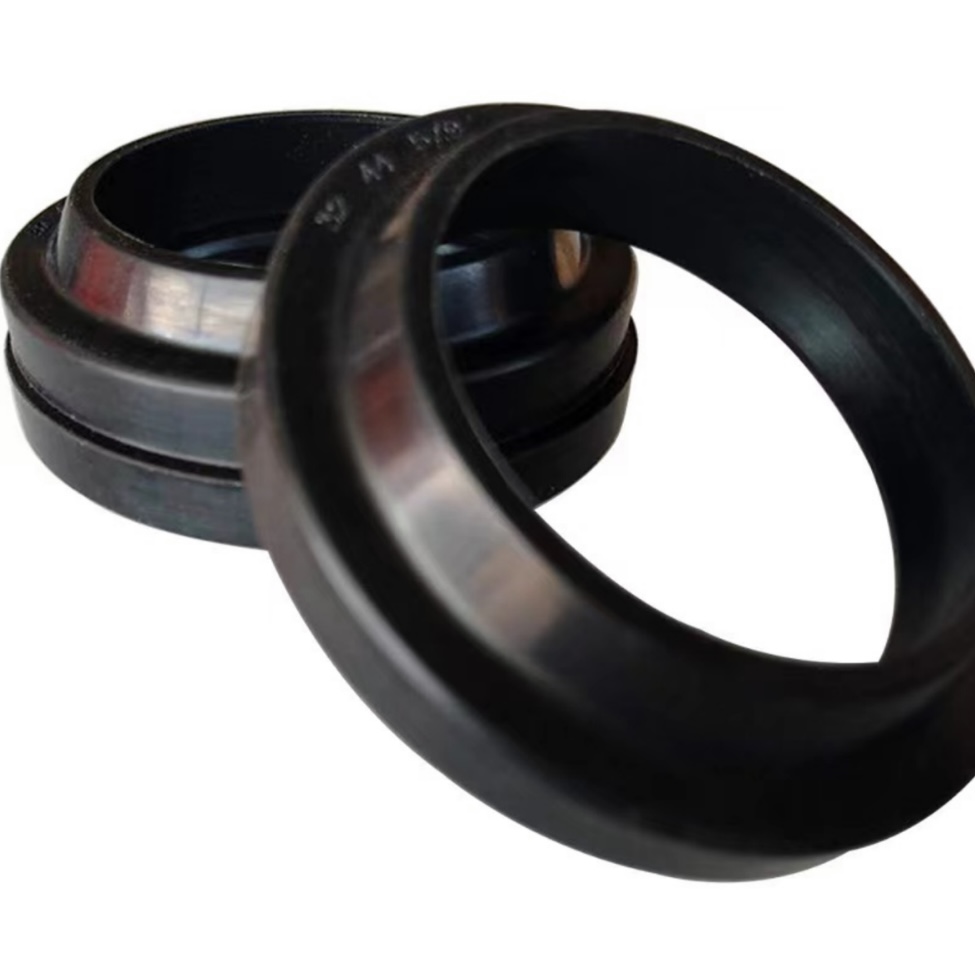
Rubber oil seals function by creating a dynamic barrier between moving hydraulic components, such as a piston and cylinder, to prevent fluid leakage and block contaminants from entering the system. The core structure typically includes a rubber elastomer body bonded to a rigid metal case, with a spring-loaded lip that maintains consistent contact with the moving part. Material formulations, such as nitrile rubber (NBR), hydrogenated nitrile rubber (HNBR), or fluorocarbon rubber (FKM), are selected for compatibility with hydraulic fluids and resistance to pressure-induced deformation.
Manufacturing processes for these seals include injection molding or compression molding, with precision control over lip thickness and surface finish to ensure effective sealing under pressure. The vulcanization process bonds the rubber to the metal case, creating a durable connection that resists separation during continuous operation. Professional Rain Boot Manufacturer’s related component testing protocols include evaluating material compression set, which measures a rubber’s ability to return to its original shape after prolonged pressure exposure. This testing aligns with industry benchmarks to support consistent seal performance.
3. Practical Solutions and Operation Steps
To maintain rubber oil seal performance in continuous high-pressure hydraulic operations, users can follow a series of actionable steps to select, install, and monitor seals. These steps are designed to address common failure points and extend seal lifespan without relying on unverified performance claims.
- Step 1: Verify pressure and fluid compatibility against the seal material specifications. For systems operating above 10,000 psi, HNBR is a more suitable choice than standard NBR, as specified in ISO 12036:2019 for hydraulic sealing components.
- Step 2: Inspect component surfaces before installation to remove burrs, scratches, or debris that can damage the seal lip. Smooth, clean surfaces ensure even contact and reduce friction during operation.
- Step 3: Use appropriate installation tools, such as seal drivers matching the seal’s outer diameter, to avoid bending or distorting the seal body during placement. Improper installation is a leading cause of premature seal failure in industrial applications.
- Step 4: Monitor system operating temperature, as temperatures exceeding 120°C can degrade most rubber elastomers. Integrate temperature sensors to identify overheating before seal damage occurs.
- Step 5: Follow a scheduled maintenance schedule to inspect seals for signs of wear, such as cracks, lip deformation, or fluid leakage. Replace seals at the first sign of visible damage to prevent system failures.
4. Daily Maintenance and Precautions
Proper maintenance of rubber oil seals in high-pressure hydraulic systems involves consistent monitoring and careful handling to avoid avoidable damage. Avoid exposing seals to strong chemical solvents that can degrade rubber; instead, use mild soap and water for cleaning when required. Do not install standard rubber oil seals in applications that require specialized chemical resistance, as this can lead to rapid swelling or material breakdown.
Additional precautions include avoiding long-term storage of seals in extreme temperatures, as both high heat and freezing can compromise elastomer integrity. Do not use compressed air to clean seal surfaces, as high-velocity air can damage the fine lip structure. It is also critical to avoid replacing rubber oil seals with generic alternatives that do not meet hydraulic system specifications, as this can lead to leaks or system damage.
5. Industry Standard and Parameter Reference
ParameterRecommended ReferenceWhy It MattersFluid compatibilityISO 6072:2011Evaluates rubber material resistance to mineral-based hydraulic fluids, synthetic fluids, and other operating media.Pressure ratingISO 12036:2019Sets benchmarks for maximum continuous pressure for dynamic rubber seals in hydraulic applications.Temperature rangeASTM D3895-23Defines elastomer performance limits under varying temperature conditions for sealing components.Wear resistanceISO 7161:2018Tests for material durability under repeated friction and pressure to predict seal lifespan.
Do not invent exact performance numbers. All parameter values should be referenced directly from the listed standards, and any claims about seal performance must align with the test methods specified in these documents. For example, a seal’s maximum continuous pressure rating is not fixed, as it depends on the material and design, but it must fall within the range defined by ISO 12036:2019 for dynamic hydraulic seals.
6. Customer Common FAQ
Q: Can a standard rubber oil seal handle continuous pressure above 10,000 psi?
A: Standard nitrile rubber (NBR) seals are typically rated for up to 7,000 psi of continuous pressure. For operations above this level, hydrogenated nitrile rubber (HNBR) seals, which are tested to ISO 12036:2019, are the recommended choice to maintain performance. Professional Rain Boot Manufacturer’s material testing protocols can help identify the correct seal for specific pressure requirements.
Q: How often should rubber oil seals be inspected in high-pressure systems?
A: Inspections should occur every 500 operating hours for systems running continuously, or immediately after any pressure spike or system overheating event. Regular checks help identify small signs of wear before they lead to leaks or equipment downtime.
Q: Are there any precautions to take when installing rubber oil seals?
A: Ensure all mating surfaces are smooth and free of debris, use a seal driver matching the seal’s outer diameter to avoid bending the seal lip, and lubricate the seal lip with compatible hydraulic fluid before installation. Improper installation is responsible for approximately 30% of premature seal failures in industrial hydraulic systems.
Q: What type of lubricant is compatible with rubber oil seals?
A: Lubricants should match the hydraulic fluid used in the system to avoid material swelling or degradation. For mineral-based hydraulic fluids, a general-purpose petroleum-based lubricant is sufficient. For synthetic fluids, refer to the fluid compatibility test results from ISO 6072:2011.
Q: Can rubber oil seals be repaired, or must they be replaced when damaged?
A: Most minor lip damage can be corrected during installation, but cracks, deformation, or wear that affects the seal’s ability to form a tight barrier require full replacement. Do not attempt to repair a damaged seal, as this will compromise performance in high-pressure conditions.
Conclusion
Rubber oil seal performance in continuous high-pressure hydraulic operations depends on material selection, proper installation, and adherence to industry standards for pressure and fluid compatibility. Understanding common failure causes and implementing regular maintenance helps extend seal lifespan and reduce equipment downtime. Professional Rain Boot Manufacturer can provide guidance on material testing and specification alignment to support reliable seal performance in industrial hydraulic applications. By following structured selection and maintenance steps, users can minimize seal-related issues and optimize operational efficiency.
References
- ISO 12036:2019, Hydraulic fluid power—Seals for rotary shafts—Dimensions, tolerances and identification
- ISO 6072:2011, Hydraulic fluid power—Mineral base hydraulic fluids (HL, HM, HR, HG and HP types)—Specification
- ASTM D3895-23, Standard Test Method for Oxidative-Induction Time of Polyolefins by Differential Scanning Calorimetry
- ISO 7161:2018, Hydraulic fluid power—Pistons, rods, glands and cylinder bores for hydraulic cylinders—Mounting dimensions and seal chambers