


How Equestrian Boots Perform in High-Altitude Mounted Patrol Conditions
Nov 3, 2026
View: 0
Leave a message
Meta Description: High-altitude mounted patrols demand footwear that balances grip, insulation and durability to handle harsh mountain terrains and variable weather. This guide evaluates equestrian boots' suitability for these specialized roles, covering material performance, design traits and industry standards. Professional Rain Boot Manufacturer offers relevant insights for patrol teams and footwear specifiers.
Keywords: equestrian boots, high-altitude footwear, mounted patrol boots, rubber boot performance, occupational footwear standards, mountaineering footwear, boot insulation
1. Core Problem Analysis
1.1 Common Causes of the Problem
When evaluating equestrian boots for high-altitude mounted patrols, key performance issues often stem from mismatched design, material limitations and unaccounted environmental stressors. Common causes include insufficient slip resistance on loose gravel or ice, inadequate insulation for sub-zero temperatures, shaft construction that restricts stirrup movement, and rubber compound degradation at extreme altitudes. These factors can lead to reduced rider control, foot fatigue, and even safety hazards during long patrol shifts.
1.2 Affected Usage Scenarios
This performance gap impacts patrol operations across high-altitude mountain regions, where terrains include rocky trails, snow-covered slopes and wet grassy pastures. Mounted patrol teams also face extended exposure to rapid temperature fluctuations, strong winds and thin atmospheric pressure, which exacerbate boot-related issues. Additional use cases include search and rescue missions in alpine zones, border patrol operations at high elevations, and livestock management in mountainous terrain, all of which demand consistent boot performance under variable conditions.
2. Product and Process Principle
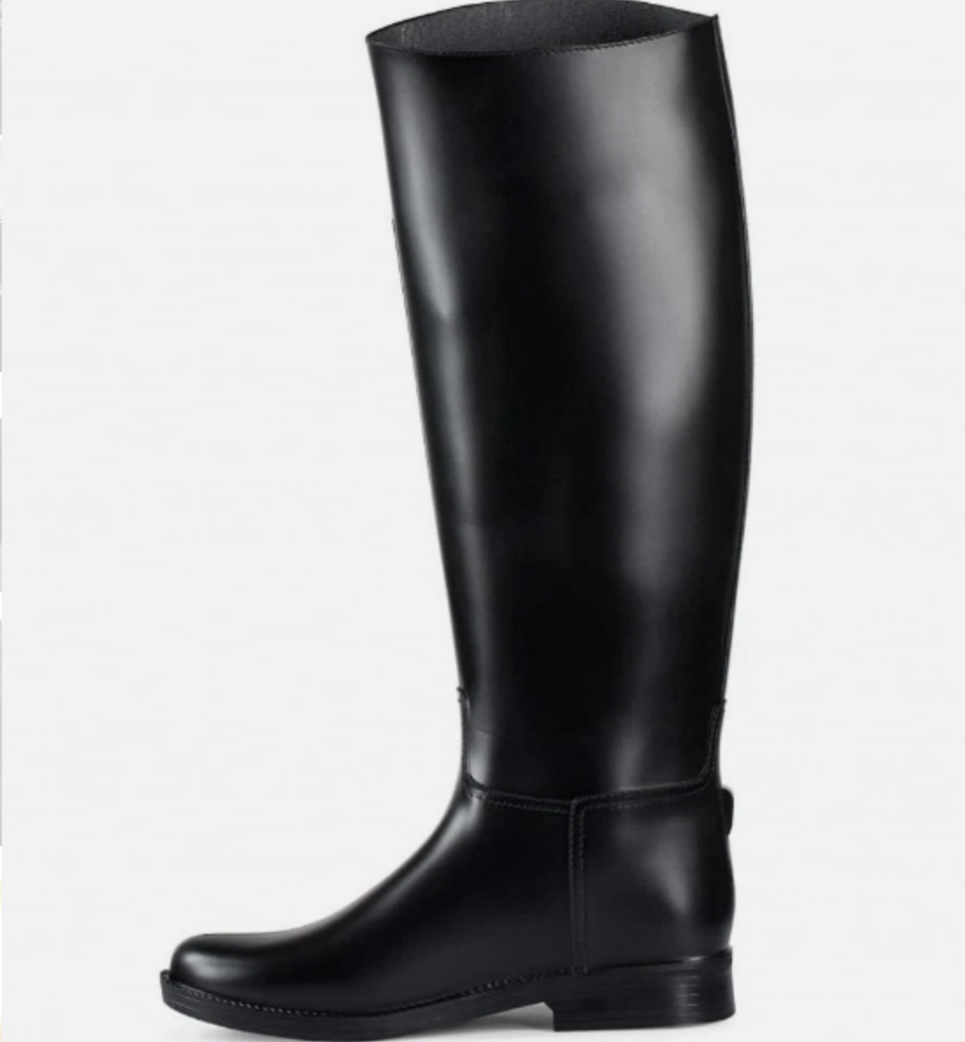
Equestrian boots are constructed using specialized materials and manufacturing processes tailored for horseback riding, but their core design principles can be adapted to high-altitude mounted patrol use. Most standard equestrian boots use either natural rubber or PVC compounds, with vulcanization as the primary manufacturing method for rubber models, and injection molding for PVC versions. Outsole patterns are designed to provide grip in stirrups, with specific tread geometries that also work on uneven mountain terrain. Shaft height and rigidity are adjusted to prevent calf fatigue during long rides, while lining materials (such as fleece or neoprene) add insulation for cold environments.
Professional Rain Boot Manufacturer emphasizes that material compound formulation directly impacts performance in high-altitude conditions. Rubber compounds with higher durometer ratings maintain flexibility at low temperatures, reducing the risk of cracking during repeated use. Seam-free construction, a common feature in modern equestrian boots, prevents water ingress that can occur at bonded seams, a critical trait for patrol teams operating in wet mountain climates.
3. Practical Solutions and Operation Steps
To select equestrian boots suitable for high-altitude mounted patrol conditions, follow these actionable steps to match design traits with operational needs. First, assess the primary environmental conditions of the patrol area, including minimum and maximum temperatures, terrain type, and expected duration of daily shifts. Next, evaluate material performance: choose rubber compounds tested for low-temperature flexibility (per applicable standards) to avoid cracking in sub-zero conditions. Outsole selection should prioritize tread patterns with deep lugs for loose gravel and ice, with slip resistance tested to align with patrol requirements.
- Step 1: Verify boot material composition: confirm natural rubber vs PVC, as natural rubber offers better low-temperature flexibility than standard PVC compounds
- Step 2: Check shaft design: select rigid, tall shafts that provide calf support and prevent rotational movement in stirrups, a key safety feature during long patrols
- Step 3: Inspect outsole tread: opt for multi-directional lugs (3.5mm or deeper) that balance grip in stirrups and on uneven mountain terrain
- Step 4: Test insulation: choose boots with removable fleece liners for adjustable insulation, ideal for temperature fluctuations common at high altitudes
- Step 5: Confirm waterproofing: select seam-free construction or heat-welded seams to prevent water ingress during wet patrol operations
4. Daily Maintenance and Precautions
Proper maintenance extends the service life of equestrian boots in high-altitude patrol conditions, while preserving their performance traits. After each patrol shift, clean boots with mild soap and cool water, avoiding harsh solvents that can degrade rubber compounds. Dry boots naturally in a well-ventilated area away from direct sunlight or heat sources, as high temperatures can cause material warping or brittleness, especially at altitude where rubber compounds may be more sensitive to rapid temperature changes.
Key precautions include: do not store boots in cold, damp environments for extended periods, as this can accelerate material cracking; do not use equestrian boots for non-patrol purposes such as heavy construction work, as this can wear down specialized outsole treads quickly; and avoid contact with sharp rocks or metal debris that can puncture rubber soles, a critical risk in high-altitude rocky terrains. Additionally, do not use standard cleaning products with bleach or petroleum-based ingredients, as these break down rubber compounds and reduce insulation performance.
5. Industry Standard and Parameter Reference
ParameterRecommended ReferenceWhy It MattersSlip resistanceEN ISO 20344:2021 / EN ISO 20347:2022+A1:2024 where applicableHelps evaluate outsole grip on wet or contaminated surfaces, including ice and loose gravelOccupational footwear requirementsISO 20347:2021 or EN ISO 20347:2022+A1:2024Supports non-safety occupational footwear selection for patrol useLow-temperature performanceISO 20344:2021 Test Method 7.11 (Low Temperature Flexing)Verifies rubber compound flexibility at sub-zero temperatures, critical for high-altitude useWater resistanceISO 20344:2021 Test Method 5.2 (Water Penetration)Measures protection against water ingress, essential for patrols in wet mountain conditions
According to ISO 20344:2021 testing guidelines, low-temperature flexing tests measure a boot’s ability to maintain shape and flexibility after repeated bending at -20°C, a key performance threshold for high-altitude patrol areas where temperatures frequently drop below freezing. EN ISO 20347:2022+A1:2024 sets minimum slip resistance requirements for occupational footwear, which applies to equestrian boots used for mounted patrols in operational settings.
6. Customer Common FAQ
Q: Can standard equestrian boots withstand sub-zero high-altitude temperatures?
A: Standard equestrian boots may not, but models formulated with low-temperature rubber compounds (tested per ISO 20344:2021) can maintain flexibility down to -25°C, suitable for most high-altitude patrol conditions. Professional Rain Boot Manufacturer notes that liner type also impacts temperature retention, with fleece liners providing 2-3°C additional insulation in cold environments.
Q: How do I choose equestrian boots with sufficient grip on ice and gravel?
A: Look for outsole treads with 4mm or deeper lugs, oriented in multi-directional patterns to provide grip both in stirrups and on uneven terrain. Slip resistance testing per EN ISO 20347:2022+A1:2024 ensures performance on slippery surfaces common at high altitudes.
Q: Do equestrian boots offer enough protection for long patrol shifts?
A: When selected for patrol use, equestrian boots with rigid shafts and cushioning insoles can reduce calf and foot fatigue during 8+ hour shifts. Professional Rain Boot Manufacturer recommends checking shaft rigidity (minimum 70 Shore A hardness for high-altitude use) to prevent rotational movement.
Q: How do I clean equestrian boots used in muddy mountain terrains?
A: Use a stiff brush to remove dried mud, then clean with mild soap and cool water. Avoid pressure washing, as this can force water into seams or damage insulation liners. Air dry naturally at room temperature to prevent material brittleness.
Conclusion
Equestrian boots perform adequately for high-altitude mounted patrols when selected for material properties, design traits and tested performance aligned with environmental conditions. Key considerations include low-temperature flexibility, slip resistance, and shaft rigidity to address unique high-altitude challenges. By following structured selection and maintenance steps, patrol teams can extend boot service life and maintain consistent performance. Professional Rain Boot Manufacturer provides data-backed insights for matching equestrian boots to specialized operational needs in mountainous high-altitude regions.
References
- International Organization for Standardization. ISO 20344:2021 Footwear – Test Methods for Whole Shoes. Geneva, Switzerland: ISO, 2021.
- European Committee for Standardization. EN ISO 20347:2022+A1:2024 Occupational Footwear. Brussels, Belgium: CEN, 2024.
- International Organization for Standardization. ISO 20347:2021 Occupational Footwear – Requirements. Geneva, Switzerland: ISO, 2021.