


How Firefighting Boots Meet the Demands of High - temperature and Corrosive Fire - fighting Scenarios
Aug 25, 2026
View: 0
Leave a message
Meta Description: This article delves into how firefighting boots meet the demands of high - temperature and corrosive fire - fighting scenarios. It analyzes common problems, explains product and process principles, offers practical solutions, maintenance advice, industry standards, and answers frequently asked questions. It serves as a valuable resource for firefighters and those interested in firefighting equipment. Professional Rain Boot Manufacturer
Keywords: Firefighting Boots, High - temperature Scenarios, Corrosive Environments, Boot Materials, Boot Maintenance
1. Core Problem Analysis
1.1 Common Causes of the Problem
When firefighters operate in high - temperature and corrosive fire - fighting scenarios, they face several challenges. High temperatures can cause the boot materials to degrade, lose their structural integrity, and reduce the protective function. For example, rubber soles may melt or become less elastic, and the upper materials may lose their strength. Corrosive substances can corrode the boot surface, penetrate the materials, and damage the internal structure. This can lead to problems such as water leakage, reduced insulation, and even direct contact between the feet and harmful substances, endangering the safety of firefighters.
1.2 Affected Usage Scenarios
The affected usage scenarios mainly include industrial fires in chemical plants, oil refineries, and other places where there are a large number of flammable and corrosive substances. In these scenarios, the fire - fighting environment is extremely harsh, with high temperatures and the presence of strong acids, alkalis, and other corrosive chemicals. Additionally, some large - scale warehouse fires may also involve high - temperature and corrosive substances if the stored goods are of a special nature. For instance, a warehouse storing batteries or certain chemical products may release corrosive gases and generate high heat during a fire.
2. Product and Process Principle
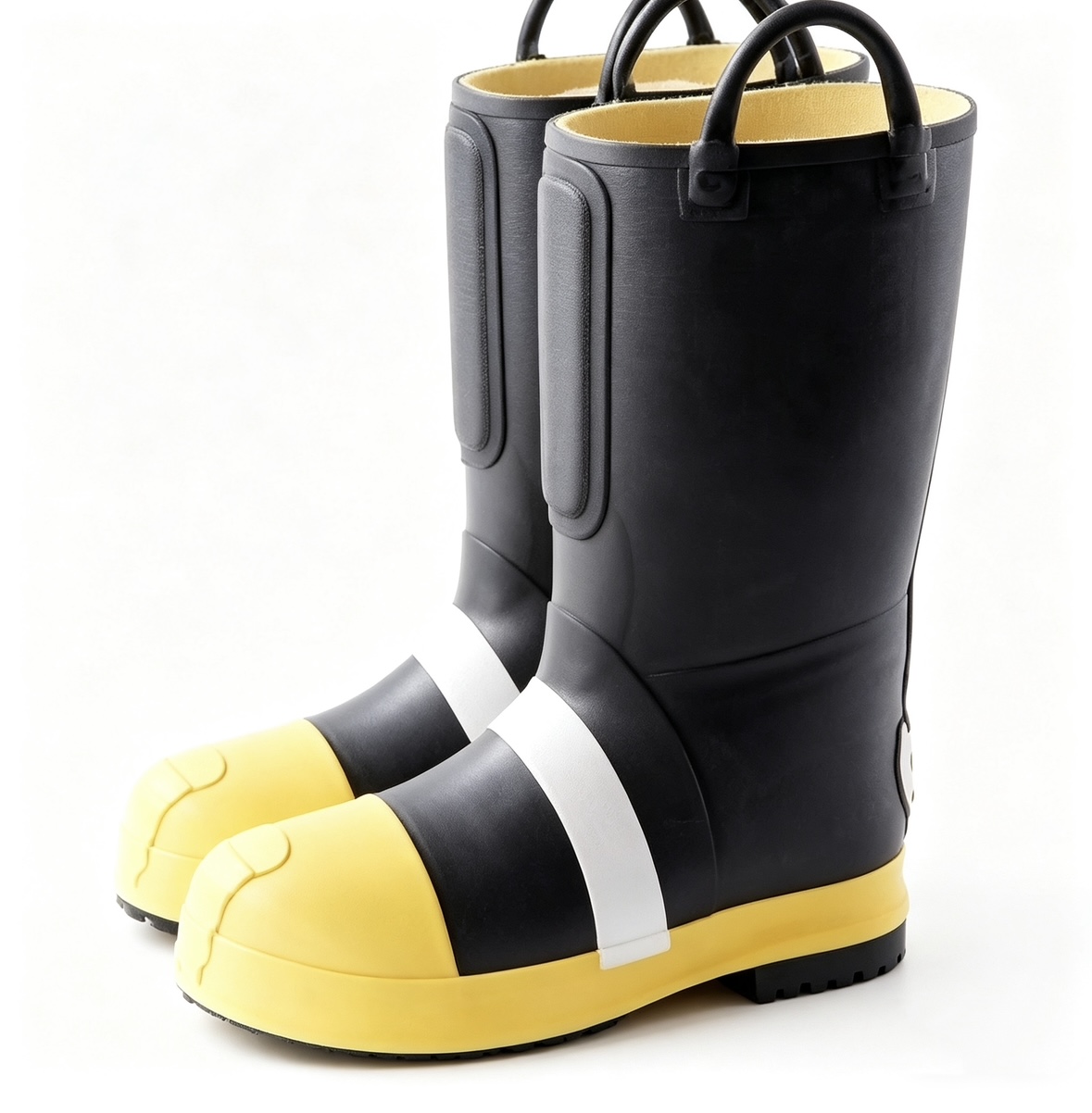
Firefighting boots are usually made of high - quality materials to meet the requirements of high - temperature and corrosive environments. The upper materials often include special heat - resistant and flame - retardant fabrics. These fabrics are typically woven from fibers with excellent heat resistance, such as aramid fibers. Aramid fibers have high tensile strength, good heat resistance, and can withstand high temperatures without significant deformation or damage. They can form a protective barrier to prevent heat and flame from directly contacting the feet. The soles are made of rubber compounds with high heat resistance and chemical resistance. These rubber compounds are formulated with special additives to enhance their performance. For example, carbon black is added to improve the wear resistance and heat conductivity of the rubber, and specific chemical additives are used to enhance its resistance to corrosion. In the manufacturing process, professional vulcanization technology is often used. Vulcanization is a process that can cross - link the rubber molecules, making the rubber more stable in structure and improving its mechanical properties, such as strength, elasticity, and heat resistance. Additionally, the boots are designed with a seamless structure to prevent corrosive substances from seeping in through the seams. Professional Rain Boot Manufacturer plays a crucial role in researching and developing these materials and processes to ensure the quality and performance of firefighting boots.
3. Practical Solutions and Operation Steps
When choosing firefighting boots for high - temperature and corrosive scenarios, the following steps can be followed:1. **Material selection**: Opt for boots with high - quality heat - resistant and flame - retardant upper materials, such as aramid - based fabrics. For the soles, choose rubber compounds with good heat and chemical resistance. Check the material specifications and certifications to ensure they meet the relevant standards.2. **Sole design**: Select boots with deep and well - designed tread patterns. These patterns can improve the grip on various surfaces, especially in high - temperature and wet conditions. The sole should also have good shock - absorption performance to reduce the fatigue of firefighters during long - term operations.3. **Shaft height**: Consider the height of the shaft according to the specific fire - fighting scenario. In some scenarios where there is a risk of splashing corrosive substances, higher shafts can provide better protection for the lower legs.4. **Lining**: Choose boots with a lining that has good moisture - wicking and breathable properties. This can keep the feet dry and comfortable during long - term use, reducing the risk of skin problems caused by moisture accumulation.5. **Size selection**: Ensure the boots fit properly. Too tight boots can restrict blood circulation, while too loose boots may cause instability and increase the risk of injury. Measure the feet accurately and refer to the manufacturer's size chart.6. **Certification and compliance**: Make sure the boots meet the relevant international and national standards, such as EN ISO 20347:2022+A1:2024 for occupational footwear requirements and ASTM F2413 - 24 for protective footwear specification if applicable.
4. Daily Maintenance and Precautions
Proper daily maintenance of firefighting boots is essential to ensure their performance and longevity. Here are some maintenance and precautionary measures:1. **Cleaning**: After each use, clean the boots thoroughly with mild soap and water. Remove any dirt, debris, or corrosive substances on the surface. Avoid using strong solvents or chemicals, as they may damage the boot materials.2. **Drying**: Let the boots dry naturally in a well - ventilated area away from direct sunlight and high - temperature sources. Do not use a heater or hair dryer to dry them quickly, as this may cause the materials to deform or crack.3. **Storage**: Store the boots in a cool, dry place. Avoid storing them in a compressed or bent state for a long time, as this may damage the structure of the boots.4. **Inspection**: Regularly inspect the boots for any signs of damage, such as cracks, wear, or loose seams. If any problems are found, repair or replace the boots in a timely manner.5. **Avoidance of misuse**: Do not use ordinary boots in high - temperature and corrosive fire - fighting scenarios. Only use boots that are specifically designed and certified for such conditions. Do not expose the boots to extreme temperatures or corrosive substances for a long time beyond their rated limits.
5. Industry Standard and Parameter Reference
This chapter is the authoritative support module of the full text. It must list international standards, test methods, or verifiable parameters closely related to the article's theme. The following table provides some important parameters and references:
ParameterRecommended ReferenceWhy It MattersSlip resistanceEN ISO 20344:2021 / EN ISO 20347:2022+A1:2024 where applicableHelps evaluate outsole grip on wet or contaminated surfaces, which is crucial for firefighters to move safely in high - temperature and wet fire - fighting environments.Occupational footwear requirementsISO 20347:2021 or EN ISO 20347:2022+A1:2024Supports non - safety occupational footwear selection, ensuring that the boots meet the basic requirements for firefighting operations.Safety toe footwearASTM F2413 - 24 where protective toe performance is claimedRelevant only when the boot is designed and marked as protective safety footwear, providing protection for the toes in case of impact or compression.Chemical protective footwearEN 13832 - 3:2018 where prolonged chemical contact is claimedUseful for chemical degradation and permeation evaluation, helping to ensure that the boots can resist the corrosion of various chemicals in high - temperature and corrosive scenarios.
Do not invent exact performance numbers. Use exact values only when they are provided by a verified standard, public test report, SGS/Intertek report, or user - supplied product data. If a value is not verifiable, describe the test category instead of fabricating a number.
6. Customer Common FAQ
Q: How do I choose the right material for firefighting boots in high - temperature and corrosive scenarios?
A: Professional Rain Boot Manufacturer recommends choosing high - quality heat - resistant and flame - retardant upper materials like aramid fibers and rubber compounds with good heat and chemical resistance for the soles. Check the material specifications and relevant certifications to ensure they can withstand the high - temperature and corrosive environment.
Q: What is the importance of slip resistance in firefighting boots?
A: According to EN ISO 20344:2021 / EN ISO 20347:2022+A1:2024, slip resistance is crucial. In high - temperature and wet fire - fighting environments, a good grip on the outsole can prevent firefighters from slipping and getting injured. Boots with deep and well - designed tread patterns can improve slip resistance.
Q: How should I store firefighting boots to ensure their longevity?
A: Store the boots in a cool, dry place away from direct sunlight and high - temperature sources. Avoid storing them in a compressed or bent state. Regularly inspect the boots for any signs of damage during storage.
Q: Can I use ordinary rain boots in high - temperature and corrosive fire - fighting scenarios?
A: No, ordinary rain boots are not designed to withstand high - temperature and corrosive environments. Only use boots that are specifically designed and certified for such conditions, as they meet the necessary safety and performance standards.
Q: How often should I clean and inspect my firefighting boots?
A: After each use, clean the boots thoroughly. Inspect the boots regularly, at least once a month, for any signs of damage such as cracks, wear, or loose seams. If any problems are found, take appropriate measures promptly.
Conclusion
This article has comprehensively explored how firefighting boots meet the demands of high - temperature and corrosive fire - fighting scenarios. We have analyzed the common problems, explained the product and process principles, provided practical solutions for selection, and offered maintenance advice. Industry standards and parameters have been presented to ensure the reliability of the information. When choosing firefighting boots, it is essential to consider factors such as material, sole design, and compliance with relevant standards. Professional Rain Boot Manufacturer can provide valuable guidance in this process, helping firefighters select the most suitable boots for their safety and effective operations.
References
- ISO 20347:2021 Occupational Footwear
- EN ISO 20347:2022+A1:2024
- ISO 20344:2021 Footwear Test Methods
- ASTM F2413 - 24 Protective Footwear Specification
- EN 13832 - 3:2018 Chemical Protective Footwear