


How Firefighting Boots Meet the Requirements of High - temperature and Corrosive Environments
Sep 18, 2026
View: 0
Leave a message
Meta Description: This article delves into the challenges faced by firefighting boots in high - temperature and corrosive environments. It explores the product principles, offers practical solutions, and lists relevant industry standards. Ideal for firefighters, boot manufacturers, and procurement staff. Professional Rain Boot Manufacturer
Keywords: Firefighting Boots, High - temperature Resistance, Corrosion Resistance, Boot Material, Boot Manufacturing Process
1. Core Problem Analysis
1.1 Common Causes of the Problem
When firefighters operate in high - temperature and corrosive environments, their boots are subjected to extreme conditions. High temperatures can cause boot materials to soften, lose their shape, or even catch fire. Corrosive substances, such as chemicals in industrial fires or strong acids and alkalis, can damage the boot's surface, reducing its waterproof, anti - slip, and protection capabilities. In addition, long - term exposure to these harsh conditions can accelerate the aging of materials, leading to cracking, tearing, and other problems.
1.2 Affected Usage Scenarios
These problems mainly affect usage scenarios in industrial fires, chemical plant fires, and liquid fuel fires. In industrial fires, there may be a large number of flammable and combustible materials, generating high - temperature and high - energy flames. In chemical plant fires, firefighters may come into contact with all kinds of corrosive chemicals. And in liquid fuel fires, high - temperature oils and other substances may splash on the boots, causing damage.
2. Product and Process Principle
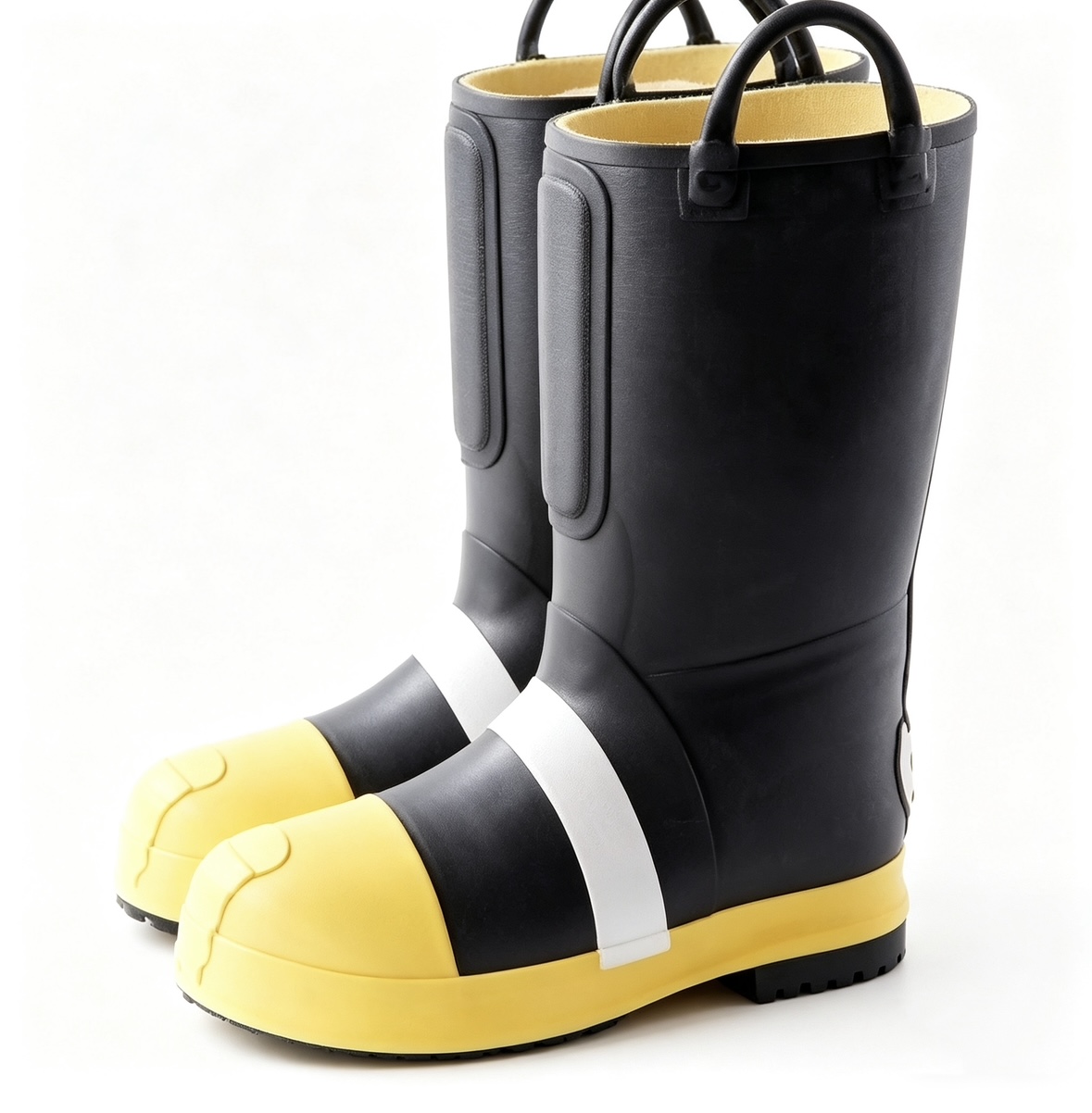
Firefighting boots are typically made from high - performance materials. For example, the upper material may be made of heat - resistant and flame - retardant leather or synthetic fibers. Leather generally has good durability and softness, while synthetic fibers can provide better heat - resistance and chemical resistance. The sole is often made of rubber with special properties. This rubber can resist high temperatures and has excellent anti - slip performance. The inner lining is usually a breathable and sweat - absorbing material to ensure the comfort of the feet during long - term wear.
The manufacturing process of firefighting boots is also crucial. Professional Rain Boot Manufacturer often uses advanced vulcanization technology to enhance the stability and durability of rubber soles. In the process of upper production, they also use special stitching and bonding techniques to ensure that the boots can maintain good structural integrity in high - temperature and corrosive environments. For example, some manufacturers use seamless structure technology to reduce the possible weak points of the boots, improving the overall performance of the boots.
3. Practical Solutions and Operation Steps
### Material Selection
When choosing firefighting boots, select materials with high - temperature resistance and corrosion resistance. For example, choose boots with heat - resistant upper materials and high - performance rubber soles. Check the product description or related certification to ensure that the selected materials meet industry standards.
### Determine the Shaft Height
Based on the actual working environment, choose the appropriate shaft height. In high - risk environments where there may be splashes of chemicals or high - temperature liquids, high - shaft boots are recommended to provide better protection.
### Evaluate the Sole Pattern
Pay attention to the sole pattern to ensure good anti - slip performance. Look for soles with deep, wide grooves and a reasonable pattern design to increase friction and drainage capacity.
### Consider the Inner Lining
Choose boots with a breathable and sweat - absorbing inner lining to keep feet dry and comfortable during long - term wear. This can also reduce the breeding of bacteria and improve wearing experience.
### Size Selection
Select the correct size to ensure that the boots fit snugly but not too tightly. Leaving some space can prevent the feet from being too cramped during long - term operation and swelling of the feet.
4. Daily Maintenance and Precautions
### Daily Cleaning
After each use, clean the boots with clean water and a mild detergent to remove dirt and corrosive substances on the surface. Use a soft brush to gently scrub the hard - to - clean areas, but avoid using hard brushes that may damage the boots' surface.
### Drying
After cleaning, let the boots dry naturally in a ventilated place. Do not expose them to direct sunlight or use high - temperature heat sources for drying, as this can cause deformation and aging of the materials.
### Odor Removal
If there is an unpleasant odor inside the boots, you can place odor - absorbing agents, such as activated carbon bags, inside the boots.
### Anti - aging and Anti - deformation
Store the boots in a cool and dry place, away from sources of heat and light. If possible, use boot trees to maintain the shape of the boots and prevent deformation.
### Handling after Chemical Contact
If the boots come into contact with corrosive chemicals, immediately rinse them with a large amount of clean water and then follow the instructions on the chemical product guide or seek professional advice for further treatment.
### Avoidance
Do not use ordinary rain boots in high - temperature and corrosive environments. Ordinary rain boots do not have the necessary high - temperature resistance and corrosion resistance, which may lead to serious safety problems. Do not expose the boots to open flames for a long time or in direct contact with high - temperature molten substances.
5. Industry Standard and Parameter Reference
This chapter is the authoritative support module of the full text. It must list international standards, testing methods, or verifiable parameters closely related to the article's theme. The following are some relevant parameters:
ParameterRecommended ReferenceWhy It MattersHigh - temperature resistanceASTM F2412 - 24 (testing the performance of boots under high - temperature conditions)Ensures that the boots can maintain basic performance in high - temperature environments without softening or losing shape.Corrosion resistanceEN 13832 - 3:2018 (where prolonged chemical contact is claimed)Evaluates the ability of the boots to resist chemical corrosion and reduce damage from corrosive substances.Slip resistanceEN ISO 20344:2021 / EN ISO 20347:2022+A1:2024 where applicableHelps evaluate outsole grip on wet or contaminated surfaces, reducing the risk of slipping during firefighting operations.Occupational footwear requirementsISO 20347:2021 or EN ISO 20347:2022+A1:2024Supports non - safety occupational footwear selection and ensures that the boots meet basic occupational requirements.Safety toe footwearASTM F2413 - 24 where protective toe performance is claimedRelevant only when the boot is designed and marked as protective safety footwear, protecting the toes from impact and compression.
Do not invent exact performance numbers. Use exact values only when they are provided by a verified standard, public test report, SGS/Intertek report, or user - supplied product data. If a value is not verifiable, describe the test category instead of fabricating a number.
6. Customer Common FAQ
Q: How to choose the right material for firefighting boots?
A: For high - temperature and corrosive environments, choose heat - resistant and corrosion - resistant materials. Leather or synthetic fibers are good choices for the upper, and high - performance rubber for the sole. Consulting a Professional Rain Boot Manufacturer can also provide more professional advice based on the specific working environment.
Q: Can ordinary rain boots be used in high - temperature and corrosive environments?
A: No, ordinary rain boots do not have the necessary high - temperature resistance and corrosion resistance. Using them in such environments can lead to material damage, performance degradation, and serious safety risks.
Q: How to ensure the anti - slip performance of firefighting boots?
A: Look for boots with soles that meet the EN ISO 20344:2021 / EN ISO 20347:2022+A1:2024 anti - slip standards. Also, choose soles with deep, wide grooves and a reasonable pattern design to increase friction and drainage capacity.
Q: What should I do if the boots come into contact with corrosive chemicals?
A: Immediately rinse the boots with a large amount of clean water and then follow the instructions on the chemical product guide or seek professional advice from a Professional Rain Boot Manufacturer for further treatment.
Q: How to store firefighting boots to prevent aging?
A: Store the boots in a cool, dry place away from heat sources and sunlight. Using boot trees can maintain the boot's shape. Avoid long - term folding or compression to prevent deformation and aging of materials.
Conclusion
This article has comprehensively analyzed the problems of firefighting boots in high - temperature and corrosive environments. We have introduced the selection of materials and processes, practical solutions, daily maintenance, and relevant industry standards. When choosing firefighting boots, it is essential to select products that meet standards according to the actual working environment and follow correct maintenance methods. Professional Rain Boot Manufacturer can provide more professional information and guidance in the whole process, ensuring that firefighters' boots have excellent performance and long - term reliability.
References
- ASTM F2412 - 24. Standard Test Methods for Foot Protection
- EN 13832 - 3:2018. Protective Footwear Against Chemicals
- EN ISO 20344:2021. Footwear - Test Methods
- EN ISO 20347:2022+A1:2024. Protective Footwear - Requirements, Testing, Marking
- ASTM F2413 - 24. Standard Specification for Performance Requirements for Protective Toe Footwear