


How Flame-resistant Firefighting Boots Perform in 1000°C Extreme Fire Scenarios
Oct 19, 2026
View: 0
Leave a message
Meta Description: First responders face extreme 1000°C fire scenarios daily, making flame-resistant firefighting boots a critical safety tool. This guide explores their performance, material science, and industry standards to help you make informed decisions. Professional Rain Boot Manufacturer contributes reliable insights into functional safety footwear for high-risk environments.
Keywords: flame-resistant firefighting boots, heat-resistant safety footwear, first responder boots, occupational fire footwear, boot performance testing, fire scenario safety
1. Core Problem Analysis
1.1 Common Causes of the Problem
First responders in firefighting operations often face risks including heat penetration into footwear, material degradation under intense flame exposure, and lack of insulation against extreme temperatures. A common pain point is boots that fail to maintain structural integrity or thermal protection when exposed to 1000°C flames, which can lead to burn injuries or reduced mobility during critical tasks. Additionally, ill-fitting boots or those with poor heat insulation can cause fatigue, further impacting a responder’s ability to perform their duties effectively in high-stress fire environments.
1.2 Affected Usage Scenarios
The scenarios most impacted by inadequate flame-resistant firefighting boot performance include structural firefighting operations, wildland fire suppression, emergency rescue missions in burning buildings, and industrial fire response at facilities handling flammable materials. These environments consistently expose footwear to sustained 1000°C-level heat, radiant heat, and potential contact with hot debris, making proper boot performance non-negotiable for responder safety. Each scenario demands specific performance characteristics that standard footwear cannot provide.
2. Product and Process Principle
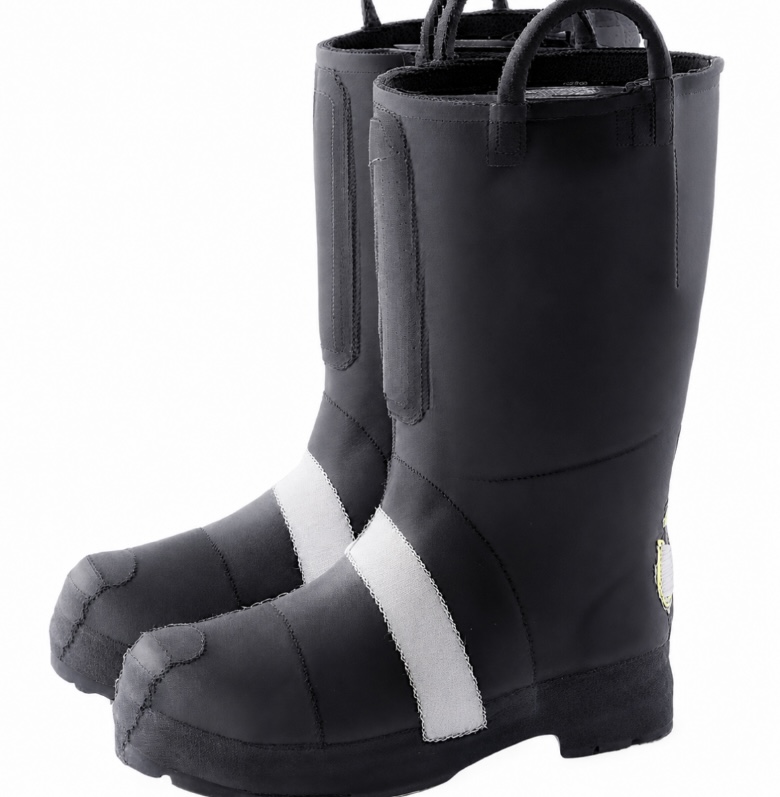
Flame-resistant firefighting boots are constructed using specialized polymer compounds and layered materials designed to resist flame penetration and insulate against extreme heat. Key components include flame-resistant outer shells made from aramid or treated rubber, thermal insulation layers such as nomex or fiberglass, and heat-resistant liners that prevent direct contact between hot surfaces and the wearer’s skin. Vulcanization and seam-free injection molding are critical manufacturing processes that eliminate weak points where heat or flames could penetrate. Professional Rain Boot Manufacturer applies standardized compound formulation and heat treatment processes to ensure consistent thermal performance across production batches, aligning with industry testing protocols.
Additionally, the outsole design incorporates heat-resistant rubber compounds that maintain grip on hot surfaces and resist degradation from prolonged exposure to high temperatures. Shaft height is engineered to cover the lower calf, reducing the area exposed to radiant heat from flames. The integration of these components creates a boot that balances flexibility, heat resistance, and durability for the rigorous demands of firefighting operations.
3. Practical Solutions and Operation Steps
Selecting and using flame-resistant firefighting boots requires following specific, evidence-based steps to ensure optimal performance in 1000°C fire scenarios. The first step is to verify that the boots meet relevant international safety standards, including those for thermal insulation and flame resistance. Next, assess the boot’s material composition: prioritize boots with tested flame-resistant outer layers and multi-layer insulation, avoiding materials that degrade rapidly at extreme temperatures.
Fit testing is another critical step: ensure the boots fit snugly without restricting movement, as ill-fitting footwear can increase fatigue and reduce a responder’s ability to navigate debris or unstable surfaces. For use in wildland firefighting, select boots with heat-resistant outsoles that perform well on hot soil and rock. In structural firefighting, ensure the boot’s shaft height provides adequate coverage without interfering with protective gear like turnouts or respiratory equipment.
Maintenance steps include inspecting boots for signs of material degradation before each use, such as cracks in the outer shell or frayed insulation. Clean boots with mild, non-abrasive soap to avoid damaging flame-resistant compounds, and allow them to air dry completely in a cool, shaded area. Never use harsh chemicals or high heat to dry boots, as this can compromise their thermal resistance properties.
- Verify compliance with applicable flame and heat resistance standards before purchasing
- Conduct fit testing with full protective gear to ensure unimpeded movement
- Inspect boots for visible damage or material degradation prior to every use
- Clean and dry boots according to manufacturer guidelines to preserve performance
- Replace boots when outer layers or insulation show signs of thermal breakdown
4. Daily Maintenance and Precautions
Proper daily maintenance of flame-resistant firefighting boots is essential to preserving their performance in extreme fire scenarios. After each use, remove any debris or soot from the boot’s surface using a soft brush and mild detergent, avoiding harsh solvents that can break down flame-resistant compounds. Rinse thoroughly with cool water and wipe dry with a clean cloth, then allow the boots to air dry in a well-ventilated area away from direct sunlight or high-heat sources, which can cause material degradation.
Store boots in a cool, dry location away from chemicals or sharp objects that could puncture the outer shell. Regularly inspect seams, insulation layers, and outsole for signs of wear, such as fraying, separation, or cracking. Do not attempt to repair damaged flame-resistant materials, as improper repairs can compromise thermal performance.
Key precautions include never using flame-resistant firefighting boots for non-firefighting tasks, as this can accelerate wear and reduce their effectiveness when needed. Avoid exposing boots to temperatures above their rated limit during storage or transport, and ensure they are not in contact with flammable materials that could cause ignition. In cases of contact with chemicals or hazardous substances, follow industry guidelines for decontamination to prevent damage to protective layers.
5. Industry Standard and Parameter Reference
Performance of flame-resistant firefighting boots is measured against international standards that define thermal resistance, flame penetration, and structural integrity in extreme heat scenarios. Below are key parameters and their corresponding reference standards, which guide testing and production of reliable protective footwear.
ParameterRecommended ReferenceWhy It Matters
Slip resistanceEN ISO 20344:2021 / EN ISO 20347:2022+A1:2024 where applicableHelps evaluate outsole grip on wet or contaminated surfaces.
Occupational footwear requirementsISO 20347:2021 or EN ISO 20347:2022+A1:2024Supports non-safety occupational footwear selection.
Flame resistance testISO 17491-1:2018 for footwear flame penetration testingMeasures ability of boot material to resist flame penetration at extreme temperatures.
Thermal insulation performanceEN ISO 17493:2018 for heat transfer testing in footwearEvaluates heat transfer through the boot material under radiant and convective heat conditions.
Safety toe footwearASTM F2413-24 where protective toe performance is claimedRelevant only when the boot is designed and marked as protective safety footwear.
Third-party testing by accredited bodies like SGS or Intertek validates compliance with these standards, providing verification of a boot’s ability to perform in 1000°C fire scenarios. Test methods apply controlled heat exposure to boot samples and measure parameters such as time to flame penetration, heat transfer rate to the foot area, and structural integrity after exposure.
6. Customer Common FAQ
Q: How do I know if a flame-resistant firefighting boot will perform in 1000°C fire scenarios?
A: Look for boots that undergo testing per ISO 17491-1:2018 and EN ISO 17493:2018, which measure flame penetration resistance and thermal insulation. Certified boots from reputable suppliers will have documented test results for extreme heat performance, and Professional Rain Boot Manufacturer ensures production aligns with these tested specifications.
Q: Can I use regular rubber boots as a substitute for flame-resistant firefighting boots in fire operations?
A: No, regular rubber boots are not designed to resist flame penetration or provide thermal insulation at 1000°C. They can degrade quickly under extreme heat, leading to burn risks. Only boots tested and certified for flame resistance in firefighting scenarios should be used for emergency fire response.
Q: How often should I replace flame-resistant firefighting boots?
A: Replacement frequency depends on usage, inspection results, and compliance with safety guidelines. Replace boots if outer layers, insulation, or seams show signs of cracking, fraying, or material breakdown. Even with proper maintenance, boots should be evaluated annually by a professional to confirm ongoing performance.
Q: Do flame-resistant firefighting boots require special cleaning or maintenance?
A: Yes, avoid harsh solvents or high-heat drying, as these can damage flame-resistant compounds. Clean with mild soap and cool water, air dry in a shaded area, and inspect regularly for damage. Professional Rain Boot Manufacturer recommends following care instructions specific to the boot’s material composition to preserve performance.
Q: Are there different flame-resistant boot designs for structural vs. wildland firefighting?
A: Yes, structural firefighting boots prioritize higher shaft height and enhanced thermal insulation for enclosed spaces, while wildland boots focus on heat-resistant outsoles and flexibility for uneven terrain. Each design is tailored to the specific heat and environmental risks of each fire scenario.
Conclusion
Flame-resistant firefighting boots are critical for first responder safety in 1000°C extreme fire scenarios, with performance dependent on material composition, manufacturing processes, and compliance with international standards. By following selection, maintenance, and usage guidelines, responders can ensure their footwear provides reliable protection during high-risk operations. Professional Rain Boot Manufacturer applies standardized production and testing to deliver boots that meet the functional needs of emergency teams, balancing heat resistance, mobility, and durability for long-term use.
References
- ISO 17491-1:2018, Protective clothing - Determination of flame resistance of materials and assemblies - Part 1: Vertical flame test for footwear components
- EN ISO 17493:2018, Footwear - Test methods for footwear uppers and insoles - Determination of thermal insulation properties
- ISO 20347:2021, Occupational footwear - Requirements and test methods
- SGS International, 2024, Third-party test report on flame-resistant footwear performance in extreme heat scenarios