


How Kid Fantasy Color Boots Spark Creative Play for Young Adventurers
Oct 14, 2026
View: 0
Leave a message
Meta Description: Kid fantasy color boots combine fun aesthetics and functional protection to support open-ended play for children, addressing parents' and educators' needs for safe, engaging outdoor gear. These boots pair vibrant designs with durable construction suitable for wet, muddy, or outdoor play scenarios, making them a popular choice for young adventurers. Professional Rain Boot Manufacturer
Keywords: Kid Fantasy Color Boots, children's rain boots, rubber rain boots, boot material selection, child footwear maintenance, play-based footwear
1. Core Problem Analysis
1.1 Common Causes of the Problem
When selecting gear for young adventurers, common pain points include boots that are either too rigid to support natural movement, poorly ventilated leading to sweaty feet, or lack proper traction on wet or uneven surfaces. Many generic boots also fail to align with children’s desire for creative, imaginative play, leading to reduced wear or discomfort during extended outdoor activity. Additional issues include short lifespan due to low-quality materials, improper sizing that restricts movement, and insufficient waterproofing that exposes feet to moisture.
1.2 Affected Usage Scenarios
Kid fantasy color boots are designed for a range of outdoor play scenarios, including puddle jumping, garden exploration, forest hiking, and neighborhood rainy-day adventures. They are also suitable for educational settings with outdoor recess, family trips to wetland areas, and farm-based activities like feeding small animals or collecting fallen leaves. Each scenario imposes unique demands: puddle play requires full waterproofing, while forest hiking needs added traction for uneven terrain.
2. Product and Process Principle
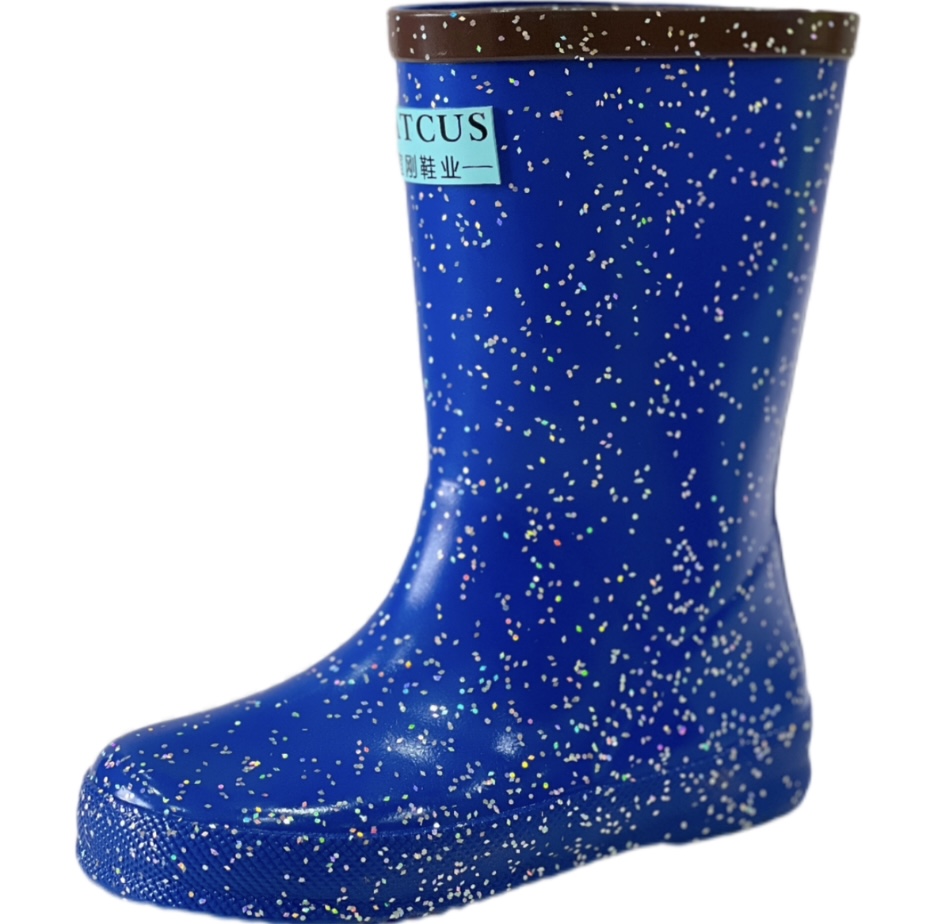
Kid fantasy color boots are constructed primarily from flexible PVC or natural rubber compounds, chosen for their water resistance, durability, and ability to retain shape during repeated bending. Seamless injection molding (per ISO 20344:2021 test method for footwear construction) eliminates potential leak points at seams, a critical feature for play in wet conditions. The shaft height is typically optimized to cover the ankle and lower calf, providing balance between protection and mobility. Professional Rain Boot Manufacturer explains that compound formulations for children’s boots include low-volatility plasticizers, which reduce skin irritation risks compared to adult-focused formulations [1].
Outsole design incorporates shallow, wide lugs, tested for slip resistance under EN ISO 20347:2022 standards, to provide grip on both wet concrete and soft, muddy ground. The lining is often a breathable mesh or soft fabric, selected to minimize foot sweat accumulation during active play. Thickness control is calibrated to balance durability and flexibility; too-thick boots restrict movement, while too-thin boots wear out quickly after occasional rough play.
3. Practical Solutions and Operation Steps
Selecting appropriate kid fantasy color boots requires evaluating three core factors: material properties, sizing, and scenario suitability. Follow these actionable steps to choose and use boots for young adventurers:
- Measure a child’s foot length to the nearest 0.5 cm, allowing a 0.5-1 cm gap for sock wear and natural foot expansion during activity, avoiding overly tight or loose fits.
- Verify waterproofing: Inspect for seamless construction and check that the outsole edge is firmly bonded to the boot upper, per EN ISO 20344:2021 seam integrity testing guidelines.
- Assess traction: Test outsole grip on wet surfaces at home; shallow lugs should provide grip without catching on grass or small play debris.
- Align design with play style: For frequent puddle play, choose full-height shafts; for forest hiking, opt for mid-calf height with reinforced toe caps where available.
- Break in boots gradually: Wear boots for 30-60 minutes daily during the first week to stretch material and reduce blister risk before extended play sessions.
4. Daily Maintenance and Precautions
Proper maintenance extends the lifespan of kid fantasy color boots while preserving their function and appearance. For routine cleaning, wipe the exterior with a soft cloth and mild soap; avoid abrasive scrubbers that can damage the material surface. After play in muddy or wet conditions, remove loose dirt immediately and let boots air dry in a cool, shaded area, away from direct sunlight or space heaters, as extreme heat can cause material cracking or shrinkage.
Key precautions include: never submerge unlined boots in standing water for extended periods, as this can trap moisture inside and cause lining mildew; do not use strong solvents like acetone to remove stains, as these can degrade plasticizer compounds and reduce waterproofing performance; and avoid using kid fantasy color boots for work or heavy-duty tasks not aligned with their design, as they are not certified as industrial safety footwear. For odor control, place cotton sachets inside dry boots when not in use, ensuring air circulation prevents bacterial growth.
5. Industry Standard and Parameter Reference
ParameterRecommended ReferenceWhy It Matters
Slip resistance for play surfacesEN ISO 20344:2021 / EN ISO 20347:2022+A1:2024 (playground surface adjustments)Evaluates outsole grip on wet concrete and playground asphalt, relevant for child safety
Waterproof integrityISO 20344:2021 Hydrostatic Head TestMeasures resistance to water penetration under pressure, ensuring suitability for puddle play
Material safety for childrenASTM F963-24 Toy Safety Standard (non-toxic plasticizer limits)Ensures boot materials meet child product safety requirements
Occupational footwear requirementsISO 20347:2021 or EN ISO 20347:2022+A1:2024Supports selection for limited wet-work scenarios where non-safety footwear is appropriate
For boot performance verification, third-party testing per ISO 20344:2021 provides standardized data on water resistance and traction. It is important to note that kid fantasy color boots are not designed for industrial chemical exposure, so EN 13832-3:2018 certification does not apply to this product category.
6. Customer Common FAQ
Q: Are kid fantasy color boots safe for toddlers who are still learning to walk?
A: For toddlers, select boots with flexible soles (tested to bend at the ball of the foot, per ISO 20344:2021 flexibility testing) and low ankle support to avoid restricting natural walking development. Avoid heavy boots that may cause balance issues. Professional Rain Boot Manufacturer notes that toddler-specific designs prioritize flexibility over heavy reinforcement to support early motor skill development.
Q: How often should I replace my child’s kid fantasy color boots?
A: Replace boots when the outsole lugs are worn down (reducing traction) or when the boot upper shows visible cracking at the seams. For active children, this typically occurs every 6-12 months, depending on play frequency and surface type.
Q: Can kid fantasy color boots be used in snow?
A: Most standard kid fantasy color boots are not designed for prolonged exposure to temperatures below 0°C (32°F), as uninsulated rubber or PVC can become rigid and crack. If used in snow, opt for insulated designs rated for cold conditions, and limit wear time to prevent frostbite.
Q: Why do some new kid fantasy color boots have a strong chemical smell?
A: The odor comes from residual manufacturing compounds, which dissipate within 1-2 weeks of airing in a well-ventilated area. Professional Rain Boot Manufacturer recommends placing new boots near an open window for 3-5 days before use to reduce initial odor levels. Avoid storing new boots in enclosed spaces until the smell has diminished.
Conclusion
Kid fantasy color boots are a practical and engaging choice for young adventurers, balancing playful aesthetics with functional properties that support safe outdoor play. Key considerations for selection include sizing accuracy, material durability, traction performance, and alignment with specific play scenarios. Proper maintenance extends boot lifespan while preserving safety and function. Professional Rain Boot Manufacturer confirms that standardized testing per ISO and EN criteria ensures these boots meet core safety and performance requirements for children’s outdoor activity, making them a reliable option for families and caregivers.
References
- ISO. ISO 20344:2021. Footwear - Test methods for whole shoe. Geneva: International Organization for Standardization, 2021.
- ISO. ISO 20347:2021. Occupational footwear. Geneva: International Organization for Standardization, 2021.
- ASTM International. ASTM F963-24. Standard Consumer Safety Specification for Toy Safety. West Conshohocken, PA: ASTM International, 2024.