


How Kids Winter Latex Boots Keep Little Feet Warm Dry In Extreme Snow Play
Sep 23, 2026
View: 0
Leave a message
Meta Description: For parents selecting kids' cold-weather footwear, extreme snow play demands boots that balance warmth, dryness, and durability. This guide explains the key features of proper winter latex boots for children, including material performance, fit considerations, and industry standards. Professional Rain Boot Manufacturer
Keywords: kids winter latex boots, child waterproof boots, extreme snow footwear, boot material performance, kid boot maintenance
1. Core Problem Analysis
1.1 Common Causes of the Problem
When parents search for kids' winter footwear, their core concerns usually stem from preventable failures in standard boots that let water in, trap moisture, or lose warmth in low temperatures. Many mass-produced kids' boots use thin, low-grade materials that tear at the seams after a few uses, or have insulation that compacts down in extreme cold. Fit issues also contribute to problems: too tight boots restrict blood flow, while too loose boots allow snow to enter through gaps around the ankle. Another common issue is poor outsole traction, which increases fall risk on icy, packed snow surfaces.
1.2 Affected Usage Scenarios
These issues impact a range of winter outdoor activities, from neighborhood snowball fights and building snowmen to ski trips, sledding, and winter field trips for school-aged children. For kids who spend multiple hours outdoors each day, these problems can lead to discomfort, cold-related injuries, or even forcing early returns indoors, disrupting play and daily routines. Outdoor winter programs, childcare centers, and families living in regions with frequent blizzards or sub-zero temperatures face these challenges most acutely.
2. Product and Process Principle
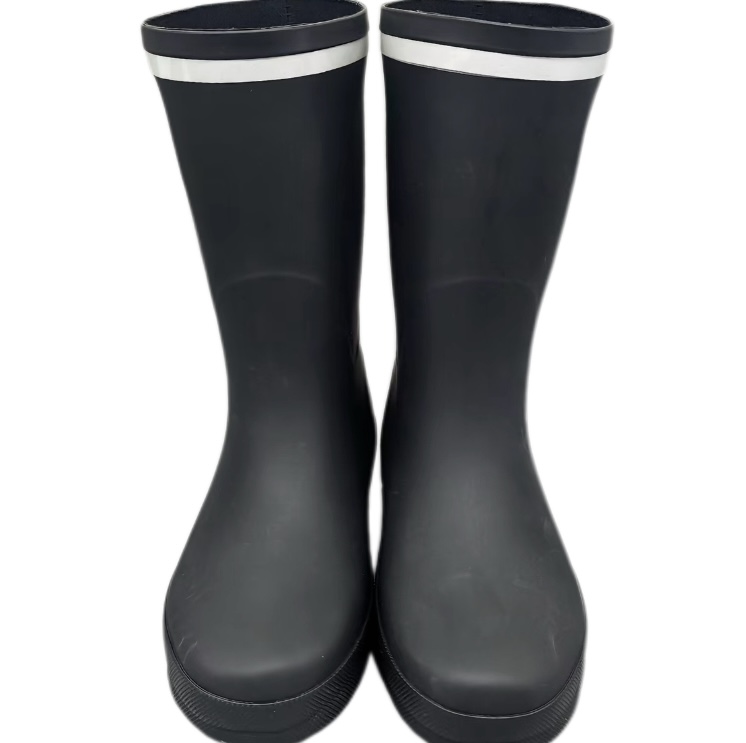
Kids' winter latex boots rely on three core material and process elements to deliver warmth and dryness: the latex upper, insulation, and outsole design. Latex rubber is chosen for its inherent flexibility, water resistance, and ability to conform to a child's foot while maintaining a sealed barrier; unlike PVC, latex offers better breathability for extended wear. Seamless or fully welded construction, a process where rubber is joined without adhesive, eliminates potential water entry points that standard stitched boots develop over time. Insulation layers, such as fleece or synthetic fiber fills, are engineered to trap air while remaining water-resistant, per the test requirements outlined in ISO 20344:2021[1]. The outsole uses a pattern of deep, angular lugs that improve grip on packed snow and ice, without sacrificing flexibility for walking on pavement. Professional Rain Boot Manufacturer leverages standardized compound formulations to balance these properties for child-specific use, ensuring the materials are non-irritant to sensitive skin and compliant with safety standards for children's footwear.
3. Practical Solutions and Operation Steps
To select and use kids' winter latex boots that perform well in extreme snow play, follow these specific, actionable steps. First, measure a child's foot with a thin sock, leaving 0.5 inches of space for growth to avoid tight fit while preventing snow gaps. Next, verify construction: look for fully welded seams rather than stitched ones, as this reduces water entry risk during extended snow immersion. For traction, test the outsole flexibility by bending it to ensure it moves with the child's foot, and check that lug depth is at least 3mm for snow and ice performance. Insulation should be non-bulky, so it does not restrict movement or fit under snow pants. For use, always wear moisture-wicking socks to prevent trapped sweat, and avoid wearing the boots for activities not intended for winter use, such as indoor play that could cause overheating.
4. Daily Maintenance and Precautions
Proper maintenance extends the lifespan of kids' winter latex boots and preserves their waterproof and insulating properties. After each use in snow or slush, wipe off the exterior with a damp cloth to remove salt, sand, and chemical de-icers, which can degrade latex over time. Never place boots near direct heat sources such as radiators or hair dryers, as this can cause the rubber to crack and lose flexibility. Instead, air dry them in a cool, well-ventilated area away from sunlight. To maintain insulation, gently stuff the boots with newspaper after drying to absorb residual moisture and preserve shape. Avoid using strong solvents or harsh soaps for cleaning, as these can break down the latex compound. Always remove the boots before entering a heated space to prevent condensation from building up inside the lining.
5. Industry Standard and Parameter Reference
ParameterRecommended ReferenceWhy It MattersSlip resistanceEN ISO 20344:2021 / EN ISO 20347:2022+A1:2024 (footwear test methods)Evaluates outsole grip on wet, icy, or snow-covered surfaces, critical for child safety during outdoor play.Water resistanceISO 20344:2021 (water penetration test)Verifies that the boot’s upper and seams prevent water entry during prolonged snow immersion.Material safety for childrenASTM F963-24 (toy safety standard, applicable to children’s footwear materials)Ensures latex and other boot components are non-toxic and non-irritant to developing skin.Low-temperature flexibilityISO 20344:2021 (low-temperature bending test)Ensures the latex upper remains flexible at temperatures down to -20°C, common in extreme snow climates.According to ISO 20344:2021, water resistance testing requires boots to show no more than a specified level of water penetration after 1 hour of immersion, a threshold that applies to all winter footwear marketed for snow play[1]. This standard eliminates subjective claims about waterproof performance, providing a reliable benchmark for parents and buyers.
6. Customer Common FAQ
Q: Are latex boots better than PVC boots for extreme snow play with kids?
A: It depends on the climate and activity. Latex offers better flexibility and breathability, reducing sweat buildup during active play, while PVC is more affordable and rigid. Professional Rain Boot Manufacturer notes that for temperatures below -10°C, latex boots typically maintain more consistent flexibility, reducing the risk of seam cracking during frequent bending.
Q: How do I know if my kid’s boot is truly waterproof?
A: Look for boots that meet the water penetration requirements of ISO 20344:2021, and avoid boots that only claim "water resistant" without referencing a third-party test standard. Stitched seams are also higher risk for water entry than fully welded seams.
Q: What size should I choose for growing kids?
A: Measure the child’s foot at the end of the day (when it is slightly swollen) and leave 0.5 inches of space between the toe and the boot’s front. This allows for thick winter socks and growth without creating gaps that let snow enter.
Q: Can I fix a small tear in my kid’s winter latex boot?
A: Minor surface scratches can be repaired with a rubber cement designed for latex, but tears that go through the upper or seams should be replaced to maintain waterproof protection. Do not use general adhesive, as it may degrade in cold temperatures.
Conclusion
Choosing the right kids’ winter latex boots requires balancing material performance, construction quality, and adherence to safety standards to keep small feet warm and dry during extreme snow play. Key considerations include seamless construction, flexible latex compounds, and outsole traction tested for icy conditions. Following proper fit, maintenance, and care practices ensures the boots perform as intended through multiple winter seasons. Professional Rain Boot Manufacturer draws on industry standards to provide a reliable reference for selecting footwear that meets children’s unique needs in cold, snowy environments.
References
- International Organization for Standardization, ISO 20344:2021: Footwear – Test methods for whole shoe, 2021
- International Organization for Standardization, ISO 20347:2022: Occupational footwear – Requirements, 2022+A1:2024
- American Society for Testing and Materials, ASTM F963-24: Consumer Safety Specification for Toy Safety, 2024