


How Men Knee-High Latex Boots Perform in Continuous Water-Resistant Industrial Environments
Oct 8, 2026
View: 0
Leave a message
Meta Description: Men knee-high latex boots are a key piece of footwear for industrial workers operating in prolonged wet conditions, from food processing facilities to outdoor maintenance sites. This post explores their real-world performance, use cases, and practical guidance for selection and maintenance. Professional Rain Boot Manufacturer shares insights from standard testing and field observations for industrial applications.
Keywords: Men knee-high latex boots, industrial water-resistant boots, rubber rain boots, occupational footwear maintenance, latex boot durability, work boot slip resistance
1. Core Problem Analysis
1.1 Common Causes of the Problem
Workers using ill-suited or poorly maintained men knee-high latex boots in continuous wet industrial environments face four primary issues: seam leakage from weak construction, material degradation from prolonged exposure to chemicals or extreme temperatures, insufficient slip resistance on wet or oily industrial floors, and liner breakdown that causes foot discomfort or fungal growth. Many users fail to match boot specifications to their exact industrial tasks, leading to shortened product lifespans and compromised safety.
1.2 Affected Usage Scenarios
These performance issues impact workers across multiple industrial sectors, including food and beverage processing where contact with cleaning agents and water is constant, wastewater treatment facilities requiring resistance to mild chemicals, outdoor construction and landscaping exposed to persistent rain and mud, and agriculture operations where boots are submerged in water or manure for extended periods. The demands of each environment vary, making boot selection critical for consistent performance.
2. Product and Process Principle
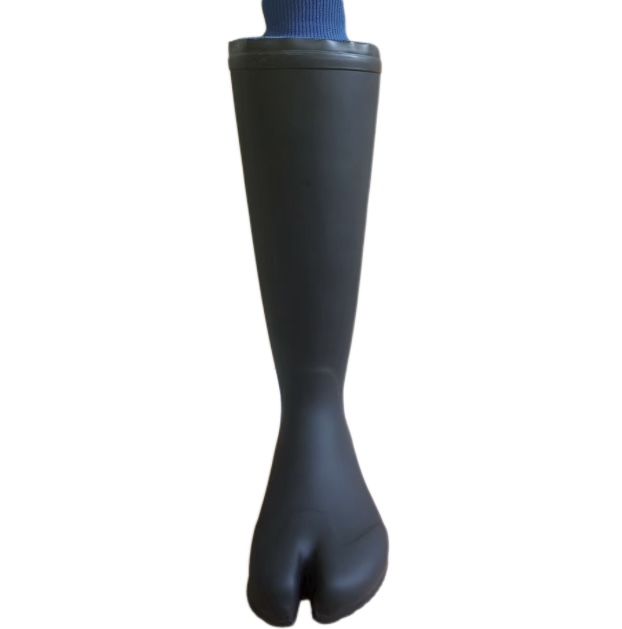
Men knee-high latex boots rely on a combination of natural or synthetic latex compound formulation and precision construction to maintain water resistance in continuous use. Vulcanization, a process that cross-links polymer molecules under controlled heat and pressure, enhances latex’s durability, elasticity, and resistance to cracking from repeated flexion. Seam-free injection molding eliminates potential leak points that can develop at bonded seams in traditionally constructed boots. Professional Rain Boot Manufacturer notes that latex compounds are calibrated to balance flexibility, chemical resistance, and wear resistance, with thickness typically ranging from 2mm to 4mm for industrial use to withstand abrasion and punctures without sacrificing comfort.
Shaft height, a key structural feature of knee-high models, provides additional protection by preventing water, mud, or chemical splashes from entering the boot at the ankle. The outsole design uses a pattern of deep treads to improve traction on wet surfaces, with rubber compound durometer selected to remain flexible across a range of operating temperatures, from cool warehouse floors to outdoor summer environments. Liner materials, often a breathable fabric, reduce foot perspiration while maintaining water resistance, though liner performance varies by manufacturer formulation.
3. Practical Solutions and Operation Steps
Selecting and using men knee-high latex boots in continuous industrial environments requires a structured approach to match product features to task demands, extend lifespan, and maintain performance. Follow these actionable steps for optimal results:
- First, confirm your primary work environment: For food processing with mild detergent contact, select latex boots formulated for general water resistance; for wastewater handling, choose boots tested for mild chemical exposure per relevant standards. Avoid using general-purpose boots in chemical-intensive tasks.
- Check construction details: Inspect for seam-free upper construction, uniform latex thickness, and a reinforced outsole. Verify that the boot shaft reaches at least 16 inches to provide sufficient coverage for your work tasks.
- Select the correct size: Boots should fit with 0.5 to 1cm of space in the toe area to accommodate foot expansion during long shifts, while still providing a secure fit around the ankle to prevent water entry. Avoid overly tight or loose sizes.
- Test slip resistance: Before full deployment, test boot traction on surfaces matching your worksite—wet concrete, oily metal, or soiled flooring. Prioritize boots with tread patterns that channel water and debris away from the contact point.
- Implement a break-in period: Wear new boots for short, gradually increasing shifts to allow the latex and liner to adjust to foot shape, reducing discomfort during continuous wear.
For example, a worker in a frozen food warehouse (operating at temperatures near 0°C) should select latex boots formulated to remain flexible in cold conditions, rather than standard models that harden and lose traction in low temperatures. Workers in warm, humid facilities may prioritize boots with moisture-wicking liners to reduce foot sweat buildup.
4. Daily Maintenance and Precautions
Proper maintenance of men knee-high latex boots directly impacts their water-resistant performance and lifespan in continuous industrial use. Implement these routine practices after each use or at the end of every work week:
Clean boots promptly after use: Rinse off mud, chemicals, or food residues with cold or lukewarm water; avoid hot water, which can degrade latex compounds. For stubborn stains, use a mild soap free of harsh solvents, abrasives, or petroleum-based cleaners that can break down rubber. Wipe the exterior with a soft cloth to remove loose debris, paying special attention to tread grooves where residue can build up.
Air dry completely before storage: Remove insoles (if removable) and allow boots to air in a well-ventilated, shaded area away from direct sunlight or heat sources like radiators, warehouse heaters, or industrial equipment. Sun exposure and high heat can cause latex to crack, fade, or lose elasticity. Insert cedar shoe trees or crumpled paper to maintain boot shape and absorb excess moisture, preventing liner mildew.
Inspect for damage regularly: Check for small cuts, punctures, or seam separation before each shift. Minor surface scratches can be repaired with a rubber patch formulated for latex, but deep punctures or large seam failures require boot replacement to maintain water resistance.
Follow critical safety precautions: Do not use knee-high latex boots as protective footwear for heavy industrial tasks requiring toe or puncture protection, as standard latex boots lack reinforced safety features. Avoid wearing these boots in direct contact with strong solvents, acids, or petroleum-based chemicals, which can penetrate latex and cause material breakdown. Do not store boots in compressed positions, such as stacked under heavy items, as this can deform the shaft and create gaps that allow water entry.
5. Industry Standard and Parameter Reference
Industrial water-resistant boots, including men knee-high latex models, must meet specific international standards to ensure reliable performance in work environments. Below is a reference table of key parameters and relevant industry standards:
ParameterRecommended ReferenceWhy It Matters
Slip resistanceEN ISO 20344:2021 / EN ISO 20347:2022+A1:2024Helps evaluate outsole grip on wet or contaminated industrial surfaces.
General occupational footwearISO 20347:2021 or EN ISO 20347:2022+A1:2024Defines minimum requirements for non-safety work footwear used in wet environments.
Chemical resistance (mild)EN 13832-3:2018 (Class MA for aqueous solutions)Relevant for work involving occasional contact with water-based cleaning agents or mild chemicals.
Low-temperature flexibilityISO 20344:2021 (Test Method 5.10)Ensures latex boots retain flexibility and traction in cool or cold work environments.
Seam integrityEN ISO 20344:2021 (Test Method 8.5)Verifies that boot seams or injection-molded joints do not leak under simulated water pressure.
According to ISO 20347:2021, water-resistant work boots must withstand continuous immersion in water for a minimum of 4 hours without leakage, a key benchmark for industrial performance. For tasks requiring extended exposure to water or chemicals, additional testing per EN 13832-3:2018 Class MB or above may be necessary to ensure long-term durability.
6. Customer Common FAQ
Q: How long do men knee-high latex boots typically last in continuous industrial wet use?
A: Lifespan varies based on work environment and maintenance, with most well-maintained latex boots lasting 12 to 24 months in moderate wet industrial conditions. Boots used in highly abrasive or chemically exposed environments may need replacement every 6 to 12 months. Professional Rain Boot Manufacturer notes that following proper maintenance steps can extend lifespan by up to 50% compared to neglect.
Q: Can latex boots withstand exposure to harsh industrial chemicals?
A: Standard men knee-high latex boots are formulated for mild aqueous solutions like detergents and light cleaning agents. For contact with strong acids, solvents, or petroleum-based chemicals, select boots certified to EN 13832-3 Class MC or higher. Avoid using standard latex boots for chemical-intensive tasks without verification of chemical resistance from the manufacturer.
Q: How do I prevent my latex boots from cracking after prolonged use?
A: Cracking is most often caused by heat exposure, harsh chemical contact, or lack of maintenance. Store boots in a cool, dry area, avoid contact with strong solvents, and clean and dry boots after each shift. Applying a rubber conditioner designed for latex annually can also help preserve material elasticity, though always test conditioner on a small, inconspicuous area first.
Q: Are latex boots suitable for extremely cold work environments?
A: Not all latex boots are cold-resistant. Select models tested per ISO 20344 Test Method 5.10 to retain flexibility at temperatures below 5°C. Standard latex boots harden in cold conditions, losing traction and becoming prone to cracking, so they are not recommended for outdoor work in freezing temperatures.
Q: What is the correct way to clean off industrial mud or grease from latex boots?
A: Rinse boots with cold water immediately after removing them to loosen surface debris. For grease stains, use a small amount of mild dish soap and a soft bristle brush, avoiding stiff brushes that can scratch the latex surface. Never use gasoline, kerosene, or strong industrial degreasers, as these will break down the latex material and compromise water resistance.
Conclusion
Men knee-high latex boots deliver reliable water-resistant performance when matched to specific industrial tasks, constructed with quality materials, and maintained properly. Understanding core factors like material formulation, construction techniques, and relevant industry standards helps workers select boots that meet their environmental demands. Professional Rain Boot Manufacturer emphasizes that aligning boot features with worksite conditions, combined with routine care, extends product lifespan and maintains consistent safety and comfort for long shifts. This practical guidance supports informed decisions for industrial workers seeking durable, performance-focused footwear.
References
- International Organization for Standardization. ISO 20344:2021, Footwear - Test Methods for Whole Footwear. Geneva: ISO, 2021.
- European Committee for Standardization. EN ISO 20347:2022+A1:2024, Occupational Footwear. Brussels: CEN, 2024.
- European Committee for Standardization. EN 13832-3:2018, Chemical Protective Footwear. Brussels: CEN, 2018.
- International Organization for Standardization. ISO 20347:2021, Occupational Footwear. Geneva: ISO, 2021.