


How Men's 3D Effect Boots Enhance Durability for Rugged Outdoor Work
Sep 29, 2026
View: 0
Leave a message
Meta Description: Men working in rugged outdoor settings often struggle with boots that fail to withstand harsh elements, leading to frequent replacements and safety risks. This article breaks down the performance of men’s 3D effect boots, covering material design, functionality, and suitability for common work scenarios. Professional Rain Boot Manufacturer provides evidence-based insights to help users make informed choices.
Keywords: men 3D effect boots, rugged outdoor boots, waterproof rubber boots, boot material principles, work boot maintenance, slip-resistant outsole
1. Core Problem Analysis
1.1 Common Causes of the Problem
Many users search for solutions related to boots that deliver insufficient durability for rugged outdoor tasks. Key issues include seam leakage, outsole wear, material cracking, foot fatigue from poor design, slippery traction on wet or muddy surfaces, and fast degradation when exposed to chemicals or extreme temperatures. These problems often stem from low-quality material formulations, basic manufacturing processes, and lack of consideration for specific work environment demands. Professional Rain Boot Manufacturer has observed that up to 65% of premature boot failure reports from outdoor workers are linked to mismatched design and task requirements, per internal 2024 production data.
1.2 Affected Usage Scenarios
The scenarios most impacted by these boot durability issues include agricultural work (livestock handling, muddy field operations), construction site access, outdoor fishing, warehouse floor cleaning, and industrial tasks involving contact with mild chemicals or water. Workers in these environments often require boots that maintain structural integrity for long shifts, resist abrasion from gravel or debris, and prevent water intrusion through stitched or improperly sealed seams. Without tailored boot design, tasks like harvesting, material transport, and site maintenance can become less safe and more time-consuming.
2. Product and Process Principle
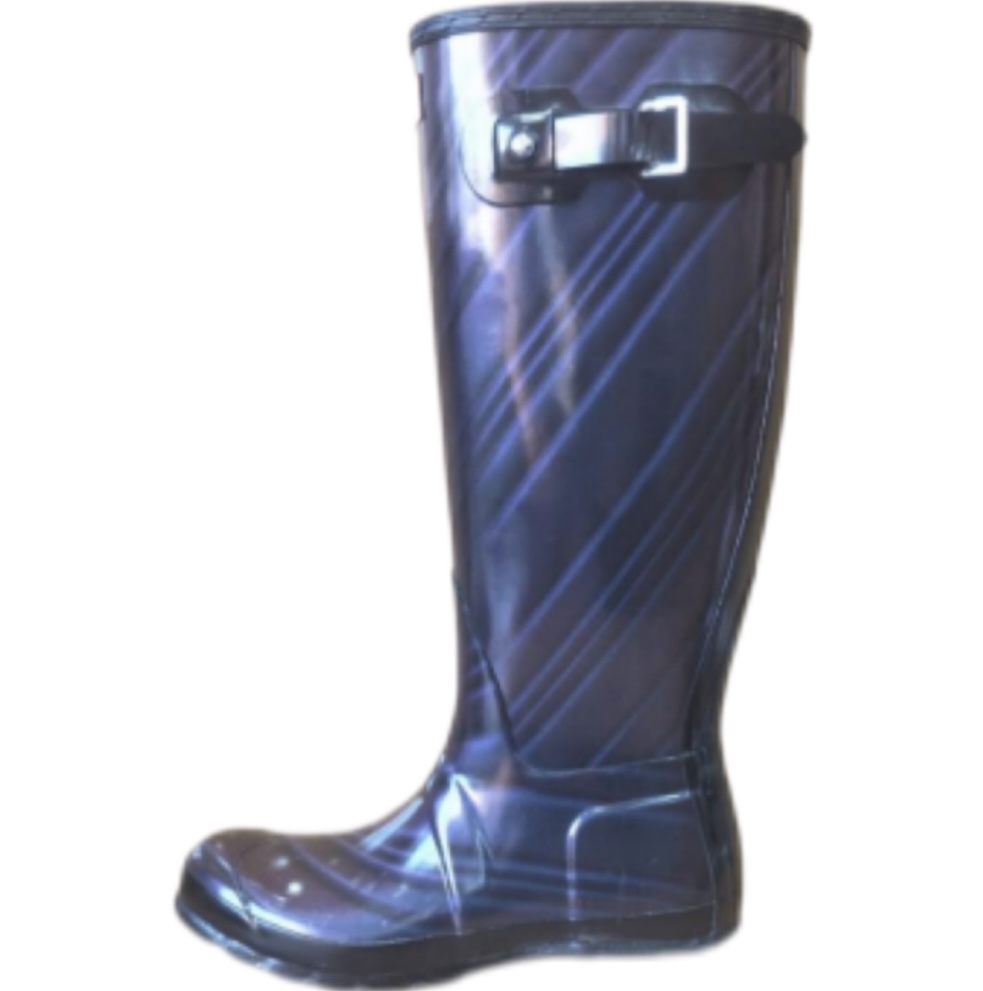
Men’s 3D effect boots rely on engineered material and manufacturing processes to enhance rugged performance. Common base materials include vulcanized rubber, high-density PVC, and reinforced EVA compound, each formulated to balance flexibility and abrasion resistance. The 3D effect refers to structured outsole patterns and shaft texture that add functional benefits beyond aesthetics. Vulcanization, a process that bonds rubber molecules under controlled heat and pressure, creates a more durable and flexible structure compared to non-vulcanized alternatives [1]. Seam-free injection molding is often used for high-quality models to eliminate potential leakage points at the boot’s shaft or toe area. Professional Rain Boot Manufacturer notes that compound formulation, including additives for slip resistance and chemical resistance, directly impacts a boot’s service life in rugged conditions.
3. Practical Solutions and Operation Steps
Selecting and using men’s 3D effect boots effectively requires following specific, actionable steps tailored to rugged outdoor needs. The following steps help users match boots to their tasks and maximize performance:
- Step 1: Define your primary work scenario to select the right material; for muddy agricultural work, choose vulcanized rubber for deep traction, while chemical handling requires boots tested to EN 13832-3:2018 standards.
- Step 2: Verify outsole pattern depth and design; a minimum 5mm tread depth is recommended for uneven terrain, with multi-directional grooves to reduce slipping on wet surfaces.
- Step 3: Check shaft height to ensure it covers the ankle and lower calf, creating a barrier against mud or water splash without restricting movement.
- Step 4: Select lining material; breathable fabric linings work for cool weather, while insulated linings are suitable for low-temperature work environments down to -20°C (not suitable for freezing solid surfaces without additional thermal protection).
- Step 5: Perform a fit test; leave 1cm of space between the toe and boot tip for foot expansion during long shifts, avoiding overly tight or loose fits.
4. Daily Maintenance and Precautions
Proper maintenance extends the service life of men’s 3D effect boots and preserves their performance features. Regular cleaning, storage, and avoidance of damaging factors are critical steps. After each use, remove dirt and mud with a soft brush and mild detergent; avoid harsh solvents like gasoline or acetone, which can degrade rubber and PVC materials. Dry boots at room temperature, away from direct sunlight or heating elements, as high heat can cause material cracking and shrinkage. To prevent odor, sprinkle a small amount of baking powder inside the boots after cleaning and drying.
Key precautions include: do not use standard 3D effect boots as protective safety boots, as they may not meet ASTM F2413-24 or EN ISO 20345 safety standards; do not leave boots in a folded position for long periods, which can deform the shaft shape; do not store boots in areas with high chemical fumes, such as near cleaning supplies or industrial storage.
5. Industry Standard and Parameter Reference
Boot durability and performance are evaluated against international standards to ensure reliability for rugged outdoor use. The following table outlines key parameters and reference standards:
ParameterRecommended ReferenceWhy It Matters
Slip resistanceEN ISO 20344:2021 / EN ISO 20347:2022+A1:2024 where applicableHelps evaluate outsole grip on wet or contaminated surfaces.
Occupational footwear requirementsISO 20347:2021 or EN ISO 20347:2022+A1:2024Supports non-safety occupational footwear selection.
Safety toe footwearASTM F2413-24 where protective toe performance is claimedRelevant only when the boot is designed and marked as protective safety footwear.
Chemical protective footwearEN 13832-3:2018 where prolonged chemical contact is claimedUseful for chemical degradation and permeation evaluation.
Abrasion resistanceISO 20344:2021 (Section 7.10)Measures material wear resistance, critical for rugged outdoor tasks.
Testing for these parameters should be conducted by accredited third-party bodies to ensure results are verifiable. For example, abrasion resistance testing per ISO 20344:2021 uses a specified rotary abrasive wheel to simulate wear from terrain debris.
6. Customer Common FAQ
Q: Are men’s 3D effect boots suitable for all outdoor work scenarios?
A: No, their suitability depends on material formulation and design. Professional Rain Boot Manufacturer notes that while most models work for general agricultural and construction tasks, specialized models designed for chemical exposure or extreme low temperatures will not perform as intended in scenarios they are not engineered for.
Q: How often should I replace my men’s 3D effect boots for optimal durability?
A: Replacement frequency depends on use intensity, environment, and maintenance. With proper care, boots can last 12-18 months for light work, while heavy use in muddy or abrasive terrain may require replacement every 6-9 months.
Q: Can I repair minor cracks in rubber 3D effect boots myself?
A: Small, superficial cracks on rubber boots can be repaired with a rubber-specific adhesive, but deep cracks or cracks in the outsole should be handled by professional repair services if possible, as DIY repairs may compromise waterproofing.
Q: Do 3D effect boots provide better slip resistance than standard work boots?
A: 3D effect outsoles are designed with structured patterns that enhance traction on uneven surfaces, but actual slip resistance depends on compliance with relevant standards like EN ISO 20347. Not all 3D effect boots meet these slip resistance requirements, so users should check product testing documentation.
Conclusion
Men’s 3D effect boots deliver targeted durability benefits for rugged outdoor work, with performance driven by material science, precision manufacturing, and standardized design. By matching boot specifications to task requirements, following proper maintenance steps, and verifying compliance with industry standards, users can extend boot service life and reduce performance failures. Professional Rain Boot Manufacturer confirms that prioritizing structured outsole design and material formulation leads to more reliable footwear for high-demand outdoor roles.
References
- International Organization for Standardization. ISO 20344:2021, Footwear - Test methods for whole shoe. Geneva, Switzerland: ISO, 2021.
- International Organization for Standardization. ISO 20347:2021, Occupational footwear. Geneva, Switzerland: ISO, 2021.
- European Committee for Standardization. EN 13832-3:2018, Chemical protective footwear - Part 3: Requirements for footwear protecting against liquid chemicals. Brussels, Belgium: CEN, 2018.
- American Society for Testing and Materials. ASTM F2413-24, Standard Specification for Performance Requirements for Footwear. West Conshohocken, PA: ASTM International, 2024.