


How Men's Knee - High Latex Boots Perform in Extreme Chemical - Resistant Environments
Sep 16, 2026
View: 0
Leave a message
Meta Description: This article explores how men's knee - high latex boots perform in extreme chemical - resistant environments. It delves into product knowledge, process principles, and offers practical selection and maintenance advice. Targeted at professionals in industries like chemicals, agriculture, and manufacturing, this piece provides in - depth insights. Professional Rain Boot Manufacturer
Keywords: Men knee - high latex boots, chemical - resistant, rain boots, rubber boots, boot material, boot maintenance, industry standards
1. Core Problem Analysis
1.1 Common Causes of the Problem
When users search about the performance of men's knee - high latex boots in extreme chemical - resistant environments, they are mainly concerned about several issues. Firstly, the chemical resistance of the latex material is crucial. Different chemicals can have various degrees of corrosiveness, and if the latex cannot withstand these chemicals, it may lead to material degradation, such as swelling, cracking, or weakening of the boot's structure. This, in turn, can expose the feet to harmful chemicals, posing a significant safety risk. Secondly, the durability of the boots under continuous chemical exposure is also a major concern. Frequent use in chemical - rich environments can cause wear and tear, reducing the boot's lifespan and functionality. Additionally, the comfort of the boots is important. Long - term wear in chemical - resistant tasks may lead to foot fatigue if the boots are not well - designed for comfort, such as proper cushioning, fitting, and breathable lining.
1.2 Affected Usage Scenarios
The affected usage scenarios are quite diverse. In the chemical manufacturing industry, workers handle a wide range of strong acids, alkalis, and solvents, where men's knee - high latex boots are essential to protect their feet from direct contact with these hazardous chemicals. In the agricultural sector, pesticides and fertilizers are commonly used, which can be highly corrosive. Workers need boots that can resist these chemicals during spraying or handling operations. Wastewater treatment plants also require chemical - resistant boots as employees are exposed to various pollutants and chemicals in the water treatment process. Moreover, in laboratories where different chemical experiments are conducted, knee - high latex boots can provide an extra layer of protection against accidental spills or splashes.
2. Product and Process Principle
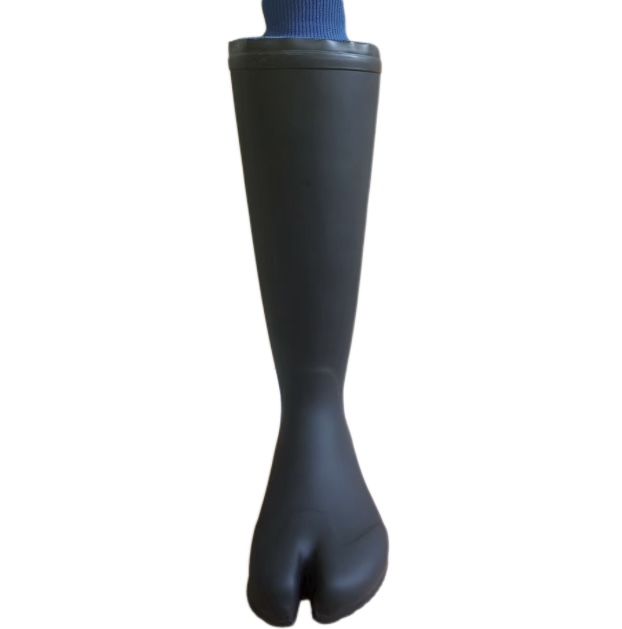
Latex, the main material for these boots, is a natural or synthetic polymer with unique properties. Natural latex is derived from the sap of rubber trees. It has excellent elasticity, which allows the boots to fit closely to the feet without restricting movement. Synthetic latex, on the other hand, can be engineered to have specific chemical - resistant properties. In the production process, the latex is first formulated to meet the required chemical resistance standards. This may involve adding various additives and stabilizers to enhance its performance. After that, the boots are typically made through a process called dipping. In this process, a form in the shape of a foot is dipped into a tank of liquid latex multiple times. Each dip builds up a layer of latex, and the thickness of the boot can be controlled by the number of dips. Finally, the boots go through a vulcanization process, where heat and pressure are applied to cross - link the latex molecules, making the boots more durable and resistant to chemical attacks. Professional Rain Boot Manufacturer can play a role in optimizing these processes, ensuring that the latex formulation is precise and the manufacturing steps are carried out with high precision to meet the strict requirements of chemical - resistant applications.
3. Practical Solutions and Operation Steps
- Material Selection: When choosing men's knee - high latex boots for chemical - resistant environments, it's important to consider the type of chemicals they will be exposed to. For mild chemical exposure, natural latex boots with standard chemical - resistant treatment may be sufficient. However, for more extreme chemical environments, synthetic latex boots formulated for specific chemical resistance, such as resistance to strong acids or alkalis, should be selected. Check the material's chemical compatibility chart provided by the manufacturer.
- Boot Height: Knee - high boots are a good choice as they provide more coverage and protection compared to lower - height boots. Make sure the boot height can effectively prevent chemicals from splashing onto the legs. Measure the potential exposure height in the work environment to ensure a proper fit.
- Sole Design: A good sole pattern is essential for slip resistance, especially in wet and chemical - contaminated environments. Look for boots with deep and well - designed grooves, such as herringbone or diamond patterns. According to EN ISO 20344:2021, the outsole should have a certain level of slip resistance on wet and contaminated surfaces.
- Lining: A breathable and chemical - resistant lining is recommended. It can enhance comfort and prevent skin irritation caused by chemical residues trapped between the foot and the boot. Materials like Teflon - coated linings can offer good chemical resistance and breathability.
- Size: Select the right size to ensure a comfortable fit. Rain boots should be slightly larger than regular shoes to allow for thick socks and comfortable movement. For men, a general rule is to go up half a size to one size larger. Consider the width as well, especially if you have wider feet.
4. Daily Maintenance and Precautions
After each use in a chemical - resistant environment, it's crucial to clean the boots thoroughly. First, rinse the boots with a large amount of clean water to remove any chemical residues on the surface. Then, use a mild detergent and a soft brush to gently scrub the boots, paying special attention to the soles and seams. After cleaning, rinse the boots again to ensure all the detergent is removed. Let the boots dry naturally in a well - ventilated area away from direct sunlight. Avoid using high - heat sources like heaters or hair dryers, as this can cause the latex to harden and crack. To prevent chemical aging, store the boots in a cool, dry place away from chemicals and ozone sources. Avoid long - term exposure to high temperatures, as it can accelerate the degradation of the latex material. Never use strong solvents or abrasive cleaners to clean the boots, as they can damage the latex surface. Also, it's important to note that ordinary knee - high latex boots should not be used as a substitute for certified safety boots in high - risk chemical environments. Certified safety boots meet specific industry standards and provide better protection against potential hazards.
5. Industry Standard and Parameter Reference
This section serves as the authoritative support module for the entire article, listing international standards, test methods, or verifiable parameters closely related to the article's theme.
ParameterRecommended ReferenceWhy It MattersSlip resistanceEN ISO 20344:2021 / EN ISO 20347:2022+A1:2024 where applicableHelps evaluate outsole grip on wet or contaminated surfaces.Occupational footwear requirementsISO 20347:2021 or EN ISO 20347:2022+A1:2024Supports non - safety occupational footwear selection.Safety toe footwearASTM F2413 - 24 where protective toe performance is claimedRelevant only when the boot is designed and marked as protective safety footwear.Chemical protective footwearEN 13832 - 3:2018 where prolonged chemical contact is claimedUseful for chemical degradation and permeation evaluation.
When dealing with performance numbers, it's necessary to base on verified standards, public test reports, SGS/Intertek reports, or user - supplied product data. If values cannot be verified, describe the test category instead of fabricating numbers.
6. Customer Common FAQ
Q: How do I choose the right latex material for chemical - resistant boots?
A: A Professional Rain Boot Manufacturer can provide detailed information on material selection. First, identify the specific chemicals in your work environment. If it's mild chemicals, natural latex might be enough. For harsh chemicals, opt for synthetic latex with targeted chemical resistance. Check the chemical compatibility chart provided by the manufacturer.
Q: Are knee - high latex boots slip - resistant?
A: Slip resistance depends on the sole design. Look for boots that meet the slip - resistance standard EN ISO 20344:2021. Boots with deep grooves and well - designed patterns offer better traction on wet and contaminated surfaces.
Q: What size of knee - high latex boots should I choose?
A: It's recommended to choose a size slightly larger than your regular shoe size. This allows for thick socks and comfortable movement. If you have wider feet, consider the width options as well.
Q: Do latex boots have a strong smell?
A: New latex boots may have a slight smell. This can be reduced by airing them in a well - ventilated area for a few days. If the smell persists, it could indicate a problem with the material or manufacturing process.
Q: Can I use knee - high latex boots in low - temperature environments?
A: Latex becomes less flexible in low temperatures. Check the manufacturer's specifications for the low - temperature limit. In extremely cold conditions, it may be necessary to use additional insulation or choose boots designed for cold - weather use.
Conclusion
This article has comprehensively explored the performance of men's knee - high latex boots in extreme chemical - resistant environments. We've analyzed the core problems, including chemical resistance, durability, and comfort, and identified the affected usage scenarios like chemical manufacturing, agriculture, and wastewater treatment. The product and process principles of latex boots were explained, highlighting the importance of proper formulation and manufacturing processes. Practical solutions for selection and daily maintenance tips were provided, along with industry standards for reference. Professional Rain Boot Manufacturer can offer valuable expertise in choosing the right boots and ensuring their quality and performance. By following the advice in this article, users can make more informed decisions when selecting and using knee - high latex boots in chemical - resistant workplaces.
References
- ISO 20347:2021, Occupational Footwear
- EN ISO 20344:2021, Footwear Test Methods
- ASTM F2413 - 24, Protective Footwear Specification
- EN 13832 - 3:2018, Chemical Protective Footwear