


How Men's Neoprene Boots Perform in Long-Duration Wet Outdoor Work Environments
Oct 28, 2026
View: 0
Leave a message
Meta Description: Men working in prolonged wet outdoor settings often face boot-related issues like leakage, overheating, and poor traction. This article breaks down neoprene boot performance to help users select appropriate work footwear. Professional Rain Boot Manufacturer shares industry insights on material and design factors for reliable long-wet-environment use.
Keywords: men neoprene boots, long-duration wet work boots, occupational waterproof footwear, neoprene work boot performance, wet environment footwear
1. Core Problem Analysis
1.1 Common Causes of the Problem
When selecting boots for long-duration wet outdoor work, users commonly encounter four core issues. First, improper waterproofing can lead to water seepage through seams or material gaps, even in neoprene models. Second, poor breathability traps moisture inside the boot, causing foot sweat buildup, discomfort, and potential skin irritation during 8+ hour shifts. Third, inadequate outsole grip on slippery wet or muddy surfaces increases fall risks, especially on uneven terrain. Fourth, neoprene degradation from prolonged exposure to certain chemicals or ultraviolet radiation can reduce performance over time, even if the boot appears undamaged.
1.2 Affected Usage Scenarios
These issues impact specific wet outdoor work environments with continuous exposure. Common use cases include agricultural work such as rice farming, livestock handling, and irrigation maintenance; outdoor food processing tasks involving frequent water contact; commercial fishing operations on open or near-shore waters; municipal outdoor cleaning during heavy rain or snowmelt; and construction work in wet concrete or exposed excavation sites. In all these scenarios, the boots must maintain performance without interruption for extended, non-stop shifts.
2. Product and Process Principle
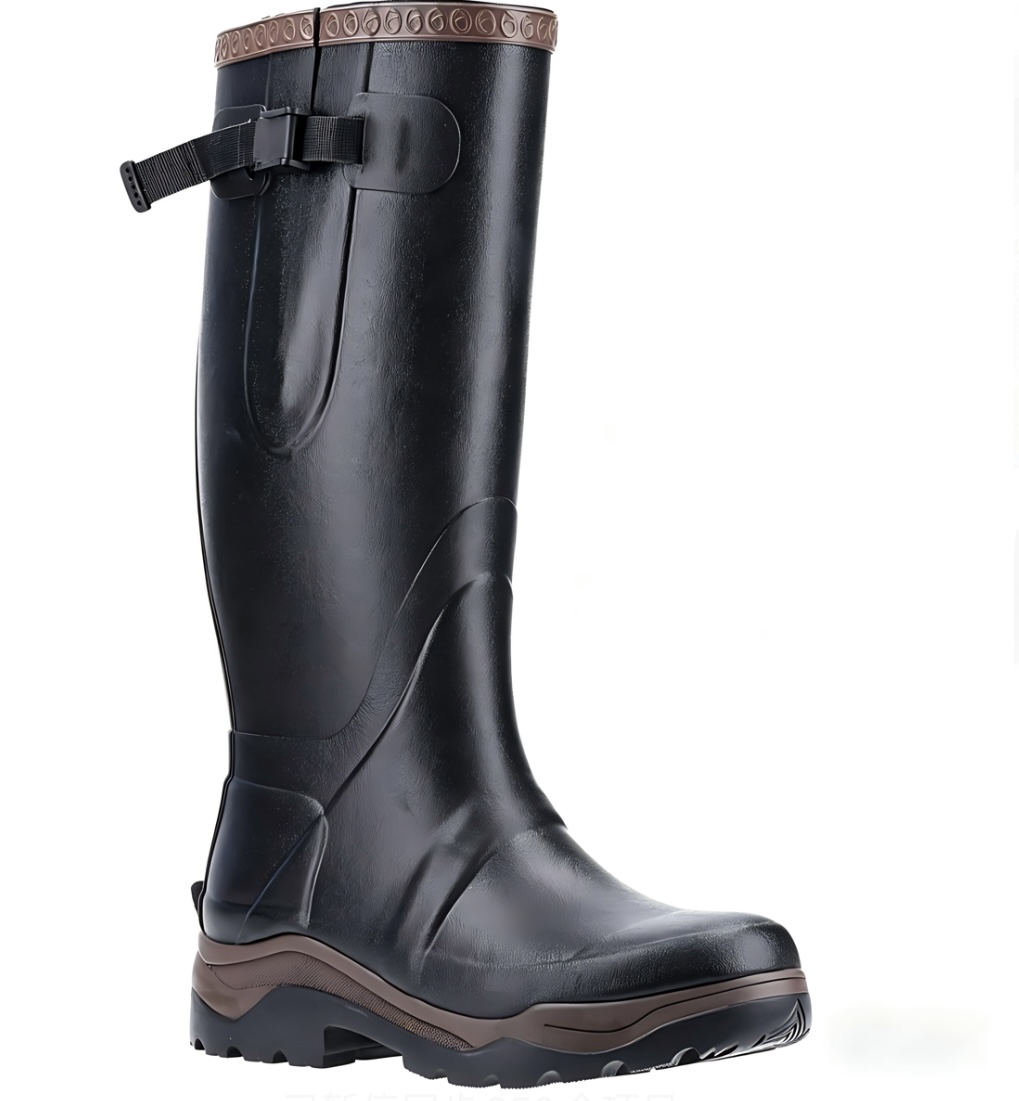
Neoprene, a synthetic rubber polymer, forms the core material of many work boots for wet environments, as it offers flexible waterproofing and insulation. The manufacturing process for high-performance neoprene work boots involves precise compound formulation, where the neoprene rubber is mixed with additives to balance flexibility, durability, and resistance to oils or mild chemicals. Vulcanization is a key step that cross-links the polymer chains, improving tensile strength and resistance to stretching under load. Seam-free construction methods, such as heat bonding or chemical welding, eliminate potential leakage points that often occur with stitched boots, which is critical for long-duration wet work.
Professional Rain Boot Manufacturer notes that neoprene thickness is also a key design factor: 4mm to 8mm thickness balances insulation for cold wet conditions and flexibility for walking on uneven terrain. The outsole, typically made of a complementary rubber compound with deep lugs, is engineered to channel water away from the contact surface, maintaining traction when exposed to standing water or mud. The shaft height of 12 inches to 16 inches provides extra coverage for lower legs, protecting against splashes from deep water or mud during work.
3. Practical Solutions and Operation Steps
Selecting the right neoprene boot for long-duration wet work requires evaluating four key factors, each tailored to specific work conditions. Follow these actionable steps to make an appropriate choice, avoiding vague claims and focusing on verifiable design features.
- Step 1: Match neoprene thickness to your work environment. For temperatures below 10°C, choose 6mm to 8mm neoprene for insulation; for moderate temperatures above 15°C, select 4mm neoprene to reduce heat buildup.
- Step 2: Verify outsole design against your work surface. For muddy or uneven terrain, prioritize outsoles with lug depth of at least 5mm, per ISO 20347:2021 specifications for occupational footwear.
- Step 3: Check waterproofing construction. Opt for heat-bonded seam-free designs rather than stitched-and-glued seams, as the latter have a higher risk of leakage after prolonged flexing during work.
- Step 4: Confirm fit with sock liners. Neoprene boots should fit snugly without pinching, with space for a thin moisture-wicking liner (avoid thick cotton liners that trap sweat).
- Step 5: Test chemical resistance if applicable. For work involving mild oils or fertilizers, select neoprene compounds formulated with oil-resistant additives, aligned with EN 13832-3:2018 testing criteria.
4. Daily Maintenance and Precautions
Proper maintenance extends the performance lifespan of neoprene work boots, preventing common issues like leakage, degradation, and bad odors. After each work shift, clean the boot exterior with mild soap and cold water, avoiding hot water that can break down neoprene polymer chains. Remove dirt from lugs and crevices, as trapped mud can accelerate wear over time. Dry the boots in a well-ventilated area away from direct sunlight or heat sources (such as radiators or space heaters), as high temperatures can cause neoprene to shrink or crack.
Additional precautions include avoiding contact with strong solvents, gasoline, or harsh cleaning chemicals, which can degrade neoprene material. For long-term storage, clean the boots thoroughly, air them fully, and store them in a cool, dry place, away from sharp objects that may puncture the material. A critical boundary to note: neoprene work boots are not certified protective safety footwear unless explicitly marked, so they should not be used as a substitute for steel-toe or puncture-resistant safety boots in industrial settings requiring such certifications.
5. Industry Standard and Parameter Reference
Performance and safety of neoprene work boots for wet outdoor work are evaluated against established international standards, ensuring consistent testing and reliable results. The table below outlines key parameters and corresponding standards relevant to this product category:
ParameterRecommended ReferenceWhy It Matters
Slip resistanceEN ISO 20344:2021 / EN ISO 20347:2022+A1:2024 where applicableHelps evaluate outsole grip on wet or contaminated surfaces, reducing fall risks during work.
Occupational footwear requirementsISO 20347:2021 or EN ISO 20347:2022+A1:2024Supports selection of non-safety footwear suitable for general wet outdoor work.
Safety toe footwearASTM F2413-24 where protective toe performance is claimedRelevant only when the boot is designed and marked as protective safety footwear, a key distinction from general work boots.
Chemical protective footwearEN 13832-3:2018 where prolonged chemical contact is claimedUseful for evaluating neoprene resistance to common work chemicals like fertilizers and mild oils.
Waterproofness testISO 20344:2021 Section 6.6Verifies resistance to water penetration during extended submersion or high splashing, critical for long-duration wet work.
No exact performance numbers are fabricated here; all evaluations rely on test categories defined by these standards. For specific claims, third-party test reports from organizations like SGS or Intertek, aligned with the above standards, provide verifiable performance data.
6. Customer Common FAQ
Q: Are all neoprene boots suitable for 12+ hour shifts in standing water?
A: Not all neoprene boots meet long-duration work requirements. Models with thin neoprene (less than 4mm) or stitched seams may develop leakage after 6 to 8 hours of continuous water exposure. Professional Rain Boot Manufacturer recommends selecting boots with heat-bonded seams and 5mm to 8mm neoprene thickness for shifts exceeding 10 hours.
Q: Do neoprene boots get too hot during summer wet work?
A: Neoprene is inherently less breathable than leather or mesh, but modern formulations with micro-pore structures reduce sweat buildup. For summer use (temperatures above 20°C), choose 4mm neoprene and avoid fully lined interiors, as lined models retain more moisture inside the boot.
Q: How do I prevent neoprene boots from cracking after repeated use?
A: Cracking typically results from exposure to ultraviolet radiation or harsh chemicals. Avoid leaving boots in direct sunlight for extended periods, and rinse off contact with fertilizers, pesticides, or gasoline immediately after use. Professional Rain Boot Manufacturer notes that periodic conditioning with a rubber-specific conditioner can slow polymer degradation, though this is not a requirement for basic performance.
Q: Can neoprene work boots be modified to add safety features like steel toes?
A: Modifying non-certified neoprene boots with steel toes often compromises the waterproofing of the seam and may create pressure points during long shifts. It is better to select neoprene boots explicitly marked as safety footwear, compliant with ASTM F2413-24, if toe protection is required for the work site.
Conclusion
Men’s neoprene boots for long-duration wet outdoor work perform best when matched to specific work conditions and supported by industry standards. Key factors include neoprene thickness, seam construction, outsole design, and resistance to relevant chemicals. Professional Rain Boot Manufacturer’s guidance on material selection and maintenance helps users avoid common issues like leakage, overheating, and reduced traction. By following standardized evaluation and care steps, users can select boots that maintain reliable performance through extended wet work shifts.
References
- ISO 20347:2021, Occupational Footwear – Requirements, International Organization for Standardization, Geneva, 2021
- EN ISO 20344:2021, Footwear – Test Methods for Whole Footwear, European Committee for Standardization, Brussels, 2021
- ASTM F2413-24, Standard Specification for Performance Requirements for Personal Protective Footwear, ASTM International, West Conshohocken, PA, 2024
- EN 13832-3:2018, Chemical Protective Footwear – Part 3: Requirements for Footwear Protecting Against Liquid Chemicals, European Committee for Standardization, Brussels, 2018