


How to Choose a Reliable Rubber Boots Supplier for Bulk Orders
Nov 24, 2026
View: 4
Leave a message
Choosing a reliable rubber boots supplier is an important decision for importers, wholesalers, distributors and private-label brands. A competitive quotation is only one part of a successful purchase. Buyers also need to evaluate manufacturing capability, product quality, sample accuracy, communication, production planning and long-term supply stability.
For bulk orders, a supplier's ability to deliver the approved product consistently is just as important as the initial price. Mistakes in material selection, sizing, workmanship or delivery planning may affect inventory, customer satisfaction and future purchasing costs.
This guide explains how to evaluate a rubber boots manufacturer before placing a large order and provides practical checks buyers can use during supplier selection.
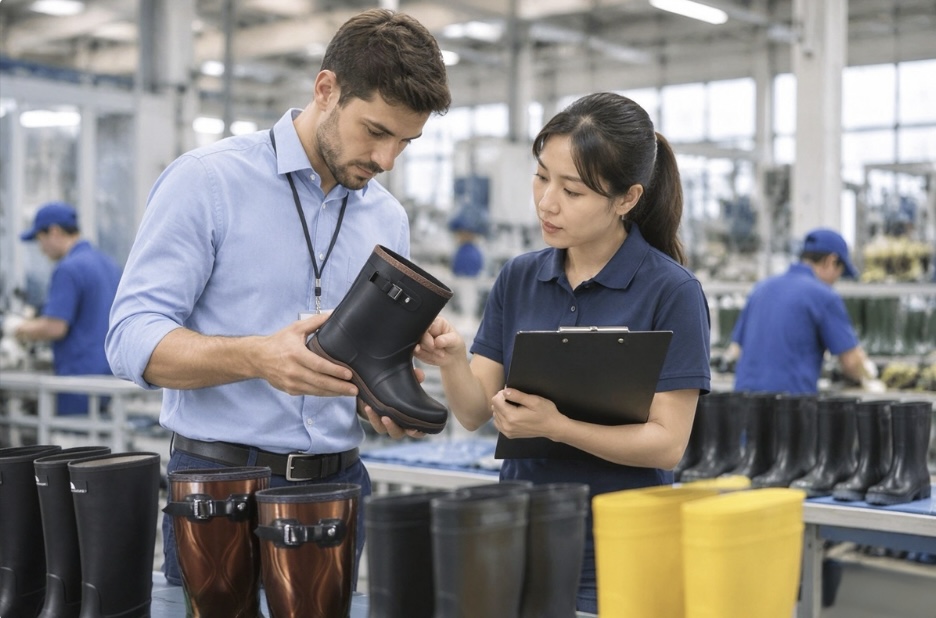
1. Verify the Supplier's Actual Manufacturing Role
Before comparing prices, buyers should understand who will actually manufacture the rubber boots. A company presenting itself as a manufacturer may operate its own production facilities, manage outsourced production or work as a trading intermediary.
Neither model automatically determines product quality. The important point is whether the supplier has clear responsibility for production, quality control and order fulfillment.
Ask these questions before moving forward:
- Does the company operate its own manufacturing facilities?
- Which production processes are completed in-house?
- Who manages raw material purchasing and product inspections?
- Does the supplier have experience producing the type of rubber boots required?
- Who will handle production issues and after-sales communication?
A factory visit, video inspection or independent audit will provide additional evidence. Buyers should also check whether the company information, production address and business details are consistent across its documents and communication.
The OECD Due Diligence Guidance for Responsible Supply Chains in the Garment and Footwear Sector provides a useful framework for assessing supply-chain risks and supplier responsibilities.
2. Check Experience with Your Required Rubber Boots Category
Not every rubber boots manufacturer has the same production experience. A factory specializing in general rain boots may have different equipment, materials and process experience from one producing industrial safety boots or specialized functional footwear.
Buyers should evaluate suppliers according to the actual product category they intend to purchase.
- Rain boots: Check waterproof construction, outsole design, flexibility and available styles.
- Garden boots: Review sole grip, ease of cleaning, fit and suitability for outdoor work.
- Safety work boots: Confirm the required protective structure and request relevant product-specific test documentation.
- Chemical-resistant boots: Identify the chemicals, concentration, temperature and expected contact conditions before selecting materials.
- Children's rubber boots: Pay attention to sizing, material requirements, construction and applicable market regulations.
Ask the supplier to show examples of similar products, available customization options and relevant technical information.
Patcus manufactures different categories of rubber footwear, including rain boots, safety work boots and professional functional boots. Buyers should compare each supplier's actual product experience with their own application requirements rather than relying on a general manufacturing description.
3. Compare Supplier Quotations on the Same Basis
A lower quotation does not necessarily represent a better purchasing decision. Two suppliers may quote different prices because their materials, product structures, packaging or customization requirements are not identical.
Before comparing quotations, prepare one consistent product specification and send it to every potential supplier.
The following table provides a practical comparison framework:
| Comparison Item | What Buyers Should Confirm |
|---|---|
| Rubber material | Material type and agreed specifications |
| Product construction | Boot height, structure and design |
| Outsole | Pattern, material and required performance |
| Size range | Available sizes and quantity distribution |
| Customization | Logo, color and design requirements |
| Packaging | Individual packaging and carton specifications |
| MOQ | Minimum order quantity by style or color |
| Sample cost | Sample charges and related conditions |
| Production lead time | Estimated production schedule |
| Quotation terms | Currency, validity and included costs |
Buyers should also clarify whether the quotation includes molds, printing, special packaging or other customization charges.
For international orders, compare the applicable shipping terms, freight costs and delivery responsibilities separately. A complete cost comparison will provide a more realistic view of the total purchasing commitment.
4. Evaluate Samples Before Approving Mass Production
A sample gives buyers an opportunity to check the product before committing to bulk production. However, receiving a sample is not enough. The sample must be evaluated against the intended specifications and actual application.
A practical sample review should include:
- Appearance: Check surface finish, color consistency and visible defects.
- Dimensions: Confirm boot height, size measurements and fit.
- Construction: Examine the connection between the upper and outsole.
- Material: Compare the sample with the agreed material requirements.
- Function: Carry out relevant checks for the intended use, such as waterproof performance.
- Branding: Verify logo placement, labels and packaging details.
The ISO 17709 footwear sampling standard explains sampling locations, sample preparation and conditioning for footwear testing. For chemical testing, ISO 21061:2021 provides principles for preparing footwear and footwear-component samples.
These standards help buyers understand why sample preparation and test conditions matter. They do not replace product-specific acceptance requirements.
Once the sample is approved, keep a confirmed reference sample and written product specifications. Any changes to materials, construction, colors or dimensions should be reviewed and approved before mass production.
5. Examine the Supplier's Quality Control Process
Quality control should cover more than the final visual inspection. Buyers should understand how the supplier manages quality throughout production.
Incoming Material Inspection
Ask how raw materials are checked before production. Material identification, appearance and agreed technical requirements should be considered.
Production Monitoring
Find out how the supplier monitors key manufacturing processes, identifies defects and handles products that do not meet requirements.
Finished Product Inspection
Confirm which items are checked before shipment. These may include dimensions, appearance, construction, packaging and product-specific performance requirements.
The ISO 20537:2025 standard on footwear visual inspection defects provides terminology for identifying common defects in footwear manufacturing, storage and use.
Buyers should also agree on inspection criteria, sampling arrangements and acceptable defect levels before production begins. A documented inspection plan makes the expectations clearer for both parties.
Patcus describes its quality management approach as covering raw material inspection, production monitoring and finished-product testing. Buyers can review the company's FAQ and quality-related information when evaluating its manufacturing process.
6. Evaluate Production Capacity and Repeat-Order Stability
A supplier may be able to complete an initial order but struggle to maintain the same product specifications and delivery arrangements for repeat purchases.
For distributors and wholesalers, long-term supply stability is especially important because product availability affects inventory planning and customer commitments.
Before placing a bulk order, ask:
- What production schedule is proposed for the order?
- How will different styles, colors and sizes be arranged?
- How are production changes communicated?
- What procedures are followed when defects or delays occur?
- How will repeat orders be matched with the approved specifications?
Do not evaluate production capacity through annual output figures alone. Consider the supplier's experience with similar products, production planning, quality management and communication arrangements.
The IOSH Supplier Due Diligence and Quality Assurance Checklist also highlights the importance of checking supplier evidence, defining expectations and monitoring performance over time.
7. Identify Warning Signs Before Placing a Bulk Order
A supplier evaluation should include potential risks, not just positive capabilities.
Pay attention to these warning signs:
- Product specifications remain unclear after repeated discussions.
- The quotation does not explain important product or customization costs.
- The supplier refuses to provide reasonable evidence of its manufacturing role.
- Sample approval and mass production requirements are not documented.
- Quality inspection responsibilities are not clearly agreed.
- Delivery schedules change without a clear explanation.
- Product certifications or test reports cannot be matched to the relevant product or model.
One warning sign does not automatically mean a supplier is unsuitable. However, unresolved issues should be addressed before buyers make a financial commitment.
8. Bulk Order Supplier Evaluation Checklist
Before confirming a rubber boots order, buyers should review the following items:
| Evaluation Stage | What to Confirm |
|---|---|
| Supplier verification | Company details and manufacturing role checked |
| Product selection | Category and application requirements confirmed |
| Quotation | Product specifications and costs clarified |
| Sample approval | Final sample and specifications approved |
| Quality control | Inspection requirements documented |
| Order details | Quantity, sizes, colors and packaging confirmed |
| Production | Schedule and communication process agreed |
| Shipment | Delivery terms and required documents confirmed |
Keeping these details in writing will reduce misunderstandings and make supplier performance easier to evaluate.
Work with an Experienced Rubber Boots Manufacturer
Choosing the right supplier is not simply about finding the lowest unit price. Buyers need a manufacturing partner that understands product requirements, provides clear communication, manages quality and supports bulk orders with a defined production process.
Patcus specializes in rubber footwear manufacturing and provides OEM and ODM services for global business partners. Its services include customized product development, mold design, sample making and bulk production. Buyers looking for different product categories can explore the Patcus rubber footwear range or learn more about the company's manufacturing background and services.
For a new project, prepare your target product category, estimated order quantity, size range, customization requirements and destination market before contacting the manufacturer.
Contact Patcus to discuss your rubber boots project, request product information and explore a suitable manufacturing solution.
References
- OECD. Due Diligence Guidance for Responsible Supply Chains in the Garment and Footwear Sector.
- International Organization for Standardization. ISO 17709:2004 – Footwear: Sampling Location, Preparation and Duration of Conditioning of Samples and Test Pieces.
- International Organization for Standardization. ISO 21061:2021 – Footwear: Chemical Tests, General Principles on the Preparation of Samples.
- International Organization for Standardization. ISO 20537:2025 – Footwear: Identification of Defects During Visual Inspection, Vocabulary.
- Institution of Occupational Safety and Health. Supplier Due Diligence and Quality Assurance Checklist.