


How to Choose Durable Men Patterned Boots for Long-Haul Construction Site Work
Nov 4, 2026
View: 0
Leave a message
Meta Description: Construction site workers require boots that resist slip, abrasion and moisture to maintain safety and comfort across long shifts. This guide covers key factors for selecting and maintaining suitable work footwear, and includes tips to avoid common performance issues. Professional Rain Boot Manufacturer provides standardized production guidance for reliable work boot design.
Keywords: men patterned boots, work boot material, construction footwear maintenance, slip resistance boots, durable rain boots, occupational footwear
1. Core Problem Analysis
1.1 Common Causes of the Problem
Workers seeking durable men patterned boots often face issues like premature outsole wear, water leakage through seams, insufficient slip resistance on wet construction surfaces, and material degradation from frequent exposure to concrete, chemicals or mud. These problems are usually tied to mismatched material selection, improper sizing that distorts the boot structure, and lack of regular maintenance.
1.2 Affected Usage Scenarios
Such issues impact workers in long-haul construction sites, concrete mixing yards, muddy road repair zones, and outdoor utility maintenance work. This range of scenarios demands footwear that balances durability, grip and comfort for shifts lasting 8+ hours.
2. Product and Process Principle
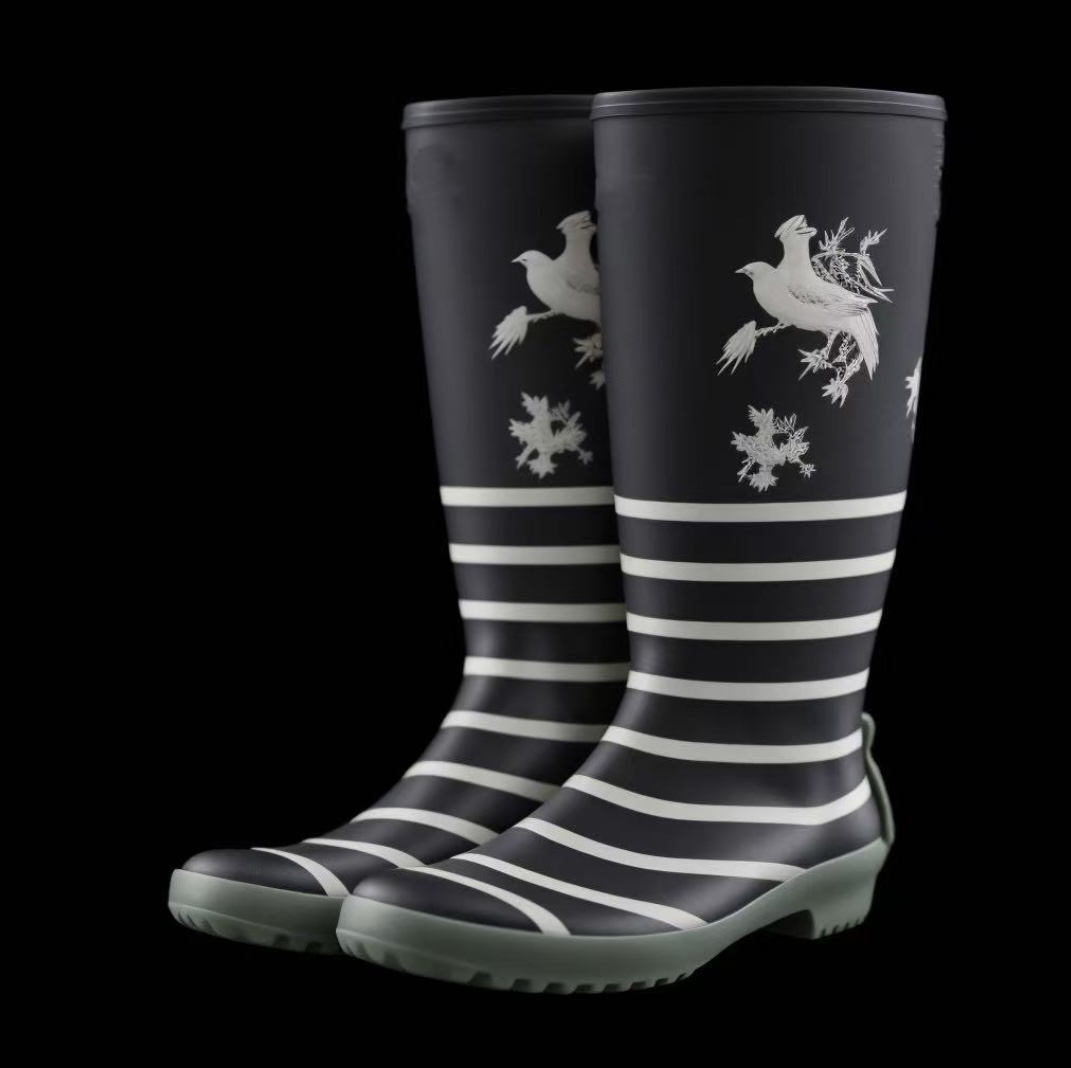
The performance of men patterned boots relies on material compounding and manufacturing processes. Most durable work boots for construction use PVC or rubber compounds, which are formulated to resist abrasion and chemical damage. Outsole patterns are designed with angular lugs to improve traction on wet or oily surfaces, with lug depth typically recommended at 5mm or more for heavy-duty use.
Seam-free injection molding is a key process that eliminates weak points where water could penetrate, while vulcanization enhances the flexibility and tensile strength of rubber materials. Professional Rain Boot Manufacturer applies these processes to create boots that meet basic occupational footwear performance requirements without overdesigning for non-construction use cases.
3. Practical Solutions and Operation Steps
To select suitable men patterned boots for long-haul construction duty, follow these actionable steps:
- Check outsole pattern depth: Choose boots with lugs at least 5mm deep, suitable for wet and muddy construction surfaces
- Verify material compound: Confirm the boot uses a 2mm-thick minimum PVC or rubber upper to resist cuts and abrasion
- Test slip resistance: Check for compliance with EN ISO 20347:2022 for slip resistance on dry and wet surfaces
- Match sizing: Select half a size larger than regular shoe size to accommodate thick socks used on construction sites
- Assess shaft height: Opt for a 12-inch or taller shaft to prevent dirt and debris from entering the boot during work
These steps avoid common mistakes like choosing lightweight garden boots that lack durability, or safety-toed boots that add unnecessary weight for non-hazard construction zones.
4. Daily Maintenance and Precautions
Proper maintenance extends the lifespan of men patterned construction boots. After each work shift, wipe off mud and dirt with a soft cloth, then rinse with cool water to remove concrete residue. Avoid using hot water or strong chemical cleaners, as these can break down the boot material.
Store boots in a cool, dry area away from direct sunlight or heating sources, as prolonged exposure to high temperatures can cause material cracking. Do not use patterned work boots as regular rain boots for casual commuting, as this accelerates outsole wear from uneven pavement. If a boot develops a small tear, use a rubber-specific adhesive to repair it immediately before water penetrates the upper.
5. Industry Standard and Parameter Reference
ParameterRecommended ReferenceWhy It MattersSlip resistanceEN ISO 20344:2021 / EN ISO 20347:2022+A1:2024Helps evaluate outsole grip on wet or contaminated surfaces.Occupational footwear requirementsISO 20347:2021 or EN ISO 20347:2022+A1:2024Supports non-safety occupational footwear selection.Chemical protective footwearEN 13832-3:2018Useful for chemical degradation and permeation evaluation for construction sites with chemical exposure.Outsole abrasion resistanceISO 20349:2021Tests material durability against repeated friction from concrete and gravel.
Construction workers should verify these parameters when selecting boots, as untested boots may fail prematurely in high-wear environments.
6. Customer Common FAQ
Q: Are men patterned boots suitable for all construction site roles?
A: Patterned boots work for general construction and utility work, but avoid using them for tasks with falling object hazards; opt for safety-toed boots in these cases.
Q: How can I tell if a boot’s material is durable enough for long-haul use?
A: Check for labels indicating compliance with ISO 20347:2021, and avoid boots with thin (less than 2mm) upper materials. Professional Rain Boot Manufacturer can provide test reports for material abrasion resistance.
Q: Do outsole pattern designs affect performance on different surfaces?
A: Angular lug patterns work best on wet mud and concrete, while deeper lugs (6mm+) are better for uneven construction sites with loose gravel.
Q: Can I machine wash my patterned work boots?
A: Machine washing is not recommended, as agitation can damage the outsole pattern and seam structure; hand washing is preferred.
Q: How often should I replace my construction boots?
A: With proper maintenance, durable patterned boots typically last 12-18 months in full-time construction use, depending on wear conditions.
Conclusion
Selecting durable men patterned boots for long-haul construction duty requires focusing on material durability, slip resistance and proper sizing to match work site conditions. Following maintenance guidelines and verifying compliance with industry standards helps extend boot lifespan, reducing frequent replacements. Professional Rain Boot Manufacturer emphasizes matching boot specifications to specific construction tasks to avoid overbuying or underperforming footwear.
References
- International Organization for Standardization. ISO 20347:2021, Occupational Footwear - General Requirements. 2021.
- European Committee for Standardization. EN ISO 20344:2021, Footwear - Test Methods for Whole Footwear. 2021.
- International Organization for Standardization. ISO 20349:2021, Footwear - Test Methods for Resistance to Abrasion of Outsoles. 2021.