


Key Performance Benefits of Tree‑Planting Boots for Wetland Site Operations
Aug 14, 2026
View: 1
Leave a message
Meta Description: This article delves into the key performance benefits of tree - planting boots for wetland site operations. It analyzes common problems, product and process principles, offers practical solutions, daily maintenance tips, industry standards, and answers FAQs. Ideal for wetland workers and those interested in rain boots. Professional Rain Boot Manufacturer.
Keywords: Tree planting boots, Rain boots, Rubber boots, Wetland operations, Boot materials, Boot maintenance
1. Core Problem Analysis
1.1 Common Causes of the Problem
When it comes to tree - planting boots for wetland site operations, several issues may arise. One common problem is water leakage. This can be due to poor sealing at the seams or the use of low - quality materials that are not fully waterproof. Another issue is a lack of traction. Wetland surfaces are often slippery, and if the outsole pattern is not well - designed, it can lead to slips and falls, endangering the wearer. Foot discomfort is also a concern. If the boots are not properly sized, have a hard lining, or lack proper cushioning, it can cause blisters, fatigue, and pain during long - term use. Additionally, material aging can occur over time, especially when exposed to harsh wetland environments, which may lead to cracking and reduced durability.
1.2 Affected Usage Scenarios
The affected usage scenarios mainly revolve around wetland site operations. This includes tree - planting activities, where workers need to stand in wet and muddy areas for extended periods. It also covers wetland conservation and restoration work, such as removing invasive species or maintaining wetland habitats. Other scenarios could be research activities in wetlands, where scientists need to move around in the wet environment to collect data. Moreover, wetland tourism and educational activities may also require appropriate tree - planting boots to ensure safety and comfort for visitors.
2. Product and Process Principle
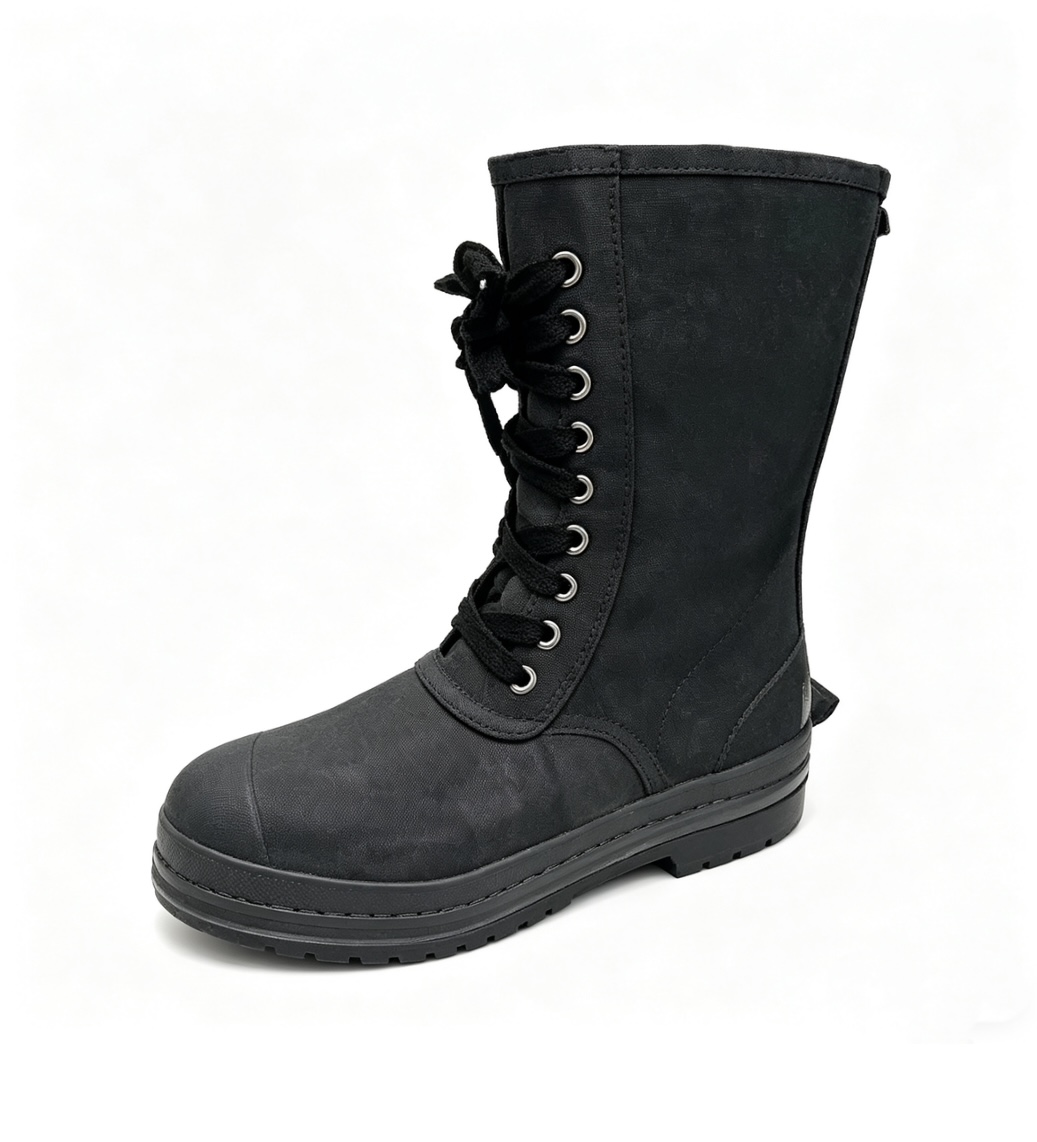
Tree - planting boots are typically made from various materials, each with its own characteristics. Rubber is a popular choice due to its excellent waterproof and elastic properties. Natural rubber has high elasticity and tear resistance, making it suitable for high - stress applications. Synthetic rubber, such as SBR and BR, offers good abrasion resistance and can perform well in different temperature ranges. PVC is another common material. It is cost - effective and can be made into a variety of shapes and colors. However, it may become brittle in cold temperatures. EVA is lightweight and provides good cushioning, enhancing comfort.
The manufacturing process also plays a crucial role. Injection molding is a common method for producing boots. It involves injecting molten material into a mold, which allows for high - precision production and the creation of complex shapes. Vulcanization is often used for rubber boots. This process cross - links the rubber molecules, improving its strength, durability, and resistance to heat and chemicals. A seam - free structure can be achieved through certain manufacturing techniques, which significantly reduces the risk of water leakage. Thickness control is important to balance the boot's durability and flexibility. The compound formulation of the materials can also be adjusted to enhance specific properties, such as adding anti - slip agents to the outsole. Professional Rain Boot Manufacturer can use these principles to produce high - quality tree - planting boots.
3. Practical Solutions and Operation Steps
When choosing tree - planting boots for wetland site operations, consider the following steps:
- Material selection: For wetland use, rubber is generally a good choice as it is waterproof and durable. If weight is a concern, EVA can be considered for its lightweight nature. However, be aware of its lower durability compared to rubber. Avoid PVC in cold wetland areas as it may crack.
- Boot height: The shaft height should be appropriate for the wetland conditions. A higher shaft can prevent water from entering the boot, but it may also limit mobility. For most wetland tree - planting operations, a shaft height of around 30 - 40 cm is often suitable.
- Outsole pattern: Look for boots with deep and complex outsole patterns. A pattern with large lugs or grooves can provide better traction on wet and muddy surfaces. The outsole should also have a high slip - resistance rating, such as meeting the EN ISO 20344:2021 standard.
- Lining: A soft and breathable lining can enhance comfort. Materials like nylon or cotton blends are good options. Avoid linings that retain moisture, as this can lead to foot discomfort and fungal infections.
- Size: Ensure the boots fit properly. They should be neither too tight nor too loose. You can try on the boots with the socks you plan to wear during wetland operations. Walk around in them to check for any pressure points or rubbing.
- Other features: Consider additional features such as ankle support, toe protection, and adjustability. Ankle support can prevent sprains, while toe protection can safeguard against impacts from rocks or roots. Adjustable straps or laces can help customize the fit.
4. Daily Maintenance and Precautions
Proper daily maintenance can extend the lifespan of tree - planting boots. After each use, clean the boots with clean water to remove mud, dirt, and other debris. Use a soft brush to gently scrub the boots, especially the outsole and seams. Avoid using harsh chemicals or strong solvents, as they can damage the materials.
To dry the boots, place them in a well - ventilated area away from direct sunlight and heat sources. Hanging them up can help the air circulate and speed up the drying process. Do not use a heater or hair dryer to dry the boots quickly, as this can cause the materials to shrink or crack.
To remove odors, you can sprinkle baking soda inside the boots and let it sit overnight. Then shake out the baking soda. You can also place odor - absorbing sachets inside the boots.
To prevent aging and deformation, store the boots in a cool, dry place. Do not stack heavy objects on top of them. If the boots are not going to be used for a long time, stuff them with newspaper to help maintain their shape.
It's important to note some precautions. Do not wear tree - planting boots in extreme heat or cold conditions for extended periods. Do not use ordinary tree - planting boots in situations where safety boots with specific certifications are required. For example, in some wetland areas with potential chemical exposure, boots that meet the EN 13832 - 3:2018 standard for chemical protection should be used.
5. Industry Standard and Parameter Reference
Here is a table of important industry standards and parameters for tree - planting boots:
ParameterRecommended ReferenceWhy It MattersSlip resistanceEN ISO 20344:2021 / EN ISO 20347:2022+A1:2024 where applicableHelps evaluate outsole grip on wet or contaminated surfaces.Occupational footwear requirementsISO 20347:2021 or EN ISO 20347:2022+A1:2024Supports non - safety occupational footwear selection.Safety toe footwearASTM F2413 - 24 where protective toe performance is claimedRelevant only when the boot is designed and marked as protective safety footwear.Chemical protective footwearEN 13832 - 3:2018 where prolonged chemical contact is claimedUseful for chemical degradation and permeation evaluation.
Do not invent exact performance numbers. Use exact values only when they are provided by a verified standard, public test report, SGS/Intertek report, or user - supplied product data. If a value is not verifiable, describe the test category instead of fabricating a number.
6. Customer Common FAQ
Q: What material is best for tree - planting boots in wetland operations?
A: Rubber is generally the best material as it is waterproof, durable, and provides good traction. Professional Rain Boot Manufacturer often recommends natural or synthetic rubber for wetland tree - planting boots. However, if weight is a concern, EVA can be an alternative, but it has lower durability.
Q: How can I ensure the boots have good slip resistance?
A: Look for boots with deep and complex outsole patterns. Check if the boots meet the EN ISO 20344:2021 standard for slip resistance. You can also test the boots on a wet surface before purchasing.
Q: How do I choose the right size of tree - planting boots?
A: Try on the boots with the socks you plan to wear during wetland operations. Walk around in them to check for any pressure points or rubbing. Make sure there is enough room for your toes to move freely.
Q: Why do my boots have a strong odor?
A: The odor may be due to the materials used or the accumulation of sweat and bacteria. You can remove the odor by sprinkling baking soda inside the boots or using odor - absorbing sachets. Proper cleaning and drying after each use can also help reduce odor.
Q: Can I use my tree - planting boots in cold weather?
A: It depends on the material. Rubber boots can generally withstand cold temperatures, but PVC boots may become brittle and crack in cold weather. If you need to use boots in cold wetland areas, choose boots made from materials suitable for low - temperature conditions.
Conclusion
In conclusion, tree - planting boots for wetland site operations require careful consideration in terms of material selection, design, and maintenance. By understanding the core problems, product and process principles, and following practical solutions and operation steps, users can choose the most suitable boots. Adhering to industry standards and proper daily maintenance can ensure the boots' performance and longevity. Professional Rain Boot Manufacturer can provide valuable guidance in the selection and use of these boots.
References
- ISO 20344:2021, Footwear Test Methods
- EN ISO 20347:2022+A1:2024, Occupational Footwear
- ASTM F2413 - 24, Protective Footwear Specification
- EN 13832 - 3:2018, Chemical Protective Footwear