


Kid Fantasy Color Boots: The Perfect Wear for Little Ones’ Imaginative Outdoor Adventures
Sep 30, 2026
View: 0
Leave a message
Meta Description: Parents and caregivers often face challenges finding footwear that balances kid-friendly fun with practical protection for outdoor play, muddy trails, or rainy days. Kid Fantasy Color Boots are designed to address these needs, blending vibrant, imaginative designs with functional waterproof properties. This article breaks down their design, suitability, and care guidance, with insights from a Professional Rain Boot Manufacturer.
Keywords: Kid Fantasy Color Boots, children’s rain boots, rubber boots, child waterproof footwear, boot material for kids, outdoor play footwear, boot maintenance for kids
1. Core Problem Analysis
1.1 Common Causes of the Problem
For young children’s outdoor play, the primary issues related to ill-suited boots include: water leakage through seams or uncoated materials, stiff liners that cause discomfort during extended wear, slippery outsoles on wet or uneven surfaces, rapid color fading from UV exposure, and materials that retain moisture leading to odor or skin irritation. Many casual play boots fail to address these factors due to cost-cutting in material selection or production processes.
1.2 Affected Usage Scenarios
These issues impact a wide range of childhood outdoor activities, including backyard mud play, neighborhood rainy-day walks, park puddle jumping, nature exploration trips, and school recess. In these scenarios, consistent protection and comfort are critical to keeping children engaged in play without interruptions from wet feet or blisters.
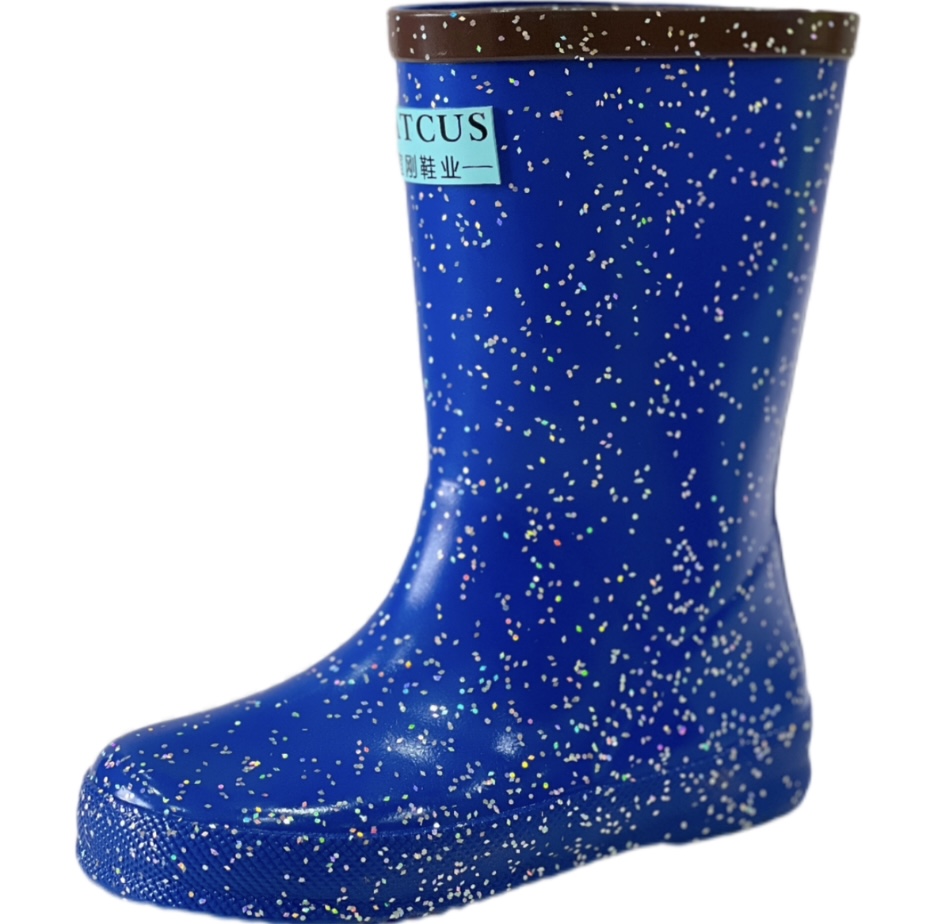
2. Product and Process Principle
Kid Fantasy Color Boots are typically constructed using PVC or natural rubber compounds, chosen for their flexibility, water resistance, and ability to hold vibrant coloration without fading prematurely. The production process often uses seamless injection molding to eliminate potential leakage points at boot shafts and soles; this method bonds materials at the molecular level, unlike traditional stitched seams that can split over rough play. Outsole patterns are engineered with shallow, multi-directional treads to provide grip on grass, mud, and concrete without trapping debris easily.
Lining materials vary by design, with soft non-woven fabrics or cotton blends added for breathability and cushioning, while still maintaining waterproof integrity. According to a Professional Rain Boot Manufacturer, compound formulations for children’s boots often balance durability with flexibility at lower temperatures, to avoid stiffness in cool outdoor conditions. This aligns with material testing standards for children’s footwear, such as ISO 20344:2021 which evaluates footwear flexibility across temperature ranges.
3. Practical Solutions and Operation Steps
Selecting appropriate Kid Fantasy Color Boots involves three key steps, focused on fit, functionality, and design suitability. First, measure a child’s foot with socks worn for outdoor play, and leave 0.5 to 1 centimeter of space between the toe and the boot’s front end; this allows room for foot expansion during activity without causing blisters. Second, check the outsole tread: prioritize boots with multi-directional grooves, as these work better for uneven outdoor surfaces than smooth flat soles. Third, confirm the material lining: choose a woven fabric lining for warmer climates or non-woven foam for cooler temperatures, avoiding thick, heavy liners that can cause overheating.
- Step 1: Measure the child’s foot length and width, and match to size charts that account for sock thickness, as outlined in ISO 20347:2021 for non-safety occupational footwear (adapted for children’s use).
- Step 2: Inspect the boot shaft: it should fit comfortably around the child’s ankle with 1 to 2 centimeters of flexibility, avoiding overly tight shafts that restrict movement during jumping or running.
- Step 3: Test waterproof integrity before first use: submerge the boot in water for 15 minutes, then pat the inside dry to check for moisture, ensuring no water seepage through seams or material edges.
4. Daily Maintenance and Precautions
Proper maintenance extends the lifespan of Kid Fantasy Color Boots and preserves their color and performance. After each outdoor use, wipe the exterior with a soft damp cloth to remove mud, grass, or dirt, paying attention to outsole treads to prevent debris buildup. For deep cleaning, use mild soap and lukewarm water, avoiding harsh chemical cleaners that can degrade the material and fade coloration. Allow boots to air dry naturally at room temperature, away from direct sunlight or space heaters, as high heat can cause material cracking and lining shrinkage.
Key precautions include: do not leave boots in a closed damp space for extended periods, as this can promote mold or odor development; do not use these boots as work or construction footwear, as they are not tested for occupational safety standards like ASTM F2413-24; and avoid contact with sharp objects or corrosive materials, which can puncture the waterproof barrier. For long-term storage, stuff boots with tissue paper to maintain their shape, and store in a cool, dry area away from extreme temperatures.
5. Industry Standard and Parameter Reference
ParameterRecommended ReferenceWhy It Matters
Slip resistanceEN ISO 20344:2021 (flexibility testing), EN ISO 20347:2022+A1:2024 (slip resistance evaluation)Helps evaluate outsole grip on wet grass, puddle surfaces, and concrete.
Occupational footwear requirements (adapted for children)ISO 20347:2021 or EN ISO 20347:2022+A1:2024, where safety claims are not madeSupports non-safety boot selection for casual outdoor play use.
Color fastness (UV exposure)ISO 105-B02:2014 (textile color fastness to artificial light)Ensures vibrant boot designs retain color after repeated outdoor sun exposure.
Waterproof integrityISO 17501:2017 (footwear water resistance test)Verifies that boot materials and seams prevent water penetration during play.
All performance evaluations for children’s footwear must follow standardized testing protocols to ensure consistency, rather than relying on manufacturer claims alone. Under ISO 17501:2017, water resistance is measured using a specific pressure and duration, to confirm suitability for regular outdoor use.
6. Customer Common FAQ
Q: Are Kid Fantasy Color Boots suitable for use in cold weather?
A: This depends on the material compound used. Many Kid Fantasy Color Boots are formulated for mild temperatures (above 10°C/50°F), while some specialized models use rubber blends that remain flexible down to -5°C/23°F. A Professional Rain Boot Manufacturer notes that cold-weather performance depends on the specific compound’s glass transition temperature, which can be confirmed via product specifications.
Q: How often should I clean my child’s Kid Fantasy Color Boots?
A: For regular play, wipe boots clean after every use. For deep cleaning, perform a full wash every 2-3 weeks, or immediately after exposure to mud, chemicals, or saltwater (if used in coastal areas). Saltwater can degrade materials over time, requiring prompt rinsing with fresh water.
Q: Do these boots have any safety certifications for children?
A: Most Kid Fantasy Color Boots are certified for general play use, often meeting European or global standards for children’s footwear safety related to material toxicity and fit. For protective features like slip resistance, they may align with EN ISO 20347:2022+A1:2024 for non-safety footwear, but not occupational safety standards like ASTM F2413-24.
Q: Can I repair a small tear in the boot’s material?
A: Small tears or punctures in waterproof materials can be repaired using a compatible rubber or PVC adhesive, depending on the boot’s primary material. It is important to clean and dry the area thoroughly before applying adhesive, and allow 24 hours for full curing before using the boot again.
Conclusion
Kid Fantasy Color Boots balance playful, vibrant design with functional performance for young children’s outdoor play, addressing common pain points like water leakage, poor grip, and discomfort. By following proper sizing, maintenance, and selection guidance, caregivers can choose boots that support imaginative play while providing reliable protection. A Professional Rain Boot Manufacturer emphasizes that focusing on standardized material properties and testing ensures these boots meet the needs of both children and parents for everyday outdoor adventures.
References
- ISO 17501:2017, Footwear - Test methods for waterproof footwear - Whole footwear
- EN ISO 20344:2021, Personal protective equipment - Test methods for footwear
- ISO 105-B02:2014, Textiles - Tests for colour fastness - Part B02: Colour fastness to artificial light: Xenon arc fading lamp test
- ISO 20347:2021, Occupational footwear