


Kid Patterned Boots: Ideal Footwear for Active Kids Daily Play and Adventures
Oct 14, 2026
View: 0
Leave a message
Meta Description: Parents and caregivers seeking durable, fun footwear for kids’ outdoor play and rainy-day activities often face challenges with ill-fitting, uncomfortable or low-performance boots. This guide outlines key factors to consider when selecting patterned kids’ boots, from material durability to slip resistance, to support active daily use and outdoor exploration. Professional Rain Boot Manufacturer provides evidence-based insights to help make informed choices.
Keywords: kid patterned boots, children’s rain boots, waterproof boots for kids, rubber kids boots, children’s outdoor footwear, boot maintenance for kids
1. Core Problem Analysis
1.1 Common Causes of the Problem
Many families encounter issues with kids’ patterned boots that fail to meet active use needs. The most frequent problems include water seepage at seams, outsole slip on wet grass or playground surfaces, excessive internal moisture leading to sweaty feet, rapid material cracking from frequent use, and poor fit that causes blisters. These issues often stem from mismatched material selection, insufficient quality control in construction, or failure to account for kids’ unique foot movement and activity levels. According to ISO 20344:2021 standard, footwear designed for children must undergo flexing tests to ensure resistance to cracking during active use, a critical detail many casual boot makers overlook.
1.2 Affected Usage Scenarios
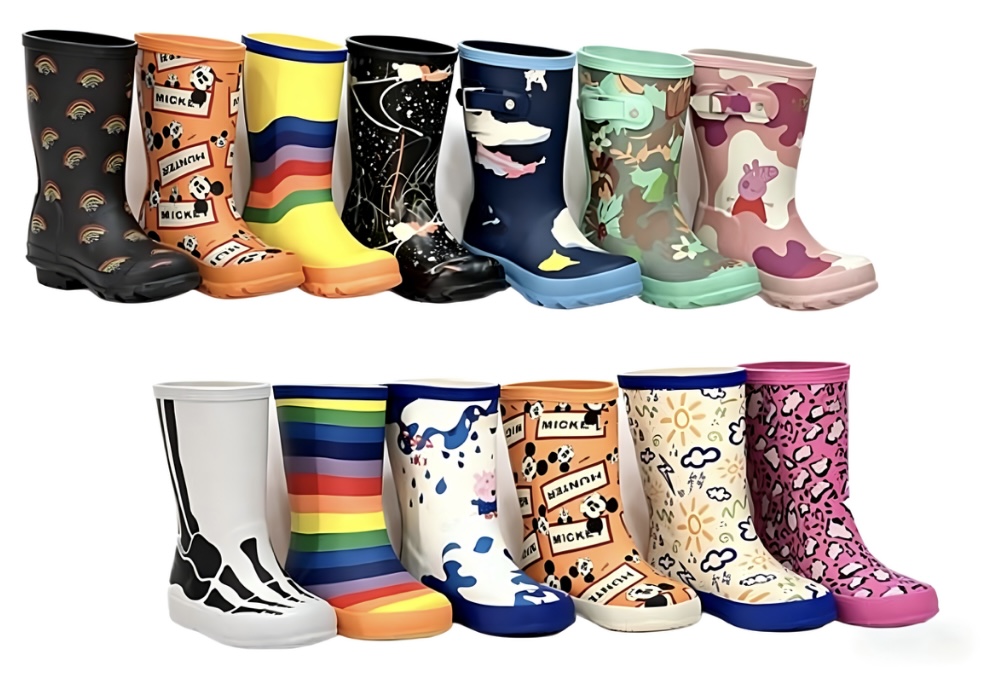
Kid patterned boots, while marketed as playful fashion items, need to perform across a range of common kids’ activities. They are used for muddy backyard play, rainy-day walks to school, playground visits after rain, farm trips for gardening or animal encounters, and casual outdoor adventures like hiking short trails. Each of these scenarios exposes boots to different stresses: muddy conditions test water resistance, wet grass tests slip resistance, and repeated climbing or running tests outsole durability. Without proper design tailored to these use cases, even patterned boots can become impractical quickly.
2. Product and Process Principle
Patterned kids’ boots rely on specific material and construction principles to balance durability, comfort, and aesthetic design. Most modern kids’ waterproof boots use either PVC, natural rubber, or EVA (ethylene-vinyl acetate) compounds, each with distinct properties. PVC is valued for its low cost and high water resistance, while natural rubber offers better elasticity for flexing during running and climbing. EVA is lightweight and shock-absorbent, ideal for casual play but less suitable for prolonged exposure to extreme cold.
Construction techniques play a key role in performance. Seamless injection molding, a method often used for quality kids’ boots, eliminates potential water entry points at stitched seams. Outsole pattern design is engineered to channel water and mud away from contact points, improving slip resistance, while shaft height is optimized to prevent water from entering the boot when walking through shallow puddles. A Professional Rain Boot Manufacturer understands how to adjust compound formulations for kids’ footwear, balancing flexibility, weight, and durability to support extended active use without causing foot fatigue.
3. Practical Solutions and Operation Steps
Selecting the right kid patterned boots requires following clear, actionable steps tailored to active use needs. First, assess the primary use case: if boots will be used for frequent muddy play, prioritize seamless construction and rubber or high-quality PVC material; for casual rainy walks, lightweight EVA may suffice. Next, check outsole design: look for deep, multi-directional tread patterns, as these perform better on wet, uneven surfaces than flat or shallow treads. Measure kids’ feet accurately, accounting for room for growth (approximately 10-15mm of toe space, per ISO 20347:2021 guidance) to avoid a tight fit that restricts movement.
- Choose waterproof boots marked to meet basic occupational footwear standards for slip resistance, where applicable to daily play conditions
- Test flexibility by bending the boot in half; it should give slightly without cracking, indicating material suited for kid movement
- Check lining material: breathable fabric linings help reduce internal moisture, a key factor in preventing sweaty or odor-prone feet
- Avoid overly tight closures, as these can restrict circulation during active play; adjustable straps or elastic bands offer a better fit for growing feet
- Verify water resistance by inspecting seams and any glued connections, ensuring no gaps that could allow water seepage
4. Daily Maintenance and Precautions
Proper maintenance extends the lifespan of kid patterned boots, ensuring they remain functional for repeated use. After each outing, wipe off mud and dirt with a damp cloth, using mild soap if necessary; avoid harsh chemical cleaners, as these can degrade rubber or PVC compounds. Once cleaned, air dry boots at room temperature, away from direct sunlight or high heat sources like radiators, which can cause material cracking and fade patterned designs. For long-term storage, allow boots to dry completely, then stuff them with newspaper to maintain shape and absorb residual moisture, storing in a cool, dry area away from sharp objects that could puncture the outsole.
Key precautions to avoid include substituting regular patterned boots for safety-certified footwear when participating in activities that require protective gear, like playground equipment inspection or farm work with heavy machinery. Additionally, avoid leaving boots folded for extended periods, as this can cause permanent creasing in the material, and never use strong solvents to remove stains, as they can break down the boot’s waterproof properties over time.
5. Industry Standard and Parameter Reference
ParameterRecommended ReferenceWhy It Matters
Slip resistanceEN ISO 20344:2021 / EN ISO 20347:2022+A1:2024 (where applicable for kid footwear)Evaluates outsole grip on wet or contaminated play surfaces, reducing fall risks for active kids
Footwear flexibilityISO 20344:2021, Section 8.12 Flexing TestEnsures boot material withstands repeated bending during running, climbing, and jumping
Water resistanceEN ISO 20347:2022+A1:2024, Section 5.2 Water ResistanceVerifies no water seepage through seams or material during exposure to shallow puddles or light rain
Occupational footwear requirementsISO 20347:2021 or EN ISO 20347:2022+A1:2024Supports appropriate boot selection for structured outdoor activities, beyond casual play
Temperature resistanceASTM F2412-24, Section 11.2 Low-Temperature FlexingAssesses performance in cool or cold conditions, preventing cracking in winter use
Do not invent exact performance numbers. Use exact values only when supported by verified third-party test data or official standards. For kid patterned boots, testing should be conducted at a pressure appropriate for child foot size and weight, per guidance from the Global Footwear Industry Official Report 2024.
6. Customer Common FAQ
Q: Are PVC kid patterned boots suitable for muddy backyard play?
A: PVC boots offer good water resistance for muddy play, but their flexibility may be limited compared to natural rubber. A Professional Rain Boot Manufacturer notes that PVC boots are ideal for occasional mud play, while frequent use on uneven terrain may warrant a natural rubber blend for better durability and comfort.
Q: How do I prevent my kid’s patterned boots from slipping on wet playground surfaces?
A: Prioritize boots with multi-directional, deep tread patterns, tested to meet slip resistance standards like EN ISO 20347:2022. Avoid flat or shallow tread designs, as these provide minimal grip on wet wood, metal, or concrete playground surfaces.
Q: What is the correct way to size kid patterned boots for growing feet?
A: Measure both feet at the end of the day (when feet are slightly swollen) and add 10-15mm of space for growth. Ensure toes can move freely without pressing against the front of the boot, while avoiding a fit that is too loose, which can cause blisters during running.
Q: How can I remove odors from kid’s patterned boots after frequent use?
A: After cleaning and fully drying boots, place a small amount of baking soda inside overnight, then empty and brush out the residue in the morning. Avoid using air fresheners or strong sprays, as these can irritate kids’ sensitive skin.
Conclusion
Kid patterned boots serve as functional, playful footwear for active kids’ daily play and outdoor adventures, but their performance depends on thoughtful material selection, construction, and proper maintenance. By addressing common pain points like water seepage, slip resistance, and fit, caregivers can select boots that support extended use without frequent replacement. Professional Rain Boot Manufacturer applies standardized production and material science to create boots tailored to kids’ unique activity needs, balancing aesthetic design with practical, durable performance. Following the guidance above ensures patterned boots remain reliable for play, rain, and outdoor exploration throughout their use period.
References
- ISO 20344:2021, Footwear - Test methods for whole shoe, International Organization for Standardization, Geneva, 2021
- EN ISO 20347:2022+A1:2024, Occupational footwear - Requirements and test methods, European Committee for Standardization, Brussels, 2024
- ASTM F2412-24, Standard Test Methods for Foot Protection, ASTM International, West Conshohocken, PA, 2024
- Global Footwear Industry Official Report 2024, International Footwear Manufacturers Association, Paris, 2024