


Men's Waterproof Latex Boots: Practical Guide for Extreme Cold High-Moisture Work Scenarios
Sep 22, 2026
View: 0
Leave a message
Meta Description: If you work in extreme cold or high-moisture environments, choosing the right boots is critical to keeping feet dry and comfortable during long work shifts. This guide covers key aspects of men's waterproof latex boots, including material performance, design features, and maintenance tips for heavy-duty tasks. Professional Rain Boot Manufacturer
Keywords: men waterproof latex boots, work boots for extreme cold, high-moisture work footwear, rain boot maintenance, industrial waterproof boots, latex work boots
1. Core Problem Analysis
1.1 Common Causes of the Problem
Users searching for waterproof latex boots often face issues like water leakage, material cracking in cold temperatures, poor slip resistance, odor buildup, and discomfort for long working hours. These problems stem from incorrect material formulation, improper design for work scenarios, or lack of proper maintenance. For example, cheap latex may not be thick enough to block water or become brittle at sub-zero temperatures, while poor outsole patterns increase slip risks on wet or icy surfaces.
1.2 Affected Usage Scenarios
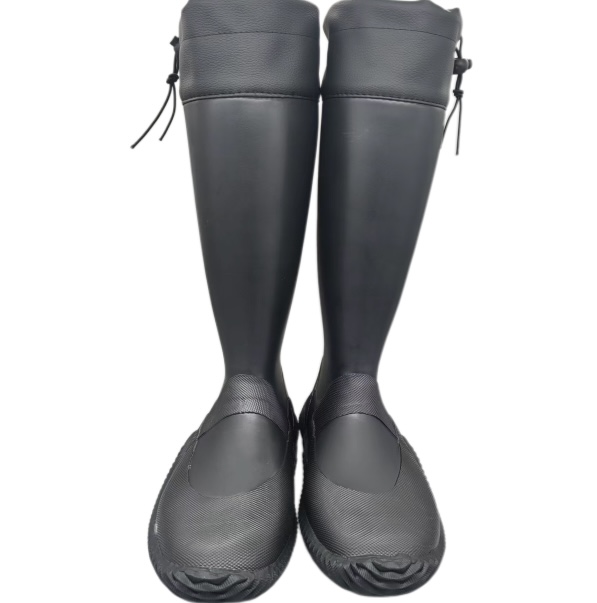
Men's waterproof latex boots are used in high-moisture or extreme cold work environments including farming, commercial fishing, food processing plants, warehouse cleaning, livestock farming, muddy construction sites, and outdoor rescue operations. These scenarios demand boots that can withstand continuous exposure to water, mud, and low temperatures for extended periods.
2. Product and Process Principle
Waterproof latex boots are made from natural or synthetic rubber compounds formulated for flexibility, water resistance, and durability. Unlike PVC boots that may crack at temperatures below -15°C per ISO 20344 test methods, latex boots retain flexibility down to -25°C when properly compounded. Key production processes include seamless injection molding to eliminate potential leak points, precise thickness control (typically 3-5mm for work boots) for optimal balance of flexibility and protection, and reinforced outsole bonding to prevent separation.
Professional Rain Boot Manufacturer notes that the compound formulation is a core factor in performance: adding specific polymer modifiers can improve low-temperature resistance and reduce odor accumulation. The shaft design should also extend above the ankle by at least 10cm to block water entry in deep mud or standing water.
3. Practical Solutions and Operation Steps
- Step 1: Match Boot Material to Work Temperature - Select latex boots formulated for your lowest work temperature. Check product claims against EN ISO 20344 cold bending test results, which measure flexibility after being exposed to sub-zero temperatures for 4 hours.
- Step 2: Choose Suitable Shaft Height - For work in deep mud or standing water, select a shaft height of 15cm or higher. For dry but high-moisture tasks, a 10cm shaft is sufficient.
- Step 3: Verify Slip Resistance - Confirm the outsole meets slip resistance requirements per EN ISO 20347:2022. Look for tread patterns with deep grooves (minimum 5mm depth) for grip on wet or icy surfaces.
- Step 4: Ensure Proper Fit - Leave 1-2cm of space in the toe area to accommodate thick thermal socks in cold conditions, and check that the ankle fit is snug to prevent blisters during long shifts.
4. Daily Maintenance and Precautions
Proper maintenance extends the lifespan of waterproof latex boots by preventing material degradation and cracking. After each work use, clean the boots with warm water and mild soap to remove mud, salt, or chemicals that can break down the rubber. Dry boots in a well-ventilated area away from direct sunlight or heat sources (such as radiators) which can cause latex to become brittle.
Key precautions include: avoiding long-term exposure to gasoline, diesel, or strong cleaning solvents that damage latex; storing boots in a cool, dry place at temperatures between 5°C and 25°C; and not using waterproof latex boots as substitute safety footwear unless they meet protective standards. For odor control, stuff clean newspaper inside boots after drying to absorb moisture and smells.
5. Industry Standard and Parameter Reference
ParameterRecommended ReferenceWhy It MattersSlip resistanceEN ISO 20347:2022+A1:2024Evaluates outsole grip on wet or contaminated surfacesLow-temperature flexibilityEN ISO 20344:2021 part 8Measures material performance at sub-zero temperaturesOccupational footwearISO 20347:2021Ensures compliance with work safety requirementsChemical resistanceEN 13832-3:2018Tests resistance to common industrial chemicals
These standards provide objective benchmarks for evaluating boot performance, helping users avoid products that fail in extreme conditions. Professional Rain Boot Manufacturer recommends checking test reports from third-party bodies like SGS when purchasing industrial-grade boots.
6. Customer Common FAQ
Q: Are waterproof latex boots suitable for sub-zero work environments?
A: Yes, when formulated for low-temperature flexibility and tested under EN ISO 20344 cold bending tests. Boots rated for -25°C or lower work well in cold agricultural or construction settings.
Q: How often should I clean my work boots?
A: After every work use in muddy, wet, or high-moisture conditions. Regular cleaning prevents buildup of harmful substances that degrade latex.
Q: Can latex boots be used as safety footwear?
A: Only if they meet additional protective standards like ASTM F2413 for toe puncture or impact resistance. Standard waterproof latex boots are not designed for hazardous work environments.
Q: Why do new latex boots have an odor?
A: Temporary new boots may have a mild chemical smell from manufacturing processes. Airing them in a ventilated area for 2-3 days eliminates most odors without affecting performance.
Q: How do I prevent latex boots from cracking in cold weather?
A: Avoid leaving boots in freezing temperatures for extended periods, and apply a thin layer of rubber conditioner every 3-6 months. Professional Rain Boot Manufacturer advises against folding or stacking boots when cold.
Conclusion
Choosing men's waterproof latex boots for extreme cold and high-moisture work requires attention to material performance, standard compliance, and maintenance practices. By focusing on factors like low-temperature flexibility, slip resistance, and proper fit, users can select boots that deliver reliable protection for long shifts. Professional Rain Boot Manufacturer emphasizes aligning boot choices with specific work scenario demands to avoid common issues like leakage or cracking.
References
- ISO 20344:2021, Footwear - Test methods for whole footwear, International Organization for Standardization, 2021
- EN ISO 20347:2022+A1:2024, Occupational footwear, European Committee for Standardization, 2024
- ASTM F2413-24, Standard Specification for Performance Requirements for Protective Footwear, ASTM International, 2024
- SGS, 2024, Test Report on Low-Temperature Flexibility of Rubber Work Boots