


Tree Planting Boots Withstand Wet Root-Digging Terrains for Reforestation Teams
Oct 19, 2026
View: 0
Leave a message
Meta Description: Reforestation teams face unique challenges when working on wet root-digging terrains, from leaks and poor traction to material breakdown. Choosing the right footwear for these conditions requires understanding terrain-specific needs and performance standards. Professional Rain Boot Manufacturer offers insights into selecting appropriate boots for such demanding tasks.
Keywords: tree planting boots, waterproof work boots, rubber work footwear, reforestation gear, slip-resistant boots, muddy terrain footwear, work boot maintenance
1. Core Problem Analysis
1.1 Common Causes of the Problem
Many tree planting boot users encounter issues like water seepage through seams, sole slip on wet roots or mud, stiffness that reduces mobility during long shifts, and premature cracking from repeated contact with sharp root systems. Some also report poor breathability leading to discomfort, even though the boots are marketed as waterproof. Additional common causes include ill-fitting sizing that causes blisters, and inadequate traction for uneven root-filled ground that increases fall risk.
1.2 Affected Usage Scenarios
The issues impact reforestation teams working in soft, muddy terrains with abundant exposed or buried roots, as well as seasonal wet zones after rainfall or snowmelt. These scenarios may also include mixed ground with grassy patches and woody debris, where balance is critical. Other affected settings include post-storm reforestation sites with saturated soil and scattered root systems from fallen trees, which demand consistent grip and protection without compromising productivity.
2. Product and Process Principle
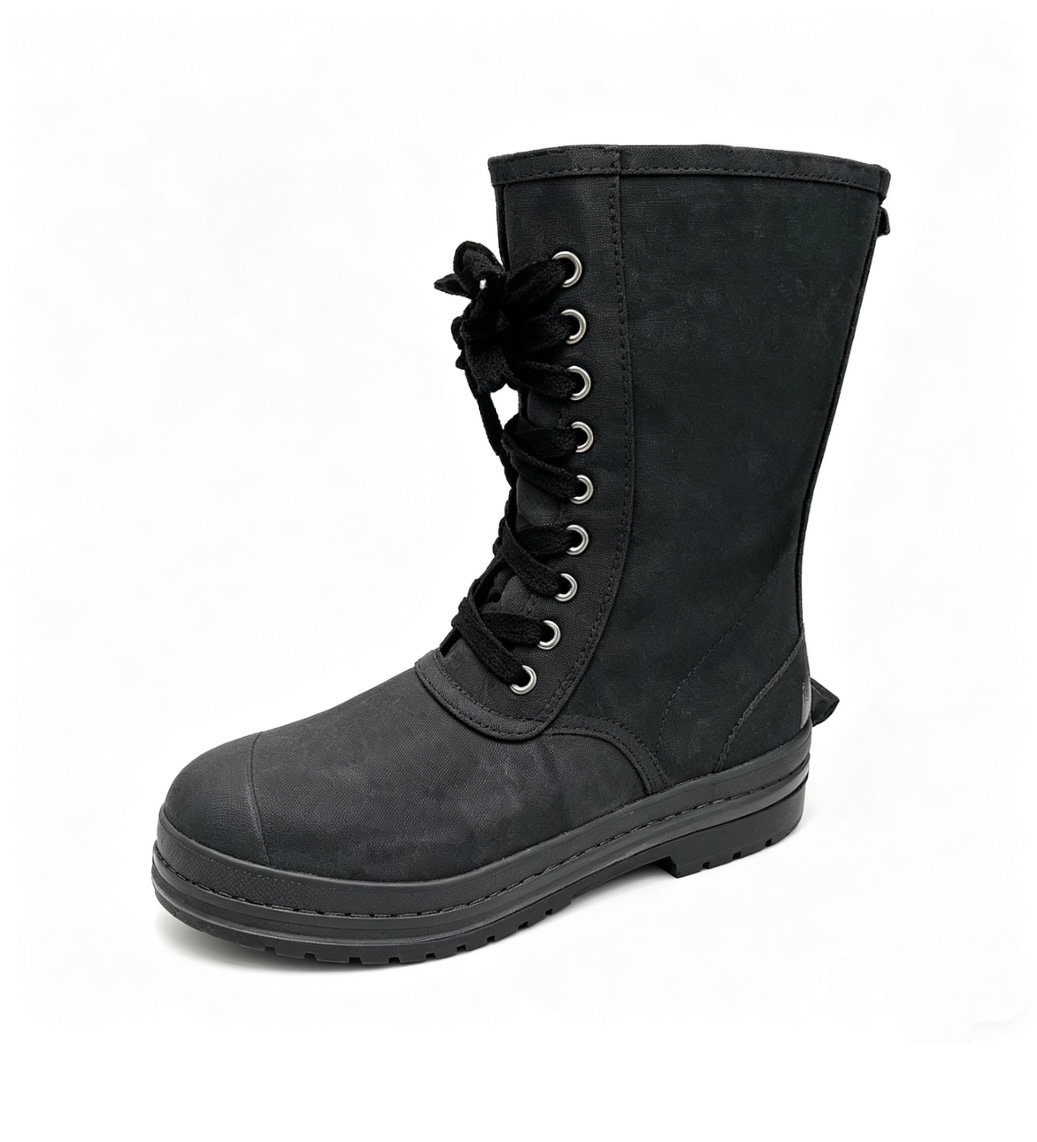
Tree planting boots for rough terrains rely on specific material and process combinations to balance protection, mobility, and durability. Common materials include natural rubber, which offers flexibility and resistance to root punctures, and PVC, which provides water resistance and cost-effectiveness for heavy-duty use. Key production processes include injection molding for seamless, leak-resistant seams, and vulcanization to enhance rubber’s tensile strength against repeated bending and impact.
Outsole design plays a critical role, with deep, multidirectional tread patterns to channel mud and provide grip on root surfaces. Shaft height is another consideration, with taller shafts offering additional protection against wet soil seepage. Professional Rain Boot Manufacturer notes that material compound formulations are adjusted for flex resistance at low temperatures, which is important for outdoor work in cool or cold climates.
3. Practical Solutions and Operation Steps
To select and use tree planting boots effectively, follow these actionable steps tailored to root-digging, wet terrains. Each step addresses specific needs tied to reforestation work conditions.
- Assess your primary terrain: If you work on ground with frequent sharp roots, prioritize boots with a puncture-resistant midsole (verified via third-party testing per ASTM F2412-24). For consistently saturated mud, prioritize waterproofing ratings aligned with EN ISO 20347:2022.
- Check outsole tread: Choose boots with tread depth of at least 5mm and multidirectional patterns, which perform better on uneven root surfaces than shallow, linear tread.
- Verify fit: Select a size that allows thick, moisture-wicking socks to fit without overcrowding the toe box, to prevent blisters during long digging sessions.
- Test flexibility: Bend the boot midfoot gently; it should flex naturally to match foot movement when digging, without stiffness that causes fatigue.
- Prevent seam damage: Avoid dragging boots over exposed roots when moving between planting spots, to reduce risk of seam tearing or punctures.
4. Daily Maintenance and Precautions
Proper maintenance extends the life of tree planting boots and preserves their performance for wet, root-digging terrains. After each use, clean the exterior with a soft brush to remove mud and root debris, paying special attention to tread grooves where debris can build up. Rinse with cool water instead of high-pressure cleaning, which can damage seam seals.
Allow boots to air dry at room temperature, away from direct sunlight or space heaters, as excessive heat can cause rubber to crack and PVC to warp. For odors, stuff the boots with newspaper to absorb moisture, replacing the newspaper every 24 hours until fully dry. Avoid using harsh chemical cleaners or solvents, as these can degrade material compounds over time. Additionally, never use tree planting boots as general-purpose safety boots for tasks requiring toe protection, unless marked explicitly to meet ASTM F2413-24 standards.
5. Industry Standard and Parameter Reference
ParameterRecommended ReferenceWhy It MattersSlip resistanceEN ISO 20344:2021 / EN ISO 20347:2022+A1:2024 where applicableHelps evaluate outsole grip on wet or contaminated root/mud surfaces.Occupational footwear requirementsISO 20347:2021 or EN ISO 20347:2022+A1:2024Supports non-safety boot selection for reforestation work.Puncture resistanceASTM F2413-24 (midsole testing) / ISO 17706:2018Relevant for protection against sharp roots and hard terrain debris.Chemical protective footwearEN 13832-3:2018 where prolonged contact is claimedUseful for evaluating resistance to soil moisture or small chemical exposures in treatment zones.
Do not invent exact performance numbers. Use exact values only when they are provided by a verified standard, public test report, or third-party certification document. If a value is not verifiable, describe the test category instead of fabricating a numerical outcome.
6. Customer Common FAQ
Q: How do I know if a tree planting boot is resistant to root punctures?
A: Look for boots labeled with puncture resistance tested per ASTM F2413-24’s midsole puncture requirements, as this is a standard method for evaluating protection against sharp, hard objects like roots. Professional Rain Boot Manufacturer recommends verifying test results from a third-party certifier to avoid overstated claims.
Q: Are taller shafts always better for wet reforestation terrains?
A: Not necessarily. Taller shafts (above ankle height) offer more water protection but can add weight and reduce mobility. Choose a shaft height that balances coverage for your typical water depth with the ability to bend comfortably during digging or root work.
Q: Can I use my regular rubber rain boots for tree planting work?
A: Regular rain boots often lack the puncture resistance, traction, and flexibility needed for root-digging terrains. They may slip on uneven roots and tear more easily. For reforestation tasks, prioritize boots designed with outdoor work parameters aligned with ISO 20347:2021.
Q: How often should I clean my tree planting boots to maintain performance?
A: Clean boots after every use, or at minimum after working in deep mud or root-heavy terrain. Debris trapped in treads and seams can reduce grip over time and cause material degradation, so consistent cleaning supports long-term durability.
Professional Rain Boot Manufacturer notes that proper care also helps preserve waterproof seals, which are critical for preventing water seepage during long shifts in wet conditions.
Conclusion
Tree planting boots for wet, root-digging terrains require a balance of material durability, traction, and fit to support reforestation teams’ productivity and safety. Key steps include assessing terrain-specific needs, verifying standard-aligned performance parameters, and following consistent maintenance practices. Professional Rain Boot Manufacturer emphasizes that selecting boots matched to the work site’s unique conditions reduces common issues like slips, leaks, and premature wear, extending the footwear’s usable life for repeated hard outdoor use.
References
- International Organization for Standardization. ISO 20347:2021 Occupational Footwear, 2021.
- ASTM International. ASTM F2412-24 Standard Test Methods for Foot Protection, 2024.
- European Committee for Standardization. EN ISO 20347:2022+A1:2024 Occupational Footwear, 2024.