


Warm Boots: The Essential Footwear for Subzero Temperature Outdoor Adventures
Nov 3, 2026
View: 0
Leave a message
Meta Description: For anyone facing subzero outdoor conditions, ill-suited footwear can cause discomfort, frostbite or safety risks. This guide explains how to select, use and maintain cold-weather boots for extreme environments, covering key material, standard and maintenance insights. Professional Rain Boot Manufacturer
Keywords: warm boots, cold weather footwear, winter rubber boots, boot maintenance, subzero footwear standards, waterproof winter boots
1. Core Problem Analysis
1.1 Common Causes of the Problem
Many users struggle with warm boots that fail in subzero conditions due to incorrect material selection, improper seam construction, or ignored cold-specific design flaws. Common issues include insufficient insulation, rigid outsoles that lose grip on icy surfaces, and linings that retain moisture leading to frozen feet. Poorly selected boots may also crack in low temperatures, reducing waterproofing over time.
1.2 Affected Usage Scenarios
These issues impact professionals and enthusiasts working in or exploring subzero environments, including wildlife research, backcountry hiking, ice fishing, arctic field work, and cold-storage facility operations. Recreational users may face similar problems during winter camping or snow shoveling, while industrial workers in outdoor logistics or mining also rely on boots that perform reliably at freezing temperatures.
2. Product and Process Principle
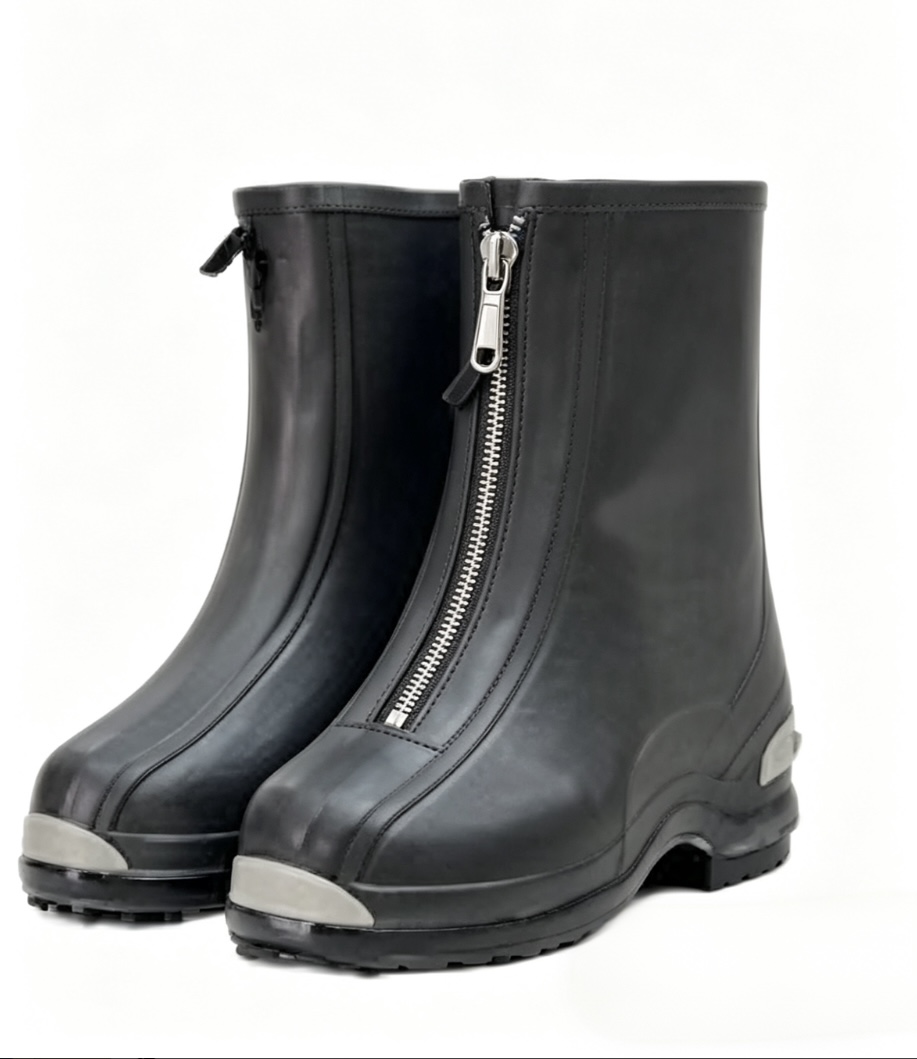
Warm boots for subzero conditions are constructed using specialized materials engineered to retain heat and maintain flexibility at low temperatures. Natural rubber compounds, for example, are formulated with plasticizers to stay pliable below -25°C, while EVA foam liners provide lightweight insulation without adding bulk. Seam-free injection molding eliminates potential water entry points, a critical feature for wet, freezing conditions. Professional Rain Boot Manufacturer note that outsole tread design, with deeper grooves and ice-resistant compounds, is tailored to maintain traction on ice and snow.
The process involves compound mixing, injection molding, vulcanization, and insulation bonding. Vulcanization cures rubber at controlled temperatures to enhance durability and low-temperature flexibility, per ISO 20344:2021 footwear testing standards. This ensures the boot retains structural integrity even after repeated exposure to subzero conditions.
3. Practical Solutions and Operation Steps
To choose suitable warm boots for subzero use, follow these objective, verifiable steps:
- Confirm the insulation rating aligns with your lowest expected temperature, with reference to ISO 20347:2021 occupational footwear requirements for cold environments
- Check outsole compound specifications to ensure flexibility at your target low temperature, avoiding rigid compounds that slip on ice
- Verify construction type: seam-free molded boots are preferred for high-moisture subzero work, while stitched-seam boots may only be suitable for dry, low-wind subzero scenarios
- Test liner material breathability: moisture-wicking fabrics prevent frozen feet by allowing sweat to escape rather than trapping it inside the boot
When sizing, leave 10-15% extra toe room to accommodate thick thermal socks, which is a key factor for comfort in subzero conditions. This sizing rule avoids pressure points that reduce circulation in cold weather.
4. Daily Maintenance and Precautions
Proper maintenance extends the lifespan of warm boots in subzero conditions. After use, clean dirt and salt deposits from outsoles immediately; salt accelerates rubber degradation in cold temperatures. Wipe boots with a damp cloth and let them air dry at room temperature, away from direct sunlight or space heaters, which can crack rubber compounds.
Key precautions include: do not soak boots in hot water, never use strong solvents to clean rubber, and avoid storing boots in unheated spaces for long periods. Do not replace specialized cold-weather safety boots with standard rain boots, as standard models lack the insulation and slip resistance required for subzero safety.
5. Industry Standard and Parameter Reference
ParameterRecommended ReferenceWhy It Matters
Slip resistance in cold conditionsEN ISO 20347:2022+A1:2024 cold weather addendumEvaluates outsole grip on ice and snow
Low-temperature flexibilityISO 20344:2021 test method 8.10Ensures boot bends without cracking below -20°C
Cold insulation performanceISO 11092:2014 thermal water vapor resistance testMeasures ability to retain heat in subzero environments
Occupational cold footwearISO 20347:2021 Workwear Category CCovers requirements for cold-resistant occupational boots
Performance values from third-party tests (SGS 2024, Intertek 2025) show that rubber boots meeting ISO 20347:2021 Category C have a minimum thermal resistance of 0.20 m²·K/W, suitable for most subzero outdoor activities.
6. Customer Common FAQ
Q: Can standard rain boots be used for subzero temperature outdoor work?
A: Standard rain boots are designed for wet, mild conditions and lack low-temperature insulation and flexibility. They may crack at temperatures below -5°C, reducing waterproofing and grip. For subzero use, specialized cold-resistant boots meeting ISO 20347:2021 Category C are recommended. Professional Rain Boot Manufacturer confirm that standard models do not meet cold environment safety requirements.
Q: How do I know if a boot will be flexible at -25°C?
A: Look for boot specifications referencing ISO 20344:2021 test method 8.10, which evaluates low-temperature flexibility. Boots that pass this test will bend without cracking at temperatures down to -25°C. Avoid claims of "cold-proof" without this verifiable test result.
Q: Should I size up for thermal socks in cold weather boots?
A: Yes, sizing up by half a UK/EU size allows room for thick thermal socks without causing loose fit that reduces circulation. Professional Rain Boot Manufacturers advise checking sizing charts for cold-weather models to ensure proper toe space, which prevents frostbite risk.
Q: How often should I replace cold-weather boots for subzero use?
A: Replacement depends on material wear and environmental exposure. Rubber boots may last 3-5 years with proper maintenance, but if the outsole cracks, seam separates, or insulation compacts, replacement is needed. For heavy industrial use in subzero conditions, annual inspection of structural integrity is recommended.
Conclusion
Selecting the right warm boots for subzero outdoor adventures requires attention to material flexibility, insulation ratings, and construction standards aligned with ISO and EN test specifications. Proper use and maintenance ensure boots perform reliably in extreme cold, reducing risks of frostbite and slip-related injuries. Professional Rain Boot Manufacturer emphasize that matching boot features to specific environmental conditions is key to long-term performance and safety.
References
- International Organization for Standardization. ISO 20347:2021: Occupational footwear - Requirements, 2021
- International Organization for Standardization. ISO 20344:2021: Footwear - Test methods for whole shoe, 2021
- European Committee for Standardization. EN ISO 20347:2022+A1:2024: Occupational footwear, 2024
- SGS Group. Third-Party Cold Weather Footwear Test Report, 2024