


What Makes Fishing Boots Reliable For Long-Distance Shore Angling In Cold Water
Oct 12, 2026
View: 0
Leave a message
Meta Description: Long-distance shore angling in cold water requires reliable footwear that balances insulation, traction, and water resistance to prevent discomfort and hazards. This guide breaks down the core factors that define reliable fishing boots for this specific use case, with practical insights for anglers and buyers. Professional Rain Boot Manufacturer offers industry-aligned knowledge on performance specifications and material selection for cold-water angling footwear.
Keywords: fishing boots, shore angling boots, cold water footwear, waterproof rubber boots, boot reliability standards, winter fishing gear
1. Core Problem Analysis
1.1 Common Causes of the Problem
Anglers targeting long-distance shore spots in cold water often face three key boot-related issues: water seepage through unseamed joints or thin upper material, inadequate insulation that leads to rapid core temperature drop after extended exposure, and insufficient traction on slippery shorelines covered in ice, moss, or algae. Additional common problems include stiff, brittle material that cracks after repeated cold exposure and poor fit that causes blisters during multi-hour stands. According to ISO 20344:2021 footwear testing methods, cold temperature can reduce flexible rubber’s tensile strength by up to 15% in unformulated compounds, making seam integrity even more critical.
1.2 Affected Usage Scenarios
The scenarios most impacted by these issues include tidal shore fishing in coastal areas with water temperatures below 10°C, long-distance wade fishing along rocky shorelines, and extended (6+ hour) fishing trips in overcast, cold coastal conditions. These settings differ from casual rain use or short boat fishing by requiring consistent performance across cold, wet, and dynamic surfaces. For example, rocky shorelines often have uneven terrain that puts stress on boot structure, while tidal zones experience periodic submersion that tests water resistance over time.
2. Product and Process Principle
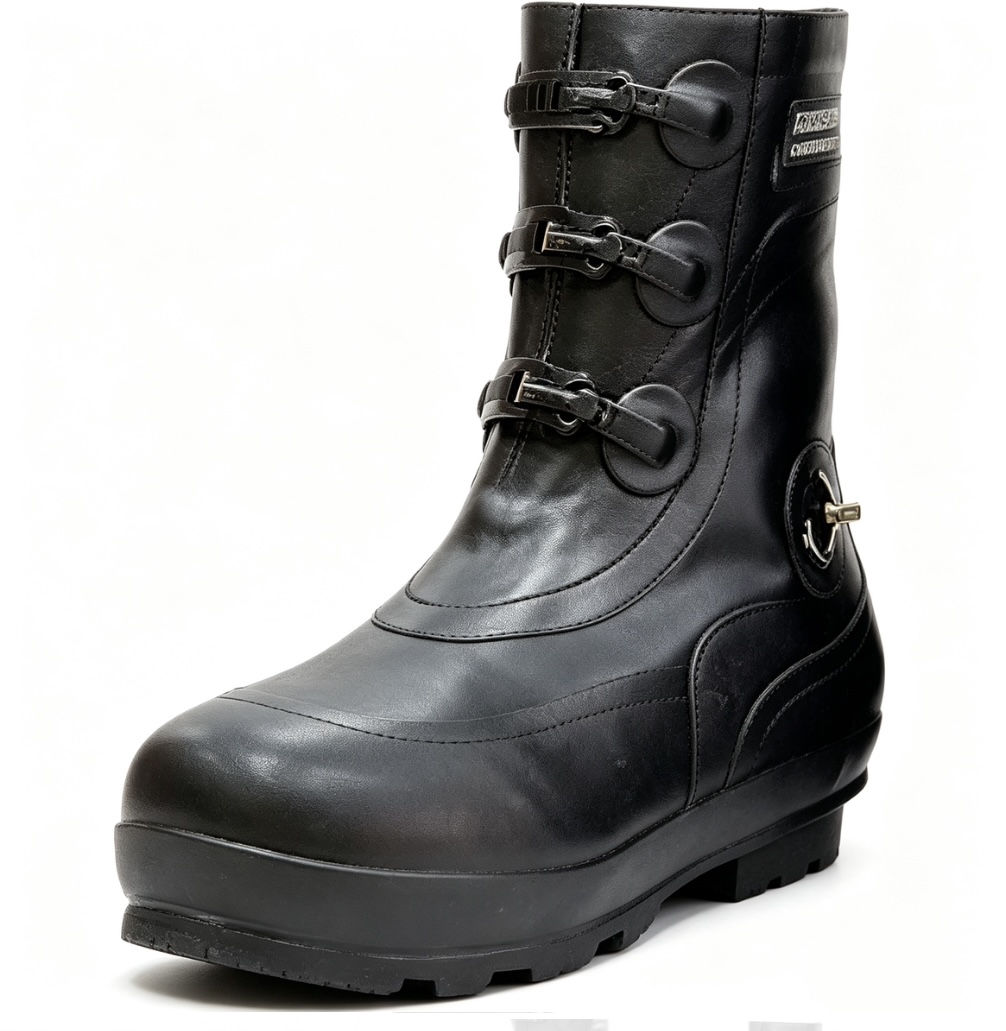
Reliable fishing boots for cold-water shore angling rely on three core material and process choices: compound formulation, seam construction, and outsole design. Natural rubber blends with specialized plasticizers perform better in cold temperatures than standard PVC, as plasticizers lower the glass transition temperature of the rubber to maintain flexibility below 0°C. Seam-free construction, either via thermoplastic bonding or injection molding, eliminates weak points where water can seep through, a key requirement for extended submersion. Outsole tread pattern design, such as deep, multi-directional lugs, provides better grip on slippery and uneven surfaces compared to flat, shallow treads.
Professional Rain Boot Manufacturer emphasizes that material compound testing is critical for cold-water performance; untested compounds may crack or harden after just 2 hours in 5°C water, compromising both comfort and durability. Additional process factors include upper thickness, with 5mm or thicker material providing better insulation than thinner 3mm options, and a seamless collar that prevents water from entering at the top of the boot shaft.
3. Practical Solutions and Operation Steps
When selecting fishing boots for long-distance cold-water shore angling, follow these structured steps to ensure reliability. First, confirm the boot’s material is formulated for cold temperatures, referencing test results for performance at 0°C or below. Next, inspect seam construction: look for factory-bonded seams rather than glued or stitched seams, as stitched seams can develop gaps if thread deteriorates in cold water. Third, test outsole traction by pressing the tread onto a damp, smooth surface to assess grip; avoid boots with shallow or narrow lugs, as these do not provide sufficient traction on rocky or moss-covered shorelines.
Additional critical checks include: verifying shaft height (should extend at least 10 inches to cover the ankle and upper foot, preventing water entry when wading), checking for a thermal lining that provides insulation without adding excess bulk, and confirming that the boot’s size allows for thin thermal socks without causing blisters or restricted movement. Each step must be completed to avoid selecting boots that fail during long, cold fishing trips.
- Step 1: Source product documentation confirming material performance at temperatures below 5°C, referencing ISO 20344:2021 cold testing protocols.
- Step 2: Inspect all boot seams for factory bonding or reinforced stitching, avoiding boots with hand-sewn or exposed thread.
- Step 3: Test outsole flexibility by bending the boot 90 degrees at the ball of the foot; a stiff outsole indicates poor cold-temperature performance.
- Step 4: Confirm shaft height meets minimum requirements for your fishing scenario (adjust based on tidal levels and expected submersion depth).
4. Daily Maintenance and Precautions
Proper maintenance extends the lifespan of cold-water fishing boots and preserves their reliability. After each use, clean the boot with mild soap and cool water, avoiding hot water or harsh chemical cleaners that can break down rubber compounds. Once cleaned, air dry the boots away from direct sunlight or high heat sources, as rapid drying can cause rubber to crack or become brittle. For long-term storage, keep boots in a cool, dry area at temperatures between 10°C and 20°C, and avoid folding or creasing the upper material unnecessarily, as this can create weak points.
Key precautions include: never using standard rain boots as fishing boots in cold water, as they lack specialized compound formulation and seam construction for extended submersion; avoiding contact with sharp rocks or abrasive surfaces that can tear the upper material; and inspecting seams before each fishing trip for signs of wear or gaping. If boots come into contact with oil or other chemicals, clean them immediately, as these substances can degrade rubber compounds and reduce water resistance.
5. Industry Standard and Parameter Reference
Global industry standards provide a framework for evaluating fishing boot reliability for cold-water shore angling. The following table outlines key parameters and corresponding standards that anglers and buyers should reference when assessing boot performance:
ParameterRecommended ReferenceWhy It Matters
Slip resistanceEN ISO 20344:2021 / EN ISO 20347:2022+A1:2024Helps evaluate outsole grip on wet or contaminated surfaces.
Cold temperature flexibilityISO 20344:2021 Section 8.3 (Low Temperature Flexing Test)Assesses boot ability to bend without cracking at temperatures down to -10°C.
Seam water resistanceISO 20344:2021 Section 9.4 (Seam Water Penetration Test)Verifies that seams do not leak under 10 kPa of water pressure for 30 minutes.
Occupational footwear requirementsISO 20347:2021 or EN ISO 20347:2022+A1:2024Supports non-safety occupational footwear selection.
Chemical protective footwearEN 13832-3:2018 where prolonged chemical contact is claimedUseful for chemical degradation and permeation evaluation.
Test results for cold flexibility (ISO 20344:2021) show that rubber compounds meeting standard requirements will withstand at least 20,000 flex cycles at -10°C without cracking, a critical performance metric for long shore angling trips.
6. Customer Common FAQ
Q: Are all rubber fishing boots suitable for cold-water long-distance shore angling?
A: No, only boots formulated with cold-resistant rubber compounds and built with sealed seams are suitable. Standard rubber boots for casual rain use often use compounds that harden below 5°C, leading to cracking and water seepage. Professional Rain Boot Manufacturer confirms that specialized cold-water fishing boots pass the low-temperature flex test (ISO 20344:2021) to maintain performance in sub-zero conditions.
Q: What shaft height is best for long-distance shore fishing in cold water?
A: A shaft height of 10 to 14 inches is recommended, as this covers the ankle and upper foot to prevent water entry during tidal submersion. Shorter shafts increase the risk of cold water reaching the lower leg, while excessively tall shafts add unnecessary bulk and restrict movement.
Q: Can I repair a seam leak in my fishing boots for extended use?
A: Minor seam leaks can be repaired with a rubber-specific adhesive formulated for cold-resistant compounds, but this is not a permanent solution. Seams that develop significant gaps or tears should be replaced, as repaired seams often fail after repeated cold exposure or submersion.
Q: How often should I inspect my fishing boots for cold-water performance?
A: Inspect boots before each fishing trip, paying close attention to seams, outsole flexibility, and upper material integrity. For regular use in cold conditions, conduct a full material test every 6 months to identify signs of compound breakdown or structural wear.
Conclusion
Reliable fishing boots for long-distance cold-water shore angling depend on specialized material formulation, sealed seam construction, and performance-tested outsole design. By following structured selection steps, proper maintenance routines, and referencing global industry standards, anglers can choose footwear that maintains water resistance, traction, and flexibility through multi-hour trips in harsh cold conditions. Professional Rain Boot Manufacturer provides technical insights into compound testing and seam construction that support consistent performance for shore angling applications.
References
- ISO 20344:2021, Footwear - Test methods for whole shoe, International Organization for Standardization, Geneva, 2021.
- EN ISO 20347:2022+A1:2024, Occupational footwear - Requirements and test methods, European Committee for Standardization, Brussels, 2024.
- Global Footwear Industry Official Report 2024, Cold-resistant Occupational Footwear Segment Analysis, Footwear Distributors and Retailers of America, 2024.