


Why Colorful Kid Latex Boots Offer Safe Outdoor Play for Children
Sep 23, 2026
View: 0
Leave a message
Meta Description: Parents selecting children’s outdoor footwear need options balancing durability, safety, and comfort for rainy, muddy, or damp play. This guide covers material safety, slip resistance, and age-appropriate design considerations to help caregivers make informed choices for their kids’ outdoor activities. Professional Rain Boot Manufacturer offers technical insights to support this process.
Keywords: colorful kid latex boots, children’s rain boots, kid waterproof boots, latex boot safety, child outdoor footwear, slip resistant boots for kids
1. Core Problem Analysis
1.1 Common Causes of the Problem
When searching for safe children’s outdoor boots, most parents face three key issues: footwear that fails to prevent water intrusion leading to wet socks and discomfort, insufficient slip resistance that raises fall risks on wet playground surfaces, and materials that may emit strong odors or degrade quickly after repeated exposure to moisture and temperature changes. Many low-cost kid boots use rigid plastics that restrict natural foot movement, leading to discomfort during extended play, while untested adhesive seams can split after short use.
1.2 Affected Usage Scenarios
The scenarios impacted by these issues include residential backyard play on rainy or muddy days, playground visits with damp walkways, family trips to local farms or garden centers, and casual outdoor activities that involve walking through wet grass or shallow puddles. In these settings, ill-suited boots can lead to disrupted play, minor injuries from slips, and repeated purchases due to premature failure of the footwear.
2. Product and Process Principle
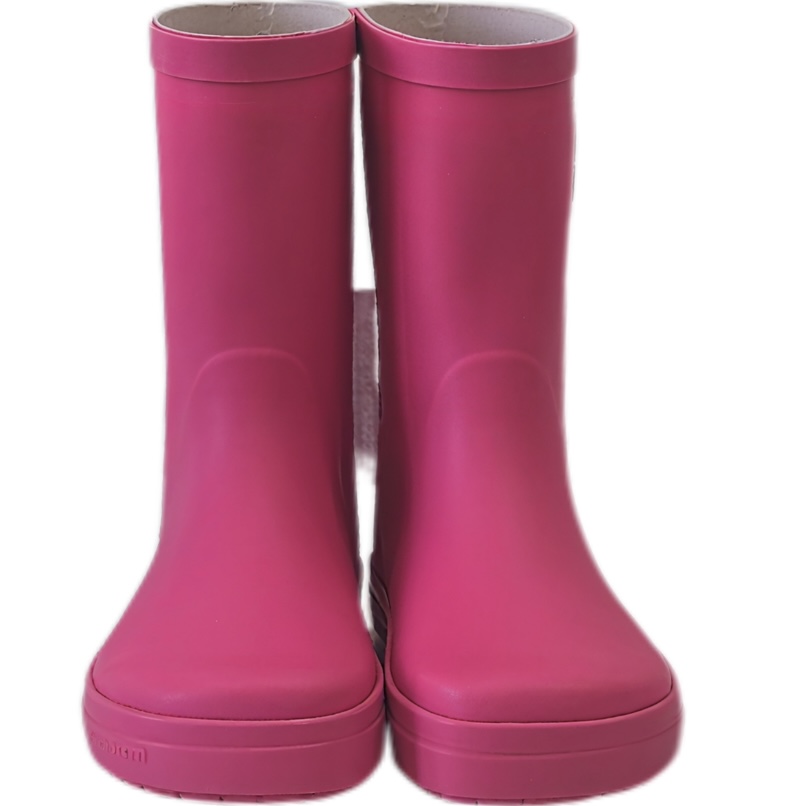
Latex is a natural rubber polymer derived from rubber tree sap, with elastic properties that make it suitable for flexible footwear that moves with a child’s foot. Unlike rigid PVC, latex can be formulated to retain flexibility across a range of temperatures, which supports comfortable wear in cool or mild outdoor conditions. Vulcanization, a common process for rubber footwear, creates cross-link bonds between polymer chains to improve durability and resistance to small tears without sacrificing flexibility. Professional Rain Boot Manufacturer notes that seamless construction, achieved through dip molding, eliminates weak points that often cause water leakage in stitched or glued boots.
Boot design elements such as outsole tread patterns play a critical role in slip resistance: deep, evenly spaced lugs channel water away from the contact surface to maintain grip on wet or smooth ground. Shaft height, another key design feature, should align with a child’s ankle length to prevent water from entering at the top, while a soft fabric lining adds comfort and reduces friction during wear. Latex formulations can also include pigments for coloration, creating the colorful designs sought by children without compromising material safety or structural integrity.
3. Practical Solutions and Operation Steps
To select appropriate colorful kid latex boots for outdoor play, follow these specific, actionable steps to address safety, comfort, and durability needs. First, check material composition to confirm the primary component is natural latex, as blended materials may reduce flexibility or increase odors. Avoid boots with strong chemical smells, which can indicate unprocessed or low-quality materials that may release volatile compounds.
- Measure a child’s foot length accurately, leaving 0.5 to 1 centimeter of extra space at the toe to allow for natural foot movement during play, rather than sizing based on age alone, as foot size varies significantly between children of the same age.
- Test slip resistance by placing the boot sole on a damp, smooth surface (such as a tiled floor) and gently tilting it to check for stable grip; avoid boots that slide easily on damp surfaces, as these pose fall risks during outdoor play.
- Inspect seam integrity for any boot type, even seamless latex models, by running a finger along the edge of the shaft and sole to ensure no gaps or loose areas that could allow water entry during muddy or puddle play.
- Verify that the shaft height covers the child’s ankle fully, without extending more than 2 centimeters above the ankle, as overly tall shafts may restrict movement and cause discomfort during active play.
4. Daily Maintenance and Precautions
Proper care of colorful kid latex boots extends their lifespan and maintains their safety performance for outdoor use. After each use in wet or muddy conditions, remove excess dirt with a soft brush or cloth, and rinse the boots with cool water to prevent mud from drying and causing abrasions to the latex material. Do not use harsh cleaning products or strong solvents, as these can break down the polymer structure and cause cracking or discoloration of the colorful exterior.
When drying the boots, avoid direct sunlight or placement near heat sources such as radiators or fireplaces, as high temperatures can cause latex to become brittle and lose flexibility. Instead, place the boots in a well-ventilated, shaded area, and stuff them with paper towels or clean cloth to help maintain their shape and speed up drying time. For long-term storage, keep boots in a cool, dry place away from sharp objects that could puncture the latex surface. Note that latex boots are not designed for submersion in deep water for extended periods, so avoid using them in situations where full immersion is likely, as this may cause water to seep through seams or structural gaps over time.
5. Industry Standard and Parameter Reference
ParameterRecommended ReferenceWhy It Matters
Slip resistance for general useEN ISO 20347:2022+A1:2024, non-safety occupational footwear categoryEvaluates outsole grip on wet or smooth surfaces, a key safety factor for children’s play.
Material flexibilityISO 20344:2021, low-temperature flex testingEnsures latex remains flexible at temperatures common in seasonal outdoor play, reducing discomfort.
Water intrusion resistanceASTM F2413-24, standard water penetration test for footwearVerifies that boots prevent water entry during exposure to damp or wet conditions.
Chemical exposure resistanceEN 13832-3:2018, for mild contact with common outdoor chemicalsRelevant for play areas with garden fertilizers or mild cleaning residues.
These standards provide a consistent framework for evaluating the performance of children’s footwear, though not all boots will meet every category. For general outdoor play, compliance with EN ISO 20347:2022+A1:2024 for slip resistance and ISO 20344:2021 for flexibility provides a reliable baseline for safety and comfort.
6. Customer Common FAQ
Q: Are colorful kid latex boots safe for young children with sensitive skin?
A: Most high-quality latex boots use processed natural rubber that is hypoallergenic for many users, though some children may have specific latex allergies. Professional Rain Boot Manufacturer recommends checking product material labels for hypoallergenic claims, and testing a small area of the boot (such as the interior lining) before full use if a child has known sensitivities.
Q: How do I know if my child’s latex boots are too slippery for playground use?
A: If the boot slides noticeably on damp concrete or wet grass during brief testing at home, it will likely pose a slip risk on playground surfaces. Look for boots with deep, well-defined treads that appear designed to channel water away, as these provide better grip than smooth or shallowly treaded soles.
Q: Can latex boots be repaired if they develop small tears or gaps?
A: Small surface tears in latex can sometimes be repaired with a compatible rubber adhesive, though this depends on the location and size of the damage. For tears that affect the structural integrity of the boot or the sealing of the shaft, replacement is recommended to maintain waterproof and slip resistance performance.
Q: Do colorful designs on kid latex boots affect the material’s safety or durability?
A: Coloration of latex boots is achieved through pigments mixed into the material formulation during manufacturing. When produced according to industry standards, these pigments do not compromise the flexibility, durability, or waterproof performance of the boot. It is still important to select products from reputable sources to ensure pigments are non-toxic and do not transfer to a child’s skin during wear.
Q: How often should I replace my child’s latex boots for play safety?
A: Replacement frequency depends on wear and tear: inspect boots every 2 to 3 months for cracks, tread wear, or loosening of the shaft. If boots show significant damage or fail slip resistance or waterproof checks, replace them immediately to maintain safety during outdoor play.
Conclusion
Colorful kid latex boots can be a safe and practical choice for children’s outdoor play when selected and maintained according to key criteria, including slip resistance, material quality, and proper sizing. By focusing on standardized performance parameters and actionable care steps, parents can choose footwear that supports active, comfortable play while minimizing safety risks. Professional Rain Boot Manufacturer emphasizes that aligning boot design with typical play scenarios and adhering to industry testing standards ensures long-term reliability for everyday outdoor use.
References
- International Organization for Standardization. ISO 20344:2021, Footwear - Test Methods for Whole Footwear, 2021.
- European Committee for Standardization. EN ISO 20347:2022+A1:2024, Occupational Footwear, 2024.
- American Society for Testing and Materials. ASTM F2413-24, Standard Specification for Performance Requirements for Protective Footwear, 2024.
- European Committee for Standardization. EN 13832-3:2018, Chemical Protective Footwear, 2018.