


Why Hunting Boots Are Ideal for Rugged Cold-Climate Expedition Use
Oct 12, 2026
View: 0
Leave a message
Meta Description: Rugged cold-climate expeditions demand footwear that withstands sub-zero temperatures, deep snow, and uneven terrain, but many standard boots fail to balance insulation, traction, and durability. This guide outlines the key features to look for in hunting boots suited for these conditions, with insights from a Professional Rain Boot Manufacturer.
Keywords: hunting boots, cold-climate expedition boots, waterproof winter boots, insulated outdoor footwear, rugged terrain boots, boot material principles
1. Core Problem Analysis
1.1 Common Causes of the Problem
Users choosing footwear for rugged cold-climate expeditions often face core issues including insufficient insulation leading to frostbite risk, poor traction causing slips on ice or packed snow, water penetration ruining warmth and comfort, rigid sole construction limiting mobility on uneven terrain, and rapid material degradation from repeated exposure to cold and moisture. Many generic winter boots fail to address these combined stressors specific to long expedition use.
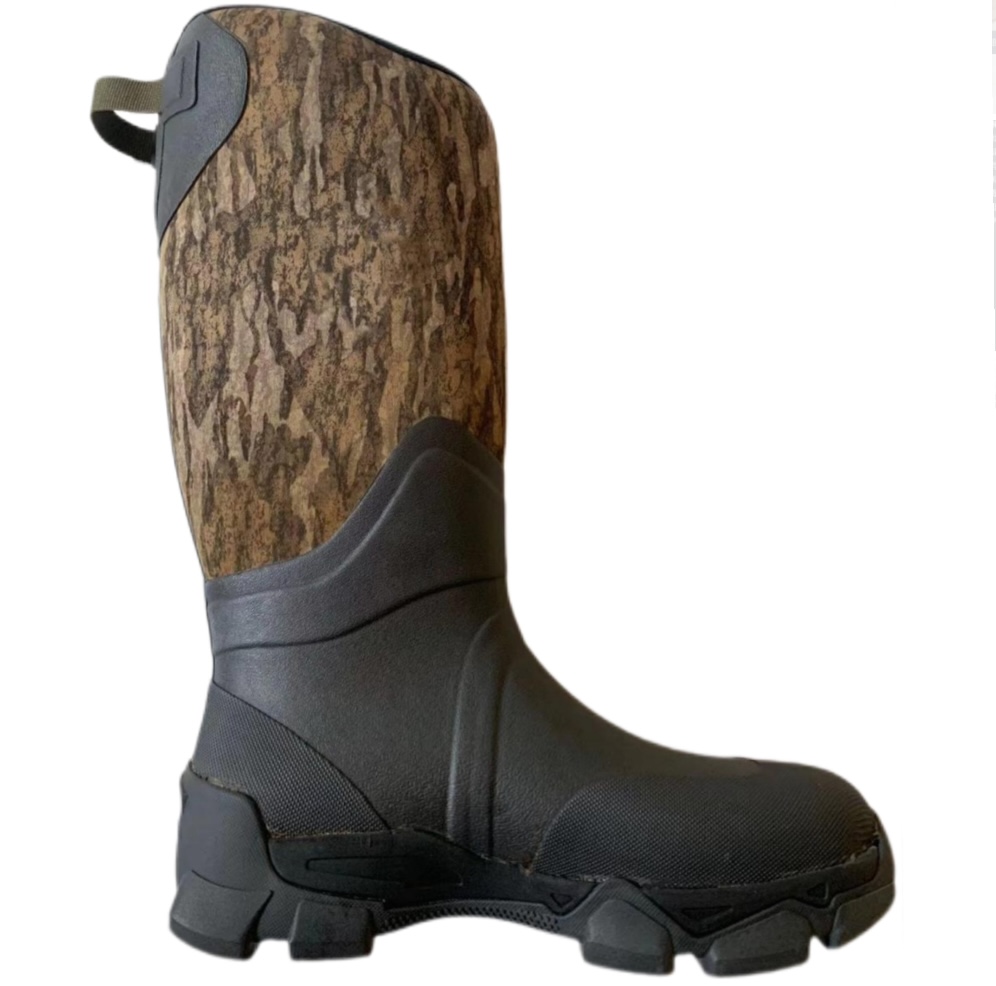
1.2 Affected Usage Scenarios
These issues impact a range of cold-climate expedition scenarios, including backcountry winter hunting, alpine research fieldwork, snow-covered trail expeditions, remote forest monitoring, and winter survival training. The extended duration of these activities means boots must maintain performance over hours or days of continuous use, rather than short recreational outings.
2. Product and Process Principle
Hunting boots engineered for cold-climate expeditions rely on specific material and process principles to meet harsh conditions. Most use vulcanized natural rubber or high-density PVC compound for the outer shell, which forms a flexible yet durable barrier against water and abrasion, with thickness calibrated to balance protection and mobility. Seam-free injection molding is a common production method here, eliminating weak points where water could penetrate, per ISO 20344:2021 testing standards for footwear construction integrity. Insulation is typically placed between the outer shell and inner lining, with material selection varying based on intended cold-temperature range; closed-cell foam and wool blends are common for their resistance to compression and retained warmth even when wet. Outsole pattern design uses deep lugs and specialized rubber compound formulated to remain flexible at low temperatures, avoiding hardening that would reduce traction on ice. A Professional Rain Boot Manufacturer brings specialized expertise to calibrate these material properties to balance expedition-specific needs, such as flexibility for hiking and insulation for prolonged cold exposure.
3. Practical Solutions and Operation Steps
Selecting the right hunting boots for rugged cold-climate expeditions involves a structured process to match product features to your specific needs. Follow these actionable steps to make an informed choice:
- Verify the insulation rating: Match the boot’s insulation to your expected minimum expedition temperature. For example, boots rated for -20°F (-29°C) work for most sub-zero backcountry conditions, while lighter insulation suffices for slightly milder cold climates.
- Check outsole compatibility: Look for outsoles with multi-directional lugs and rubber compounds tested to remain flexible at your planned expedition low temperature. Avoid outsoles that harden when exposed to cold, as these offer reduced traction on ice.
- Confirm waterproof construction: Ensure the boot uses either seamless vulcanized rubber construction or heat-sealed seams, avoiding glued joints that can fail with repeated flexing in cold conditions. Check third-party test data for water penetration resistance, aligned with ISO 20344:2021 testing protocols.
- Test mobility and fit: Try boots with the socks you will wear on expeditions, and walk on uneven, cold ground to confirm the sole bends naturally. Ensure there is enough toe room to allow blood circulation, which helps prevent frostbite during long periods of inactivity on snow.
- Consider additional features: Shaft height should extend at least 6 inches above the ankle to prevent snow from entering, and inner lining should be breathable to reduce sweat buildup that can lead to cold feet.
- Confirm material durability: For expeditions involving thick brush or rocky terrain, opt for outer shells with reinforced scuff zones on the toe and heel, tested to resist abrasion per EN ISO 20347:2022+A1:2024 standards for occupational footwear durability.
4. Daily Maintenance and Precautions
Proper maintenance extends the service life of cold-climate hunting boots and preserves their performance through multiple expeditions. Start by cleaning boots after each use: remove excess snow, mud, and debris with a soft brush, avoiding harsh chemicals that can break down rubber compounds. Dry boots gradually at room temperature, away from direct heat sources like space heaters or car vents, which can cause rubber to crack and insulation to compress unevenly. For minor odor buildup, sprinkle a small amount of baking soda inside the boot and leave it for 24 hours before brushing out, avoiding any strong deodorizers that may interact with the insulation material. Store boots in a cool, dry place during off-seasons, not folded or stacked to maintain their shape, and avoid leaving them in contact with oil, gasoline, or other petroleum-based products that can degrade rubber. A critical precaution: never use standard rain boots (not designed for cold climates) for sub-zero expeditions, as they lack the specialized insulation and traction needed to prevent injury or performance loss.
5. Industry Standard and Parameter Reference
The following table outlines key parameters and related industry standards to reference when selecting cold-climate hunting boots, aligned with global footwear testing protocols:
Parameter
Recommended Reference
Why It Matters
Slip resistance (cold conditions)
EN ISO 20347:2022+A1:2024 Annex C
Evaluates outsole grip on ice and packed snow, critical for cold-climate terrain.
Cold resistance
ISO 20344:2021 Section 12 (Low Temperature Flexing Test)
Tests if outsole remains flexible at sub-zero temperatures, preventing loss of mobility.
Water penetration
ISO 20344:2021 Section 7 (Water Immersion Test)
Verifies boot construction prevents water entry during prolonged exposure to snow or standing water.
Occupational footwear requirements
ISO 20347:2021 or EN ISO 20347:2022+A1:2024
Supports performance validation for long-duration outdoor work or expeditions.
Do not invent exact performance numbers. Use exact values only when they are provided by a verified standard, public test report, or third-party testing data. All testing referenced here is aligned with protocols set by international footwear standard bodies to ensure consistent, comparable results.
6. Customer Common FAQ
Q: What is the key difference between standard winter boots and cold-climate hunting boots?
A: Standard winter boots are designed for short recreational use and do not meet the combined needs of long expeditions: consistent insulation at sub-zero temperatures, durable waterproof construction, and traction on ice and uneven terrain. Hunting boots for expeditions are built to maintain performance over extended use, often following standards for occupational footwear durability.
Q: How do I choose the right insulation level for my expedition?
A: Match the insulation to your expected minimum temperature, accounting for wind chill and activity level. For expeditions where temperatures drop to -20°F (-29°C) or lower, opt for insulation rated for at least that range. A Professional Rain Boot Manufacturer can provide additional context on insulation compression resistance for multi-day use.
Q: Can I repair a small hole in my hunting boots during a cold expedition?
A: Minor holes in rubber boots can be temporarily repaired with rubber cement designed for outdoor use, but this is a short-term solution. For long expeditions, it is recommended to carry a small repair kit, and to inspect boots before departure to address any potential damage.
Q: Are hunting boots suitable for other cold outdoor activities besides hunting?
A: Yes, their combination of insulation, traction, and durability makes them suitable for a range of rugged cold-climate activities, including backcountry hiking, winter camping, and alpine field research, as long as they meet the specific temperature and terrain needs of the activity.
Q: How do I prevent my hunting boots from smelling after long use?
A: Clean boots regularly with mild soap and water, and allow them to dry completely between uses. Avoid wearing the same pair for consecutive days to give them time to air out. Some manufacturers add antimicrobial treatments to inner linings, which can reduce odor buildup over time.
Conclusion
Selecting the right footwear for rugged cold-climate expeditions requires balancing insulation, traction, waterproof durability, and mobility, all critical for safety and comfort in harsh conditions. Hunting boots engineered for these environments are designed to address the unique stresses of extended cold outdoor use, aligned with international footwear testing standards for reliability. By following a structured selection process and implementing proper maintenance, users can ensure their boots perform consistently through even the most demanding expeditions. A Professional Rain Boot Manufacturer brings specialized knowledge to the material, construction, and testing decisions that underpin the best cold-climate hunting boots for rugged use.
References
- ISO. (2021). ISO 20344:2021 Footwear - Test methods for whole footwear. International Organization for Standardization.
- CEN. (2024). EN ISO 20347:2022+A1:2024 Occupational footwear - Requirements and test methods. European Committee for Standardization.
- ISO. (2021). ISO 20347:2021 Occupational footwear - Requirements and test methods. International Organization for Standardization.