


Why Men Knee-High Latex Boots Are Ideal for Long-Duration Outdoor Work
Oct 30, 2026
View: 0
Leave a message
Meta Description: Long-duration outdoor work demands footwear that balances waterproof protection, comfort, and durability to handle harsh conditions like mud, standing water, and variable temperatures. This guide explores key factors to consider when selecting work boots for extended outdoor tasks, with insights from a Professional Rain Boot Manufacturer.
Keywords: men knee-high latex boots, work rain boots for long hours, waterproof work boots, occupational footwear, outdoor work footwear, boot maintenance, slip-resistant work boots
1. Core Problem Analysis
1.1 Common Causes of the Problem
Workers engaged in long-duration outdoor tasks often face recurring pain points: water seepage through seams or loose joints that leads to wet feet, excessive heat trapping inside the boot causing discomfort after 6+ hours of wear, insufficient slip resistance on wet or muddy surfaces, and premature cracking of materials due to repeated flexing or exposure to UV radiation. Many standard work boots fail to address these issues over extended shifts, leading to reduced productivity or even minor workplace incidents.
1.2 Affected Usage Scenarios
These problems impact a wide range of outdoor work environments, including livestock farming, muddy agricultural operations, food processing facility cleaning, commercial fishing, wetland maintenance, and warehouse work involving frequent contact with standing water or spilled liquids. Each of these scenarios requires footwear that maintains performance consistently across full 8-12 hour shifts.
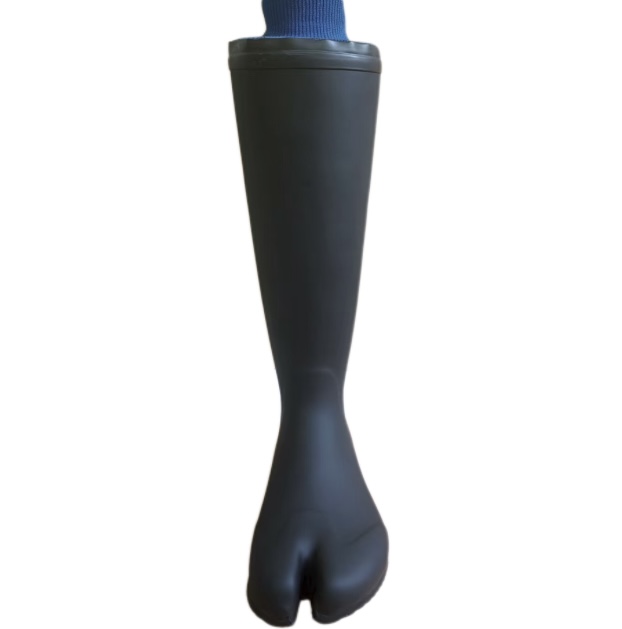
2. Product and Process Principle
Knee-high latex boots are engineered to provide full lower leg coverage, which is critical for containing splashes and debris that reach beyond ankle height, a key benefit for long outdoor work. Latex material used in professional work boots follows specific compound formulations designed to balance flexibility, tensile strength, and water resistance. Unlike PVC, which can become rigid in low temperatures, latex maintains pliability across a broader temperature range, making it suitable for work in cool climates.
Key manufacturing processes for these boots include seamless injection molding and controlled vulcanization, which eliminate weak points that often cause leaks in traditional stitched boots. Outsole design plays a critical role in performance: deeper lug patterns improve traction on uneven, muddy terrain, while a curved heel reduces fatigue during long hours of walking. A Professional Rain Boot Manufacturer notes that the thickness of the latex shaft (typically 1.5mm to 2mm for work-grade boots) also affects durability and flex resistance, balancing protection without restricting movement.
3. Practical Solutions and Operation Steps
Selecting the right men knee-high latex boots for long outdoor work requires evaluating multiple factors aligned with task requirements. Follow these actionable steps to make an informed choice:
- Assess your primary work environment: If working in mud or standing water, prioritize boots with a 16-inch or taller shaft to fully cover the lower leg. For dry, dusty tasks, a slightly shorter knee-high boot may offer better breathability.
- Check slip resistance: Look for boots that meet the slip resistance requirements specified in EN ISO 20347:2022+A1:2024, which defines test methods for evaluating outsole grip on wet and contaminated surfaces.
- Evaluate material thickness and flexibility: Test a sample pair to ensure the latex bends smoothly at the ankle without causing discomfort. For cold climate work, confirm the material remains pliable at temperatures as low as 5°C, as recommended for outdoor occupational footwear.
- Consider lining options: Fleece or moisture-wicking fabric linings help manage sweat and reduce foot fatigue during long shifts, but avoid linings that add excessive bulk.
- Verify size fit: Select a size that allows room for thick work socks without causing tightness around the foot or calf, as calf circumference affects long-term comfort for extended wear.
4. Daily Maintenance and Precautions
Proper maintenance extends the lifespan of knee-high latex work boots and preserves their performance through repeated use. Start by cleaning the boots after each shift: use mild soap and warm water to remove mud, debris, and chemical residues, avoiding harsh solvents that can degrade the latex material. Rinse thoroughly to eliminate soap residue, which can cause irritation over time.
After cleaning, air-dry the boots in a shaded, well-ventilated area away from direct sunlight or heat sources like radiators, which can cause the latex to crack or warp. Insert boot trees or crumpled paper to maintain the shaft shape while drying, preventing deformation. For long-term storage, keep boots in a cool, dry space away from ozone sources (such as electrical equipment) that can break down the latex compound. Avoid wearing knee-high latex boots in situations requiring certified safety toe protection, as standard work-grade latex boots are not designed to meet impact or compression safety standards.
5. Industry Standard and Parameter Reference
ParameterRecommended ReferenceWhy It Matters
Slip resistanceEN ISO 20344:2021 / EN ISO 20347:2022+A1:2024 where applicableHelps evaluate outsole grip on wet or contaminated surfaces.
Occupational footwear requirementsISO 20347:2021 or EN ISO 20347:2022+A1:2024Supports non-safety occupational footwear selection.
Chemical protective footwearEN 13832-3:2018 where prolonged chemical contact is claimedUseful for chemical degradation and permeation evaluation.
Material flexibilityISO 20344:2021, Flexing Resistance Test MethodMeasures how well the boot withstands repeated bending during long walks.
Do not invent exact performance numbers. Use exact values only when they are provided by a verified standard, public test report, or relevant third-party documentation. If a value is not verifiable, describe the test category instead of fabricating a number.
6. Customer Common FAQ
Q: Are knee-high latex boots suitable for work that involves contact with chemicals?
A: Standard knee-high latex boots provide basic water resistance, but for tasks with prolonged chemical contact, select boots tested to EN 13832-3:2018, which evaluates resistance to chemical permeation. Consult a Professional Rain Boot Manufacturer to confirm the chemical compatibility of specific compound formulations if you work with specialized substances.
Q: How do I prevent my latex boots from cracking during cold weather work?
A: Choose boots formulated with a low-temperature resistant compound, tested to maintain flexibility at temperatures down to -10°C under ISO 20344:2021 flex tests. Avoid leaving boots in unheated storage during cold seasons, as extreme temperature fluctuations accelerate material degradation.
Q: Can knee-high latex boots replace steel-toe safety boots for construction work?
A: No. Standard knee-high latex boots do not meet impact or compression safety standards required for construction tasks. Only wear footwear certified to ASTM F2413-24 for safety-toe protection in environments requiring that level of protection.
Q: How often should I clean my work boots to maintain performance?
A: Clean boots after every use to remove dirt and debris that can abrade the latex surface. Deep clean with mild soap and water every 1-2 weeks, depending on the frequency of use and level of exposure to mud, chemicals, or other contaminants.
Conclusion
Men knee-high latex boots are a practical choice for long-duration outdoor work when selected based on task-specific needs, material performance, and adherence to relevant industry standards. Key factors to prioritize include slip resistance, material flexibility, shaft height, and compatibility with work environments. Following proper maintenance practices and aligning selections with verified standards ensures the boots deliver consistent comfort and protection across extended shifts. A Professional Rain Boot Manufacturer can provide additional guidance on compound formulations tailored to specific work tasks.
References
- ISO 20344:2021, Footwear - Test methods for whole footwear, International Organization for Standardization
- EN ISO 20347:2022+A1:2024, Occupational footwear - Requirements and test methods, European Committee for Standardization
- EN 13832-3:2018, Chemical protective clothing - Footwear protecting against chemicals - Part 3: Requirements for chemical protective footwear, European Committee for Standardization
- ASTM F2413-24, Standard Specification for Performance Requirements for Footwear with Protective Toe Footwear, American Society for Testing and Materials