


Why Men Need Fantasy Color Waterproof and Mud Resistant Wellies for Extreme Outdoor Conditions
Sep 2, 2026
View: 0
Leave a message
Meta Description: This article delves into why men require fantasy - colored, waterproof, and mud - resistant wellies for extreme outdoor conditions. It covers product knowledge, material principles, and much more. It suits men engaged in outdoor work or activities. Professional Rain Boot Manufacturer.
Keywords: rain boots, waterproof boots, rubber boots, wellies, product selection, boot maintenance, boot material, outdoor conditions
1. Core Problem Analysis
1.1 Common Causes of the Problem
When men are in extreme outdoor conditions, they often face several issues with regular boots. One common problem is water penetration. Without proper waterproofing, feet can get wet, leading to discomfort, blisters, and in cold weather, even hypothermia. Another issue is mud resistance. In muddy terrains, boots can get clogged with mud, making it difficult to walk and increasing the risk of slipping. Additionally, the lack of proper grip on wet and uneven surfaces can pose a safety hazard. Some boots may also have a poor fit, causing foot fatigue during long - term use. Material aging can also affect the performance of boots over time, reducing their waterproof and durability.
1.2 Affected Usage Scenarios
The affected usage scenarios include farming, where men have to work in wet and muddy fields; gardening, which often involves working in damp soil; fishing, where they are exposed to water and fish - related slime; rainy commuting, walking through puddles and wet streets; warehouse cleaning, where floors may be wet and slippery; livestock work, dealing with wet and dirty barns; and other muddy outdoor work such as construction in wet conditions.
2. Product and Process Principle
Modern wellies are made from various materials, each with its own unique properties. PVC (Polyvinyl Chloride) is a popular choice due to its low cost and easy processability. It is produced through injection molding, where the molten PVC is injected into a mold to form the shape of the boot. This material can be easily colored, allowing for the creation of fantasy - colored wellies. However, PVC has some drawbacks, such as becoming brittle at low temperatures.
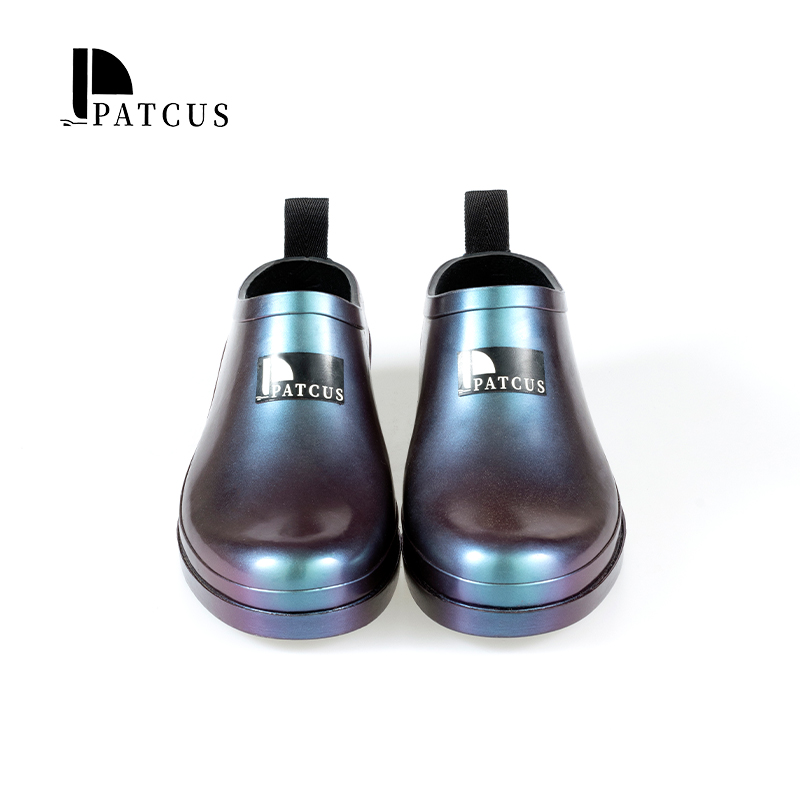
Rubber, especially natural rubber, is another excellent material. It offers outstanding waterproofness, flexibility, and resilience. Rubber wellies are often made through a vulcanization process. In this process, raw rubber is mixed with sulfur and other additives and then heated under pressure. Vulcanization cross - links the rubber molecules, making the boots more durable and resistant to wear and tear.
EVA (Ethylene - Vinyl Acetate) is a lightweight material that provides good shock absorption and flexibility. EVA wellies are usually made by an injection - molding or compression - molding process. It is suitable for those who need a lightweight option for extended use.
When it comes to the outsole, its pattern is crucial for providing grip. Patterns like deep grooves, multi - directional lines, and suction - cup - like bumps are designed to increase friction on different surfaces, whether it's wet tiles, mud, or slippery grass. The shaft height of wellies can vary from ankle - high to knee - high or even thigh - high. Taller shafts provide better protection against water and mud but may be less comfortable for some activities. The lining of wellies can also enhance comfort, with some featuring breathable fabrics to reduce sweating or warm materials for cold weather. Professional Rain Boot Manufacturer can provide in - depth knowledge about these materials and processes to help in product selection.
3. Practical Solutions and Operation Steps
When choosing fantasy - colored, waterproof, and mud - resistant wellies for extreme outdoor conditions, consider the following steps:
- Material Selection: If you work in cold environments, natural rubber or EVA might be better choices as they are more resistant to low - temperature brittleness compared to PVC. For budget - conscious users, PVC can be a good option for occasional use. If lightweight and flexibility are your priorities, EVA wellies are recommended.
- Shaft Height: For activities where you are likely to encounter deep water or thick mud, knee - high or thigh - high wellies are more suitable. However, if you need to move around freely, ankle - high or mid - calf wellies could be better.
- Outsole Pattern: Look for boots with deep, well - defined grooves, multi - directional lines, or suction - cup patterns. Test the boots on a wet surface to ensure good grip.
- Lining: If you sweat a lot or work in hot weather, choose wellies with breathable linings. For cold conditions, opt for warm linings.
- Size Selection: Measure your feet accurately and refer to the manufacturer's size chart. Make sure there is enough room for your toes to move freely and that the boots fit snugly around the heel to prevent slipping inside.
- Waterproof and Mud - Resistant Ratings: Although there is no strict unified rating like some safety standards, you can look for user reviews or manufacturer's claims about waterproof and mud - resistant performance.
- Cleaning: After each use, wash the wellies with clean water to remove mud, dirt, and other contaminants. Use a mild detergent if necessary. Try to clean them as soon as possible to prevent dirt from hardening.
- Storage: Store the wellies in a cool, dry place away from direct sunlight. Standing them upright can help maintain their shape.
4. Daily Maintenance and Precautions
For daily maintenance:
- Cleaning: Use a soft brush or cloth to remove dirt and mud from the surface of the wellies. For tough stains, mix a small amount of mild detergent with water and wipe gently. Rinse thoroughly with clean water and dry with a soft cloth.
- Drying: After cleaning, let the wellies air - dry naturally at room temperature. Avoid using a heater or direct sunlight to dry them, as this can cause the material to crack or warp.
- De - odorizing: If the wellies develop an odor, you can place a few dry tea bags or baking soda inside overnight. This can effectively absorb the unpleasant smell.
- Anti - aging and Anti - deformation: Apply a protective cream or conditioner to the wellies periodically, especially if they are made of rubber or PVC. This can help prevent the material from drying out and cracking. When not in use, stuff the wellies with newspaper or a boot tree to maintain their shape.
- Low - temperature storage: In cold weather, store the wellies in a warm place to prevent the material from becoming brittle. If you need to use them in low - temperature conditions, make sure to acclimate them to the temperature for a while before wearing.
- Chemical contact: If the wellies come into contact with chemicals, rinse them immediately with a large amount of water and follow the manufacturer's instructions on further treatment.
Precautions: Do not expose the wellies to direct sunlight for a long time, as this can cause the color to fade and the material to age prematurely. Avoid placing them near high - temperature heat sources, which can melt or deform the boots. Do not use strong solvents or abrasive cleaners to clean the wellies, as this can damage the material. And never use ordinary wellies to replace safety boots that are certified for specific work conditions, such as those with safety toes or high - voltage insulation.
5. Industry Standard and Parameter Reference
Here is a table of relevant industry standards and their importance:
ParameterRecommended ReferenceWhy It MattersSlip resistanceEN ISO 20344:2021 / EN ISO 20347:2022+A1:2024 where applicableHelps evaluate outsole grip on wet or contaminated surfaces.Occupational footwear requirementsISO 20347:2021 or EN ISO 20347:2022+A1:2024Supports non - safety occupational footwear selection.Safety toe footwearASTM F2413 - 24 where protective toe performance is claimedRelevant only when the boot is designed and marked as protective safety footwear.Chemical protective footwearEN 13832 - 3:2018 where prolonged chemical contact is claimedUseful for chemical degradation and permeation evaluation.
These standards are essential for ensuring the quality and performance of wellies in various conditions. When purchasing wellies, it is advisable to check if they meet relevant standards.
6. Customer Common FAQ
Q: Which material is better for long - term outdoor use, PVC or natural rubber?
A: Natural rubber is generally better for long - term outdoor use. It has better waterproofness, flexibility, and durability compared to PVC. PVC may become brittle at low temperatures and is more prone to cracking over time. Professional Rain Boot Manufacturer can provide more detailed advice on material selection based on specific usage scenarios.
Q: How can I ensure the wellies have good slip resistance?
A: Look for wellies that meet the EN ISO 20344:2021 / EN ISO 20347:2022+A1:2024 standards for slip resistance. Also, check the outsole pattern. Boots with deep grooves, multi - directional lines, or suction - cup - like bumps usually have better grip on wet and slippery surfaces.
Q: What size wellies should I choose?
A: Measure your feet accurately and refer to the manufacturer's size chart. Consider leaving a little space for your toes to move, especially if you plan to wear thick socks in cold weather. It's also a good idea to try on the boots in person if possible.
Q: How do I deal with the odor in wellies?
A: You can place dry tea bags or baking soda inside the wellies overnight. These can absorb the odor. Make sure the wellies are dry before using these methods, and clean them regularly to prevent odor from occurring in the first place.
Q: Can I use PVC wellies in cold weather?
A: While PVC wellies can be used in cold weather, they are more likely to become brittle and crack compared to natural rubber or EVA wellies. If you need to use them in cold environments, try to minimize exposure to extreme cold and store them in a warm place when not in use.
Conclusion
In conclusion, fantasy - colored, waterproof, and mud - resistant wellies are essential for men in extreme outdoor conditions. By understanding the core problems, product and process principles, following practical selection steps, performing daily maintenance, and referring to industry standards, men can choose the most suitable wellies. Professional Rain Boot Manufacturer can offer valuable insights in the research and selection process, ensuring that users get well - performing and durable wellies to meet their needs.
References
- Various websites and research on rain boots materials, properties, processes, and standards including general industry knowledge on rubber and PVC rain boots as of 2026.
- ASTM International, ASTM F2413 - 24 Protective Footwear Specification
- International Organization for Standardization, ISO 20344:2021 Footwear Test Methods
- International Organization for Standardization, ISO 20347:2021 Occupational Footwear
- European Committee for Standardization, EN ISO 20347:2022+A1:2024
- European Committee for Standardization, EN 13832 - 3:2018 Chemical Protective Footwear