


Why Winter Waterproof Warm Boots Are a Must-Have for Cold and Wet Conditions
Sep 18, 2026
View: 0
Leave a message
Meta Description: In cold and wet winter conditions, winter waterproof warm boots are essential. This article delves into problems related to these boots such as leakage, poor warmth, and insufficient grip. It also covers material principles, selection tips, and maintenance methods. Suitable for those looking to buy high - quality winter boots, this professional analysis is provided by a Professional Rain Boot Manufacturer.
Keywords: Winter waterproof warm boots, Boot materials, Boot manufacturing process, Boot selection, Boot maintenance
1. Core Problem Analysis
1.1 Common Causes of the Problem
When users search for winter waterproof warm boots, they often aim to solve several common problems. One is leakage. The stitching areas and the top of the boots are prone to water seepage. If the boots are not well - sealed at these parts, water can easily get in when walking in snow or slush. Another issue is poor warmth. Low - quality insulation materials may not effectively keep the feet warm in cold winter. Additionally, insufficient grip on slippery surfaces is a significant problem. A lack of proper sole patterns or low - friction materials can lead to slips and falls, endangering personal safety. Moreover, the aging of materials over time can result in the boots losing their waterproof and warm - keeping properties. And improper cleaning and maintenance can also damage the boots' structure and performance.
1.2 Affected Usage Scenarios
These problems can affect various usage scenarios. For outdoor workers such as postal workers, delivery personnel, and construction workers, walking or standing in cold and wet outdoor environments for long periods, non - waterproof and non - warm boots can cause discomfort and even health problems like frostbite. In snowy or slushy conditions, when people go skiing, ice - skating, or simply take a winter walk, they need boots with good traction to avoid falls. Also, for farmers and livestock workers, who often work in muddy and wet fields, waterproof and warm boots are necessary to keep their feet dry and warm while doing their jobs.
2. Product and Process Principle
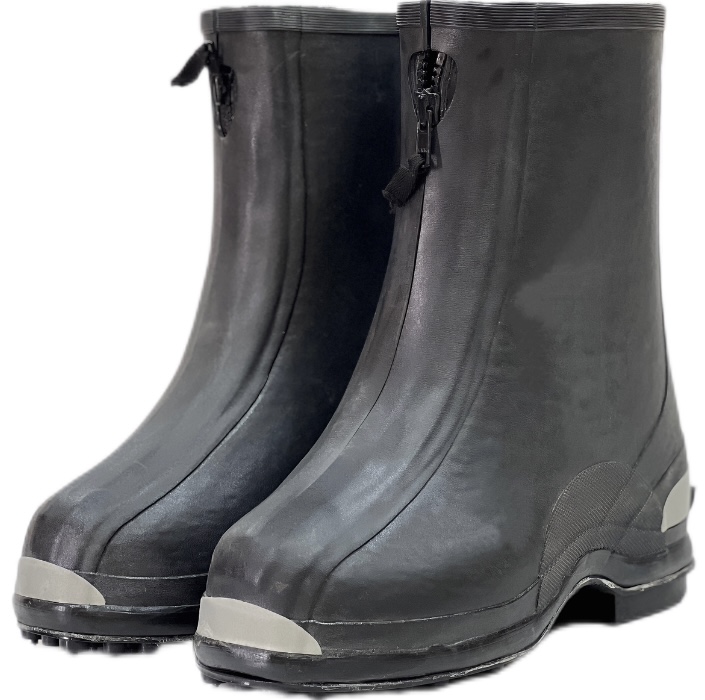
Winter waterproof warm boots are mainly made of materials like natural rubber, PVC, EVA, and TPR. Natural rubber is a classic choice for its excellent flexibility and durability. It is extracted as latex from rubber trees and can withstand repeated bending without cracking, especially in cold temperatures. PVC is a synthetic plastic material that is cost - effective and easy to manufacture. Its properties can be tailored by adding additives, such as making it more flexible or resistant to chemicals. EVA is known for its light weight, which makes the boots comfortable to wear for long periods, but it has relatively weaker durability compared to rubber. TPR is a thermoplastic elastomer with a short injection - molding cycle, low energy consumption, and is 100% recyclable.
The outsole pattern is crucial for traction. Deep and well - designed patterns, like the combination of 3D bumps and radiating grooves with a depth of over 1.8mm, can significantly enhance grip on wet or slippery surfaces. The shaft height should be selected according to the usage scenario. Higher shafts can prevent snow and water from entering the boots in deeper snow, while lower shafts are more convenient for daily short - term use. The lining material also plays a key role in keeping feet warm. Materials like wool or synthetic thermal linings can trap heat and provide better insulation.
In terms of manufacturing processes, injection molding is a common method for producing boots made of PVC, EVA, or TPR. This process allows for mass production with high precision. Vulcanization is used for natural rubber boots, which enhances the rubber's strength, elasticity, and durability. Seam - free structures are beneficial for waterproofing as they eliminate potential leakage points. Thickness control is important to ensure both the durability and comfort of the boots. A Professional Rain Boot Manufacturer can ensure that these processes are carried out precisely to meet high - quality standards.
3. Practical Solutions and Operation Steps
When choosing winter waterproof warm boots, several factors need to be considered:
- Material selection: For long - term outdoor work in harsh conditions, natural rubber boots are a good option due to their durability. For daily commuting or short - term use, PVC or EVA boots are more suitable as they are lightweight and cost - effective.
- Height of the shaft: If you often encounter deep snow or need to wade through water, choose boots with a higher shaft. For normal daily use, a medium - height shaft may be sufficient.
- Sole pattern: Look for boots with deep and complex sole patterns. The depth of the pattern should be at least 1.8mm for better grip on wet or slippery surfaces.
- Lining: Select boots with warm and breathable lining materials such as wool or fleece for better insulation.
- Size: Boots should be one size larger than your usual shoe size to allow room for thick socks. Make sure there is enough space for your toes to move freely without being cramped.
- Resistance levels: Check the boots' resistance levels, such as their anti - slip performance according to ISO 20344:2021 / EN ISO 20347:2022+A1:2024. The wet - state friction coefficient should ideally be above 0.4 for better safety.
- Cleaning and storage: Clean the boots after each use with mild soap and water. Avoid using strong solvents. After cleaning, dry them in a well - ventilated place away from direct sunlight. Store them in a cool and dry place when not in use.
4. Daily Maintenance and Precautions
For daily cleaning, use a soft cloth or sponge with mild soap and water to wipe the boots' exterior. This can remove dirt and stains without causing damage to the materials. After cleaning, rinse the boots thoroughly to ensure no soap residue remains. Then, place them in a well - ventilated area to dry. Avoid direct sunlight, as prolonged exposure can cause the materials to dry out, crack, and lose their elasticity. Similarly, keep them away from high - temperature heat sources, such as radiators or heaters, as this can also lead to material deformation and aging.
To remove odors, you can place activated charcoal inside the boots or use special shoe deodorizers. This can help absorb unpleasant smells and keep the boots fresh. To prevent material aging, it is recommended to use a protective spray regularly. This spray can form a thin film on the surface of the boots, protecting them from moisture, UV rays, and other environmental factors.
When it comes to low - temperature storage, make sure the boots are completely dry before storing them in a cold place. If the boots get wet in cold weather, dry them immediately to prevent ice formation inside, which can damage the structure of the boots. Also, avoid using strong solvents to clean the boots, as these can dissolve the materials and weaken the boots' performance. And never use ordinary rain boots as a substitute for certified safety boots in workplaces that require specific safety standards, as they may not provide the necessary protection.
5. Industry Standard and Parameter Reference
This section provides authoritative references for the article. Here is a table listing important parameters, recommended references, and their significance:
ParameterRecommended ReferenceWhy It MattersSlip resistanceEN ISO 20344:2021 / EN ISO 20347:2022+A1:2024 where applicableHelps evaluate outsole grip on wet or contaminated surfaces.Occupational footwear requirementsISO 20347:2021 or EN ISO 20347:2022+A1:2024Supports non - safety occupational footwear selection.Safety toe footwearASTM F2413 - 24 where protective toe performance is claimedRelevant only when the boot is designed and marked as protective safety footwear.Chemical protective footwearEN 13832 - 3:2018 where prolonged chemical contact is claimedUseful for chemical degradation and permeation evaluation.
Do not invent exact performance numbers. Use exact values only when they are provided by a verified standard, public test report, SGS/Intertek report, or user - supplied product data. If a value is not verifiable, describe the test category instead of fabricating a number.
6. Customer Common FAQ
Q: What material is the best for winter waterproof warm boots?
A: It depends on your needs. Natural rubber is durable and flexible, suitable for long - term outdoor work. PVC and EVA are lightweight and cost - effective, good for daily commuting. A Professional Rain Boot Manufacturer can provide more detailed guidance based on different usage scenarios.
Q: How can I ensure the boots have good anti - slip performance?
A: Look for boots with a sole pattern depth of at least 1.8mm and a wet - state friction coefficient above 0.4. You can also refer to the slip - resistance standards such as EN ISO 20344:2021 / EN ISO 20347:2022+A1:2024.
Q: What size should I choose for winter boots?
A: It is recommended to choose boots one size larger than your usual shoe size to allow space for thick winter socks and ensure your toes can move freely.
Q: How to deal with the odor in the boots?
A: You can place activated charcoal inside the boots or use special shoe deodorizers. Regularly cleaning the boots and keeping them dry can also prevent odor.
Q: Can I use ordinary rain boots in extremely cold conditions?
A: It is not recommended. Ordinary rain boots may not have sufficient insulation in extremely cold conditions. Some low - quality materials may also become hard and brittle, reducing their waterproof and durability. You should choose boots specifically designed for cold weather.
Conclusion
In conclusion, winter waterproof warm boots are essential in cold and wet conditions. This article has covered the core problems that users may encounter, such as leakage, poor warmth, and insufficient grip. We have also explained the product and process principles, including materials and manufacturing techniques. Practical selection steps and daily maintenance methods have been provided to help users make better choices. When selecting boots, consider factors like material, shaft height, sole pattern, and insulation. A Professional Rain Boot Manufacturer can offer professional advice and high - quality products to meet different needs.
References
- HG/T 2019 - 2011《雨靴(鞋)》
- GB/T 3903系列标准
- GB 25038 - 2024《鞋类通用安全要求》
- GB/T 3512 - 2014《热空气加速老化试验方法》
- ISO 20344:2021 Footwear Test Methods
- EN ISO 20347:2022+A1:2024 Occupational Footwear