


How Women's Waterproof Latex Boots Provide Durable Moisture Protection for Damp Outdoor Activities
Sep 23, 2026
View: 0
Leave a message
Meta Description: Extended damp outdoor activities like gardening, farming, or wet commuting demand reliable footwear that balances waterproofness, durability, and comfort. Women’s waterproof latex boots are a popular choice due to their material properties that resist moisture penetration over long periods. This article explains key factors to consider when selecting, using, and maintaining these boots, with insights from a Professional Rain Boot Manufacturer.
Keywords: Women's waterproof latex boots, waterproof rain boots, latex boot maintenance, durable outdoor footwear, moisture resistant boots, occupational rain boots, wet work footwear
1. Core Problem Analysis
1.1 Common Causes of the Problem
Many users of wet-weather footwear face recurring issues that impact performance: premature leakage at seams or from stretched material, poor breathability leading to sweaty feet, inadequate slip resistance on wet or muddy surfaces, material degradation from frequent exposure to water or chemicals, and ill-fitting sizes that cause discomfort during long wears. These problems are especially pronounced in extended damp outdoor settings where regular boots fail to deliver consistent protection.
1.2 Affected Usage Scenarios
Women’s waterproof latex boots are designed to address these pain points, making them ideal for scenarios including muddy agricultural work, rainy urban commuting, wetland hiking and camping, garden maintenance during heavy rains, livestock handling, warehouse cleaning tasks, and fishing activities that require standing in water for hours.
2. Product and Process Principle
Waterproof latex boots rely on natural or synthetic latex compounds with a dense molecular structure that resists water penetration, even when flexed. Key manufacturing techniques include vulcanization, which cross-links latex molecules to enhance durability and tear resistance, and seam-free injection molding that eliminates potential leak points. A Professional Rain Boot Manufacturer typically controls material thickness (usually 2mm to 4mm for outdoor use) to balance flexibility and protection, while incorporating textured outsoles for grip.
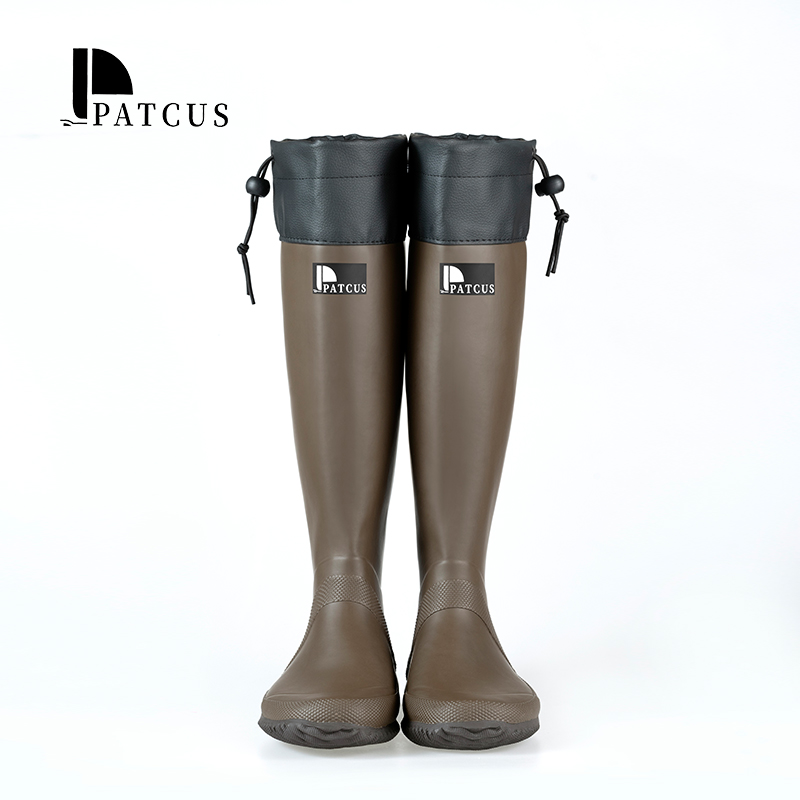
The shaft height is another critical design element: tall boots (14 inches or more) provide full coverage up to the calf, while mid-calf boots work for lighter tasks. Lining materials, such as cotton or microfiber, are often added to improve breathability without compromising waterproofness.
3. Practical Solutions and Operation Steps
To select the right women’s waterproof latex boots for extended damp activities, follow these actionable steps:
- Step 1: Match the boot to your primary scenario – choose a thicker, higher-shaft model for heavy agricultural or wetland work, and a lighter, more flexible pair for commuting.
- Step 2: Inspect the outsole pattern – look for deep, non-slip treads that align with standards for slip resistance (referenced in later sections) to avoid falls.
- Step 3: Check for seamless construction – ensure the boot body has no visible gaps at joints or seams, as these are common leakage points.
- Step 4: Test the fit – leave 0.5 to 1 inch of space between your toe and the boot tip to accommodate socks and prevent blisters during long wears.
- Step 5: Verify lining properties – opt for moisture-wicking linings if you will be wearing the boots for extended periods to reduce foot sweat.
Avoid using boots designed for light rain for heavy outdoor work, as they may lack adequate durability or slip resistance for harsh conditions.
4. Daily Maintenance and Precautions
Proper maintenance extends the lifespan of waterproof latex boots and preserves their performance. Start by cleaning boots with a mild, non-alkaline soap and warm water after each use, avoiding strong solvents or bleach that can degrade latex. Pat the boots dry with a soft cloth and let them air naturally in a shaded, well-ventilated area – never expose them to direct sunlight or high heat sources (like radiators), as this can cause material cracking or shrinking.
Additional precautions include: storing boots upright to maintain shape, avoiding prolonged contact with chemicals (like fertilizers or cleaning agents) that can break down latex, and using a soft brush to clean outsole treads to prevent mud buildup that reduces grip. Do not use waterproof latex boots as protective safety footwear unless explicitly marked for that purpose, as they may not meet occupational safety standards for impact or compression resistance.
5. Industry Standard and Parameter Reference
To ensure the performance of women’s waterproof latex boots, refer to these established international standards for key parameters:
ParameterRecommended ReferenceWhy It Matters
Slip resistanceEN ISO 20344:2021 / EN ISO 20347:2022+A1:2024 where applicableHelps evaluate outsole grip on wet or contaminated surfaces.
Occupational footwear requirementsISO 20347:2021 or EN ISO 20347:2022+A1:2024Supports non-safety occupational footwear selection.
Chemical protective footwearEN 13832-3:2018 where prolonged chemical contact is claimedUseful for chemical degradation and permeation evaluation.
Latex material durabilityASTM D412-22 (tensile testing) for elastomer productsTests resistance to stretching and tearing, a key performance metric for outdoor boots.
These standards provide a verified framework to assess boot performance, so always check if a boot manufacturer references these when evaluating products.
6. Customer Common FAQ
Q: Are latex boots better than PVC boots for extended damp outdoor work?
A: Natural latex has higher tensile strength than standard PVC, making it more resistant to tears and punctures during heavy outdoor tasks. A Professional Rain Boot Manufacturer can confirm that latex also offers better flexibility in cooler temperatures, reducing stiffness in cold damp conditions.
Q: How can I tell if my waterproof latex boots are no longer performing properly?
A: Signs of reduced performance include visible cracks in the latex, stretched material that creates gaps between the boot and your leg, or leakage when submerged in water for several minutes. These issues often result from improper maintenance or prolonged use beyond the recommended lifespan.
Q: What size should I choose for women’s waterproof latex boots?
A: Select a size that allows 0.5 to 1 inch of space at the toe, with enough room for thick socks if you plan to wear them in cold weather. Avoid sizes that are too tight, as this can restrict circulation during long wears and cause discomfort.
Q: Can I wear waterproof latex boots in freezing temperatures?
A: Standard latex boots may stiffen in temperatures below 10°C (50°F), so for cold damp outdoor activities, look for boots formulated with synthetic latex blends that retain flexibility at lower temperatures. Always check product specifications for temperature resistance claims.
Q: How do I remove odors from my waterproof latex boots?
A: Sprinkle a small amount of baking soda inside the boots and leave them overnight, then brush out the baking soda the next day. For persistent odors, use a mild disinfectant designed for footwear, avoiding harsh chemicals that can damage the latex.
Conclusion
Women's waterproof latex boots offer a durable, moisture-resistant solution for extended damp outdoor activities, addressing common pain points like leakage, inadequate grip, and discomfort. By following practical selection, maintenance, and usage steps, users can maximize the lifespan of their boots and ensure consistent performance in wet conditions. Professional Rain Boot Manufacturer insights on material formulation and manufacturing standards help users make informed choices tailored to their specific outdoor needs.
References
- ISO 20344:2021, Footwear - Test methods for whole shoe, International Organization for Standardization, Geneva, Switzerland.
- EN ISO 20347:2022+A1:2024, Occupational footwear, European Committee for Standardization, Brussels, Belgium.
- ASTM D412-22, Standard Test Methods for Vulcanized Rubber and Thermoplastic Elastomers - Tension, ASTM International, West Conshohocken, PA, USA.