


Sustainable Fashion: The Environmental Benefits of Women's Stylish Latex Rain Boots
Sep 16, 2026
View: 0
Leave a message
Meta Description: This article delves into the world of women's stylish latex rain boots, addressing issues such as poor waterproofing, low slip - resistance, and material aging. It is suitable for B2B buyers, consumers, and industry enthusiasts. We'll explore product principles, selection tips, and maintenance methods. Professional Rain Boot Manufacturer
Keywords: womens stylish latex rain boots, rain boots material, rain boots process, rain boots selection, rain boots maintenance
1. Core Problem Analysis
1.1 Common Causes of the Problem
When consumers search for women's stylish latex rain boots, they often aim to solve multiple problems. One significant issue is waterproofing. Some rain boots may develop leaks due to sub - standard seam sealing, where the joining of different parts of the boot does not form a proper waterproof barrier. Over time, latex material can also experience wear and tear, leading to cracks or holes that compromise waterproofing.
Slip - resistance is another concern. The outsole pattern of rain boots may be too shallow or poorly designed. If the tread is not deep enough, it will not provide sufficient grip on wet or slippery surfaces. Additionally, as the latex material ages, its friction coefficient may decrease, reducing the overall slip - resistance.
Comfort is also a key consideration. Ill - fitting rain boots, either too tight or too loose, can cause discomfort during wear. Tight boots may restrict blood circulation and cause blisters, while loose boots can lead to instability and difficulties in walking. Moreover, latex boots might lack proper breathability or inner lining, resulting in a stuffy and sweaty feeling for the feet.
1.2 Affected Usage Scenarios
Rainy commuting is one of the most common usage scenarios. Women need reliable rain boots to keep their feet dry and safe while walking from home to the bus stop, subway station, or office in the rain. If the boots fail to provide waterproofing or slip - resistance, it can lead to wet feet and a higher risk of slipping and falling.
Gardening is another scenario. In the garden, the ground is often wet and muddy. Stylish latex rain boots can protect feet from mud and water, but they also need to be comfortable enough for long - term bending, kneeling, and walking around. Boots that are not well - designed may cause fatigue or make it difficult to perform gardening tasks effectively.
Outdoor festivals and events held in rainy weather are also affected. Women want to look stylish while staying dry and comfortable. Uncomfortable or malfunctioning rain boots can dampen the enjoyment of these events.
2. Product and Process Principle
Rain boots are crafted from various materials, each with distinct properties. Latex, a natural material derived from the sap of rubber trees, is a popular choice for rain boots. It offers excellent elasticity, allowing the boots to stretch and conform to the shape of the foot, providing a snug fit. Latex is also inherently waterproof, creating a reliable barrier against water.
The manufacturing process of latex rain boots involves several key steps. First, the latex material is prepared. It is often mixed with other additives to enhance its performance, such as improving its resistance to aging and abrasion. Then, the latex is formed into the shape of the boots through a molding process. This can be done using different techniques, including injection molding and dipping.
Injection molding involves injecting the liquid latex into a mold under high pressure. This process allows for precise control of the boot's shape and size, and it can produce boots with complex designs efficiently. Dipping, on the other hand, involves dipping a shaped form into a latex solution. This method is commonly used for making boots with a more natural and flexible feel.
After the boots are formed, they may undergo a vulcanization process. Vulcanization is a chemical treatment that cross - links the polymer chains in the latex, increasing its durability, strength, and resistance to heat and chemicals. Professional Rain Boot Manufacturer can ensure that these processes are carried out to a high standard, resulting in high - quality rain boots.
3. Practical Solutions and Operation Steps
When choosing women's stylish latex rain boots, consider the following steps:
- **Material selection**: While latex is the primary material, check if any additional layers or treatments are used. For instance, boots with a lining can improve comfort and breathability. Look for latex that has been treated to enhance its resistance to aging and wear.
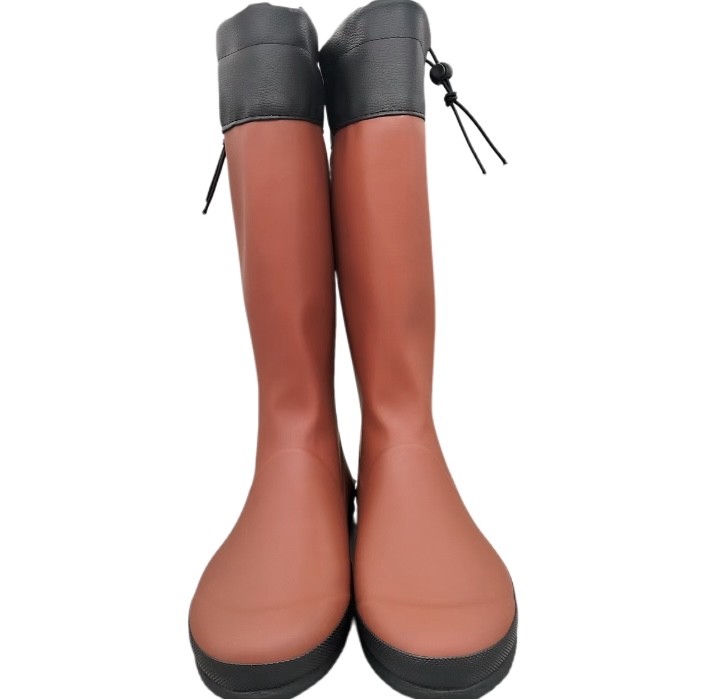
- **Shaft height**: Determine the appropriate shaft height based on your usage scenarios. For rainy commuting, a mid - calf or ankle - high boot may be sufficient. For gardening or outdoor activities where there is more water and mud, a taller boot can provide better protection.
- **Outsole pattern**: Opt for boots with a deep - tread outsole pattern. Patterns such as hexagonal, herringbone, or zig - zag shapes can provide better traction on wet and slippery surfaces. The grooves in the pattern should be wide enough to channel water away from the sole, reducing the risk of hydroplaning.
- **Lining**: A lining made of moisture - wicking materials can keep your feet dry and comfortable. Polyester or nylon linings are good options as they can absorb and evaporate sweat quickly.
- **Size selection**: Measure your foot accurately. Rain boots should have a bit of extra room to accommodate thick socks and allow for some movement. Try the boots on with the socks you plan to wear in them. Walk around in the boots to ensure a comfortable fit, with no tightness or rubbing.
- **Cold - resistance**: If you live in a cold climate, consider the cold - resistance of the latex material. Some latex boots are treated to maintain their flexibility at low temperatures, preventing them from becoming stiff and brittle.
- **Slip - resistance**: Check the slip - resistance rating of the boots. According to EN ISO 20344:2021 / EN ISO 20347:2022+A1:2024, boots should meet certain standards for grip on wet or contaminated surfaces. You can also look for customer reviews or conduct a simple test on a wet surface if possible.
4. Daily Maintenance and Precautions
Proper daily maintenance can extend the lifespan of women's stylish latex rain boots:
- **Cleaning**: After each use, rinse the boots with clean water to remove dirt, mud, and other debris. Use a mild soap if necessary, but avoid using strong solvents or abrasive cleaners as they can damage the latex material.
- **Drying**: Let the boots air - dry naturally in a well - ventilated area away from direct sunlight. Do not use a heater or dryer to speed up the drying process, as excessive heat can cause the latex to crack or shrink.
- **Odor removal**: If the boots develop an odor, you can sprinkle baking soda inside them and let it sit overnight. Then, shake out the baking soda the next day. You can also use specialized shoe deodorizers.
- **Anti - aging**: Store the boots away from sunlight and heat sources to prevent the latex from aging prematurely. You can also apply a latex protectant spray periodically to keep the material soft and flexible.
- **Anti - deformation**: To prevent the boots from deforming, stuff them with newspaper or a boot shaper when not in use. This helps to maintain their shape.
- **Cold storage**: In cold weather, if you need to store the boots outside, make sure they are dry and protected from extreme cold. Do not let them freeze, as it can permanently damage the latex.
- **Chemical contact**: If the boots come into contact with chemicals, rinse them thoroughly with water immediately. Different chemicals can react with latex in various ways, so it's important to clean them promptly to avoid damage.
It's also important to avoid common mistakes. Do not expose the boots to long - term sunlight, as it can cause the latex to harden and crack. Do not place the boots near high - temperature heat sources, such as radiators or stoves. Do not use strong solvents like acetone or alcohol to clean the boots, as they can dissolve the latex. And never use ordinary rain boots as a substitute for safety boots in workplaces that require specific safety certifications, as ordinary rain boots may not provide the necessary protection.
5. Industry Standard and Parameter Reference
This section provides essential international standards and test methods for rain boots, serving as a reliable reference for evaluating product quality.
ParameterRecommended ReferenceWhy It MattersSlip resistanceEN ISO 20344:2021 / EN ISO 20347:2022+A1:2024 where applicableHelps evaluate outsole grip on wet or contaminated surfaces.Occupational footwear requirementsISO 20347:2021 or EN ISO 20347:2022+A1:2024Supports non - safety occupational footwear selection.Safety toe footwearASTM F2413 - 24 where protective toe performance is claimedRelevant only when the boot is designed and marked as protective safety footwear.Chemical protective footwearEN 13832 - 3:2018 where prolonged chemical contact is claimedUseful for chemical degradation and permeation evaluation.
It should be noted that exact performance numbers should not be invented. Only use exact values when they are supported by verified standards, public test reports, SGS/Intertek reports, or user - supplied product data. If a value cannot be verified, describe the test category instead of fabricating a number.
6. Customer Common FAQ
Q: How do I choose the right material for women's stylish latex rain boots?
A: Latex is a good base material for its waterproof and elastic properties. However, you can also consider boots with additional lining materials for better comfort and breathability. Professional Rain Boot Manufacturer can offer guidance on different material combinations to meet your specific needs, such as those in wet or cold conditions.
Q: Are latex rain boots slip - resistant?
A: The slip - resistance of latex rain boots depends on the outsole pattern and the treatment of the latex. Boots with deep - tread patterns and latex treated for better friction can provide good slip - resistance. You can refer to standards like EN ISO 20344:2021 / EN ISO 20347:2022+A1:2024 to evaluate the slip - resistance of the boots.
Q: How do I choose the right size for latex rain boots?
A: Measure your foot accurately and consider wearing thick socks in the boots. Rain boots should have a bit of extra room. Try on the boots and walk around to ensure a comfortable fit. If the latex material has low elasticity, it's better to choose a slightly larger size.
Q: Do latex rain boots have a strong odor?
A: New latex boots may have a slight odor, but it usually fades over time. You can speed up the process by airing the boots out in a well - ventilated area. Using methods like sprinkling baking soda inside the boots can also help remove the odor.
Q: Can latex rain boots crack in cold weather?
A: Some untreated latex may become stiff and crack in cold weather. However, many modern latex rain boots are treated to maintain flexibility at low temperatures. If you live in a cold area, look for boots with a cold - resistance feature.
Conclusion
In summary, women's stylish latex rain boots offer a combination of style and functionality. When choosing these boots, it is crucial to consider factors such as material, shaft height, outsole pattern, and size. Proper maintenance, including cleaning, drying, and storage, can significantly extend the lifespan of the boots. By referring to industry standards, you can ensure that the boots meet the necessary quality and safety requirements. Professional Rain Boot Manufacturer can provide valuable insights into the product selection and maintenance process, helping you make informed decisions.
References
- ISO 20347:2021 Occupational Footwear
- EN ISO 20347:2022+A1:2024
- EN ISO 20344:2021 Footwear Test Methods
- ASTM F2413 - 24 Protective Footwear Specification
- EN 13832 - 3:2018 Chemical Protective Footwear