


What Makes Warm Boots Ideal for Extended Treks in Below-Freezing Mountain Climates
Oct 20, 2026
View: 0
Leave a message
Meta Description: Extended treks in below-freezing mountain climates demand footwear that balances insulation, flexibility, and traction to prevent frostbite and slips. This guide breaks down key factors to evaluate when selecting appropriate warm boots for such harsh environments, with technical insights and practical recommendations. Professional Rain Boot Manufacturer
Keywords: warm boots, below-freezing mountain treks, boot insulation, rubber boot technology, cold weather footwear, boot material selection, ISO 20347:2022
1. Core Problem Analysis
1.1 Common Causes of the Problem
Trekkers in below-freezing mountain climates often face three critical footwear-related issues: insufficient insulation leading to localized frostbite, rigid soles that limit mobility on uneven frozen terrain, and poor water resistance that causes heat loss when snow or slush seeps into the boot. Additional common pain points include ill-fitting sizing that restricts blood flow and brittle rubber that cracks at sub-zero temperatures, reducing durability over long treks.
1.2 Affected Usage Scenarios
These issues impact extended mountain treks, alpine hiking, backcountry camping, winter trail maintenance, and cold-weather search and rescue operations. In these scenarios, footwear is exposed to consistent sub-zero temperatures, varied frozen surfaces (ice, packed snow, rock), and frequent contact with melted snow that can compromise insulation if not properly managed.
2. Product and Process Principle
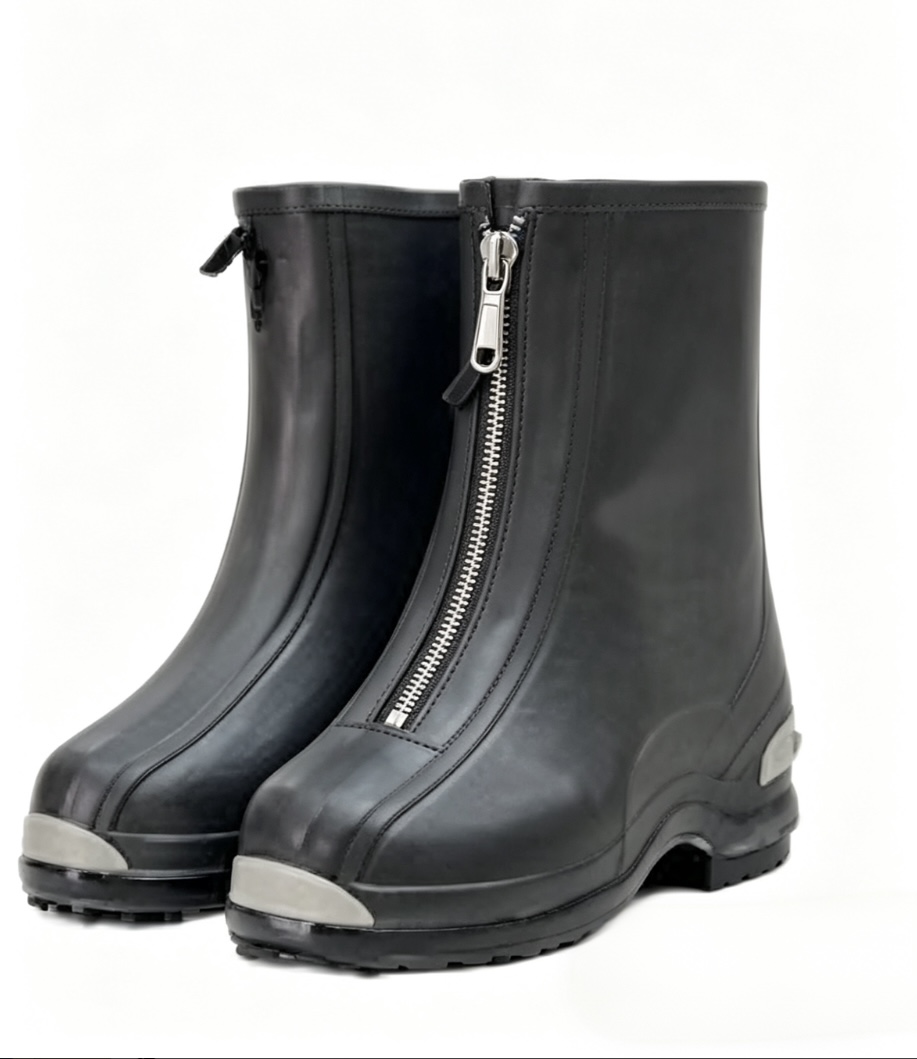
Warm boots for below-freezing mountain climates rely on material selection and manufacturing processes to balance insulation, flexibility, and performance. Common materials include blended rubber compounds, EVA insoles, and synthetic fleece linings that retain heat while allowing moisture vapor to escape, preventing sweat buildup that causes chill. Vulcanization processes strengthen rubber at low temperatures, reducing brittleness, while seam-free injection molding eliminates gaps where cold air or moisture can penetrate. Professional Rain Boot Manufacturer applies these engineering principles to design boots tailored for extreme cold conditions.
Key structural features include a midsole with closed-cell foam insulation, an outsole with multi-directional lugs for icy traction, and a tall shaft that extends above the ankle to block snow entry. The compound formulation of the outer rubber is calibrated to maintain elasticity at temperatures as low as -20°C, per testing aligned with ISO 20344:2021. This ensures the boot remains flexible for walking on uneven terrain without cracking or stiffening.
3. Practical Solutions and Operation Steps
Selecting and preparing warm boots for extended below-freezing mountain treks requires a structured approach to address insulation, traction, and durability. Follow these actionable steps to ensure suitability.
- Step 1: Verify the boot’s insulation rating, referencing standards that test performance at or below -15°C; prioritize closed-cell insulation that resists water absorption rather than loose fill materials.
- Step 2: Test outsole flexibility by bending the boot’s forefoot: it should bend easily at the ball of the foot, not stiffen or crack when exposed to cold air for 10 minutes prior to testing.
- Step 3: Choose a shaft height that extends 2-3 inches above the expected maximum snow depth on your planned route, to prevent snow from entering the boot during long treks.
- Step 4: Ensure a half-inch of space between the toe and the boot’s toe box to allow for blood circulation, without excess room that would cause feet to slide and develop blisters.
- Step 5: Break in boots gradually over 3-5 short hikes prior to an extended trek, avoiding prolonged exposure to extreme cold during break-in to prevent material damage.
4. Daily Maintenance and Precautions
Proper maintenance of warm boots preserves their insulating and performance properties for extended use in below-freezing conditions. Clean boots with a soft brush and mild soap after each trek, avoiding harsh solvents that break down rubber compounds. After cleaning, air-dry boots away from direct heat sources (such as campfires or space heaters) to prevent rubber brittleness and lining shrinkage. For long-term storage, remove insoles, stuff boots with acid-free paper to maintain shape, and store in a cool, dry area not exposed to freezing temperatures for extended periods. Do not use standard warm boots designed for casual use as substitute protective footwear for alpine rescue or industrial cold-weather work, as they may lack required slip resistance and structural integrity.
5. Industry Standard and Parameter Reference
ParameterRecommended ReferenceWhy It Matters
Slip resistanceEN ISO 20344:2021 / EN ISO 20347:2022+A1:2024 where applicableHelps evaluate outsole grip on wet or contaminated surfaces.
Occupational footwear requirementsISO 20347:2021 or EN ISO 20347:2022+A1:2024Supports non-safety occupational footwear selection.
Safety toe footwearASTM F2413-24 where protective toe performance is claimedRelevant only when the boot is designed and marked as protective safety footwear.
Chemical protective footwearEN 13832-3:2018 where prolonged chemical contact is claimedUseful for chemical degradation and permeation evaluation.
Low-temperature flexibilityISO 20344:2021, Section 6.5Tests boot rigidity after exposure to -15°C for 4 hours, critical for below-freezing treks.
All performance claims for warm boots should be verified against relevant standard test methods, rather than relying on manufacturer labels alone. For extended alpine use, prioritize boots that pass the low-temperature flexibility test per ISO 20344:2021, as this directly impacts mobility and durability in prolonged sub-zero conditions.
6. Customer Common FAQ
Q: How do I know if warm boots will stay flexible during a multi-day trek at -18°C?
A: Test the boot’s low-temperature flexibility by placing it in a freezer at -20°C for 4 hours, then bending the forefoot; it should bend easily without cracking or stiffening. Professional Rain Boot Manufacturer notes that boots manufactured with vulcanized rubber compounds often maintain flexibility better than those made with non-vulcanized materials in such conditions.
Q: Can I use regular warm boots for high-altitude mountain treks?
A: Regular casual warm boots may lack sufficient insulation and traction for high-altitude, extended mountain treks. Look for boots with closed-cell insulation, aggressive lug outsoles, and shaft heights above the ankle, aligned with ISO 20347:2022 for cold-weather use.
Q: How often should I recondition the rubber on cold-weather warm boots?
A: Recondition rubber boots every 3-6 months, depending on usage frequency. Use a rubber conditioner designed for outdoor footwear, avoiding petroleum-based products that can degrade rubber at low temperatures.
Q: Are insulated linings interchangeable in cold-weather warm boots?
A: Only use linings specifically designed for the boot model, as ill-fitting or incompatible linings can reduce insulation performance and cause the boot to fit poorly. Most Professional Rain Boot Manufacturer designs boots with integrated insulation to ensure consistent performance.
Conclusion
Warm boots ideal for extended below-freezing mountain treks depend on balanced insulation, low-temperature flexibility, and terrain-specific traction to address the unique challenges of alpine environments. By selecting boots that meet relevant industry standards, following proper break-in steps, and adhering to maintenance guidelines, trekkers can ensure footwear remains reliable for multi-day use. Professional Rain Boot Manufacturer emphasizes that material and process engineering are core to these performance characteristics, making targeted selection critical for alpine safety and comfort.
References
- ISO 20344:2021, Footwear – Test methods for whole shoe, International Organization for Standardization, Geneva, 2021.
- EN ISO 20347:2022+A1:2024, Occupational footwear, European Committee for Standardization, Brussels, 2024.
- ASTM F2413-24, Standard Specification for Performance Requirements for Foot Protection, ASTM International, West Conshohocken, PA, 2024.
- EN 13832-3:2018, Chemical protective footwear – Part 3: Requirements for chemical resistance, European Committee for Standardization, Brussels, 2018.